

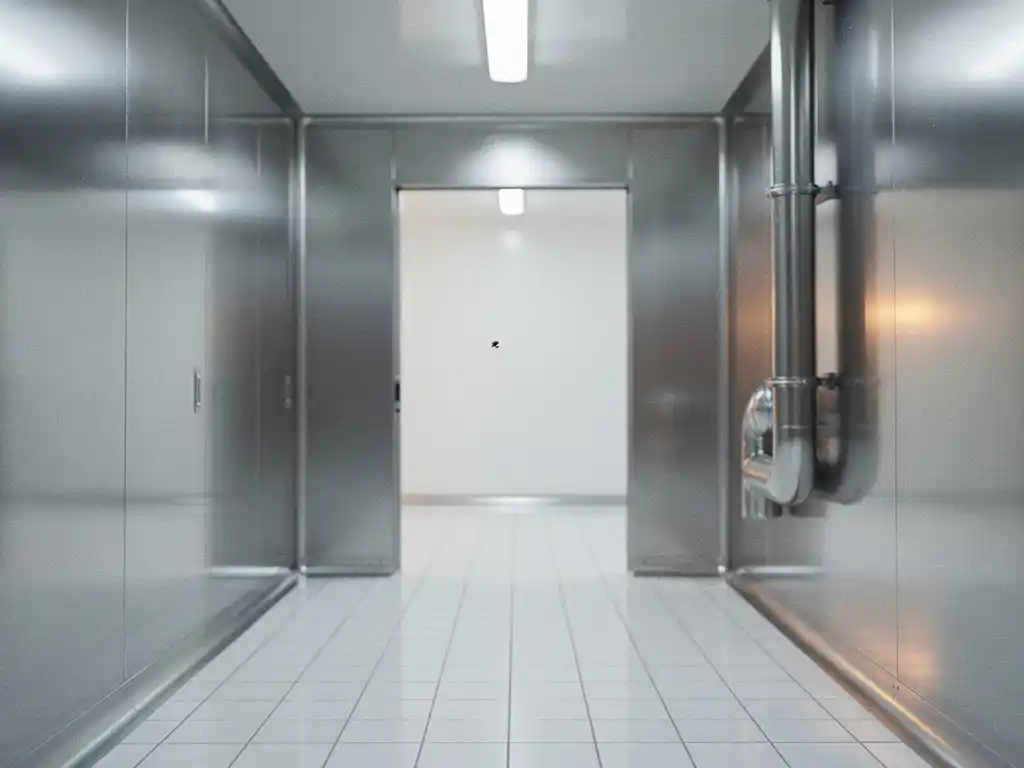
Cross-contamination between zones in food manufacturing is primarily caused by the physical movement of people, equipment, and materials carrying contaminants from lower-hygiene areas into higher-hygiene zones. Foot traffic, wheeled vehicles, and airborne particles are the three dominant transfer mechanisms, and without effective controls at zone boundaries, contaminants move freely between production areas. The sections below address the most common causes, the highest-risk entry points, and the control measures that reliably prevent cross-zone contamination.
How do contaminants physically move between food manufacturing zones?
Contaminants move between food manufacturing zones primarily through three physical pathways: people walking between areas, equipment and vehicles crossing zone boundaries, and air currents carrying particulates from one space to another. Of these, foot and wheel traffic are the most consistent and controllable vectors, because they occur at predictable entry and exit points throughout every shift.
When a worker walks from a raw material handling area into a processing zone, the soles of their footwear carry bacteria, allergens, dust, and debris across that boundary. The same transfer occurs when a pallet truck or forklift moves between zones without passing through any decontamination step. Each crossing deposits a fresh load of contaminants onto what should be a clean floor surface, where they can then be redistributed further by subsequent foot traffic or become airborne through disturbance.
Airborne transfer is harder to observe but equally significant. Doors opening and closing, ventilation systems with inadequate pressure differentials, and the movement of dry particulates on clothing or packaging all contribute to airborne cross-zone contamination. In facilities without clearly enforced physical barriers, contaminants can migrate considerable distances before settling on surfaces, equipment, or product.
What are the most common sources of cross-contamination in food facilities?
The most common sources of cross-contamination in food facilities are personnel movement, shared equipment, inadequately cleaned vehicles, and poor zoning discipline at entry points. Personnel are the single most frequent vector because they move continuously between zones throughout the working day, and each transition carries contamination risk if no control measures are in place.
Shared equipment is a close second. Utensils, containers, trolleys, and processing tools that move between raw and ready-to-eat areas without proper cleaning protocols are a well-documented source of cross-contamination in food production. Similarly, pallet trucks and forklifts that travel between external loading areas and internal production zones carry significant contamination loads on their wheels.
Beyond personnel and equipment, packaging materials, raw ingredients, and even condensation can introduce biological and chemical contaminants into controlled zones. Allergen cross-contamination is a particular concern in facilities handling multiple product types, where even trace transfer between zones can have serious regulatory and consumer safety consequences.
Why are zone entry and exit points the highest contamination risk?
Zone entry and exit points represent the highest contamination risk in food manufacturing because they are where lower-hygiene and higher-hygiene environments meet. Every time a person or vehicle crosses a zone boundary, they carry the contamination profile of the area they came from into the area they are entering. Without a physical control at that transition point, contamination transfer is essentially unrestricted.
The risk is compounded by frequency. In a busy food facility, a single entry point may be crossed hundreds of times per shift by different personnel and vehicles, each bringing a different contamination load. Over the course of a production day, an uncontrolled entry point accumulates and redistributes contaminants at a rate that rapidly undermines even well-designed cleaning schedules.
Entry points are also where contamination is most concentrated and therefore most manageable. This is precisely why contamination control at zone boundaries is more effective than trying to manage contamination once it has already spread across a production floor. Catching contaminants at the point of entry prevents their redistribution throughout the facility.
How does contamination at floor level affect product safety and compliance?
Floor-level contamination directly threatens product safety because floors are the primary reservoir for biological, chemical, and particulate contaminants in food manufacturing environments. Research and industry experience consistently show that the majority of contaminants entering controlled environments do so at floor level, carried by footwear and wheeled equipment. Once on the floor, contaminants can be transferred to product contact surfaces, packaging, and ingredients through indirect contact and airborne redistribution.
From a compliance perspective, floor-level contamination is a recurring focus during regulatory inspections and audits under frameworks such as HACCP, BRC, and SQF. Auditors assess whether facilities have identified and controlled critical contamination pathways, and zone boundaries are among the first areas examined. Inadequate floor-level controls at entry points can result in non-conformances that affect certification status and, in serious cases, product recalls.
The consequences extend beyond audit findings. Contamination events linked to inadequate zone separation can result in product loss, production downtime, and reputational damage. For food manufacturers operating under tight margins and strict customer specifications, the cost of a single contamination incident typically far exceeds the investment required to prevent it.
What contamination control measures are most effective at zone boundaries?
The most effective contamination control measures at zone boundaries combine physical barriers, personnel hygiene protocols, and floor-level particulate capture systems. No single measure is sufficient on its own; effective zone protection requires a layered approach where each control reinforces the others.
- Floor-level contamination control mats: Positioned at zone entry points, these capture and retain particulates from footwear and wheels before they cross into higher-hygiene areas. Reusable polymeric mats with built-in antimicrobial protection, such as Dycem’s CleanZone and WorkZone systems, can capture up to 99.9% of particles at the point of entry and inhibit microbial growth between cleaning cycles.
- Gowning and footwear change protocols: Requiring personnel to change footwear or apply dedicated overshoes before entering higher-hygiene zones significantly reduces biological transfer from external areas.
- Dedicated equipment per zone: Preventing equipment from crossing zone boundaries eliminates one of the most consistent contamination pathways in food facilities.
- Air pressure differentials: Maintaining positive pressure in higher-hygiene zones prevents airborne contaminants from migrating inward when doors are opened.
- Clearly marked and enforced zone boundaries: Visual demarcation combined with training and procedural discipline ensures that personnel understand and respect zone protocols consistently.
How should a food manufacturer design zones to minimise cross-contamination risk?
A food manufacturer should design zones using a linear or unidirectional flow principle, where raw materials, personnel, and product move progressively from lower-hygiene to higher-hygiene areas without backtracking. This layout minimises the number of times personnel and equipment must cross zone boundaries and reduces the risk of contamination being carried in the wrong direction through the facility.
Effective zone design incorporates several structural and procedural elements working together. Entry points between zones should be minimised and positioned to funnel all traffic through a single controlled transition point where contamination control measures can be consistently applied. Gowning rooms and airlocks between zones create a physical buffer that allows personnel to decontaminate before entering critical areas.
Zone boundaries should be clearly defined using permanent floor markings, physical barriers, or changes in flooring material that signal a transition between hygiene levels. These visual cues reinforce procedural compliance and make it easier to audit zone discipline during inspections. Facilities should also consider traffic flow separately for personnel and vehicles, since forklifts and pallet trucks require wider entry points and different contamination control solutions than pedestrian routes.
Finally, zone design should be reviewed regularly as production layouts evolve. A configuration that worked well for one product range may create new contamination risks when lines are reorganised or new materials are introduced. Building flexibility into zone boundary controls, such as using repositionable contamination control mats for temporary or variable zones, allows facilities to adapt without compromising hygiene standards.
How Dycem helps prevent cross-contamination between food manufacturing zones
Dycem’s reusable contamination control mat systems are purpose-built to address the primary causes of cross-zone contamination in food manufacturing environments. At zone entry and exit points, where contamination risk is highest, Dycem mats capture and retain particulates before they can be transferred further into the facility.
- Up to 99.9% particulate capture at floor level, targeting the most common contamination pathway in food facilities
- Biomaster silver-ion antimicrobial technology built into every mat, inhibiting microbial growth by up to 99.9% between cleaning cycles
- CleanZone mats for pedestrian and light-wheeled traffic at gowning rooms, critical corridors, and zone entry points
- WorkZone mats engineered for heavy-wheeled vehicles including forklifts and pallet trucks crossing zone boundaries
- Floating Mats for flexible or temporary zone configurations that require repositionable contamination control
- 3 to 5-year product lifespan, making Dycem a more sustainable and cost-effective alternative to disposable sticky mats
- ISO-certified manufacturing meeting EN ISO 9001 and 14001 standards, with EU REACH and California Proposition 65 compliance
Dycem’s contamination control specialists work with food manufacturers to assess facility layouts, identify high-risk entry points, and recommend the right mat configuration for each zone boundary. To arrange a consultation or free site survey, contact Dycem today.