

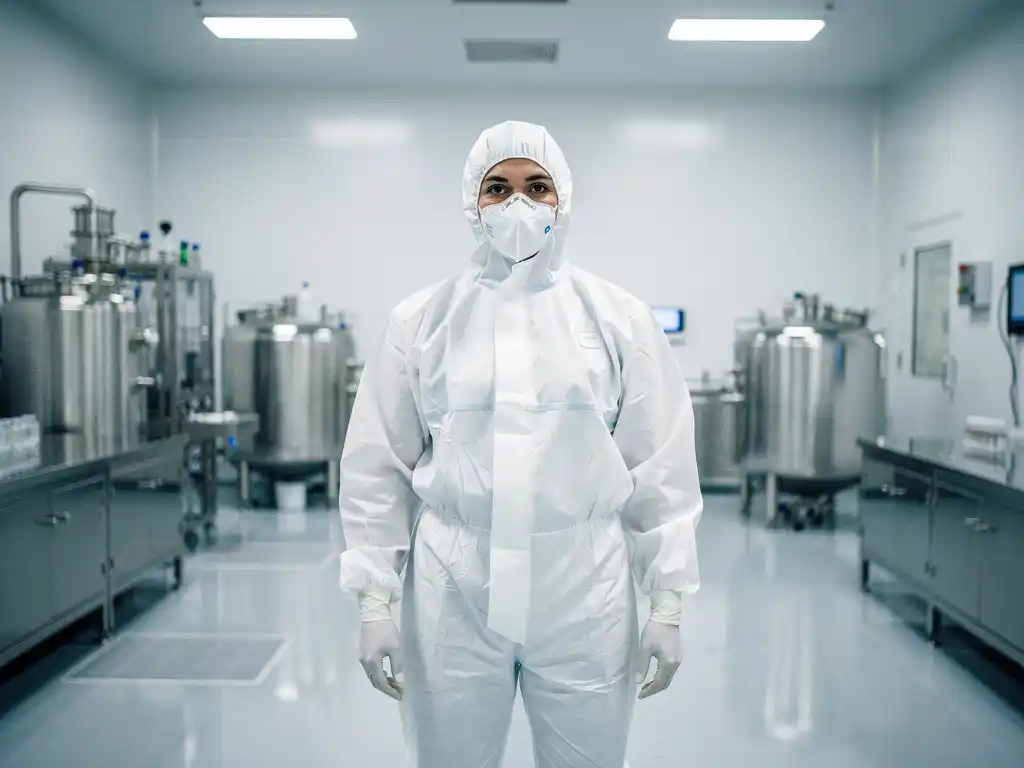
Passive contamination control uses physical barriers and materials to prevent contaminants from entering a controlled environment, while active contamination control uses powered systems and processes to actively remove or neutralise contaminants already present. Both approaches serve distinct functions and address different contamination pathways. Most regulated facilities rely on a combination of the two to meet compliance requirements and protect product integrity.
Understanding how these two strategies differ, where each performs best, and how they interact is essential for any Quality, EHS, or Facilities Manager responsible for maintaining cleanroom standards. The sections below address the most common questions around passive and active contamination control methods.
Which contamination control approach is more effective?
Neither passive nor active contamination control is universally more effective. The most effective approach depends on the contamination risk profile of the facility, the nature of the controlled environment, and the regulatory standards that apply. In practice, the two methods are complementary, and the strongest contamination prevention strategies use both in a coordinated system.
Passive controls are highly effective at stopping contaminants at the point of entry before they ever reach a critical zone. They require no energy to operate and provide consistent, continuous protection. Active controls, by contrast, are essential for managing contaminants that have already entered the environment or that cannot be intercepted by physical barriers alone, such as fine airborne particles or microbial agents.
Facilities operating under GMP, ISO, or FDA regulatory frameworks are typically required to demonstrate that both passive and active controls are in place and validated. Relying on only one approach leaves gaps that auditors will identify and that contamination events will eventually exploit.
What are examples of passive contamination control?
Passive contamination control methods are physical or material-based solutions that intercept contaminants without requiring energy input or active operation. They work continuously and automatically as part of the facility’s design and entry protocols.
Common examples of passive contamination control include:
- Contamination control mats placed at entry points to capture particulates from shoes and wheels before they enter controlled zones
- Gowning protocols and PPE such as cleanroom suits, gloves, and overshoes that prevent personnel from introducing contaminants
- Physical barriers and airlocks that create buffer zones between clean and non-clean areas
- Sealed surfaces and smooth wall finishes that resist particle accumulation and are easy to clean
- Pressure differentials maintained by facility design to direct airflow away from critical zones, preventing ingress
Among these, contamination control mats are one of the most consistently deployed passive solutions. Research in controlled environment management consistently shows that the majority of contamination enters facilities at floor level, carried in by foot traffic and wheeled equipment. Addressing this pathway with a reliable passive barrier is a foundational step in any contamination control strategy.
What are examples of active contamination control?
Active contamination control methods use powered systems or deliberate processes to remove, neutralise, or monitor contaminants that are present in the environment. Unlike passive controls, active systems require energy input and ongoing management to operate effectively.
Common examples of active contamination control include:
- HVAC and HEPA filtration systems that continuously filter airborne particulates and maintain controlled air quality
- Positive and negative pressure systems that actively manage airflow direction to contain or exclude contaminants
- UV-C disinfection systems used to neutralise microbial contamination on surfaces and in the air
- Environmental monitoring systems that detect particle counts, microbial levels, and temperature or humidity conditions in real time
- Chemical cleaning and disinfection programmes carried out by trained personnel on defined schedules
- Air showers that actively dislodge particles from personnel before they enter clean zones
Active contamination control is particularly important in environments where airborne particulates, microbial agents, or volatile compounds pose a risk that passive barriers cannot fully address. These systems are also central to regulatory compliance, as they generate the monitoring data and audit trails that inspectors require.
Why do most cleanrooms use both passive and active controls?
Most cleanrooms use both passive and active contamination control because no single method can address every contamination pathway. Passive controls are highly effective at the point of entry but cannot manage contaminants already circulating within the environment. Active controls manage the internal environment but are less effective at stopping contamination from being introduced in the first place.
The relationship between the two is cumulative. A well-designed passive barrier at a cleanroom entrance reduces the burden placed on active systems inside. When fewer contaminants enter the controlled zone, HEPA filters last longer, cleaning cycles are less intensive, and environmental monitoring results are more consistent. This directly supports audit readiness and reduces the risk of excursions that could halt production or trigger regulatory action.
Regulatory frameworks such as EU GMP Annex 1, ISO 14644, and FDA guidance documents reflect this layered approach. They do not treat passive and active controls as alternatives but as complementary elements of a validated contamination control strategy. Facilities that rely too heavily on one approach at the expense of the other typically find compliance harder to maintain and contamination incidents more difficult to explain.
How do passive and active controls differ in cost and maintenance?
Passive contamination control methods generally have lower operating costs and require less ongoing maintenance than active systems, but they do require regular inspection and replacement. Active systems carry higher energy and maintenance costs but provide dynamic, responsive protection that passive methods cannot replicate.
Passive control costs and maintenance
Passive solutions such as contamination control mats, gowning stations, and physical barriers have straightforward cost structures. The primary costs are initial installation and periodic replacement or cleaning. High-quality reusable mats, for example, are designed for a lifespan of three to five years, which significantly reduces the recurring cost and waste associated with disposable alternatives. Maintenance typically involves scheduled cleaning and periodic condition checks rather than technical servicing.
Active control costs and maintenance
Active systems such as HVAC, HEPA filtration, UV-C disinfection, and environmental monitoring platforms involve higher capital expenditure and ongoing operational costs. HEPA filters require regular replacement, air handling units need servicing, and monitoring systems require calibration and data management. These costs are non-negotiable in regulated environments, but they can be managed more efficiently when passive controls reduce the contamination load that active systems must handle.
When evaluating total cost of ownership, facilities that invest in effective passive contamination control at entry points often find that their active systems operate more efficiently and require less intensive maintenance over time. The two approaches are not competing budget lines but interconnected investments.
When should a facility upgrade or reassess its contamination control strategy?
A facility should reassess its contamination control strategy when it experiences recurring contamination events, fails or struggles in regulatory audits, changes its production processes, expands its facility footprint, or identifies that its current methods are no longer fit for purpose. Proactive review is always preferable to reactive remediation.
Specific triggers that should prompt a formal review include:
- Environmental monitoring results showing upward trends in particle counts or microbial levels
- Audit findings that identify gaps in contamination prevention documentation or physical controls
- Introduction of new products, processes, or personnel flows that change contamination risk profiles
- Facility modifications such as new entry points, expanded cleanroom areas, or changes to HVAC layout
- Persistent frustration with the cost, waste, or inconsistency of legacy solutions such as disposable sticky mats or footbaths
- ESG commitments that require a reduction in single-use plastic consumption
In 2026, many facilities are also reassessing their contamination control strategies in response to updated regulatory guidance and increased scrutiny of environmental sustainability in supply chains. A strategy review is not a one-time event but a continuous process aligned with the facility’s quality management system.
How Dycem helps with contamination control
Dycem’s reusable contamination control mats are a proven passive contamination control solution, engineered to capture up to 99.9% of shoe and wheel contaminants at the point of entry. They address the most common and underestimated contamination pathway in controlled environments: floor-level ingress. Key capabilities include:
- Capture and retention of floor-level and airborne particulates before they reach critical zones
- Built-in Biomaster silver-ion antimicrobial technology that inhibits microbial growth by up to 99.9%
- A three-to-five year product lifespan, reducing replacement costs and single-use plastic waste
- ISO-certified manufacturing compliant with EN ISO 9001 and 14001, California Proposition 65, and EU REACH
- Customisable formats including CleanZone for pedestrian and light-wheeled traffic areas and WorkZone for heavy industrial traffic
- A more sustainable alternative to disposable peel-off mats, supporting ESG goals without compromising performance
Dycem specialists are available worldwide to assess your facility’s entry points, traffic flows, and contamination risk profile. Contact Dycem today to arrange a free consultation and site survey.