

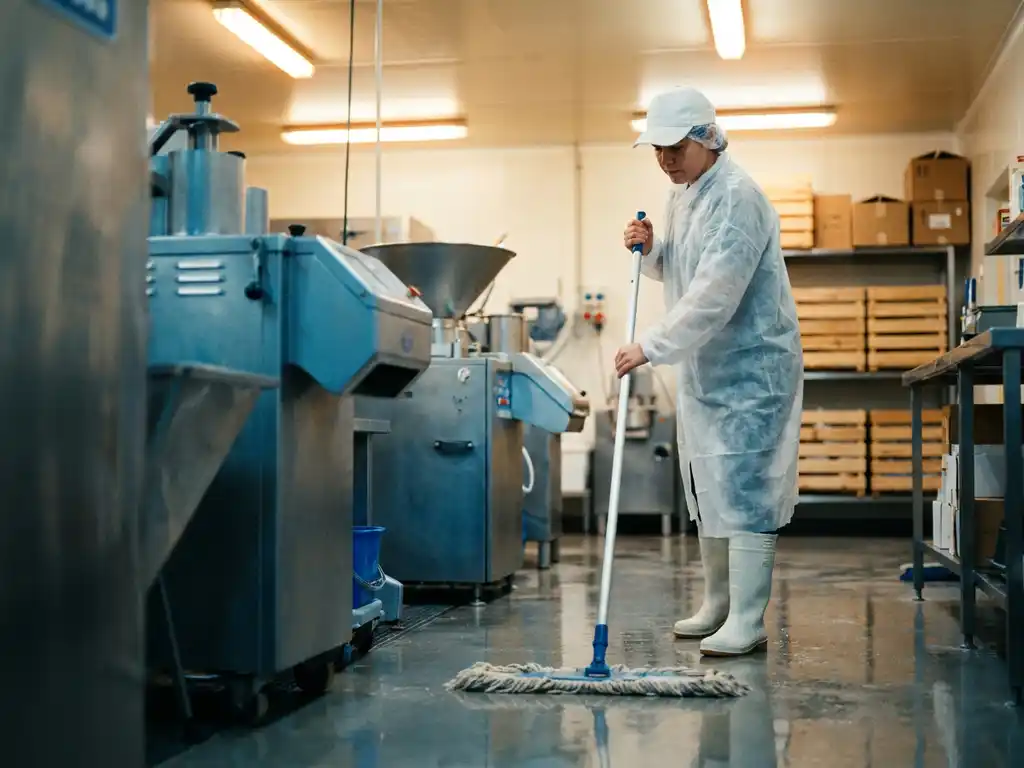
Floor hygiene plays a direct and significant role in preventing foodborne illness outbreaks. Floors in food production and processing environments accumulate pathogens, allergens, and organic debris that can transfer to products, equipment, and personnel through foot traffic and wheeled vehicles. Facilities that implement robust floor contamination control at critical entry points and high-risk zones reduce the likelihood of cross-contamination events that lead to product recalls, regulatory action, and consumer harm. The sections below address the most important questions food facility managers face when evaluating their floor hygiene strategy.
How does floor contamination spread foodborne pathogens?
Floor contamination spreads foodborne pathogens primarily through foot traffic and wheeled equipment moving between zones of differing hygiene status. When personnel or vehicles travel from a lower-hygiene area to a production or packing zone without effective decontamination at the transition point, they carry pathogens with them on soles and wheels. This mechanism of transfer is one of the most consistent contributors to cross-contamination in food environments.
Pathogens such as Listeria monocytogenes, Salmonella, and E. coli are capable of surviving on hard floor surfaces for extended periods, particularly in areas with moisture, organic residue, or temperature variation. Once deposited on a floor, these organisms can be picked up and redistributed across a facility with every footstep or wheel rotation. Research in food microbiology consistently identifies floors and drains as significant reservoirs for persistent contamination in food manufacturing settings.
The challenge is compounded by the fact that contamination is largely invisible. A floor that appears clean may still carry viable microbial loads capable of causing illness if they reach a food contact surface. This is why physical capture at the point of entry, before contamination enters controlled production areas, is a more reliable strategy than relying on visual inspection alone.
What are the most common floor contaminants in food facilities?
The most common floor contaminants in food facilities include biological agents such as bacteria, mould spores, and yeasts; physical contaminants such as dust, soil, and particulate matter brought in from outside; and chemical residues from cleaning agents, lubricants, or processing by-products. Each category presents a distinct risk to food safety, product integrity, and regulatory compliance.
Biological contaminants are the most consequential from a public health standpoint. Listeria is particularly concerning in food environments because it thrives in cool, moist conditions, making it well-suited to survive in drains, floor cracks, and around refrigerated processing areas. Salmonella and Campylobacter are frequently introduced via raw materials, packaging, or personnel entering from external areas.
Physical particulates, while not directly harmful, create conditions that support microbial growth by providing organic material for bacteria to colonise. Dust and debris also pose allergen risks in facilities that handle multiple product types, where cross-contact between allergen-containing and allergen-free lines must be strictly controlled.
Chemical contamination at floor level tends to arise from inadequate rinsing after cleaning, spillage from maintenance activities, or carry-in from external vehicles. While less immediately dangerous than biological agents, chemical residues on floors can migrate to product contact surfaces and create compliance issues under food safety regulations.
Which areas of a food facility carry the highest floor contamination risk?
The highest floor contamination risk in a food facility is concentrated at entry and transition points: facility entrances, loading docks, gowning areas, and the boundaries between raw and ready-to-eat processing zones. These are the locations where contamination is most likely to be introduced or transferred between hygiene zones, making them the priority focus for any floor hygiene programme.
Loading docks and goods-in areas are exposed to the external environment continuously. Vehicles, pallets, and personnel moving between outdoor and indoor spaces bring in soil, biological material, and environmental pathogens with every transit. Without effective capture at this boundary, contamination travels directly into the facility.
Gowning rooms and cleanroom entrances represent the critical transition between general facility areas and controlled production or packing environments. Personnel moving through these zones may carry contamination on footwear even after changing into facility-specific clothing, making floor hygiene at this point particularly important.
Raw processing areas, where unprocessed ingredients are handled, present an elevated risk of pathogen shedding onto floors. When personnel or equipment move between raw and high-care zones without adequate floor decontamination at the boundary, the risk of cross-contamination between raw and finished products increases substantially. Drains, floor junctions, and areas around refrigeration units are also consistently identified as high-risk zones in food safety audits.
What floor hygiene methods are most effective at reducing contamination?
The most effective floor hygiene methods for reducing contamination in food facilities combine physical capture at entry points with a structured cleaning and disinfection programme applied to all floor surfaces throughout the facility. Neither approach alone is sufficient; physical capture prevents contamination from entering critical zones, while routine cleaning eliminates the residual contamination that accumulates during operations.
Physical capture at entry and transition points
Placing contamination control mats at facility entrances, gowning areas, and zone boundaries intercepts particulates and biological material before they can travel further into the environment. Effective mats attract and retain contaminants from shoe soles and wheels rather than simply displacing them. Antimicrobial mat technology, such as Biomaster silver-ion treatment, adds a further layer of protection by inhibiting microbial growth within the mat itself, preventing it from becoming a secondary contamination source.
Reusable polymeric mats designed for food environments are washable and maintainable, making them practical for facilities with high traffic volumes. Unlike disposable sticky mats, which require frequent replacement and generate single-use plastic waste, reusable systems offer consistent performance over a multi-year lifespan without the operational disruption of constant changeovers.
Structured cleaning and disinfection programmes
Floor cleaning in food facilities should follow a validated schedule that accounts for the specific contamination risks in each zone. High-risk areas such as raw processing and drain surrounds typically require more frequent cleaning and the use of disinfectants effective against the specific pathogens relevant to the product type. Cleaning verification, through environmental swabbing and ATP testing, provides objective evidence that cleaning procedures are achieving the required standard and supports regulatory compliance.
How do regulatory standards address floor hygiene in food environments?
Regulatory standards for food safety consistently identify floors as a critical control point for contamination management. Frameworks including the FDA Food Safety Modernization Act (FSMA), EU Regulation 852/2004 on food hygiene, and the British Retail Consortium (BRC) Global Standard for Food Safety all contain specific requirements relating to the design, maintenance, and hygiene of floor surfaces in food production environments.
Under FSMA’s Preventive Controls for Human Food rule, facilities are required to identify and control environmental hazards, including those associated with floor surfaces and drains. The regulation expects facilities to implement sanitation controls that address the potential for environmental pathogens to contaminate food contact surfaces and finished products.
The BRC Global Standard, widely adopted by food manufacturers supplying major retailers, requires that floors be constructed from materials that are impervious, durable, and cleanable, and that floor hygiene procedures be documented and verified. Auditors routinely assess floor condition and hygiene practices as part of site inspections, and non-conformances in this area can result in reduced certification grades or audit failures.
ISO 22000, the international food safety management standard, takes a risk-based approach that requires organisations to assess all potential sources of contamination, including environmental sources at floor level, and implement controls proportionate to the identified risk. Facilities seeking or maintaining ISO 22000 certification need documented evidence that their floor hygiene controls are effective and consistently applied.
When should a food facility upgrade its floor contamination control system?
A food facility should upgrade its floor contamination control system when existing methods are producing inconsistent results, generating excessive operational cost, or failing to meet the requirements of regulatory audits and customer standards. Specific triggers include recurring positive environmental monitoring results, increasing frequency of disposable mat replacement, audit findings related to floor hygiene, or a change in production scope that introduces new contamination risks.
Facilities relying on disposable sticky mats often find that the cost and waste generated by frequent replacement becomes unsustainable as production volumes increase. When staff are changing mats multiple times per shift to maintain effectiveness, the hidden labour cost and single-use plastic waste represent a clear signal that a more durable, contamination control solution is warranted.
Expansion into new product categories, particularly the introduction of allergen-containing lines or ready-to-eat products, raises the hygiene bar significantly. These changes typically require a reassessment of zone boundaries and the contamination control measures in place at each transition point. Similarly, achieving or renewing certification to BRC, SQF, or ISO 22000 often prompts facilities to review and strengthen their environmental hygiene controls, including floor management.
Facilities that have experienced a product recall or contamination incident should treat floor hygiene as a priority area for review. Environmental investigations following such events frequently identify floors and drains as contributing factors, underscoring the value of investing in systems that capture contamination reliably and consistently rather than relying on methods that require high-frequency replacement or manual intervention to remain effective.
How Dycem helps prevent foodborne illness through floor hygiene
Dycem’s reusable contamination control mats are engineered specifically to address the floor hygiene challenges that food facilities face every day. Key features that make Dycem an effective part of a food safety programme include:
- Up to 99.9% particulate capture: Dycem mats attract and retain floor-level contaminants from shoe soles and wheels at the point of entry, preventing them from spreading into production zones.
- Biomaster antimicrobial protection: Built-in silver-ion technology inhibits microbial growth within the mat by up to 99.9%, preventing the mat itself from becoming a contamination source.
- 3 to 5 year lifespan: Washable and reusable, Dycem mats deliver consistent performance over years rather than days, eliminating the cost and disruption of constant disposable mat replacement.
- ISO-certified manufacturing: Compliance with EN ISO 9001 and 14001 standards, California Proposition 65, and EU REACH regulations ensures the mats meet the quality and safety expectations of regulated food environments.
- Flexible product range: From the Dycem CleanZone mat for pedestrian and light-wheeled traffic areas to the WorkZone mat for heavy industrial traffic, solutions are available for every zone type within a food facility.
- Reduced environmental impact: Reusable construction minimises single-use plastic waste, supporting ESG commitments without compromising performance.
If your facility is reviewing its floor hygiene strategy or preparing for a food safety audit, Dycem’s contamination control specialists can provide a free site survey and tailored recommendation. Contact Dycem today to find out how a reusable mat system can strengthen your contamination control programme.
Related Articles
- How do you build a contamination control culture across a food manufacturing team?
- How does particulate contamination affect drug product quality?
- What should pharma facility managers look for in a contamination mat supplier?
- What are the contamination control requirements under EU GMP Annex 1?
- How do you build a contamination control strategy from scratch?