

Here are 6 Reasons to Stop Using Footbaths in Manufacturing
(and not the relaxing kind)
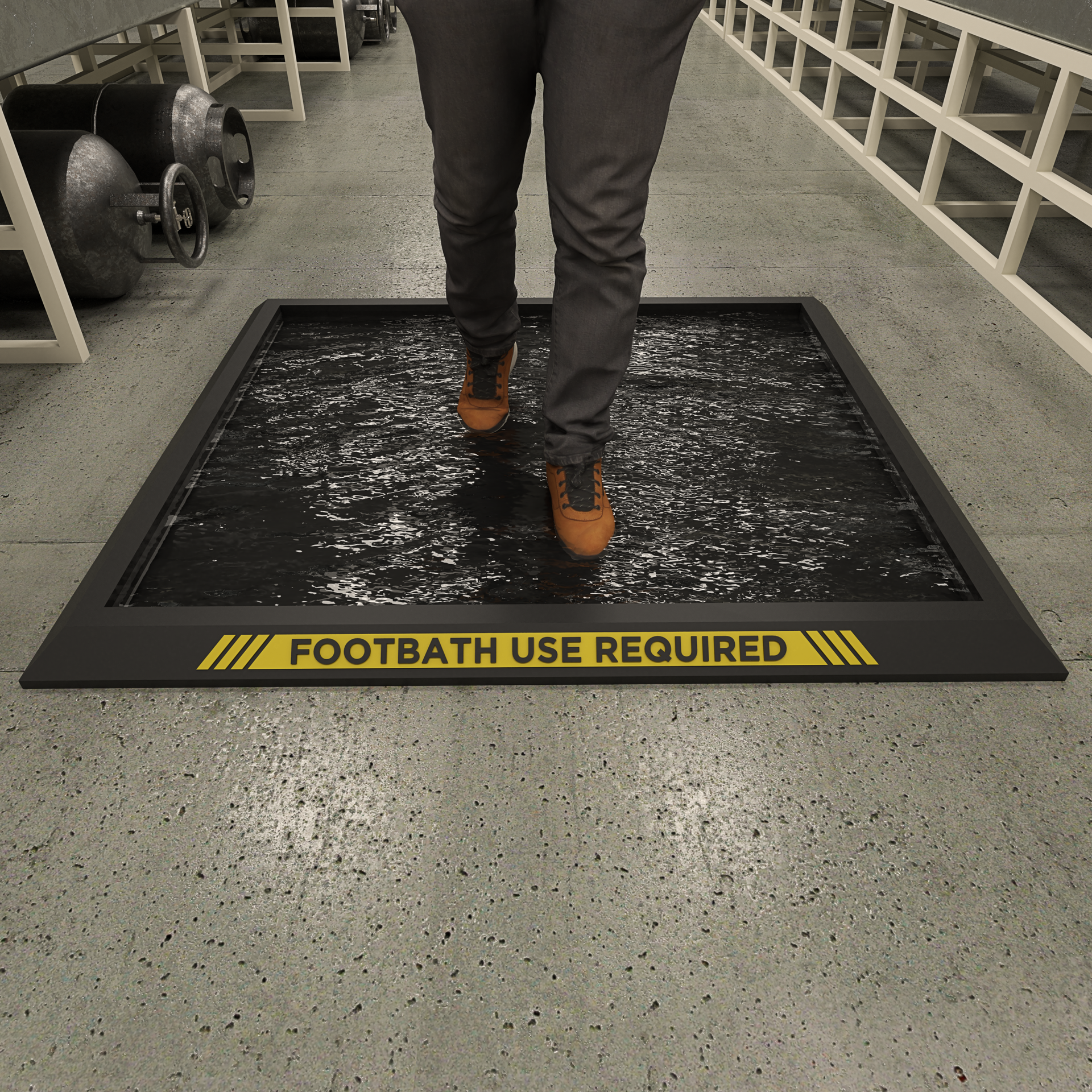
For decades, processors have relied on foot baths, also called shoe baths or foot mats, to reduce cross contamination from footwear. A foot bath is usually a large tub or tray filled with an antimicrobial solution. Workers step through the chemical bath to saturate the soles of their shoes and lower the risk of carrying pathogens into production areas.
Although common, foot baths come with inherent problems. Even as sanitation practices have advanced, several methods used to clean footwear have been shown to be ineffective and can even contribute to microbial spread. Manual foot baths, shoe and boot covers, and systems that rely on workers to scrub footwear with brushes often fall short because they require constant oversight. (1)
Many facilities are now shifting from chemical footbaths to dry, polymeric contamination control surfaces like Dycem. Below are six reasons why.
1. Microbial Control Weakens Fast
Foot baths depend entirely on disinfectant chemistry. For the solution to perform as intended, shoes must already be clean, the sanitizer must be at the correct concentration, and workers must pause long enough for contact time.
In practice, none of these stay consistent.
As workers move through the bath, soil and organic matter disperse into the solution. This dilutes the chemistry and reduces microbial kill. A peer reviewed study published in Food Protection Trends found that common aqueous and dry quaternary ammonium footbath treatments provided no significant microbial reduction when workers walked through at normal speeds. Both Aqueous QAC and Dry QAC performed the same as no treatment at all. (2)
This means a foot bath may start clean in the morning and lose effectiveness long before mid-shift.
Dycem mats maintain a consistent level of control because the polymeric surface captures and holds particulate matter on contact. The Biomaster silver additive slows microbial growth across the surface, keeping the mat functional between routine cleanings.
2. Footbaths Create Slip and Fall Hazards
Foot baths add moisture to floors that are intended to stay dry. Each step carries liquid out of the basin and creates a slick splash zone. With traffic, this zone grows and becomes a high-risk area for slips and falls.
Foot baths also introduce moisture to environments that are designed to stay dry. This added moisture affects sanitation, safety, and regulatory risk. FDA investigators can now swab any area of a facility, including a foot bath. (3) If pathogens such as Listeria or Salmonella are found, the consequences can be serious.
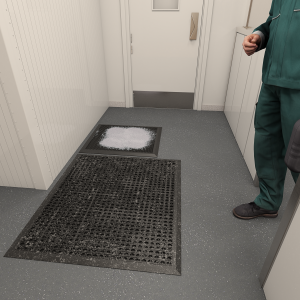
Dycem mats avoid these hazards entirely. The dry, textured surface provides traction while capturing contamination without introducing water.
3. Cross Contamination Increases as Debris Builds
Foot baths are supposed to stop contaminants from traveling between hygiene zones. Their effectiveness collapses once debris enters the solution.
Every step introduces soil, powders, organic matter, and food particles into the bath. As the debris load increases, the chemical solution becomes overloaded. Instead of controlling contamination, the bath can become a source of it.
Dycem mats act as a physical, dry barrier. Contamination adheres to the mat on contact and stays secured until cleaning.
4. Maintenance and Downtime Add Up
Footbath programs require constant management. Staff must:
• Monitor sanitizer concentration
• Replenish the solution
• Empty and dispose of contaminated liquids
• Clean the container
• Stock and manage chemicals
Workers also slow down due to the required contact time, which creates bottlenecks in busy areas.
Dycem mats eliminate these steps. Operators simply walk across them. The mats roll into existing wet cleaning schedules and require no chemicals. They last an average of three to five years.
5. Results Are Inconsistent and Hard to Document
Foot baths do not produce a uniform sanitizing event. Step depth, speed, and shoe contact vary person to person. Some workers barely touch the disinfectant at all.
Chemical strength changes throughout the day. Debris alters concentration. Contact time is uncontrolled. Auditors look for documented, predictable processes. Foot baths introduce variation at every stage, making consistent compliance difficult.
Dycem mats create a repeatable, reliable control point. Everyone entering or exiting a zone contacts the same dry, consistent surface, supporting stronger documentation and audit readiness.
6. Total Cost Is Higher Than It Appears
Foot baths may seem inexpensive upfront, but the long-term costs add up quickly. Chemical purchases, labor hours, lost productivity, slip incidents, discarded solution, and contamination risks all increase operating costs.
Dycem mats provide long service life, minimal maintenance needs, and strong contamination control. This combination offers a significant return on investment and reduces hidden costs.
See the difference in your facility
If you want to compare Dycem with traditional sanitizing methods, download our comparison brochure or learn how Dycem compares to footbaths.
Contact us today to get started.
- https://saraya.world/news/professional-news/fighting-cross-contamination-from-footwear-in-your-facility#:~:text=Truth%20Be%20Told,unwanted%20moisture%20into%20the%20environment.
- Chemical Decontamination of Footwear Soles to Limit Microbial Transfer in a Dry Environment
- https://www.fda.gov/food/sampling-protect-food-supply/environmental-sampling