

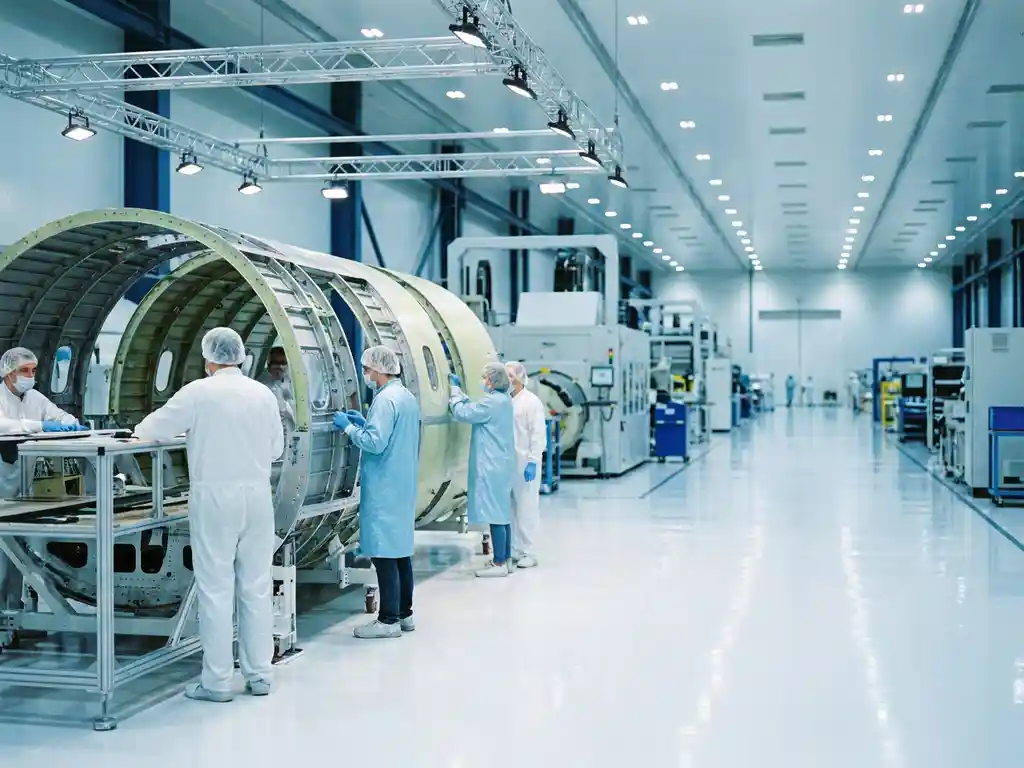
Yes, contamination control strategies can absolutely be applied outside of the pharmaceutical industry. Any environment where particulate matter, biological agents, or chemical residues pose a risk to product quality, personnel safety, or regulatory compliance can benefit from structured contamination prevention. From aerospace manufacturing to food processing, the principles that underpin cleanroom contamination control translate directly into non-pharma settings. The sections below explore which industries are affected, what risks they face, and how effective modern contamination control solutions perform across these environments.
Which industries rely on contamination control beyond pharmaceuticals?
Many industries beyond pharmaceuticals rely on contamination control strategies to protect product integrity, meet regulatory requirements, and maintain safe working environments. Electronics, aerospace, food and beverage, medical devices, automotive, and healthcare are among the most prominent sectors where controlled environments and contamination prevention are essential to daily operations.
In electronics manufacturing, even microscopic particles can damage semiconductor components or disrupt circuit board assembly. Cleanroom contamination control is standard practice in facilities producing microchips, displays, and precision sensors. In aerospace, foreign object debris poses serious safety risks to aircraft components, making particulate management a non-negotiable part of production protocols.
Food and beverage facilities must prevent biological and chemical contamination to comply with food safety legislation and protect consumers. Healthcare environments, including hospital operating theatres and sterile supply units, depend on contamination prevention to reduce infection risk. Automotive manufacturers producing precision components, particularly those supplying electric vehicle or advanced driver assistance system technologies, increasingly operate in controlled zones where airborne and floor-level contamination must be managed rigorously.
What types of contaminants pose the biggest risk in non-pharma environments?
The contaminants that pose the greatest risk in non-pharma environments vary by industry but broadly fall into three categories: particulate matter, biological agents, and chemical residues. Each type carries distinct consequences depending on the sensitivity of the environment and the nature of the product or process involved.
In electronics and aerospace, particulate contamination is the primary concern. Dust, fibres, and skin cells can interfere with precision components, cause equipment failure, or compromise structural integrity. Even particles invisible to the naked eye can render a semiconductor defective or introduce a fault into an aerospace assembly.
In food and beverage production, biological contaminants such as bacteria, mould, and allergens present the most serious risk. Cross-contamination between production lines or the introduction of pathogens via footwear and wheeled equipment can lead to product recalls, regulatory penalties, and significant reputational damage.
In automotive and general manufacturing, chemical residues from lubricants, cleaning agents, and processing materials can compromise surface finishes, adhesive bonds, or component coatings. Floor-level contamination from wheels and foot traffic is a common vector for spreading these residues across production areas.
How do contamination control strategies differ across industries?
Contamination control strategies differ across industries primarily in the classification of controlled zones, the types of contaminants targeted, and the regulatory frameworks that define acceptable standards. While the underlying goal of preventing contamination is universal, the methods, intensity, and documentation requirements vary considerably.
In electronics and semiconductor manufacturing, facilities typically follow ISO cleanroom classifications that dictate air cleanliness levels, personnel behaviour protocols, and the use of specialised garments and entry systems. The emphasis is on particle counts per cubic metre of air, but floor-level contamination control at entry points is equally critical because foot and wheel traffic are primary vectors for introducing particles into controlled zones.
Food and beverage facilities prioritise hygiene-based strategies aligned with HACCP principles, focusing on biological risk management and allergen segregation. Contamination prevention at entry points is addressed through footwear hygiene programmes, but these are often inconsistent when relying on disposable solutions or footbaths that lose effectiveness quickly.
In aerospace and defence, contamination control is driven by foreign object debris prevention programmes, with strict protocols around material traceability and zone access. Healthcare settings, meanwhile, combine clinical infection control guidelines with physical contamination barriers at ward and theatre entry points.
Despite these differences, one consistent challenge across all industries is managing floor-level contamination at the transition between uncontrolled and controlled areas. This is where entry-point contamination control solutions play a critical role regardless of sector.
What are the regulatory standards that govern contamination control outside of pharma?
Regulatory standards governing contamination control outside of pharmaceuticals include ISO 14644 for cleanrooms, HACCP and ISO 22000 for food safety, AS9100 for aerospace quality management, and ISO 13485 for medical devices. These frameworks each establish requirements for contamination prevention that facilities must meet to maintain certification and operate legally.
ISO 14644 is the most widely referenced standard for cleanroom design and operation across industries including electronics, aerospace, and medical devices. It classifies cleanrooms by airborne particulate cleanliness and sets expectations for monitoring, personnel access, and contamination control procedures at entry and exit points.
HACCP (Hazard Analysis and Critical Control Points) and ISO 22000 govern food safety management and require facilities to identify and control contamination risks at every stage of production, including at floor level where biological agents can be tracked in from external environments.
AS9100 applies to aerospace and defence manufacturing and incorporates quality management requirements that include foreign object debris prevention, making structured contamination control at facility entry points a compliance expectation rather than an optional measure.
ISO 13485 covers medical device manufacturing and requires documented contamination control procedures, particularly at the boundaries of controlled production zones. Facilities operating under these standards are subject to regular audits, and gaps in contamination prevention protocols can result in non-conformances with significant commercial consequences.
How effective are reusable contamination control mats in non-pharma settings?
Reusable contamination control mats are highly effective in non-pharma settings, capturing up to 99.9% of shoe and wheel contaminants at facility entry points. Their performance is not limited to pharmaceutical cleanrooms – the same mechanism of particulate capture through a tacky polymeric surface works equally well in electronics facilities, food production areas, aerospace manufacturing, and healthcare environments.
The key advantage of reusable polymer mats over disposable alternatives is consistent performance over time. Disposable sticky mats lose their effectiveness rapidly as layers are peeled away, and the frequency of replacement required to maintain performance creates operational disruption and ongoing cost. Reusable mats maintain their contamination capture properties throughout their lifespan and can be cleaned and restored to full effectiveness without replacing the mat itself.
In heavy industrial environments such as automotive plants or food production facilities, mats engineered for wheeled traffic provide contamination control even under the weight and frequency of forklift and pallet truck movement. This makes them practical for environments where foot traffic alone is not the primary contamination vector.
The built-in antimicrobial protection found in high-quality reusable mats adds a further layer of performance relevant to food and beverage and healthcare settings, where biological contamination is a primary concern. This characteristic is particularly valuable in environments where mats may not be cleaned as frequently as those in pharmaceutical cleanrooms.
Should non-pharma facilities replace disposable sticky mats with reusable alternatives?
Non-pharma facilities should strongly consider replacing disposable sticky mats with reusable alternatives. Disposable mats offer inconsistent performance, generate significant single-use plastic waste, and carry a high total cost of ownership when replacement frequency is factored in. Reusable contamination control mats address all three of these drawbacks while delivering comparable or superior contamination capture performance.
From a cost perspective, the recurring expenditure on disposable mats accumulates substantially over time. A reusable mat with a lifespan of three to five years eliminates that cycle of repeat purchasing while reducing the labour associated with frequent mat changes. For procurement and operations leaders scrutinising total cost of ownership, this is a meaningful financial argument.
From a sustainability standpoint, the volume of single-use plastic generated by disposable sticky mat programmes is considerable. Facilities with ESG commitments or sustainability targets will find that transitioning to reusable solutions is a more responsible and defensible choice when reporting against environmental objectives.
From a performance standpoint, the argument is equally clear. Disposable mats degrade with each layer removed, meaning their contamination capture effectiveness is highest immediately after a layer is peeled and declines until the next change. Reusable mats maintain consistent performance throughout their use cycle, providing more reliable protection at critical entry points.
How Dycem helps with contamination control across industries
Dycem provides contamination control solutions designed to perform across the full range of industries where particulate, biological, and chemical contamination poses a risk. Whether a facility operates a pharmaceutical cleanroom, an electronics production line, a food processing plant, or an aerospace assembly area, Dycem’s reusable polymer mats deliver consistent, validated performance at the critical transition points where contamination is most likely to enter controlled zones.
The Dycem product range is purpose-built to address the diversity of contamination control challenges across sectors:
- Dycem CleanZone is designed for pedestrian and light-wheeled traffic areas such as cleanroom entrances, gowning rooms, and airlocks, capturing particulates at the most sensitive entry points in electronics, medical device, and pharmaceutical facilities.
- Dycem WorkZone is engineered for heavy-wheeled traffic including forklifts and pallet trucks, making it suited to food production, automotive, and aerospace manufacturing environments where industrial equipment moves between controlled and uncontrolled zones.
- Dycem Floating Mats offer flexible, repositionable contamination control for facilities with variable or temporary controlled zones, providing a practical solution for environments that cannot commit to fixed mat installations.
- Dycem Bench Mats and Access Panels extend contamination prevention beyond the floor and into workstation-level environments, addressing contamination risk at the point of assembly or inspection.
All Dycem mats share the same core attributes: reusable polymer construction, built-in Biomaster antimicrobial protection, a three to five year lifespan, and ISO-certified manufacturing. They are customisable in size, format, and colour to suit any facility layout, and Dycem’s contamination control specialists are available worldwide to support facilities through an initial consultation and free site survey. To explore the full range of contamination control mat solutions or to discuss your facility’s specific requirements, contact the Dycem team directly.