

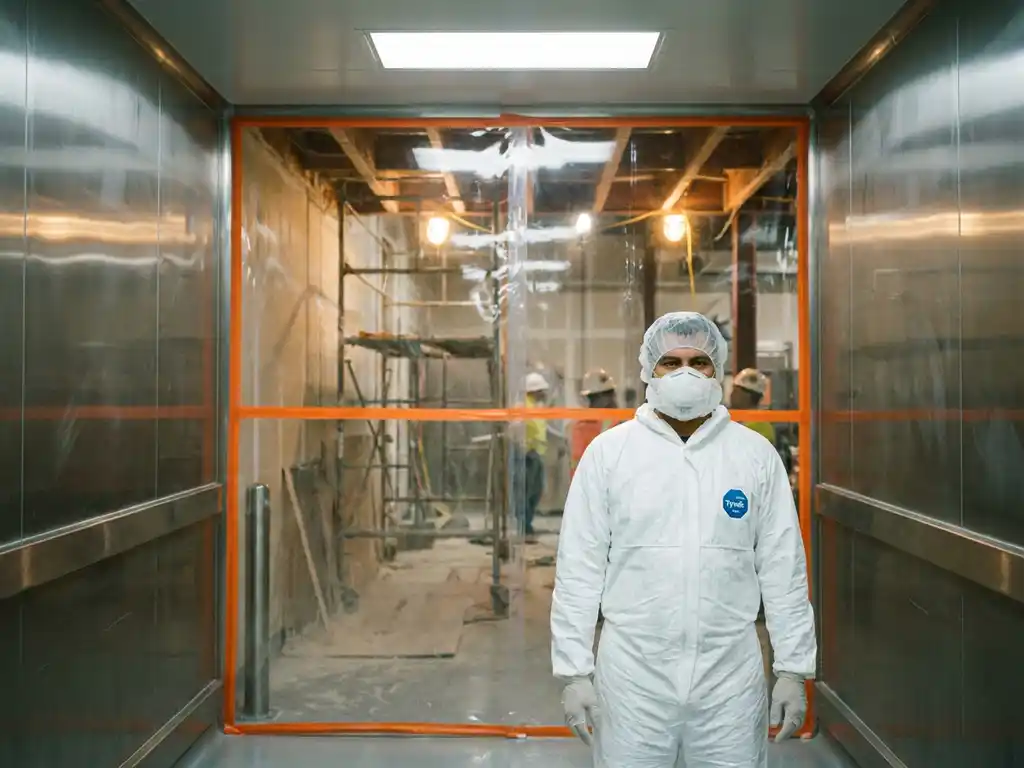
Food manufacturers manage contamination risk during facility expansion by implementing structured contamination control strategies at every new entry point, traffic route, and production zone before operations begin. Expansion inherently introduces new vectors for contamination: unfamiliar workflows, temporary access routes, and increased foot and vehicle traffic all elevate risk. The sections below address the most critical questions facility managers face when scaling up food production.
What contamination risks increase when a food facility expands?
Facility expansion increases contamination risk primarily by multiplying the number of uncontrolled entry points, disrupting established hygiene routines, and introducing construction debris, additional personnel, and new equipment into or adjacent to active production areas. Each new doorway, corridor, or loading zone becomes a potential pathway for particulates, pathogens, and allergens to enter controlled spaces.
During construction or fit-out phases, airborne dust and fine particulates are a persistent concern. Workers moving between construction zones and food production areas can transfer contaminants on footwear and clothing without realising it. Temporary access routes that bypass normal hygiene checkpoints are particularly high-risk because they lack the contamination barriers that permanent entry points have established over time.
Once the expansion is operational, the increased volume of foot traffic and wheeled equipment introduces a proportionally higher contamination load at floor level. Industry experience consistently shows that the majority of contaminants entering controlled environments do so at floor level, carried in on shoes and wheels. A larger facility with more personnel and more vehicle movement amplifies this risk considerably if the contamination control infrastructure does not scale alongside the operation.
How does facility expansion affect GMP compliance and audits?
Facility expansion directly affects GMP compliance by creating new zones, workflows, and personnel movements that must be validated, documented, and controlled before they can be considered compliant. Any change to a facility’s layout or operational footprint typically triggers a re-evaluation of contamination control procedures under GMP frameworks, including those set by the FDA, BRC, and ISO standards relevant to food production.
Auditors examining an expanded facility will scrutinise whether new entry points have adequate hygiene controls, whether personnel flow maps have been updated, and whether contamination monitoring data covers the new zones. Gaps in any of these areas can result in non-conformances, even if the original facility was fully compliant before the expansion.
The administrative burden is significant. Quality and EHS managers must update Standard Operating Procedures, retrain staff on revised hygiene protocols, and ensure that any new contractors or suppliers operating on site meet the facility’s contamination standards. Failing to treat the expanded footprint as a new compliance challenge, rather than simply an extension of the existing one, is one of the most common mistakes food manufacturers make during growth phases.
What contamination control methods are used at new facility entry points?
At new facility entry points, food manufacturers typically deploy a combination of physical barriers, hygiene protocols, and surface-level contamination capture systems. The most effective approaches address contamination at the point of entry rather than attempting to manage it once it has spread into the production environment.
Common methods include:
- Contamination control matting positioned at pedestrian and vehicle entry points to capture particulates from footwear and wheels before they enter controlled zones
- Gowning procedures requiring personnel to change footwear or apply covers before entering production areas
- Air pressure differentials and airlocks at critical boundaries to prevent airborne particulate migration
- Cleaning and disinfection stations at entry points for hands, footwear, and equipment
- Signage and zoning systems that clearly define controlled areas and enforce directional flow
Of these, floor-level contamination control is often the most cost-effective first line of defence. Reusable polymeric mats engineered to attract and retain particulates can capture contaminants from both foot traffic and wheeled equipment consistently across every shift, without relying on personnel compliance in the same way that manual hygiene steps do.
How do reusable contamination control mats work in food production environments?
Reusable contamination control mats work by using a high-friction polymeric surface that attracts, captures, and retains particulates from shoe soles and wheels as personnel and equipment pass over them. Unlike disposable sticky mats that rely on adhesive layers, reusable mats maintain their performance through regular cleaning and are engineered to function consistently across years of use.
In food production environments specifically, the mats serve a dual purpose. First, they physically remove particulates, including dust, debris, and allergen-carrying particles, from footwear and vehicle tyres at entry points. Second, mats incorporating Biomaster silver-ion antimicrobial technology actively inhibit microbial growth on the mat surface itself, reducing the risk of the mat becoming a secondary contamination source.
The practical advantages in a food facility context are considerable. Reusable mats can be washed and returned to service quickly, minimising operational disruption. They are available in formats suited to pedestrian corridors, gowning rooms, and heavy-traffic vehicle routes, meaning a single supplier can address contamination control needs across the entire facility footprint. Their long service life, typically three to five years, also reduces the volume of single-use plastic waste generated compared to disposable peel-off mat programmes, supporting a facility’s broader sustainability commitments.
When should contamination control infrastructure be installed during an expansion project?
Contamination control infrastructure should be installed before the expanded zones become operational, not after. Waiting until production begins in new areas means the facility is accepting uncontrolled contamination risk during the critical commissioning period, which can compromise product safety and complicate GMP validation.
The most effective approach is to treat contamination control as part of the facility design and commissioning process rather than a post-fit-out addition. This means:
- Planning entry point controls during the design phase so that matting zones, gowning areas, and hygiene stations are built into the layout rather than retrofitted
- Installing temporary contamination controls at construction access points during the build phase to prevent debris migrating into active production areas
- Commissioning permanent contamination control systems before the first production run in any new zone, so that baseline cleanliness data can be established
- Validating the controls as part of the site’s GMP documentation before the expanded area is included in regulatory audits
Facilities that integrate contamination control into the project timeline from the outset consistently find it easier to achieve audit readiness in new zones and avoid the disruption of retrofitting controls around live production equipment.
What should food manufacturers look for in a contamination control supplier?
Food manufacturers should look for a contamination control supplier that combines validated product performance, regulatory compliance credentials, and the ability to provide consultative support tailored to the facility’s specific layout and risk profile. A supplier that only fulfils orders without understanding how a facility operates is unlikely to deliver optimal contamination outcomes.
Key criteria to evaluate include:
- Proven performance data demonstrating particulate capture effectiveness across relevant traffic types
- ISO-certified manufacturing to EN ISO 9001 and 14001 standards, confirming consistent product quality and environmental responsibility
- Regulatory compliance with standards relevant to food production, including EU REACH and applicable regional requirements
- Product range depth covering pedestrian zones, vehicle routes, and specialist areas within a single facility
- Long-term value through durable, reusable products that reduce total cost of ownership compared to recurring disposable mat programmes
- Consultative capability including site surveys, layout advice, and ongoing technical support
Suppliers with experience across regulated industries, pharmaceuticals, medical devices, aerospace, bring a level of contamination control expertise that translates directly into food production environments, where the consequences of contamination are equally serious.
How Dycem helps with food manufacturing contamination control
Dycem’s reusable contamination control mats are purpose-built to address the challenges food manufacturers face during facility expansion and day-to-day operations. Key benefits include:
- Capture and retention of up to 99.9% of shoe and wheel-borne contaminants at entry points
- Built-in Biomaster silver-ion antimicrobial technology that inhibits microbial growth by up to 99.9% on the mat surface
- A product range covering pedestrian zones (Dycem CleanZone), heavy vehicle routes (Dycem WorkZone), and flexible or temporary areas (Dycem Floating Mats)
- A 3 to 5 year product lifespan that significantly reduces single-use plastic waste compared to disposable sticky mat alternatives
- ISO-certified manufacturing to EN ISO 9001 and 14001 standards, with EU REACH and California Proposition 65 compliance
- Free site surveys and consultative support from contamination control specialists to help facilities design the right solution for their layout and traffic flows
Whether you are commissioning a new production zone or replacing an underperforming legacy solution, Dycem’s team can help you build a contamination control strategy that supports GMP compliance and long-term operational performance. Contact Dycem today to arrange a free site survey.