

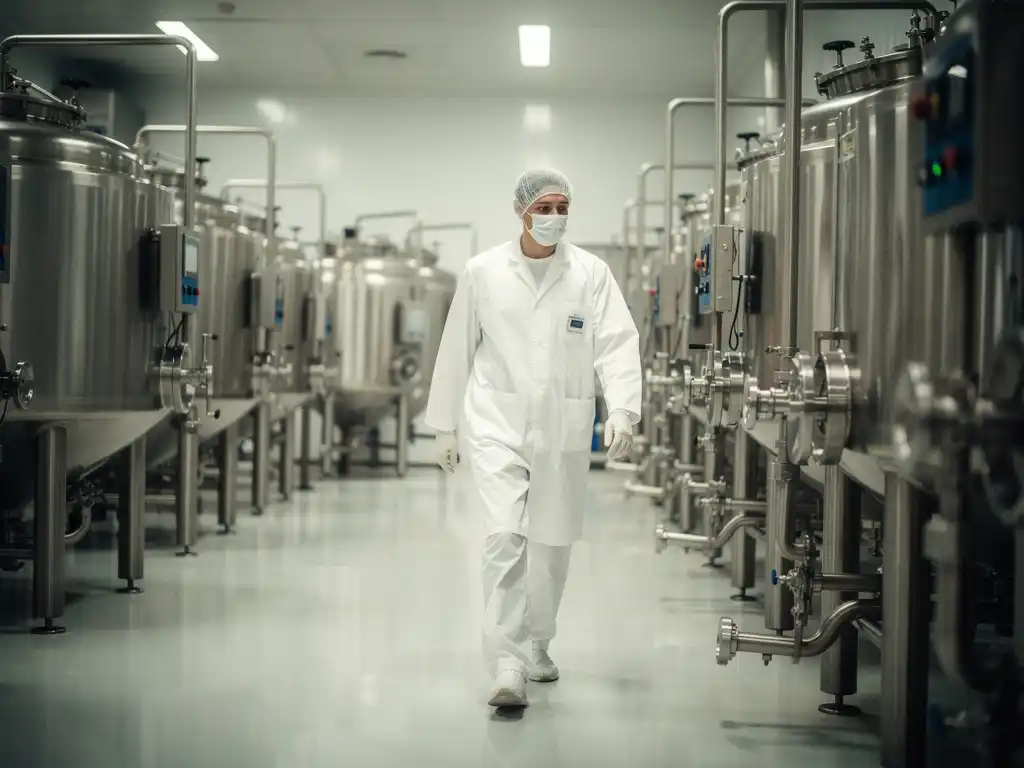
Building a contamination control culture in food manufacturing requires leadership commitment, clear procedures, consistent staff training, and physical controls at every contamination entry point. Culture is not a policy document; it is the sum of daily habits, team behaviours, and facility design choices that either prevent contamination or allow it to spread. The sections below address the most common questions facilities managers face when trying to move from reactive contamination management to a proactive, team-wide culture.
Why do food manufacturing teams struggle with contamination discipline?
Food manufacturing teams struggle with contamination discipline because contamination risks are often invisible, and the consequences of poor practice are delayed rather than immediate. When nothing visibly goes wrong after a shortcut, teams stop associating the behaviour with risk. This disconnect between action and consequence is the root cause of most contamination culture failures in food production environments.
Several compounding factors make the problem worse. High staff turnover in food manufacturing means contamination control training is frequently incomplete or inconsistently delivered. Shift-based working creates gaps in supervision, and when team leads are not present, standards drift. Facilities that rely on passive controls — signs, floor markings, verbal reminders — without reinforcing them with physical barriers or validated systems are particularly vulnerable.
There is also a compliance mindset problem. When GMP food manufacturing requirements are framed purely as audit obligations rather than operational necessities, staff treat them as tick-box exercises. The goal of building a genuine contamination control culture is to shift that perception so that every team member understands why the standard exists, not just what it requires.
What does a contamination control culture actually look like in practice?
A contamination control culture in food manufacturing is one where every person on the floor understands their role in preventing contamination, follows procedures consistently without supervision, and raises concerns when they observe non-compliance. It is visible in the physical environment, embedded in onboarding, and reinforced through regular team communication rather than annual training events.
In practical terms, this means contamination prevention is built into the facility layout itself. Entry points have validated physical controls. Gowning procedures are standardised and audited. Cleaning schedules are documented and followed. When a new team member joins, contamination awareness is part of day one induction, not a later add-on.
Strong contamination cultures also have clear accountability. Quality and EHS managers set the standards, but team leaders own them on the floor. When a contamination event occurs, the response focuses on root cause and systemic improvement rather than individual blame. This approach sustains long-term discipline far more effectively than enforcement alone.
How do you train food manufacturing staff on contamination control?
Effective contamination control team training in food manufacturing combines role-specific instruction, practical demonstration, and regular reinforcement. Training should be delivered at induction, repeated at defined intervals, and updated whenever procedures or facility layouts change. Generic food hygiene training is not sufficient — staff need to understand the specific contamination risks at their workstation and entry point.
The most effective training programmes include the following elements:
- Role-specific content: A forklift operator has different contamination responsibilities than a cleanroom operative. Training must reflect the actual risks each person encounters.
- Visual and practical demonstration: Showing how particles travel on footwear or wheels is more memorable than a slide presentation. Where possible, use visual aids or controlled demonstrations at entry points.
- Scenario-based learning: Present real contamination events from the food industry (without identifying specific companies) and ask teams to identify where controls failed.
- Refresher cycles: Annual recertification alone is insufficient. Brief monthly reminders, toolbox talks, or visual prompts at entry points maintain awareness between formal sessions.
- Clear ownership: Assign contamination control responsibilities to named individuals at each shift level. Accountability drives consistency.
Training should also address the reasoning behind each control. Staff who understand that up to 80% of contaminants enter controlled environments at floor level are far more likely to take entry-point discipline seriously than those who are simply told to follow a rule.
Which contamination entry points should food facilities prioritise first?
Food facilities should prioritise pedestrian and wheeled vehicle entry points as their first contamination control focus, because these are the primary routes by which external particulates, pathogens, and debris enter controlled production areas. Floor-level contamination accounts for the majority of contamination events in food manufacturing, making entry point management the highest-leverage intervention available.
The entry points that consistently present the greatest risk include:
- Main personnel entry points: Where staff transition from non-controlled to controlled zones, including gowning areas, airlocks, and production floor entrances.
- Raw material intake areas: Where incoming goods, packaging, and ingredients enter the facility, often via loading docks or goods-in areas with heavy wheeled traffic.
- Internal zone transitions: Movement between areas of different hygiene classification within the same facility — for example, between a preparation area and a high-care production zone.
- Maintenance access routes: Engineering and maintenance staff often move between external and internal environments carrying tools and equipment that have not been through standard gowning protocols.
Once the highest-risk entry points are identified, facilities should implement validated physical controls at each one. A contamination control mat positioned at each transition point provides a consistent, passive barrier that captures particulates from footwear and wheels before they enter the production environment — without relying on staff compliance at every step.
What’s the difference between reusable contamination mats and disposable sticky mats?
The key difference between reusable contamination mats and disposable sticky mats is long-term performance and total cost of ownership. Disposable sticky mats require frequent replacement, generate significant single-use plastic waste, and lose effectiveness as layers are peeled away. Reusable contamination control mats are engineered to perform consistently for three to five years, capturing particulates through a polymeric surface rather than adhesive layers.
Performance consistency
Disposable sticky mats degrade with every layer removed. If a layer is not peeled promptly, the adhesive surface becomes saturated and stops capturing contaminants effectively. Reusable mats maintain their particulate capture performance throughout their lifespan when cleaned according to the manufacturer’s protocol. This consistency is critical in food manufacturing environments where contamination control cannot be conditional on how recently a mat was changed.
Cost and sustainability
The recurring purchase and disposal cost of sticky mats accumulates significantly over time. Reusable mats require a higher upfront investment but deliver a substantially lower total cost over a three-to-five-year period. From a sustainability perspective, reusable mats are the more responsible option, eliminating the continuous generation of single-use plastic waste that disposable alternatives create. For facilities with ESG commitments or regulatory pressure around waste reduction, this distinction is increasingly relevant in 2026.
Reusable mats such as Dycem CleanZone also incorporate Biomaster silver-ion antimicrobial technology, which inhibits microbial growth by up to 99.9% — a capability that disposable sticky mats do not offer.
How do you measure whether your contamination control programme is working?
You measure the effectiveness of a food manufacturing contamination control programme by tracking a combination of environmental monitoring data, audit outcomes, contamination incident rates, and physical control performance. No single metric tells the full story — effective measurement combines quantitative data with regular operational review.
The most useful indicators include:
- Environmental monitoring results: Swab testing and particle counts at defined points within the facility provide objective data on contamination levels over time. A declining trend following the introduction of new controls confirms their effectiveness.
- Audit and inspection outcomes: Internal GMP audits and third-party inspections provide structured assessments of whether procedures are being followed. Recurring findings in the same area indicate a systemic gap rather than an isolated incident.
- Contamination incident frequency: Track the number of contamination-related events, product holds, or quality failures per period. Reduction over time is a meaningful indicator of programme improvement.
- Entry point compliance rates: Observation-based audits of whether staff and vehicles are correctly using designated entry points and contamination controls. Low compliance rates signal a training or culture gap rather than a procedure gap.
- Mat condition and cleaning frequency: For facilities using reusable contamination control mats, tracking cleaning schedules and mat condition confirms that physical controls are being maintained at the performance level they were designed to deliver.
Review these metrics on a regular cycle — monthly for environmental data, quarterly for trend analysis — and share findings with team leaders. Transparency about performance data drives accountability and reinforces the importance of contamination discipline at every level of the organisation.
How Dycem helps with food manufacturing contamination control
Dycem’s reusable contamination control mats are trusted by food manufacturers worldwide to provide consistent, validated protection at the entry points that matter most. Here is how Dycem supports contamination prevention in food production programmes:
- Captures up to 99.9% of shoe and wheel-borne contaminants at facility entry points
- Biomaster silver-ion antimicrobial technology inhibits microbial growth by up to 99.9%
- CleanZone mats are engineered for pedestrian and light-wheeled traffic zones including production entrances, gowning areas, and critical corridors
- WorkZone mats handle heavy-wheeled traffic including forklifts and pallet trucks, with a lifespan exceeding three years
- ISO-certified manufacturing to EN ISO 9001 and 14001 standards, with EU REACH and California Proposition 65 compliance
- Reusable construction eliminates the ongoing cost and plastic waste of disposable sticky mats
- Customisable in size, format, and colour to suit any facility layout or zone classification
Dycem’s contamination control specialists provide consultative support from initial site assessment through to installation and ongoing performance review. To discuss your facility’s requirements and arrange a free site survey, contact the Dycem team today.