

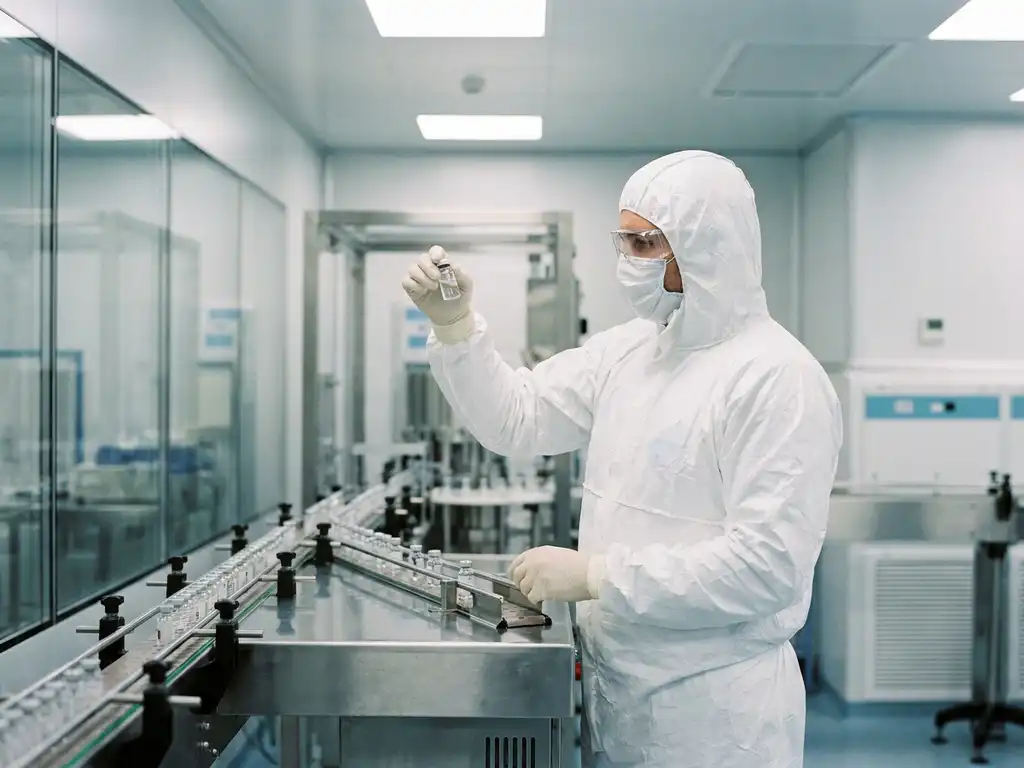
Packaging materials are a significant and often underestimated source of contamination in sterile fill lines. Primary containers such as vials, ampoules, stoppers, and blister films can introduce particulate matter, microbial load, and chemical residues directly into drug products if not properly managed. Understanding how different materials contribute to contamination risk is essential for any pharmaceutical quality or manufacturing team operating in a regulated fill-finish environment.
Which packaging materials pose the highest contamination risk in sterile fill lines?
The packaging materials that pose the highest contamination risk in sterile fill lines are rubber closures, glass vials, plastic primary containers, and laminate films. These materials are in direct or near-direct contact with the drug product and can shed particles, harbour microbial contamination, or leach chemical compounds if not correctly processed, stored, or handled before use.
Rubber stoppers and elastomeric closures are among the most consistently identified risk materials. Their surface texture and composition make them prone to particulate shedding, and they require thorough washing, siliconisation, and sterilisation to meet acceptable cleanliness standards. Glass vials, while chemically inert in most applications, can generate glass particles during manufacturing or transport, particularly at contact points between containers. Delamination, a process where the inner surface of a glass vial sheds thin flakes into the product, is a recognised failure mode in certain glass formulations.
Plastic primary containers, including prefilled syringe barrels and polymer vials, introduce a different set of concerns. Depending on the resin type, they may leach additives, plasticisers, or antioxidants into the drug product over time. Laminate foil packaging used in blister lines presents a contamination risk through adhesive migration, print layer off-gassing, and particulate generation during the sealing and cutting process.
How do packaging materials introduce particles into sterile fill environments?
Packaging materials introduce particles into sterile fill environments through physical abrasion, shedding, delamination, and inadequate pre-treatment. Every time a component moves along a fill line, contact between surfaces generates microscopic debris. This debris can enter open containers, contaminate product contact surfaces, or accumulate in the surrounding cleanroom environment.
The fill-finish process involves high-speed mechanical handling of vials, stoppers, and closures. Conveyor systems, bowl feeders, and stopper insertion equipment all create friction between components. This friction generates particulate matter that, without adequate environmental controls, migrates into the critical zone where drug product is exposed.
Pre-treatment processes such as depyrogenation tunnels and washing systems reduce but do not eliminate particulate risk. Components that are improperly stored after washing, or transported through inadequately controlled environments before reaching the fill line, can accumulate contamination before they ever reach the product. Packaging materials arriving from external suppliers also carry environmental contamination from transit and warehousing, making incoming material management a critical control point in any contamination control strategy.
What are extractables and leachables, and why do they matter in fill finish operations?
Extractables are chemical compounds that can be released from packaging materials under controlled laboratory conditions, typically using aggressive solvents or elevated temperatures. Leachables are the subset of those compounds that actually migrate into a drug product under normal storage and use conditions. In fill-finish operations, leachables matter because they can compromise drug product safety, efficacy, and regulatory approval.
Regulatory agencies including the FDA and EMA require pharmaceutical manufacturers to characterise the extractables and leachables profile of all primary packaging components. This requirement applies to rubber stoppers, plastic containers, syringe components, and any material in direct contact with the drug product. The concern is not purely theoretical. Leachable compounds have been linked to patient safety incidents, product recalls, and failed regulatory submissions.
The risk is particularly acute for biologics, protein-based therapies, and sensitive small molecules, where even trace levels of leached compounds can cause degradation, aggregation, or immunogenic responses. Manufacturers must conduct extractables and leachables studies early in product development, using formulation-specific conditions, to ensure that chosen packaging systems are compatible with the intended drug product throughout its shelf life.
How does packaging material handling affect contamination levels on the fill line?
Packaging material handling directly affects contamination levels on the fill line by determining how much environmental contamination components accumulate before they reach the critical zone. Poor handling practices, including inadequate gowning at transfer points, improper debagging procedures, and movement through uncontrolled corridors, introduce contamination that pre-treatment processes cannot fully address.
Transfer of materials from unclassified areas into Grade C, B, or A environments is a high-risk operation. Each transfer represents an opportunity for particles, microbes, and chemical residues to enter the controlled space. Best practice requires staged debagging, where outer packaging layers are removed at successive environmental boundaries, and surface decontamination at each transition point.
Personnel handling is equally significant. The way operators pick up, position, and load components onto the fill line determines how much contact-generated contamination enters the process. Poorly trained or inadequately gowned personnel are a consistent source of microbial and particulate contamination in fill-finish environments. Facility entry points, including gowning rooms, airlocks, and material transfer corridors, are critical control zones where contamination introduced on footwear and wheeled equipment can be tracked directly into classified areas.
What contamination control measures reduce packaging-related risk in sterile manufacturing?
The contamination control measures that most effectively reduce packaging-related risk in sterile manufacturing are component pre-treatment validation, environmental monitoring, personnel training, and robust facility entry controls. No single measure is sufficient in isolation. Effective contamination control requires a layered approach that addresses material, personnel, and environmental sources simultaneously.
- Component washing and sterilisation validation: Washing cycles for vials and stoppers must be validated to demonstrate consistent removal of particulate and microbial contamination, with regular revalidation when parameters or suppliers change.
- Environmental monitoring programmes: Continuous or periodic monitoring of airborne particulate and microbial levels in classified zones provides early warning of contamination events linked to material or process changes.
- Incoming material controls: Supplier qualification, certificate of analysis review, and incoming inspection reduce the risk of substandard components entering the process.
- Staged material transfer procedures: Removing successive layers of outer packaging at environmental boundaries prevents external contamination from being carried into higher-grade areas.
- Facility entry contamination control: Controlling what enters the facility at the floor level is a foundational measure. Footwear and wheeled equipment are primary vectors for particle transfer into controlled environments, and managing these entry points reduces the overall contamination burden throughout the facility.
Dycem contamination control mats support this layered approach by capturing up to 99.9% of shoe and wheel-borne contaminants at facility entry points, gowning rooms, airlocks, and material transfer corridors. The Dycem CleanZone mat, designed specifically for pedestrian and light-wheeled traffic in critical environments, provides a reusable, antimicrobial barrier that outperforms disposable sticky mat alternatives in both performance and sustainability. Unlike single-use peel-off mats, Dycem mats are washable, carry built-in Biomaster antimicrobial protection, and deliver consistent performance across a three to five year lifespan, reducing both operational disruption and environmental waste.
- Reusable polymer construction with built-in antimicrobial technology
- Captures particulate contamination from footwear and wheeled equipment before it reaches the fill line
- Available in formats suited to gowning rooms, airlocks, and material corridors
- ISO-certified manufacturing for audit-ready quality assurance
- Significantly reduces single-use plastic waste compared to disposable mat programmes
To find out how Dycem can support your sterile fill-finish facility’s contamination control programme, request a free site survey from a contamination control specialist.
How do regulatory bodies like FDA and EMA evaluate packaging contamination risks?
The FDA and EMA evaluate packaging contamination risks through a combination of guidance documents, pharmacopoeial standards, and pre-approval inspection requirements. Both agencies expect manufacturers to demonstrate that primary packaging materials are suitable for their intended use, do not adversely affect the drug product, and are manufactured and controlled under conditions that prevent contamination.
The FDA’s guidance on container closure systems for packaging human drugs and biologics sets out expectations for packaging integrity, compatibility, and safety testing. The agency requires extractables and leachables assessments, particulate matter testing, and container closure integrity testing as part of the Chemistry, Manufacturing, and Controls section of a New Drug Application or Biologics License Application.
The EMA aligns closely with ICH guidelines, particularly ICH Q8, Q9, and Q10, which address pharmaceutical development, quality risk management, and pharmaceutical quality systems respectively. EMA inspectors evaluate packaging contamination controls as part of Good Manufacturing Practice inspections, reviewing batch records, environmental monitoring data, and validation documentation to assess whether contamination risks have been identified and adequately managed.
Both agencies take a risk-based approach, meaning that higher-risk products and processes, such as injectable biologics or ophthalmic preparations, face greater scrutiny than lower-risk dosage forms. Manufacturers who cannot demonstrate robust contamination control across the entire fill-finish process, including packaging material management, are at risk of receiving observations, warning letters, or delayed product approvals. Maintaining a well-documented, evidence-based contamination control programme is therefore not only a quality imperative but a direct commercial and regulatory necessity.