

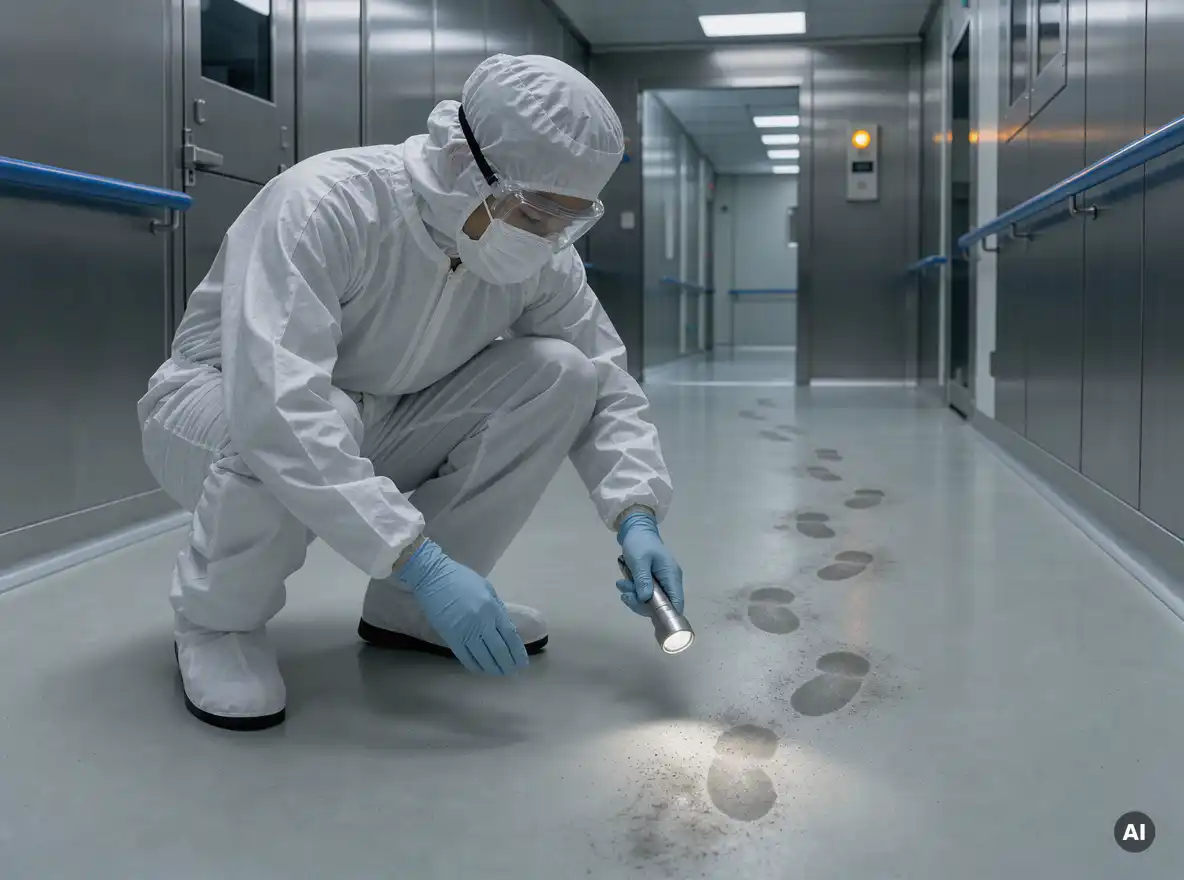
A contamination control mat needs replacing when it has significant physical damage, irreversible surface deterioration, or a verified loss of particle collection performance that cleaning cannot restore. A dirty mat does not automatically need replacing, because a reusable Dycem mat that looks soiled is often just due for cleaning. Judging the condition of the mat matters more than judging its age.
Getting this decision right protects floor contamination control, floor hygiene, and budget alike. The questions below separate cleaning from repair, testing, and replacement.
What visible signs show a mat is worn out?
A worn-out contamination control mat typically shows significant physical damage, such as deep cuts or tears, lifting or curling edges, or a surface that has deteriorated and no longer recovers after correct cleaning. These signs suggest the mat may no longer protect your floor reliably.
Look for these indicators during routine checks:
- Edges that lift, curl, or no longer lie flat, which also creates a trip hazard and weakens floor safety
- Deep gouges, tears, or areas where the surface has broken down
- Persistent performance problems that remain after the mat has been cleaned using the correct procedure
- Findings from a professional inspection or performance test that indicate deterioration
Not every mark is a warning sign. Footprints, scuff marks, and ordinary dirt accumulation are expected on a mat doing its job. Some minor damage may also be repairable following Dycem’s product-specific guidance, so it is worth checking before assuming replacement is the only option.
Does a clean-looking mat still capture contaminants?
Not necessarily. A mat can look clean and still have reduced particle collection performance, just as a visibly dirty mat can still perform well once cleaned. Appearance alone is an unreliable guide to contamination control mat performance, which is why objective testing is the most dependable way to judge effectiveness.
Surface performance can be affected by accumulated contamination or by cleaning products that are not approved for the mat. Both can reduce tackiness temporarily without meaning the mat has reached the end of its life. This is why following Dycem’s approved cleaning procedures should come before concluding that a mat has failed. The Dycem cleaning guidance sets out the correct methods, and it is worth applying them before drawing conclusions about performance.
It is equally important to avoid unapproved chemicals and abrasive cleaning methods. Using them can harm a functioning mat and create a problem that did not previously exist.
How often should mats be inspected and cleaned?
Mats should be inspected regularly as part of a facility’s contamination control routine, with cleaning carried out according to Dycem’s approved procedures and the level of traffic and soiling in each area. There is no single universal interval, because busy entrances collect contamination faster than low-traffic zones.
Build inspection into existing cleaning or audit rounds so that edges, surface condition, and visible damage are checked consistently. In facilities with formal contamination control procedures, document each cleaning, inspection, and test result. A clear record shows whether a performance issue followed a lapse in maintenance or developed despite correct care, which makes any later replacement decision far easier to justify.
Good Dycem mat maintenance also supports wider floor hygiene, because a mat that is cleaned correctly and inspected routinely keeps working at the point where contamination enters.
How does mat type affect replacement timing?
Mat type affects replacement timing because each product is built for different traffic and wear. CleanZone is designed for pedestrian and light-wheeled traffic, WorkZone for heavy-wheeled traffic such as forklifts and pallet trucks, and Floating Mats for movable, loose-laid use.
Dycem commonly reports an expected lifespan of approximately 3 to 5 years for its reusable mats, depending on product type, usage, traffic, maintenance, and operating conditions. This is a general expectation, not a guaranteed replacement deadline, and it should not be applied identically to every product.
A mat in a lightly used gowning room and one crossed by loaded pallet trucks every shift will not age at the same rate. For that reason, actual condition and measured performance are better replacement indicators than age alone. Replacement criteria, cleaning instructions, and specifications should always be checked against the specific product installed. Antimicrobial technology also does not prevent physical wear or remove the need for cleaning, so it should not be treated as a reason to skip inspection.
What happens if a worn mat stays in use?
A worn or underperforming mat can allow particulates to pass into a controlled area, weakening floor protection at the very point it is meant to stop contamination. It may also create safety risks, particularly where edges lift or curl.
The consequences affect several priorities at once:
- Contamination risk: reduced particle capture at entry points puts hygiene and product integrity under pressure
- Floor safety: lifting edges can cause trips, especially in busy corridors and airlocks
- Audit readiness: an unmonitored mat is harder to defend during quality reviews
The opposite error carries a cost too. Replacing a functioning reusable mat simply because it looks dirty wastes resources and undermines the sustainability advantage of reusable mats over disposable alternatives. The aim is a measured decision, not a reflex in either direction.
When should a facility get expert advice?
A facility should seek expert advice when performance remains uncertain after correct cleaning, when damage appears that might be repairable, or when the reasons for considering replacement are unclear. Objective testing removes guesswork from the decision.
Dycem’s Particle Collection Efficiency Test (PCET) evaluates how well an installed mat is collecting particles and helps identify deterioration over time. Dycem offers complimentary annual PCET assessments for applicable installed products, particularly CleanZone and WorkZone. Under Dycem’s published testing guidance, a measured efficacy below 50% leads to a recommendation for replacement. This threshold comes from Dycem’s testing programme and is not a universal cleanroom regulatory requirement. Mat performance should always be assessed within a facility’s wider contamination control strategy.
A practical decision framework looks like this:
- Clean the mat when contamination buildup is the likely cause of reduced tackiness.
- Request a professional assessment when performance remains uncertain after proper cleaning.
- Seek repair advice when minor damage may be repairable under Dycem’s product guidance.
- Consider replacement when significant damage, persistent underperformance, or test findings justify it.
Answers to common product questions are also available in the Dycem FAQs.
Make the replacement decision with evidence
Dirt on a reusable mat is a cue to clean it, not a verdict on its lifespan. Physical damage, persistent underperformance after correct cleaning, and verified test results are what justify replacement. To confirm whether your installed mats still perform, arrange a complimentary Particle Collection Efficiency Test before replacing a reusable mat unnecessarily.
Frequently Asked Questions
How do I get started with a mat inspection program if we don't have one yet?
Start by listing every contamination control mat in your facility, noting the product type (CleanZone, WorkZone, or Floating Mat), its location, and its installation date if known. Add a simple checklist to your existing cleaning or audit rounds covering edge condition, surface damage, and cleaning status. Record each check, cleaning, and test result so you build a history that supports future repair or replacement decisions.
What should I do if my mat looks dirty but I'm not sure whether to clean or replace it?
Clean it first using Dycem’s approved cleaning procedures, since visible dirt on a reusable mat is usually a sign it needs cleaning, not replacing. After cleaning, check for physical damage such as lifting edges, tears, or a surface that has not recovered. If performance still seems uncertain, request a Particle Collection Efficiency Test (PCET) rather than guessing.
Can I use stronger cleaning products to restore a mat that has lost its tackiness?
No. Unapproved chemicals and abrasive methods can damage a mat that would otherwise work well, and some products can temporarily reduce tackiness or leave residue. Stick to the methods in Dycem’s cleaning guidance, and only draw conclusions about performance once the mat has been cleaned correctly.
Is minor damage always a reason to replace a mat?
Not always. Some minor damage may be repairable under Dycem’s product-specific guidance, so contact Dycem or check the guidance for your installed product before ordering a replacement. Significant damage, such as deep gouges, tears, or edges that no longer lie flat, is more likely to justify replacement, especially where it creates a trip hazard.
What if my mat is older than 3 to 5 years but still seems to perform well?
The 3 to 5 year figure is a general expectation, not a fixed deadline, and actual lifespan depends on product type, traffic, maintenance, and operating conditions. If the mat is undamaged and performing well, there is no need to replace it on age alone. Use routine inspections and a PCET assessment to confirm its condition and keep records to show the decision was evidence-based.
What does a PCET result below 50% mean, and is it a regulatory requirement?
Under Dycem’s published testing guidance, a measured efficacy below 50% leads to a recommendation to replace the mat. This threshold comes from Dycem’s testing programme and is not a universal cleanroom regulatory requirement. Treat the result as one input within your wider contamination control strategy, alongside visual inspection and your own quality standards.
How should I document mat checks so they stand up during an audit?
Record the date, location, mat type, inspection findings, cleaning carried out, and any PCET results for each mat. Note any corrective actions, such as repair advice sought or replacement decisions, along with the reasons. A consistent record shows whether a performance issue followed a maintenance lapse or developed despite correct care, which makes replacement decisions easier to justify to auditors.