

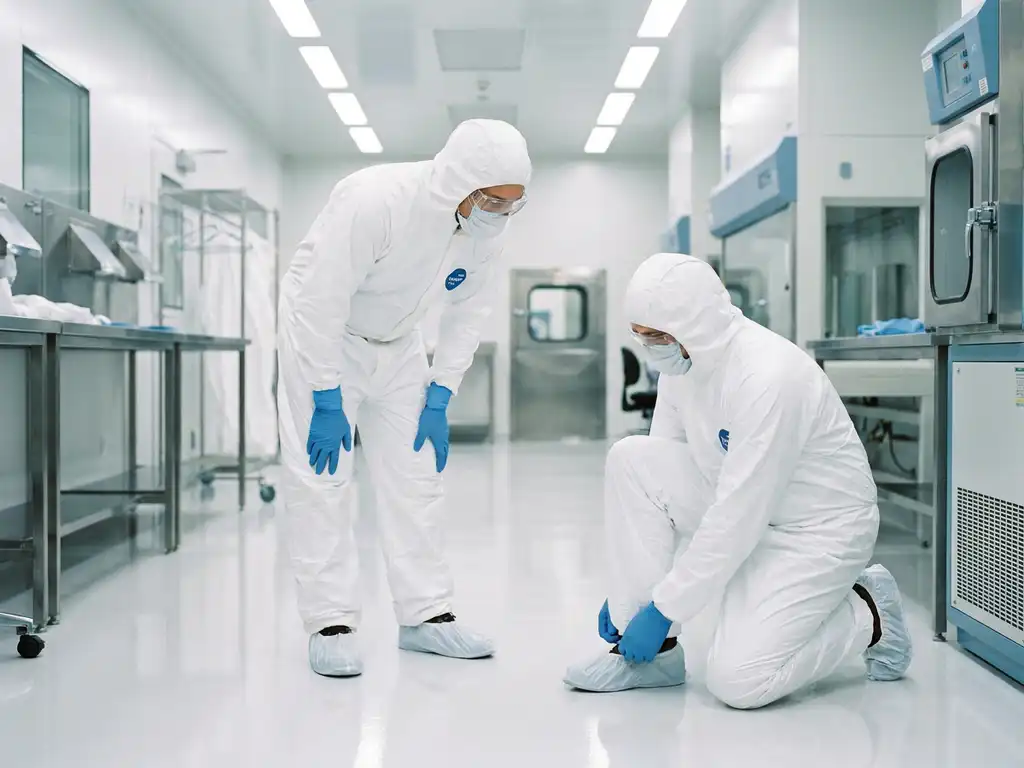
Effective cleanroom staff training on contamination prevention in 2026 combines structured onboarding, regular refresher sessions, and practical, role-specific instruction. Staff should be trained before entering any controlled environment, retrained at least annually, and assessed through observable behaviour and environmental monitoring data. The sections below address the most common questions facilities managers ask when building or reviewing a contamination control training programme.
What are the biggest contamination risks that cleanroom staff introduce?
People are the single largest source of contamination in cleanrooms and controlled environments. Human activity generates particles continuously, from skin shedding and hair loss to respiratory droplets and clothing fibres. Even well-intentioned staff can introduce contaminants through improper gowning, incorrect movement patterns, or inadequate footwear discipline.
The most significant contamination risks that staff introduce include:
- Skin particles and oils released during normal movement, which increase sharply with physical exertion or rapid movement
- Clothing fibres shed from street clothes worn under or instead of proper cleanroom garments
- Footwear contamination tracked in from corridors, gowning rooms, and external environments at floor level
- Respiratory aerosols generated by talking, coughing, or sneezing inside controlled zones
- Hand contact transferring oils, lotions, or external particulates to surfaces and equipment
- Incorrect gowning sequence that defeats the purpose of cleanroom attire by reintroducing contaminants
Industry experience consistently shows that floor-level transfer is responsible for a disproportionate share of contamination events, with up to 80% of particulates entering controlled spaces through shoe and wheel contact. This makes entry point discipline one of the highest-priority areas in any training programme.
What topics should a cleanroom contamination training programme cover?
A cleanroom contamination training programme should cover gowning procedures, personal hygiene standards, movement protocols, entry and exit discipline, equipment handling, and the facility’s specific contamination control policies. Effective programmes also explain the reasons behind each requirement, not just the rules, so staff understand what they are protecting and why compliance matters.
Core topics to include in a comprehensive programme:
- Gowning and degowning procedures specific to the facility’s cleanroom classification
- Personal hygiene requirements including restrictions on cosmetics, lotions, and jewellery
- Correct movement behaviour such as slow, deliberate motion to minimise particle generation
- Entry and exit protocols covering airlocks, gowning rooms, and contamination control mat usage
- Equipment and material transfer procedures to avoid introducing external contaminants
- Regulatory context including GMP requirements, ISO cleanroom classifications, and FDA expectations relevant to the facility
- Incident reporting so staff know how to flag potential contamination events without hesitation
For facilities operating in pharmaceuticals, medical devices, or food and beverage production, training content should also address the specific hygiene compliance requirements set by relevant regulatory bodies. Aligning training content with audit expectations reduces the risk of non-conformance findings during inspections.
How often should cleanroom staff be retrained on contamination prevention?
Cleanroom staff should receive contamination prevention retraining at least once per year, with additional sessions triggered by role changes, procedural updates, audit findings, or contamination events. Initial training before first entry is mandatory, and probationary observation periods help confirm that new staff apply what they have learned in practice.
Annual retraining is a baseline, not a ceiling. Facilities with high staff turnover, complex gowning requirements, or recent contamination incidents benefit from more frequent refreshers. Retraining is also warranted when:
- Cleanroom classification or layout changes
- New equipment or processes are introduced
- Environmental monitoring data shows unexplained particulate increases
- A member of staff returns after an extended absence
- Regulatory guidance affecting contamination control practices is updated
Documenting all training sessions, including dates, content covered, and individual assessment outcomes, is essential for demonstrating hygiene compliance during GMP and ISO audits. Training records form part of the quality management evidence that inspectors routinely request.
What training methods work best for cleanroom contamination control?
Practical, hands-on training combined with visual demonstration produces the best outcomes for cleanroom contamination control. Abstract instruction alone is rarely sufficient. Staff retain correct behaviour far more reliably when they practise gowning sequences, follow entry protocols, and observe the consequences of poor technique in a controlled setting before working in a live environment.
The most effective training methods include:
- Supervised gowning practice where trainers observe and correct technique in real time
- Video-based instruction showing correct and incorrect behaviours side by side, useful for standardising training across shifts and sites
- Particle counter demonstrations that show staff the immediate impact of incorrect movement or gowning on air quality
- Role-specific modules tailored to the contamination risks relevant to each job function, from production operatives to maintenance engineers
- Scenario-based assessments that test decision-making in realistic situations rather than multiple-choice recall
Digital learning platforms are increasingly used in 2026 to deliver consistent training across global facilities, but they work best as a complement to in-person practical sessions rather than a replacement. Behavioural competency in a cleanroom environment requires direct observation to validate.
How do you measure whether cleanroom contamination training is effective?
The effectiveness of cleanroom contamination training is measured through a combination of environmental monitoring data, observational audits, and formal competency assessments. A reduction in particulate counts, fewer contamination incidents, and improved audit outcomes over time are the most reliable indicators that training is having a meaningful effect.
Specific measurement approaches include:
- Environmental monitoring trends tracking airborne particulate levels before and after training interventions
- Gowning audits where trained observers assess staff compliance against documented procedures
- Contamination incident rates logged over time to identify patterns linked to specific teams, shifts, or entry points
- Written and practical assessments completed at the end of each training session with pass thresholds defined by the quality team
- Regulatory inspection outcomes including the frequency and severity of contamination-related non-conformances
Measurement should be ongoing rather than limited to post-training assessments. Facilities that build contamination data review into their regular quality meetings can identify emerging risks early and adjust training content before a minor issue becomes a significant event.
How does floor-level contamination control support staff training programmes?
Floor-level contamination control reinforces staff training by creating a physical system that captures contaminants at entry points, reducing the burden on individual behaviour alone. Even well-trained staff can inadvertently transfer particulates on footwear, so passive contamination control at floor level provides a consistent, reliable layer of protection that works regardless of human error.
When staff training is paired with robust physical controls at entry points, facilities benefit from:
- A visible, consistent reminder of contamination control discipline at every entry point
- Reduced reliance on perfect individual technique to achieve cleanroom hygiene targets
- Cleaner baseline environmental monitoring data that makes training effectiveness easier to measure
- Fewer contamination events attributable to footwear transfer, which supports a stronger audit record
Dycem’s range of reusable contamination control mats is designed to integrate directly into cleanroom entry protocols, supporting the training disciplines your team works hard to maintain. Key benefits include:
- Dycem CleanZone for pedestrian and light-wheeled traffic areas such as gowning rooms, airlocks, and critical corridors
- Dycem WorkZone for heavy-wheeled traffic including forklifts and pallet trucks in demanding industrial environments
- Dycem Floating Mats for flexible, repositionable coverage across variable or temporary controlled zones
- Built-in Biomaster antimicrobial protection and a 3 to 5 year lifespan, making them a sustainable alternative to disposable sticky mats
- ISO-certified manufacturing aligned with GMP, ISO, and FDA compliance requirements
To find out how Dycem’s contamination control solutions can complement your training programme, or to arrange a free site survey, contact our team today.