

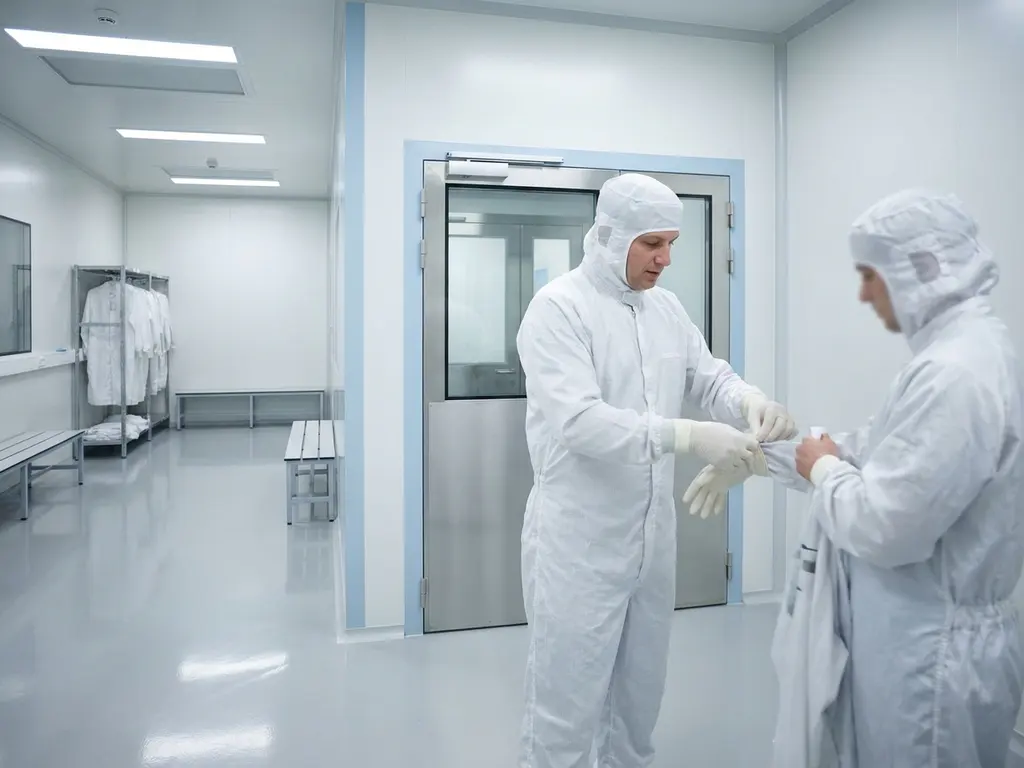
Training staff on contamination control procedures requires a structured programme that covers gowning protocols, entry and exit procedures, equipment handling, and the science behind contamination risk. Effective training combines clear written procedures, practical demonstrations, and regular competency assessments. For regulated industries such as pharmaceuticals, medical devices, and food manufacturing, contamination control training is not optional — it is a compliance requirement under GMP, ISO, and FDA frameworks.
The sections below address the most common questions facility managers ask when building or reviewing their contamination control training programmes.
What should contamination control training cover?
Contamination control training should cover the sources and pathways of contamination, correct gowning and degowning procedures, entry and exit protocols for controlled zones, equipment and material transfer procedures, cleaning and disinfection responsibilities, and the correct use of contamination control measures at facility entry points. Every element of the training should be tied directly to the facility’s contamination control plan.
In practice, a well-structured contamination control training programme addresses the following core areas:
- Contamination science: Why contamination occurs, where it originates, and how it travels through a facility. Understanding that the majority of contamination enters at floor level through foot and wheel traffic gives staff context for why entry point controls matter.
- Gowning and personal hygiene: The correct sequence for donning and doffing cleanroom garments, gloves, masks, and footwear. Mistakes in gowning order are among the most common sources of human-generated contamination.
- Zone demarcation and movement rules: How to move between controlled and uncontrolled areas, which materials may cross zone boundaries, and what actions trigger a re-gowning requirement.
- Equipment and material handling: Decontamination of tools, containers, and components before they enter controlled zones.
- Cleaning and disinfection procedures: Who is responsible for cleaning which surfaces, at what frequency, and with which approved agents.
- Incident reporting: How to identify, report, and respond to a contamination event or near miss.
Training content should be aligned with the specific risk profile of each facility. A pharmaceutical cleanroom operating under GMP will require more rigorous procedural depth than a food processing area, but the foundational principles remain consistent across regulated environments.
Who is responsible for contamination control training in a facility?
Responsibility for contamination control training typically sits with the Quality or EHS Manager, who owns the contamination control plan and ensures compliance with regulatory frameworks. In larger facilities, a dedicated training coordinator or quality systems team may manage delivery and records. However, operational responsibility extends to line managers and supervisors who reinforce correct behaviours on the floor daily.
In regulated industries, accountability for training is often formally documented. GMP guidelines, for example, require that training records are maintained and that competency is verified, not just attendance. This means the Quality Manager must not only design the programme but also ensure it is consistently delivered, assessed, and recorded in a format that satisfies auditors.
Supervisors and team leaders play a critical role in reinforcing training outcomes. Formal training sessions establish knowledge; daily supervision and immediate correction of non-compliant behaviour are what embed correct practice. Facilities that treat contamination control training as the sole responsibility of the quality department, rather than a shared operational priority, tend to see higher rates of procedural drift over time.
How often should contamination control training be refreshed?
Contamination control training should be refreshed at minimum annually for all staff working in or near controlled environments. In addition to scheduled refreshers, retraining should be triggered by any significant change to procedures, a contamination event or audit finding, the introduction of new equipment or facility layout changes, or when a staff member returns from extended absence.
Annual refresher training is the baseline in most GMP and ISO-regulated environments, but the frequency should reflect actual risk. High-turnover roles, seasonal or contract workers, and areas with historically elevated contamination incidents may warrant more frequent review cycles, such as quarterly competency checks or targeted refresher sessions following any deviation.
New starters should complete contamination control training before they are permitted to enter any controlled zone, regardless of prior experience in similar environments. Each facility has its own layout, zone classifications, and procedural specifics. Assuming that experience elsewhere transfers without formal induction is a common and avoidable risk.
What are the most effective methods for delivering contamination control training?
The most effective contamination control training combines initial classroom or e-learning instruction with hands-on practical demonstrations, followed by supervised practice and competency assessment. No single delivery method is sufficient on its own. Procedural knowledge must be converted into reliable physical habit, and that requires repeated, observed practice in real or simulated conditions.
Effective delivery methods include:
- Instructor-led sessions: Suitable for introducing the principles of contamination science, regulatory requirements, and facility-specific rules. Allows for questions and discussion, which improves retention and surfaces misunderstandings early.
- Practical demonstrations: Gowning procedures, entry protocols, and equipment transfer steps should be demonstrated by a qualified trainer and then replicated by the trainee under observation. Visual and kinaesthetic learning is particularly important for procedural tasks.
- E-learning modules: Useful for delivering standardised content at scale, particularly for large or geographically distributed workforces. Best used as a foundation layer, not as a standalone approach for high-risk procedures.
- On-the-job coaching: Supervisors observing and correcting behaviour in real time reinforces training and prevents procedural drift between formal training cycles.
- Visual aids and signage: Laminated gowning sequence cards, zone boundary markings, and floor-level reminders at entry points support correct behaviour at the point of action, reducing reliance on memory alone.
For cleanroom staff training specifically, the physical environment itself should be used as a teaching tool. Walking staff through entry sequences, showing them where contamination control measures are positioned and why, and explaining the logic behind zone boundaries makes abstract procedures concrete and memorable.
How do you measure whether contamination control training is working?
Contamination control training effectiveness is measured through a combination of competency assessments, contamination monitoring data, audit findings, and behavioural observation. Training records alone do not demonstrate effectiveness. The goal is to verify that knowledge has translated into consistent, correct behaviour and that contamination incidents have reduced or remained within acceptable limits.
Practical indicators of training effectiveness include:
- Competency assessments: Written or practical tests administered after training and at refresher intervals confirm that staff understand procedures and can demonstrate them correctly.
- Environmental monitoring trends: Particle counts, microbial sampling results, and surface contamination data should be reviewed over time. Deteriorating results following a period of high staff turnover or training gaps are a reliable signal that the programme needs attention.
- Audit and inspection outcomes: Observations raised during internal audits or external regulatory inspections related to human behaviour or procedural compliance point directly to training gaps.
- Deviation and incident records: Tracking contamination events and near misses by cause allows facilities to identify whether human error is a recurring factor and which procedures are most frequently breached.
- Behavioural observation: Supervisors conducting structured observations of staff at controlled entry points, during gowning, and at material transfer points provide qualitative data that monitoring equipment cannot capture.
Measurement should be ongoing rather than limited to post-training assessments. A training programme that produces good test scores but fails to change behaviour on the floor has not achieved its purpose.
What common mistakes undermine contamination control training programmes?
The most common mistakes that undermine contamination control training are treating it as a one-time induction activity, failing to assess practical competency, not updating training when procedures change, and relying on passive delivery methods for high-risk procedural content. These gaps create a false sense of compliance and leave facilities exposed to contamination events that well-designed training would prevent.
Other frequently observed failures include:
- Inconsistent enforcement: When supervisors do not reinforce training expectations on the floor, staff quickly learn that procedural shortcuts are tolerated. Training content is undermined by what is modelled and accepted in practice.
- Generic content not tailored to the facility: Off-the-shelf training that does not reflect the specific layout, zone classifications, and procedures of the facility leaves staff without the practical knowledge they need to apply the training correctly.
- No records or incomplete documentation: In a GMP or ISO-regulated environment, undocumented training is effectively untrained staff from an audit perspective. Record-keeping is not administrative overhead — it is a compliance requirement.
- Overlooking temporary and contract workers: High-risk contamination events frequently involve individuals who are new to the site. Temporary staff must complete the same induction and competency verification as permanent employees.
- Neglecting physical entry controls: Training alone cannot compensate for inadequate physical barriers. Staff who are well-trained but working in a facility with poorly maintained or absent entry-point contamination controls will still transfer contaminants into critical zones. Procedural training and physical controls must work together.
How Dycem supports contamination control at facility entry points
Effective contamination control training prepares staff to follow correct procedures. Physical entry-point controls ensure that even when procedures are followed correctly, residual contaminants on footwear and wheeled equipment are captured before they enter controlled zones. This is where Dycem’s reusable contamination control mat systems provide a direct, validated contribution to a facility’s overall contamination control strategy.
Dycem’s contamination control mat range is engineered to work alongside procedural training, not replace it. Key features include:
- Up to 99.9% capture of shoe and wheel contaminants at the most critical entry points, including cleanroom entrances, gowning rooms, and airlocks
- Built-in Biomaster antimicrobial protection across all mat formats, reducing microbial transfer risk at every transition point
- Dycem CleanZone mats for pedestrian and light-wheeled traffic zones, washable and reusable for long-term performance in sensitive environments
- Dycem WorkZone mats for heavy-wheeled traffic including forklifts and pallet trucks, built to withstand demanding industrial conditions with a lifespan exceeding three years
- Dycem Floating Mats for facilities requiring flexible, repositionable contamination control across variable or temporary zones
- ISO-certified manufacturing to EN ISO 9001 and 14001 standards, supporting audit-ready documentation and supplier qualification processes
For quality, EHS, and facilities managers looking to strengthen both the physical and procedural elements of their contamination control programme, Dycem’s contamination control specialists offer a free site survey and consultation. Contact the Dycem team to discuss your facility’s requirements and find out which mat system is right for your controlled environment.