

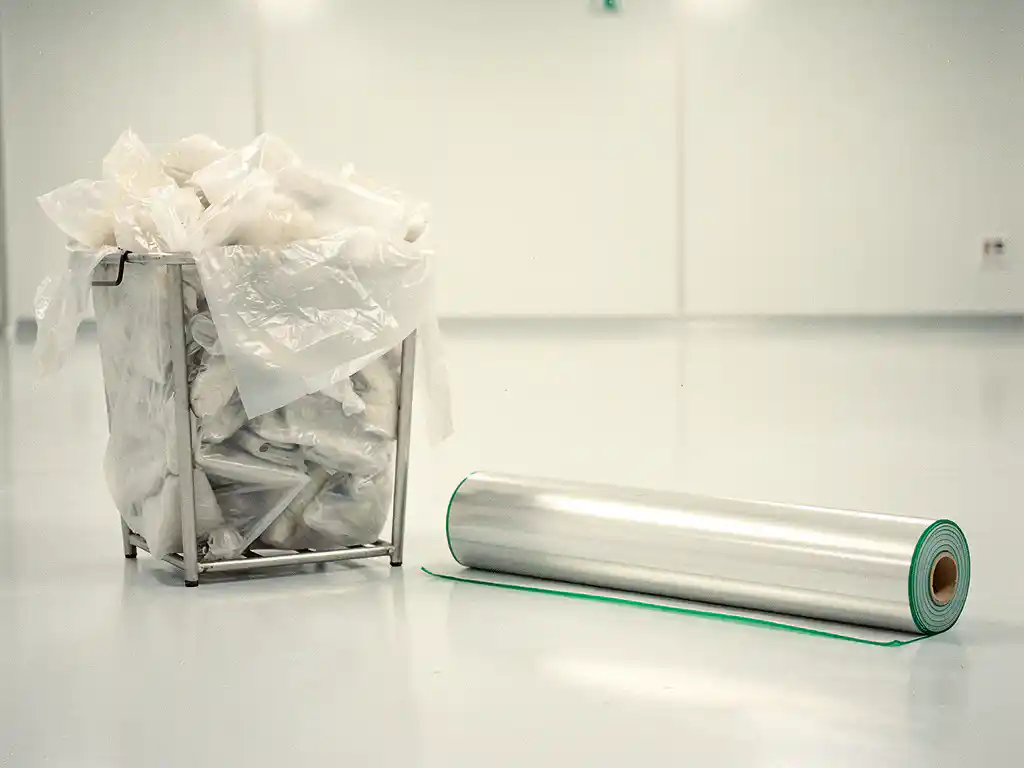
The type of contamination control equipment a facility chooses has a direct and measurable impact on its total waste output. Reusable polymer mats generate significantly less waste over their operational life than disposable sticky mat systems, which require frequent replacement and produce substantial volumes of single-use plastic. For regulated facilities managing compliance alongside sustainability targets, this distinction matters more than ever in 2026.
The sections below address the most common questions facilities ask when evaluating contamination control options through a waste and sustainability lens.
What types of waste does contamination control equipment generate?
Contamination control equipment generates two primary categories of waste: consumable waste from disposable products and operational waste from maintenance activities. The dominant source in most facilities is disposable sticky mats, which are peeled away layer by layer and discarded as single-use plastic waste. Over the course of a year, a single high-traffic entry point can produce a significant volume of plastic sheeting destined for landfill.
Beyond the mats themselves, contamination control programmes that rely on disposable methods also generate secondary waste streams. These include packaging materials from frequent deliveries, spent shoe covers, single-use gloves used during changeovers, and the cardboard and plastic wrapping associated with bulk sticky mat orders.
Reusable contamination control mats, by contrast, produce a far narrower waste profile. The primary waste associated with a reusable mat system is the water and cleaning solution used during routine maintenance. The mat itself remains in service for several years, meaning the material waste per entry point per year is a fraction of what a disposable system generates.
How does switching to reusable mats reduce single-use plastic waste?
Switching from disposable sticky mats to reusable contamination control mats eliminates the ongoing generation of single-use plastic at every entry point. A standard disposable sticky mat pad is replaced multiple times per day in busy environments, with each used layer discarded as plastic waste. A reusable polymer mat, designed to last three to five years, replaces thousands of those disposable layers across its operational life.
The reduction is structural rather than incremental. When a facility installs a reusable mat, it removes the mechanism that generates the waste in the first place. There is no peel-off layer to discard, no frequent delivery of replacement pads, and no accumulation of plastic packaging from restocking orders.
For facilities with multiple entry points across a large site, this shift can represent a meaningful reduction in the volume of plastic waste generated annually. Procurement teams evaluating supplier ESG credentials and environmental compliance increasingly factor this kind of measurable reduction into their supplier assessments. Reusable mats also align with regulatory pressure in many markets to reduce single-use plastic in industrial and commercial settings, making the switch both an environmental and a compliance consideration.
What is the total cost of ownership difference between disposable and reusable mats?
Reusable contamination control mats consistently deliver a lower total cost of ownership than disposable sticky mats when calculated across a multi-year period. The upfront cost of a reusable mat is higher, but the recurring expenditure on disposable mats — replacement pads, delivery costs, and staff time for changeovers — accumulates quickly and typically exceeds the cost of a reusable solution within the first year or two of operation.
Several cost factors drive this difference:
- Replacement frequency: Disposable sticky mats require regular pad changes, often multiple times per shift in high-traffic areas. Reusable mats require only periodic cleaning.
- Labour costs: Changing sticky mat layers is a repetitive task that consumes staff time. Cleaning a reusable mat is less frequent and often faster in total.
- Storage and logistics: Maintaining a stock of disposable mat pads requires storage space and a reliable supply chain. Reusable mats eliminate this dependency.
- Disposal costs: In facilities where waste disposal is charged by volume or weight, the reduction in plastic waste from switching to reusable mats can generate direct cost savings.
A reusable mat with a three to five year lifespan effectively spreads its cost across that entire period, while a disposable system generates cost continuously. For procurement and operations leaders focused on long-term value, the total cost of ownership calculation consistently favours the reusable approach.
How do contamination control choices affect a facility’s ESG commitments?
Contamination control choices directly affect a facility’s ability to meet its environmental, social, and governance commitments, particularly in the areas of waste reduction, single-use plastic elimination, and responsible procurement. Facilities that rely on disposable sticky mats generate ongoing plastic waste that conflicts with waste reduction targets and can complicate ESG reporting.
Reusable contamination control mats support ESG commitments in several concrete ways:
- Waste reduction: Eliminating single-use plastic at entry points contributes directly to measurable reductions in facility waste output.
- Carbon footprint: Fewer deliveries, less manufacturing of replacement products, and reduced disposal activity all lower the carbon intensity associated with contamination control.
- Responsible procurement: Sourcing from ISO-certified manufacturers with documented environmental standards strengthens a facility’s supply chain sustainability credentials.
- Reporting and audit readiness: Reusable systems are easier to document and quantify in sustainability reports than high-frequency disposable consumables.
For quality and EHS managers who are increasingly asked to contribute to corporate sustainability reporting, the choice of contamination control equipment is no longer purely a hygiene or compliance decision. It is also a data point in the facility’s broader environmental performance record.
Which contamination control method produces the least waste per entry point?
Reusable polymer contamination control mats produce the least waste per entry point of any currently available method. When measured across a full operational period, a single reusable mat generates only the residual waste from cleaning, compared to the continuous stream of plastic sheeting produced by disposable sticky mat systems or the chemical and water waste associated with footbath programmes.
Shoe cover programmes, while sometimes perceived as low-waste, generate their own significant consumable waste stream. Single-use covers are discarded after each use, and in facilities with high foot traffic, the volume of spent covers accumulates rapidly.
Footbath systems avoid solid plastic waste but introduce liquid waste management requirements, including the disposal of contaminated disinfectant solutions and the environmental impact of the chemicals used.
Reusable mats avoid the primary waste streams associated with all of these alternatives. Their polymer construction is designed for long-term durability, their antimicrobial properties are built in rather than applied through consumable chemicals, and their maintenance requirements are straightforward and low-frequency. Across a three to five year lifespan, the waste generated per entry point is substantially lower than any disposable or consumable-dependent alternative.
How Dycem helps reduce contamination-related waste
Dycem’s range of reusable contamination control mats is engineered specifically to address the waste, cost, and compliance challenges described above. Key attributes include:
- A 3 to 5 year operational lifespan, replacing thousands of disposable sticky mat layers per entry point
- Biomaster silver-ion antimicrobial technology, built into the mat rather than applied through consumable chemicals
- Capture of up to 99.9% of particles at the point of entry, reducing contamination without generating single-use plastic waste
- Compliance with EN ISO 9001 and 14001, California Proposition 65, and EU REACH regulations, supporting responsible procurement and ESG reporting
- Solutions tailored to pedestrian zones, heavy-wheeled traffic areas, and variable or temporary layouts, covering the full range of facility entry point requirements
For facilities ready to reduce their contamination control waste output and strengthen their sustainability position, speak to a Dycem specialist to arrange a free site survey and assess the right solution for your environment.