

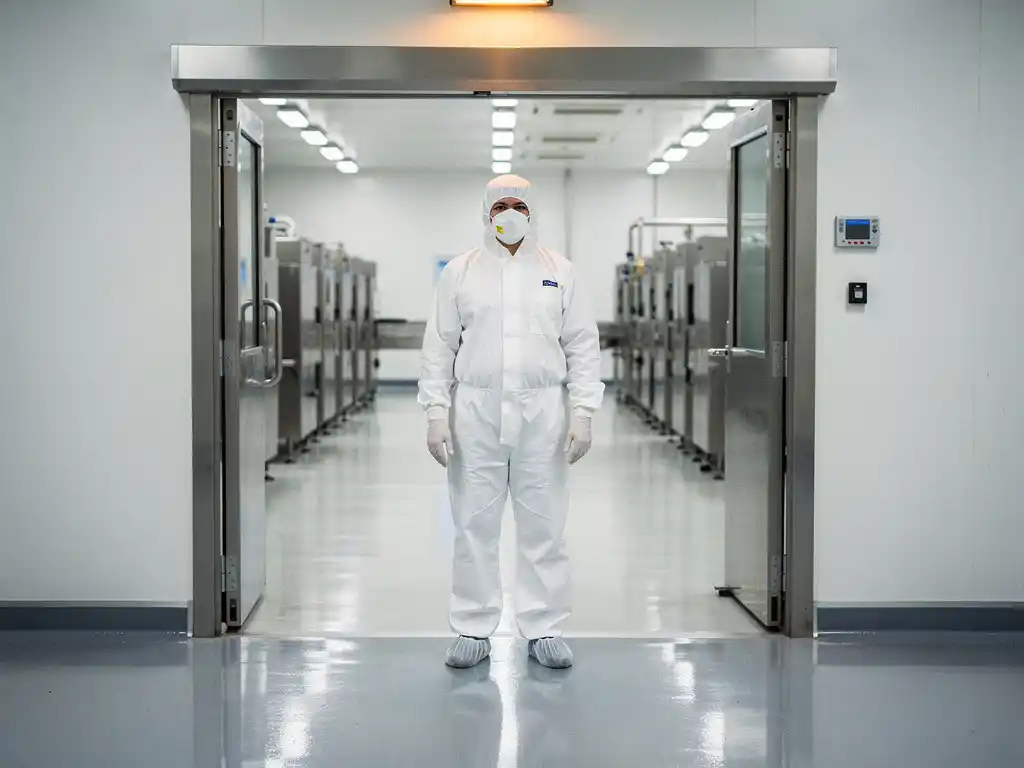
Food manufacturers should use antimicrobial flooring at every zone entry point where contamination risk is meaningful, which in practice means most controlled areas within a food production facility. The case for zone-by-zone coverage is grounded in how contamination actually travels: on the soles of shoes, on equipment wheels, and through foot traffic moving between areas of different hygiene status. The sections below address the most common questions facilities managers ask when evaluating this approach.
What contamination risks exist at zone entry points in food facilities?
Zone entry points in food manufacturing facilities are the primary pathway through which external contaminants reach production areas. Every time a person walks in or a piece of equipment crosses a threshold, they carry with them particles, microorganisms, and debris picked up from lower-hygiene areas. Without an effective barrier at the entry point, those contaminants travel directly into spaces where food is processed, packaged, or stored.
The most significant risks at zone entries include:
- Microbial transfer: Bacteria, mould spores, and other microorganisms present on footwear or wheels can be deposited onto production floors, eventually reaching food contact surfaces or open product.
- Particulate contamination: Dust, fibres, and debris carried in on shoes or equipment wheels are a persistent source of physical contamination in food environments.
- Cross-zone contamination: In facilities with multiple hygiene zones, personnel moving between raw material handling areas and high-care or high-risk zones can carry contaminants across boundaries if entry controls are inadequate.
- Equipment-borne transfer: Forklifts, pallet trucks, and trolleys that travel across external or low-hygiene areas before entering production zones are a frequently underestimated contamination vector.
Industry experience consistently shows that the floor level is the primary entry route for contamination in controlled environments, with the vast majority of particulate entering on footwear and wheeled equipment. Addressing this at the entry point, before contamination spreads, is far more effective than attempting to manage it once it has reached the production floor.
How does antimicrobial flooring work in food production environments?
Antimicrobial flooring in food production environments works by capturing and retaining contaminants from shoe soles and equipment wheels at the point of entry, while simultaneously inhibiting microbial growth on the mat surface itself. Unlike passive floor coverings, purpose-designed contamination control mats use a tacky polymeric surface to attract and hold particulate, preventing it from being tracked further into the facility.
The mechanism operates on two levels. First, the physical capture layer: the mat’s surface grips contaminants as footwear or wheels pass over it, stripping particles away rather than simply deflecting them. This is distinct from disposable sticky mats, which rely on an adhesive layer that degrades with each footstep and must be peeled away and discarded once saturated.
Second, the antimicrobial layer: high-performance mats incorporate silver-ion technology, such as Biomaster, which inhibits microbial growth on the mat surface by up to 99.9%. This is particularly relevant in food manufacturing, where warm, humid environments can otherwise allow bacteria to proliferate on floor surfaces between cleaning cycles. The antimicrobial protection is built into the material itself, meaning it remains active throughout the product’s lifespan rather than being applied as a surface treatment that wears away.
Reusable contamination control mats of this type are engineered to perform consistently for three to five years, and can be cleaned in place or removed for washing without losing their capture or antimicrobial properties. This makes them a practical and cost-effective solution for food facilities operating continuous production schedules.
Which zones in a food manufacturing facility need contamination control at entry?
In a food manufacturing facility, any zone where hygiene status changes at a threshold requires contamination control at the entry point. The higher the hygiene classification of the zone being entered, the more critical the barrier becomes. In practice, this covers a broad range of locations across most modern food production sites.
The zones that most commonly require antimicrobial flooring at entry include:
- High-care and high-risk production areas: These zones handle ready-to-eat or high-sensitivity products and carry the greatest consequences for contamination. Entry control here is typically a regulatory requirement, not a discretionary measure.
- Gowning and changing rooms: The transition from street clothing to production attire is a critical contamination boundary. Flooring at the exit point of gowning rooms prevents clean footwear from being contaminated before personnel reach the production floor.
- Packaging areas: Open product or primary packaging at this stage is particularly vulnerable. Entry controls prevent particulate from reaching finished goods.
- Ingredient handling and storage areas: Raw materials and ingredients brought into controlled storage areas carry external contamination. Entry mats at these points reduce the risk of cross-contamination between incoming goods and stored materials.
- Maintenance access points: Engineers and contractors moving between external areas and production zones represent a high-risk entry event. Dedicated entry control at maintenance access points is often overlooked but consistently valuable.
- Vehicle and equipment entry points: Loading bays, equipment wash-down areas, and internal logistics routes where wheeled equipment crosses hygiene boundaries all require appropriate floor-level contamination control.
The principle to apply is straightforward: wherever the hygiene status of a space is higher than the area being entered from, there is a case for contamination control at that threshold.
What’s the difference between antimicrobial mats and disposable sticky mats?
The key difference between antimicrobial contamination control mats and disposable sticky mats is performance longevity and contamination management approach. Disposable sticky mats rely on an adhesive surface that becomes saturated and ineffective within a small number of footsteps, requiring frequent peeling and replacement. Reusable antimicrobial mats capture and retain contaminants through a durable polymeric surface that can be cleaned and restored to full performance repeatedly over a three-to-five-year lifespan.
Beyond the fundamental performance distinction, the two approaches diverge significantly across several practical dimensions:
- Ongoing cost: Disposable sticky mats generate continuous consumable spend. Each mat is used once and discarded, meaning the cost compounds over time. Reusable mats carry a higher upfront investment but eliminate recurring replacement costs across their operational lifespan.
- Waste generation: Sticky mats produce substantial single-use plastic waste, which creates challenges for facilities with ESG commitments or sustainability reporting obligations. Reusable antimicrobial mats significantly reduce this waste stream and represent a more sustainable option for food manufacturers looking to reduce their environmental impact.
- Microbial inhibition: Standard sticky mats offer no antimicrobial protection. Once the adhesive surface is contaminated, microorganisms can remain on the mat. Antimicrobial mats with silver-ion technology actively inhibit microbial growth on the surface between cleaning cycles.
- Operational disruption: Peeling and replacing sticky mat layers is a manual, time-consuming process that must happen frequently to maintain effectiveness. Reusable mats are cleaned in place or removed for washing, with minimal disruption to production schedules.
- Heavy traffic compatibility: Sticky mats are not designed for wheeled equipment. The adhesive surface degrades rapidly under cart or forklift traffic. Reusable polymeric mats are available in formats engineered specifically for heavy-wheeled traffic.
Do antimicrobial floor mats help food manufacturers meet GMP and audit requirements?
Yes, antimicrobial floor mats directly support GMP compliance and audit readiness in food manufacturing by providing a documented, consistent, and validated contamination control measure at zone entry points. Regulatory frameworks including BRC Global Standards, SQF, and FSSC 22000 require food manufacturers to demonstrate effective controls at the boundaries between hygiene zones, and floor-level contamination control is a recognised element of those controls.
During audits, facilities are expected to show not just that controls exist, but that they are effective and consistently applied. Reusable antimicrobial mats support this in several ways. Their cleaning and maintenance can be documented within hygiene management programmes, providing an auditable record of contamination control activity. The consistent performance of a mat with a validated capture rate and built-in antimicrobial protection is easier to evidence than the variable effectiveness of a sticky mat that may have been partially used or improperly replaced.
Facilities that use contamination control mats manufactured to ISO 9001 and 14001 standards can also reference the supplier’s quality certifications as part of their supplier assurance documentation, which is increasingly scrutinised in third-party audits. The combination of a validated product, a documented cleaning regime, and a compliant supply chain makes a stronger audit case than consumable alternatives that offer no equivalent traceability.
It is worth noting that antimicrobial flooring is one element of a broader contamination control programme. Auditors assess the totality of controls in place, and floor-level measures work most effectively when combined with appropriate gowning, air handling, and hygiene protocols.
Should every zone entry have the same type of antimicrobial mat?
No, not every zone entry in a food manufacturing facility requires the same type of antimicrobial mat. The appropriate mat format depends on the traffic type, hygiene classification of the zone, and the physical configuration of the entry point. Applying the same solution uniformly across all entries often means either over-specifying in lower-risk areas or under-specifying in critical ones.
The primary variables to consider when selecting a mat format for each entry point are:
- Traffic type: Pedestrian-only entries, such as gowning room exits and cleanroom corridors, are well served by mats designed for foot traffic. Entries used by trolleys, pallet trucks, or forklifts require a mat engineered for heavy-wheeled loads, with a construction that maintains its integrity and performance under that kind of stress.
- Zone hygiene classification: Higher-risk zones, such as high-care or high-risk production areas, warrant the highest-specification entry control. Lower-classification areas may require a less intensive solution, though some level of contamination control at every meaningful threshold remains best practice.
- Physical space: Some entry points have fixed dimensions or cannot accommodate a permanent installation. In these cases, repositionable mat formats that sit on top of existing flooring offer a practical alternative without requiring structural modification.
- Traffic volume: High-frequency entry points, such as the main access route to a busy production hall, require a mat with the durability and cleaning frequency to match that demand.
A structured zone-by-zone assessment of entry points, traffic patterns, and hygiene requirements will typically reveal that a food manufacturing facility needs a combination of mat formats rather than a single solution applied universally. This is a more precise and cost-effective approach than blanket standardisation.
How Dycem helps food manufacturers control zone entry contamination
Dycem’s range of reusable contamination control mats is designed to address the specific entry-point challenges food manufacturers face, from high-care production zones to heavy-traffic logistics routes. Key benefits include:
- Capture and retention of up to 99.9% of shoe and wheel contaminants before they enter controlled areas
- Built-in Biomaster silver-ion antimicrobial technology, inhibiting microbial growth on the mat surface by up to 99.9%
- A product range covering pedestrian zones (CleanZone), heavy-wheeled traffic areas (WorkZone), and flexible or temporary installations (Floating Mats)
- A three-to-five-year product lifespan that reduces ongoing consumable costs and single-use plastic waste compared to disposable sticky mats
- ISO 9001 and 14001 certified manufacturing, supporting supplier assurance documentation for GMP audits
- Customisable sizing, format, and colour to suit complex facility layouts and defined hygiene zones
Dycem’s contamination control specialists work with food manufacturers to assess facility entry points, identify the right mat format for each zone, and provide ongoing support throughout the product lifecycle. To discuss your facility’s requirements or arrange a free site survey, contact Dycem today.