

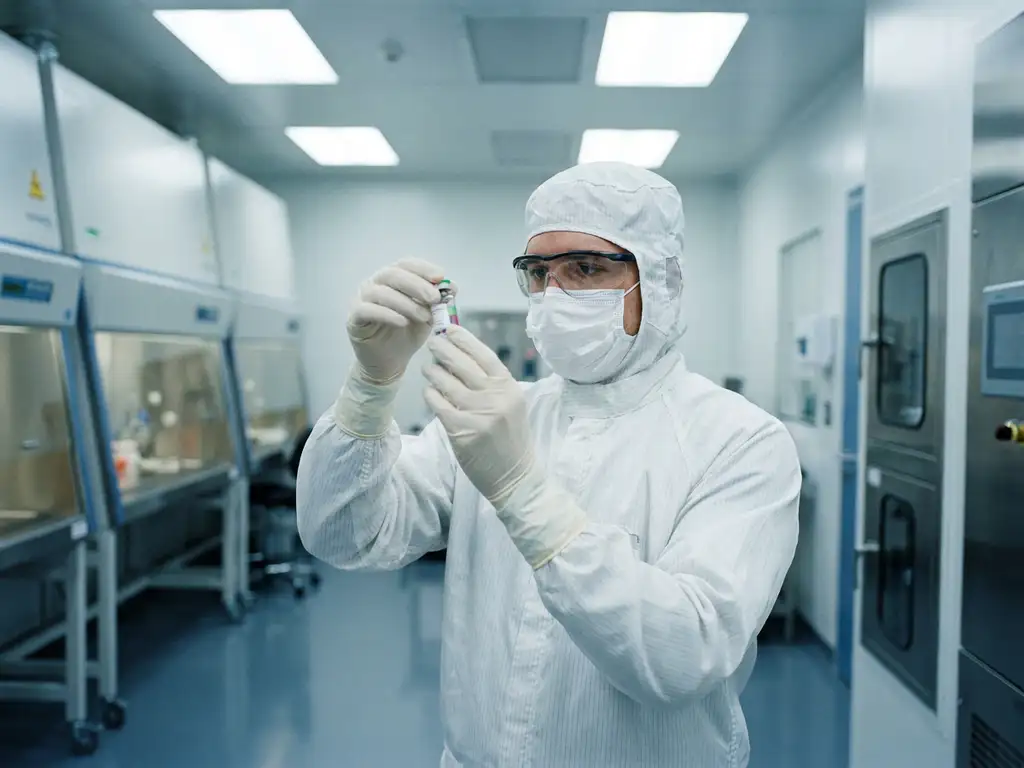
Biotechnology cleanrooms face a distinct and demanding set of contamination risks that go beyond those encountered in general manufacturing environments. Unlike standard cleanrooms, biotech facilities must simultaneously manage particulate contamination, viable microbial threats, and the biological materials being processed — all within tightly regulated environments where a single contamination event can compromise product safety, invalidate a batch, or trigger a regulatory investigation. The sections below address the most pressing questions facing quality and facilities professionals responsible for contamination control in biotech settings.
How do biotechnology cleanrooms differ from standard cleanrooms in contamination risk?
Biotechnology cleanrooms differ from standard cleanrooms in that they must control both non-viable particulate contamination and viable biological contamination simultaneously. Standard manufacturing cleanrooms typically focus on particle counts and airborne debris. Biotech facilities must also manage living microorganisms, biological materials, and the risk of cross-contamination between biological agents and the products being developed or manufactured.
This dual contamination challenge shapes every aspect of how a biotech cleanroom is designed, operated, and monitored. Personnel are not just a source of shed particles — they are also vectors for bacteria, fungi, and other viable contaminants. The biological materials present in the environment, including cell cultures, fermentation products, and active pharmaceutical ingredients, can themselves become contamination risks if they escape their designated zones.
The consequences of contamination in biotech cleanrooms are also more severe. In electronics or aerospace cleanrooms, contamination typically affects product quality or yield. In biotechnology, contamination can render a batch unsafe for human use, trigger regulatory action under GMP frameworks, or endanger patients. This raises the stakes for every element of the contamination control strategy.
What are the most common sources of contamination in biotech cleanrooms?
The most common sources of contamination in biotech cleanrooms are personnel, equipment, raw materials, and facility surfaces. Personnel consistently represent the highest contamination risk, contributing shed skin cells, hair, respiratory droplets, and microorganisms with every movement. Equipment and raw material transfers introduce particles and viable organisms from less controlled areas into critical zones.
Breaking these sources down further helps facilities prioritise their control measures:
- Personnel: Human operators shed thousands of particles per minute during normal activity. Gowning failures, improper technique at entry points, and inadequate decontamination at transitions all increase microbial and particulate risk.
- Footwear and wheeled equipment: Shoes and wheels moving between zones carry contaminants from corridors, loading areas, and external environments directly into controlled spaces.
- Air and HVAC systems: Poorly maintained filtration or pressure differentials can allow uncontrolled airflow between zones, transporting viable particles into critical areas.
- Raw materials and consumables: Items entering the cleanroom without adequate decontamination bring external contamination with them.
- Surfaces and equipment: Infrequently cleaned horizontal surfaces, equipment housings, and floor areas accumulate particulate and biological contamination over time.
Understanding these sources is the foundation of any effective biotech cleanroom contamination control strategy. Each entry point, transition zone, and material transfer represents a potential pathway that must be actively managed.
Why is floor-level contamination a critical risk in biotech environments?
Floor-level contamination is a critical risk in biotech environments because up to 80% of contaminants entering a controlled environment are tracked in at floor level, primarily via footwear and wheeled equipment. In biotech cleanrooms, this means viable microorganisms and particulate matter are continuously being introduced at the point where personnel and equipment cross between zones.
Floors in cleanrooms are often overlooked in favour of air quality monitoring and surface swabbing of workstations. However, floor surfaces accumulate contamination rapidly in high-traffic areas such as airlocks, gowning rooms, and entry corridors. When personnel walk through contaminated floor zones, particles and microorganisms are redistributed into the air and onto adjacent surfaces through foot traffic and equipment movement.
Wheeled equipment presents a particular challenge. Pallet trucks, carts, and trolleys used to transfer materials between zones carry contamination on their wheels from less controlled areas. Without an effective barrier at the transition point, this contamination travels directly into the cleanroom environment.
Addressing floor-level contamination at entry and transition points is therefore one of the highest-impact interventions available to biotech facilities. Controlling what enters at the floor removes contamination before it has the opportunity to become airborne or spread to critical surfaces.
What contamination control standards apply to biotechnology cleanrooms?
Biotechnology cleanrooms are governed by several overlapping standards and regulatory frameworks, depending on the nature of the product being manufactured and the markets being served. The primary standards include ISO 14644 for cleanroom classification and monitoring, EU GMP Annex 1 for sterile medicinal products, and FDA 21 CFR guidelines for pharmaceutical manufacturing in the United States.
Each framework sets requirements for particulate limits, microbial monitoring, personnel behaviour, gowning procedures, and environmental controls. Key standards relevant to biotech cleanroom contamination control include:
- ISO 14644-1 and 14644-2: Define cleanroom classification by airborne particulate concentration and establish monitoring requirements to demonstrate ongoing compliance.
- EU GMP Annex 1 (2022 revision): Sets detailed requirements for sterile product manufacturing, including contamination control strategy documentation, environmental monitoring, and personnel behaviour in Grade A, B, C, and D environments.
- FDA 21 CFR Part 211: Covers current Good Manufacturing Practice for finished pharmaceuticals, including facility design and environmental controls.
- ICH Q10: Provides a pharmaceutical quality system framework that encompasses contamination risk management as part of broader product lifecycle control.
The 2022 revision of EU GMP Annex 1 is particularly significant for biotech facilities in 2026, as it explicitly requires a documented Contamination Control Strategy (CCS) that addresses all contamination sources holistically — not just air quality. This has elevated the importance of floor-level and entry-point controls within formal compliance programmes.
How can biotech facilities reduce contamination risk at entry and transition points?
Biotech facilities can reduce contamination risk at entry and transition points by implementing a layered control approach that addresses personnel, footwear, and equipment before they enter controlled zones. This means combining physical barriers, decontamination steps, and validated contamination capture solutions at every transition between classified areas.
Effective measures at entry and transition points include:
- Gowning room protocols: Structured gowning sequences with clearly defined clean and dirty sides prevent personnel from recontaminating themselves after donning cleanroom attire.
- Contamination capture mats: Reusable polymeric mats at entry points capture particulate and microbial contamination from shoe soles and equipment wheels before they cross into controlled zones. Unlike disposable sticky mats, high-performance reusable mats maintain consistent capture efficiency and do not generate single-use plastic waste.
- Airlock and pressure cascade design: Properly maintained pressure differentials between zones prevent uncontrolled airflow from carrying contamination inward.
- Equipment decontamination stations: Wheeled equipment should pass through a dedicated decontamination point, including wheel cleaning or contamination capture, before entering classified areas.
- Access restriction and traffic flow management: Limiting the number of personnel and equipment movements between zones reduces the frequency of contamination transfer events.
Transition points between Grade D and Grade C areas, or between unclassified corridors and classified zones, are where contamination control interventions deliver the greatest return. These are the moments when external contamination can be stopped before it reaches critical environments.
What should a contamination control strategy for a biotech cleanroom include?
A contamination control strategy for a biotech cleanroom should include a systematic assessment of all contamination sources, defined control measures for each source, environmental monitoring protocols, and documented procedures for personnel behaviour, material transfer, and equipment management. Under EU GMP Annex 1, this strategy must be a formal, written document reviewed regularly as part of the quality system.
A robust strategy typically covers the following elements:
- Contamination source mapping: Identifying all potential contamination pathways — personnel, materials, equipment, air, and surfaces — and assessing the risk associated with each.
- Physical controls: Facility design features including airlocks, pressure cascades, HEPA filtration, and entry-point contamination capture systems.
- Procedural controls: Gowning procedures, material transfer protocols, cleaning and disinfection schedules, and personnel training programmes.
- Environmental monitoring: Regular air sampling, surface swabbing, and settle plate monitoring to detect contamination trends before they become compliance issues.
- Equipment management: Protocols for the decontamination, maintenance, and movement of equipment between classified zones.
- Review and continuous improvement: Scheduled reviews of monitoring data, deviation investigations, and updates to control measures based on findings.
The strategy should be proportionate to the classification of the cleanroom and the risk profile of the product being manufactured. Higher-grade environments — particularly Grade A and B zones used for aseptic processing — require more stringent controls and more frequent monitoring than lower-grade support areas.
How Dycem supports contamination control in biotech cleanrooms
Dycem’s range of reusable contamination control mats is designed to address one of the most persistent and underestimated risks in biotech cleanrooms: contamination entering at floor level through footwear and wheeled equipment. Dycem mats are engineered to capture up to 99.9% of shoe and wheel contaminants, providing a validated, consistent barrier at the entry and transition points where contamination control matters most.
For biotech facilities, Dycem offers solutions suited to every area of the controlled environment:
- Dycem CleanZone: A semi-permanent mat designed for gowning rooms, airlocks, and cleanroom entries where pedestrian and light-wheeled traffic crosses between classified zones. Washable and reusable, CleanZone delivers consistent particulate capture without generating the single-use plastic waste associated with disposable sticky mats.
- Dycem WorkZone: Built for heavy-duty areas where forklifts, pallet trucks, and large carts transfer materials between zones. WorkZone handles demanding traffic loads with a lifespan exceeding three years.
- Dycem Floating Mats: Repositionable mats that provide flexible contamination control across variable or temporary zones, suited to facilities where layouts or traffic patterns change.
- Dycem Bench Mats and Access Panels: Extend contamination control beyond the floor to workstation surfaces and access points within the controlled environment.
All Dycem mats incorporate built-in Biomaster antimicrobial protection and are manufactured to ISO 9001 and 14001 standards, supporting the documented Contamination Control Strategy requirements of EU GMP Annex 1 and equivalent frameworks. To find the right solution for your biotech facility, explore the full Dycem contamination control range or contact a contamination control specialist to arrange a free site survey.