

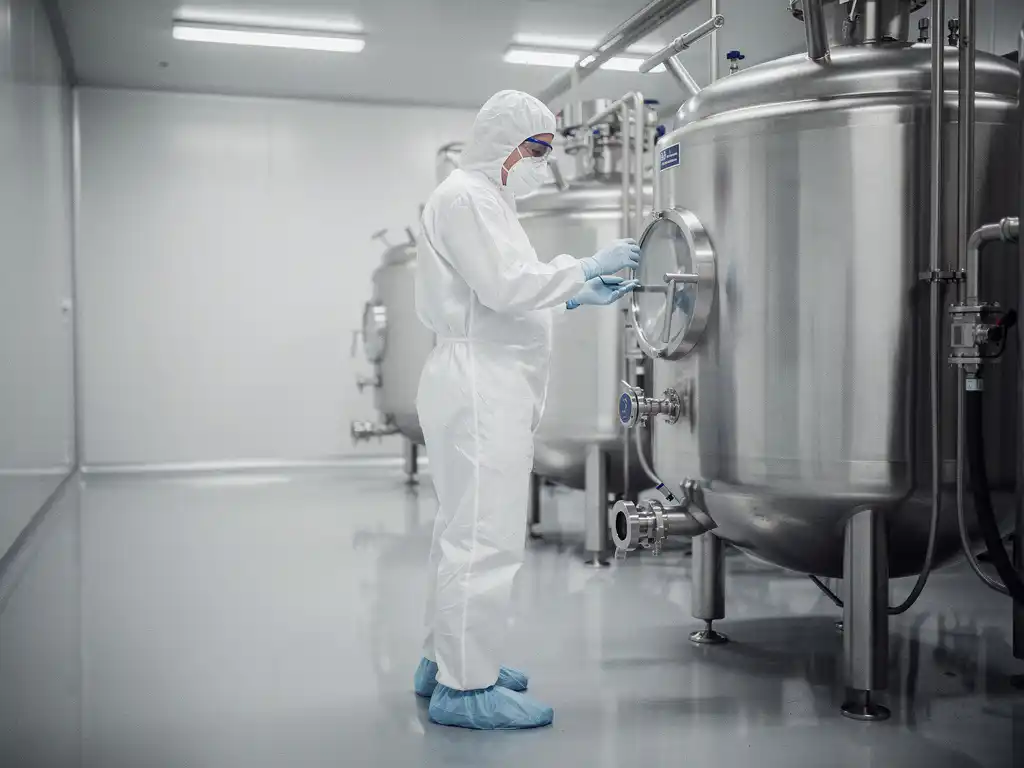
HACCP requirements for contamination control in 2026 mandate that food and pharmaceutical businesses identify physical contamination at entry points as a significant hazard, establish verified control measures at critical control points, and maintain documented evidence that those measures are consistently effective. These obligations apply to any facility where foot traffic, wheeled equipment, or airborne particles can introduce contaminants into processing, packaging, or production zones. The sections below address the specific questions that quality, EHS, and facilities managers most commonly raise when preparing for HACCP audits or reviewing their contamination control strategy.
What does HACCP require for physical contamination at entry points?
HACCP requires that physical contamination risks at facility entry points be identified during the hazard analysis stage, assessed for likelihood and severity, and controlled through validated preventive measures. Where entry points connect directly to food contact or processing areas, the risk of particulate ingress must be addressed as part of the HACCP plan with documented controls and monitoring procedures.
Under HACCP principles, the hazard analysis must consider all routes by which physical contaminants can enter a controlled space. Entry points, including gowning rooms, airlocks, loading bays, and corridor transitions, represent some of the highest-risk zones in any food production or pharmaceutical facility. Research consistently shows that approximately 80% of contaminants enter controlled environments at floor level, carried on footwear and wheeled equipment.
To satisfy HACCP requirements at entry points, facilities must:
- Document the specific contamination hazards present at each entry point
- Determine whether the entry point qualifies as a Critical Control Point (CCP) or a prerequisite programme (PRP) measure
- Define critical limits, monitoring frequency, and corrective actions
- Maintain records that demonstrate the control measure is functioning as intended
Entry point controls that cannot be verified or monitored consistently will not satisfy HACCP requirements, regardless of how effective they appear in practice. This is why the choice of control measure matters as much as the decision to implement one.
How does HACCP classify contamination control mats as a control measure?
Under HACCP, contamination control mats are typically classified as a prerequisite programme (PRP) or operational prerequisite programme (oPRP) rather than a standalone CCP, because they form part of the broader hygiene infrastructure that maintains baseline contamination control across the facility. In some high-risk environments, they may contribute directly to a CCP where particulate ingress is identified as a critical hazard.
The distinction matters because PRPs and oPRPs still require documented procedures, monitoring, and verification. A contamination control mat cannot simply be placed at an entry point and ignored. HACCP documentation must specify how the mat is maintained, how its performance is verified, and what corrective action is taken if contamination levels exceed acceptable thresholds.
Reusable polymeric mats are particularly well-suited to HACCP compliance because their performance characteristics can be validated and their maintenance schedules documented. This creates the auditable trail that HACCP inspectors expect to see. Disposable sticky mats, by contrast, introduce variability in how and when they are changed, making consistent documentation more difficult to achieve.
What are the 2026 updates to HACCP contamination control standards?
In 2026, HACCP contamination control standards continue to evolve under pressure from updated GFSI-benchmarked schemes, including BRCGS Food Safety Issue 9 and FSSC 22000 Version 6, both of which place greater emphasis on environmental monitoring, entry point hygiene, and the validation of physical contamination controls. These updates reinforce the expectation that facilities demonstrate, not just describe, the effectiveness of their contamination management systems.
Key areas of focus in current standards include:
- Validation requirements: Facilities must show that their chosen contamination control measures actually reduce particulate levels, not simply that a measure is in place
- Environmental monitoring integration: Contamination control at entry points is increasingly expected to feed into broader environmental monitoring programmes, with data used to identify trends and trigger corrective action
- Sustainability and waste reduction: Auditors are increasingly aware of the regulatory and reputational risks associated with single-use plastic waste, and GFSI-aligned schemes are beginning to reflect this in their prerequisite programme guidance
- Supply chain traceability: Contamination control products used in certified facilities are expected to come from suppliers with documented quality management systems
Facilities reviewing their HACCP plans in 2026 should ensure that their contamination control measures at entry points are validated, monitored, and supported by supplier documentation that meets current regulatory expectations.
Which industries are most affected by HACCP contamination control requirements?
HACCP contamination control requirements most directly affect food and beverage manufacturing, pharmaceutical production, and medical device manufacturing, where physical contamination can cause serious harm to consumers or patients. These industries operate under mandatory HACCP frameworks and face regular third-party audits that assess the effectiveness of contamination controls at every stage of production, including entry points.
Food production facilities, from ready-to-eat processing plants to beverage bottling lines, must control particulate ingress from personnel and equipment at every transition point between low-care and high-care zones. A single contamination event can trigger product recalls, regulatory action, and significant reputational damage.
Pharmaceutical manufacturers face equivalent pressure under GMP regulations, where cleanroom integrity depends on controlling particulate and microbial contamination at every entry point. The consequences of contamination in this sector extend to patient safety, batch rejection, and regulatory non-compliance.
Other industries where HACCP-aligned contamination control requirements are becoming increasingly relevant include:
- Aerospace and defence manufacturing, where particulate contamination affects component precision and safety
- Electronics production, where even microscopic particles can compromise product performance
- Healthcare environments, where infection control and cross-contamination prevention are ongoing priorities
How do auditors assess contamination control during a HACCP inspection?
During a HACCP inspection, auditors assess contamination control at entry points by reviewing documented procedures, observing physical controls in operation, and verifying that monitoring records are complete and consistent. They are looking for evidence that the facility has identified entry point contamination as a hazard, implemented a validated control measure, and maintained the records to prove it is working.
Auditors typically examine several specific areas:
- Hazard analysis documentation: Is physical contamination at entry points identified and assessed?
- Control measure validation: Is there evidence that the chosen measure actually reduces contamination?
- Monitoring records: Are inspection logs, cleaning schedules, or performance checks up to date and consistently maintained?
- Corrective action procedures: What happens when a control measure fails or performance deteriorates?
- Supplier documentation: Do contamination control products come with quality certifications and compliance documentation?
A common audit finding is that facilities have a contamination control measure in place but cannot demonstrate that it is being monitored or maintained to a defined standard. This is treated as a gap in the HACCP system, not simply a housekeeping issue, and can result in non-conformances that affect certification status.
What’s the difference between reusable and disposable mats for HACCP compliance?
The key difference between reusable and disposable mats for HACCP compliance is verifiability. Reusable contamination control mats can be cleaned, inspected, and maintained to a documented standard, making them easier to integrate into a validated HACCP control measure. Disposable sticky mats rely on consistent replacement by personnel, which introduces human variability that is difficult to control and audit reliably.
Disposable peel-off mats present several practical challenges in a HACCP context:
- Replacement frequency is often inconsistent, meaning contamination capture performance degrades unpredictably between changes
- There is no objective way to assess whether a disposable mat is still performing effectively at any given moment
- High volumes of single-use plastic waste create disposal challenges and conflict with ESG commitments increasingly scrutinised by auditors and procurement teams
- Ongoing procurement and replacement costs accumulate significantly over time compared to a long-life reusable solution
Reusable polymeric mats, by contrast, maintain consistent performance characteristics that can be validated and documented. Their cleaning and inspection schedules can be built directly into the HACCP prerequisite programme, and their long operational lifespan, typically three to five years, reduces both cost and waste. For facilities seeking a contamination control solution that supports both compliance and sustainability objectives, reusable mats represent a demonstrably more robust option.
How Dycem helps with HACCP contamination control compliance
Dycem’s range of reusable contamination control mats is designed to meet the specific demands of HACCP-regulated environments, providing validated, auditable, and sustainable entry point protection for facilities across food production, pharmaceuticals, healthcare, and beyond. Key features that support HACCP compliance include:
- Capture and retention of up to 99.9% of floor-level particulates, reducing the risk of physical contamination entering controlled zones
- Built-in Biomaster silver-ion antimicrobial technology, inhibiting microbial growth by up to 99.9% to support hygiene controls
- A 3 to 5 year operational lifespan with documented cleaning and maintenance schedules, supporting consistent HACCP monitoring records
- ISO-certified manufacturing to EN ISO 9001 and 14001 standards, with EU REACH and California Proposition 65 compliance, providing the supplier documentation auditors expect
- Customisable formats including CleanZone and WorkZone mats tailored to pedestrian, light-wheeled, and heavy-wheeled traffic areas
Dycem’s contamination control specialists provide consultative support from initial site assessment through to ongoing compliance guidance, helping facilities build entry point controls that satisfy both HACCP requirements and third-party audit expectations. To discuss your facility’s specific requirements, contact Dycem today for a free site survey and consultation.