

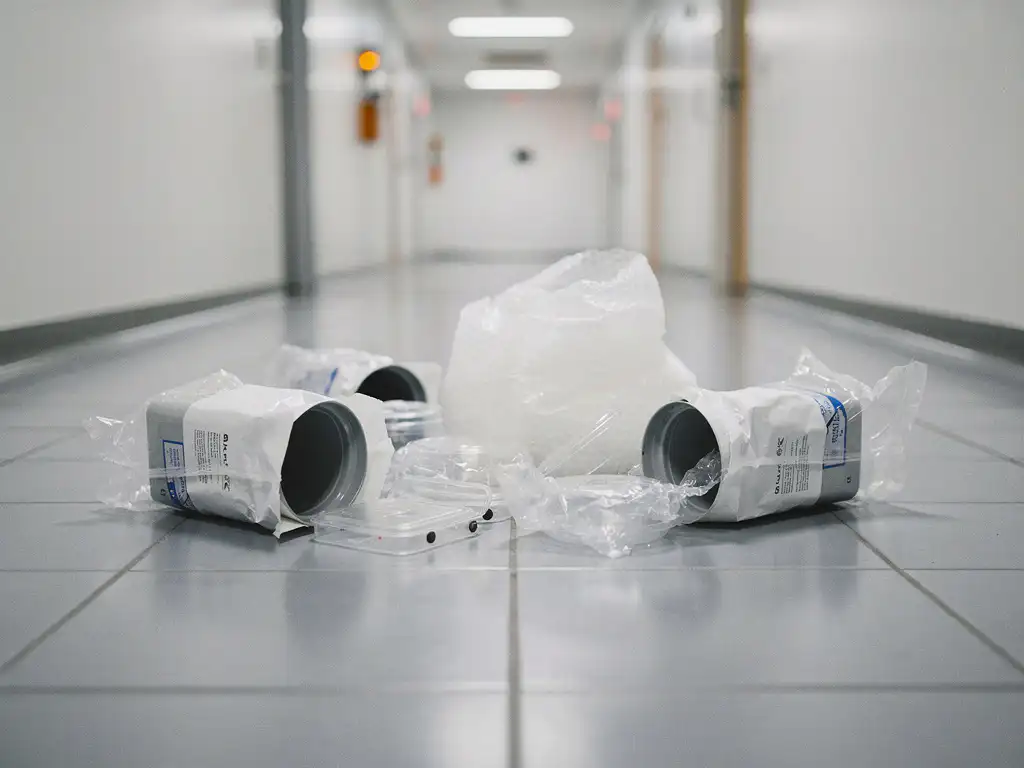
The most overlooked sources of plastic waste in facilities are the consumable contamination control products used every single day: disposable sticky mats, single-use PPE, shoe covers, and packaging materials that accumulate quietly at entry points and workstations. These items rarely appear on sustainability audits because they are treated as operational necessities rather than waste streams. This article unpacks each hidden source and explains how facilities can take meaningful action to reduce them.
Where does most plastic waste in facilities actually come from?
Most plastic waste in facilities originates from consumable products used repeatedly throughout daily operations rather than from packaging or raw materials. The primary contributors are disposable contamination control products at entry points, single-use PPE worn by staff, and the plastic packaging surrounding these consumables. Because these items are purchased in bulk and disposed of routinely, their cumulative volume is rarely questioned.
In regulated environments such as pharmaceutical manufacturing, food production, and electronics assembly, the volume of single-use plastic consumed is particularly high. Facilities operating multiple shifts across large floor areas can go through thousands of individual disposable items each week. The problem is structural: when contamination control relies entirely on consumables, plastic waste is not an occasional byproduct but a built-in consequence of the operational model.
The waste generated at entry points is especially significant. Sticky mat systems, for instance, require regular sheet removal as layers become saturated with particulate. Each sheet is a single-use plastic product that goes directly to landfill. Multiply that across dozens of entry points and multiple daily changes, and the total plastic output becomes substantial, yet it rarely appears as a line item in environmental reporting.
Why are disposable contamination control products a hidden waste problem?
Disposable contamination control products are a hidden waste problem because they are categorised as operational consumables rather than plastic waste, which means they escape the scrutiny applied to other single-use materials. Facilities that have committed to reducing plastic packaging often continue purchasing thousands of sticky mat sheets each month without connecting that behaviour to their broader sustainability targets.
The scale of the issue becomes clear when you consider how sticky mat systems work. Each mat consists of a stack of adhesive plastic sheets. As the top layer fills with contaminants, it is peeled away and discarded. A single mat station might require multiple sheet changes per shift depending on traffic volume. Across a facility with several entry points running around the clock, the total plastic discarded can reach tens of thousands of sheets annually.
Beyond the physical waste, there is a cost dimension that is also frequently overlooked. The ongoing procurement of replacement sheets, the labour involved in changing them, and the disposal costs all represent expenditure that does not appear on a single invoice. This fragmented cost structure makes it easy for the true total to remain invisible until a formal audit forces the calculation.
Facilities operating under GMP, ISO, or FDA frameworks are under increasing pressure to demonstrate environmental responsibility alongside compliance. A contamination control strategy built on single-use plastics creates a tension between operational necessity and ESG commitments that is becoming harder to justify to regulators, investors, and customers alike.
How does single-use PPE contribute to facility plastic waste?
Single-use PPE contributes to facility plastic waste by generating a continuous stream of disposable items including shoe covers, gloves, hairnets, coveralls, and overshoes that are worn once and discarded. In cleanroom and controlled environments, PPE protocols are non-negotiable, but the plastic content of each item and the frequency of use mean that PPE is often one of the largest single-use plastic streams in a facility.
Shoe covers are a particularly significant contributor. In facilities where staff must don fresh covers every time they enter a controlled zone, the daily consumption can reach hundreds of units. Each cover is typically made from polypropylene or polyethylene, both of which are difficult to recycle in a contaminated state. Unlike packaging plastics, used PPE cannot be sorted and processed through standard recycling streams, so virtually all of it goes to landfill or incineration.
Gloves represent another high-volume source. Nitrile, latex, and vinyl gloves are replaced frequently throughout a shift in environments where hand contamination is a critical risk. The cumulative weight of glove waste across a large facility over a year is considerable, yet gloves are rarely identified as a plastic reduction opportunity because their use is mandated by safety and hygiene protocols.
The important distinction here is between PPE that is genuinely irreplaceable and contamination control measures that have reusable alternatives. Gloves and coveralls serve direct personal protection functions that are difficult to replicate. Entry-point contamination control, however, is an area where reusable solutions can significantly reduce the volume of single-use plastic without compromising hygiene standards.
What role do reusable alternatives play in reducing plastic waste?
Reusable alternatives reduce facility plastic waste by replacing high-frequency consumable products with durable solutions that perform the same function over an extended lifespan, eliminating the continuous cycle of purchase, use, and disposal. In contamination control specifically, switching from disposable sticky mats to reusable polymeric mats can remove tens of thousands of single-use plastic sheets from a facility’s waste stream each year.
The performance argument for reusable contamination control mats is straightforward. A high-quality polymeric mat is engineered to capture and retain particulate through its material properties rather than through adhesive layers that saturate and require replacement. The mat is cleaned rather than discarded, and its functional lifespan extends across several years rather than several minutes.
From a sustainability standpoint, the reduction in plastic waste is direct and measurable. A facility that replaces sticky mat systems at multiple entry points with reusable mats eliminates the procurement, use, and disposal of replacement sheets entirely at those locations. This is a tangible, auditable reduction in single-use plastic consumption that can be reported against ESG targets.
Reusable alternatives also address the total cost of ownership argument that procurement and operations leaders need to make internally. A product with a multi-year lifespan, even at a higher initial price point, typically delivers a lower cost per use than consumables purchased continuously. When labour, disposal, and procurement administration costs are included in the calculation, the financial case for reusable solutions becomes compelling alongside the environmental one.
How can facilities audit their overlooked plastic waste streams?
Facilities can audit their overlooked plastic waste streams by conducting a structured review of all consumable products used across entry points, controlled zones, and workstations, categorising each item by material type, frequency of use, and disposal route. The goal is to make visible the plastic consumption that sits outside standard waste reporting and to identify where reusable or lower-waste alternatives exist.
A practical audit follows a clear sequence:
- Map all entry and transition points where contamination control products are in use, including gowning rooms, airlocks, cleanroom entrances, and loading areas.
- Record every consumable product at each location, including sticky mat sheets, shoe covers, gloves, hairnets, and any single-use cleaning materials.
- Quantify usage rates by shift, day, and week to establish annual consumption volumes for each item.
- Identify the material composition of each product and its disposal route to determine what is going to landfill, incineration, or recycling.
- Calculate the total cost of each consumable stream, including procurement, labour, and disposal, to build a complete picture of the financial and environmental impact.
- Prioritise substitution opportunities by identifying where reusable alternatives exist that meet the same performance and compliance requirements.
The audit process often reveals that the largest plastic waste streams are the ones that have been in place the longest. Sticky mat programmes, for example, are frequently inherited rather than chosen, and their cumulative waste is never formally assessed. Bringing these streams into a structured review is the first step toward reducing them in a way that is documented and defensible to regulators and stakeholders.
Facilities that have never conducted this type of review often find that their contamination control consumables represent a disproportionately large share of their total single-use plastic output. Addressing this one area can deliver measurable progress against sustainability targets without requiring changes to core manufacturing processes or compliance protocols.
How Dycem helps reduce plastic waste in facilities
Dycem’s reusable contamination control mats offer a direct, proven alternative to the disposable sticky mat systems that generate significant single-use plastic waste in regulated facilities. Key advantages include:
- Up to 99.9% particulate capture from shoe and wheel traffic, without the need for adhesive sheets that saturate and require disposal.
- A 3 to 5 year product lifespan that replaces continuous consumable procurement with a single, long-term investment.
- Built-in Biomaster antimicrobial protection that inhibits microbial growth by up to 99.9%, maintaining hygiene standards without single-use materials.
- ISO-certified manufacturing aligned with EN ISO 9001 and 14001 standards, California Proposition 65, and EU REACH compliance.
- Solutions for every facility zone, from cleanroom entrances and gowning rooms with CleanZone mats to heavy-traffic industrial areas with WorkZone.
- Support for ESG reporting, with a measurable, auditable reduction in single-use plastic waste that can be documented against sustainability targets.
If your facility is ready to audit its contamination control waste streams and explore a more sustainable approach, speak to a Dycem specialist to arrange a free site survey and consultation.