

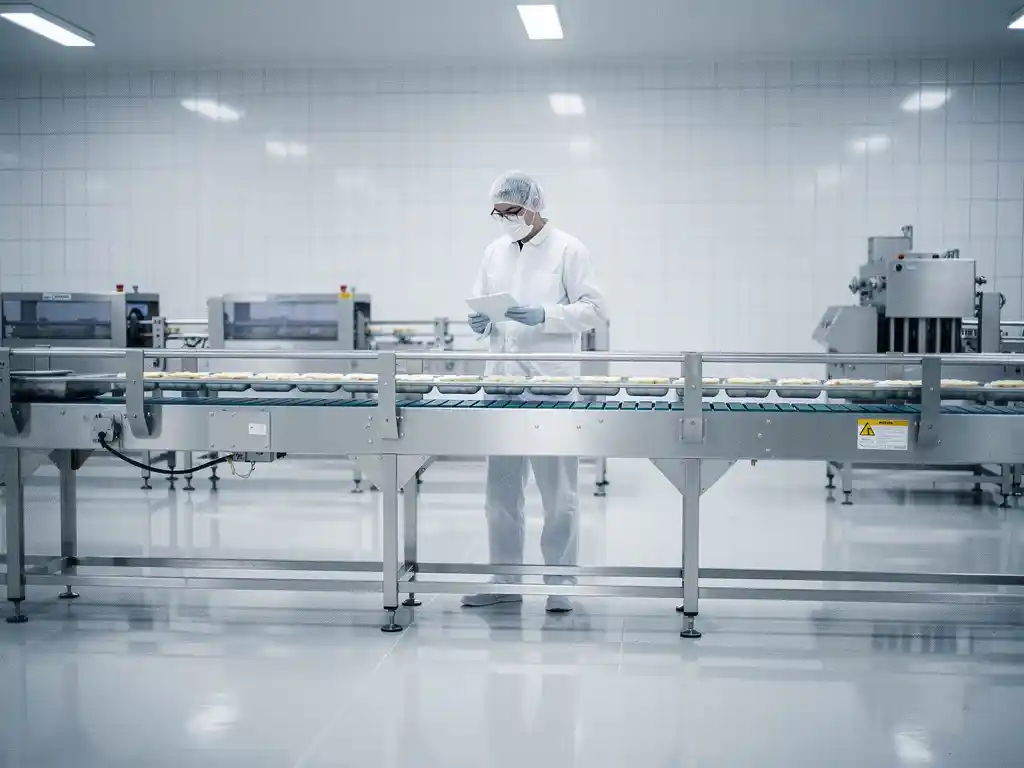
Contamination control in food manufacturing is the set of practices, systems, and physical measures used to prevent harmful substances from entering, spreading through, or contaminating food products during production. It covers biological, chemical, physical, and allergen hazards across the entire facility. The sections below address the most common questions food safety and quality professionals ask when evaluating or strengthening their contamination control programmes.
Why is contamination control so critical in food manufacturing?
Contamination control in food manufacturing is critical because even trace levels of harmful substances can render products unsafe, trigger costly recalls, and expose businesses to serious regulatory and legal consequences. Unlike many industries where contamination causes operational disruption, in food production it can directly harm consumers and permanently damage brand trust.
Food manufacturers operate under intense scrutiny from regulators, retailers, and consumers alike. A single contamination incident can result in product recalls, facility shutdowns, loss of certification, and significant financial penalties. Beyond the commercial impact, the human cost of foodborne illness makes contamination prevention a genuine moral responsibility, not simply a compliance checkbox.
Contamination also affects production efficiency. When contaminants enter a facility unchecked, they increase the risk of batch failures, line stoppages, and rework, all of which drive up operational costs. Robust contamination control in food production protects both the product and the bottom line.
What are the main types of contamination in food manufacturing?
The four main types of contamination in food manufacturing are biological, chemical, physical, and allergen contamination. Each poses distinct risks to product safety and requires targeted prevention strategies as part of a comprehensive food facility contamination prevention programme.
- Biological contamination involves microorganisms such as bacteria, viruses, moulds, and yeasts. Pathogens like Listeria monocytogenes, Salmonella, and E. coli are among the most serious threats in food environments, capable of causing severe illness and death.
- Chemical contamination occurs when cleaning agents, pesticides, lubricants, or other chemical substances come into contact with food or food-contact surfaces. Improper chemical storage and handling are common root causes.
- Physical contamination refers to foreign objects entering food products, including glass, metal fragments, plastic, hair, or particulate matter tracked in from outside the production area.
- Allergen contamination is cross-contact between allergenic ingredients and products that should be allergen-free. This is a growing concern as consumer demand for allergen-free products increases and labelling regulations tighten.
Understanding these categories is the first step toward building effective controls. Many facilities face multiple contamination types simultaneously, which is why layered prevention systems are more effective than single-point solutions.
How do contaminants enter a food manufacturing facility?
Contaminants most commonly enter food manufacturing facilities through people, vehicles, raw materials, air, and water. Research consistently shows that foot and wheel traffic at entry points is one of the primary vectors, with up to 80% of facility contamination introduced at floor level.
Every time a worker, visitor, or delivery vehicle moves from an uncontrolled area into a production zone, they carry potential contamination with them. Shoe soles and wheel surfaces pick up particulates, microorganisms, and debris from external environments and transport them directly into controlled areas. This is why entry point management is a foundational element of any food safety contamination control strategy.
Other common entry routes include:
- Raw material deliveries introducing soil, packaging debris, or biological contaminants
- Air handling systems drawing in external particulates, especially in facilities with inadequate filtration
- Pest ingress through structural gaps, drains, or poorly maintained entry points
- Water sources carrying chemical or biological contaminants into processing areas
- Personnel moving between zones without adequate hygiene protocols
Addressing these pathways requires a combination of physical barriers, procedural controls, and ongoing monitoring. Entry point solutions such as contamination control mats play a particularly important role in capturing particulates and microorganisms before they can travel further into the facility.
What contamination control measures are used in food manufacturing?
Contamination control in food manufacturing relies on a layered system of physical barriers, procedural protocols, environmental monitoring, and personnel hygiene measures. No single measure is sufficient on its own; effective food safety depends on multiple controls working together across the facility.
Physical and environmental controls
Physical controls are designed to prevent contaminants from entering or spreading through the facility. These include dedicated entry point systems such as contamination control mats, air filtration and positive pressure systems in controlled zones, segregated production areas, and sealed surfaces that resist microbial growth. Zoning, where facilities are divided into areas of different hygiene classification, is a standard approach in GMP food manufacturing environments.
Procedural and personnel controls
Personnel remain one of the most significant contamination vectors in any food facility. Effective procedural controls include gowning requirements, handwashing and sanitisation protocols, restricted access to high-care and high-risk zones, and regular training. Visitor management procedures, including the use of dedicated entry routes and protective clothing, are equally important.
Cleaning and disinfection schedules, pest control programmes, and supplier assurance processes round out a comprehensive contamination prevention approach. The most effective facilities treat contamination control as a continuous process rather than a periodic activity.
What regulations govern contamination control in food manufacturing?
Contamination control in food manufacturing is governed by a combination of international food safety standards, national legislation, and industry-specific codes of practice. The most significant frameworks include GMP (Good Manufacturing Practice) requirements, HACCP principles, and standards such as BRCGS, SQF, IFS, and ISO 22000.
In the United States, the FDA’s Food Safety Modernization Act (FSMA) mandates preventive controls for human food, placing legal responsibility on manufacturers to identify and manage contamination risks proactively. In the European Union, Regulation (EC) No 852/2004 on food hygiene sets out hygiene requirements for food businesses, with HACCP compliance as a central obligation.
Retailer-driven standards such as BRCGS (British Retail Consortium Global Standard) and SQF (Safe Quality Food) are widely adopted globally and set detailed requirements for facility design, personnel hygiene, zoning, and contamination monitoring. Many food manufacturers must achieve and maintain certification to these standards as a condition of supply agreements.
Across all frameworks, the underlying principle is consistent: contamination risks must be identified, assessed, and controlled through documented, validated measures. Regulatory audits assess not just whether controls exist, but whether they are effective, consistently applied, and regularly reviewed.
How do you choose the right contamination control solution for a food facility?
Choosing the right contamination control solution for a food manufacturing facility depends on the types of contamination present, the traffic patterns at entry points, the hygiene classification of different zones, and the facility’s regulatory obligations. A solution that performs well in a low-risk packing area may be wholly inadequate in a high-care production zone.
Start by mapping the facility’s contamination risk profile. Identify the highest-risk entry points, the volume and type of traffic moving through them, and the specific contaminants that pose the greatest threat. This assessment should inform both the type of control measure selected and its specification.
Key factors to evaluate when selecting a solution include:
- Capture performance: Does the solution demonstrably reduce particulate and microbial transfer at entry points?
- Antimicrobial properties: For biological contamination risks, does the solution inhibit microbial growth between cleaning cycles?
- Durability and total cost: Reusable solutions with a multi-year lifespan typically offer significantly lower total cost of ownership than disposable alternatives, while also reducing single-use plastic waste.
- Compliance suitability: Does the solution support audit readiness and align with the relevant GMP food manufacturing standards?
- Operational fit: Can the solution accommodate the facility’s traffic volumes, layout, and cleaning regimes without disrupting production?
Consulting a specialist before committing to a solution is always advisable. Facilities vary significantly, and a solution designed around the specific layout, traffic flow, and risk profile of your site will consistently outperform a generic off-the-shelf approach.
How Dycem helps with contamination control in food manufacturing
Dycem’s reusable contamination control mats are engineered to address the entry-point contamination challenge that food manufacturers face every day. Here is what they deliver:
- Capture and retain up to 99.9% of shoe and wheel-borne particulates before they enter controlled production areas
- Built-in Biomaster silver-ion antimicrobial technology inhibits microbial growth by up to 99.9% between cleaning cycles
- Designed to perform for 3 to 5 years, reducing the recurring cost and waste associated with disposable sticky mat alternatives
- Customisable in size, format, and colour to suit complex facility layouts, zoning requirements, and traffic flows
- ISO-certified manufacturing meeting EN ISO 9001 and 14001 standards, California Proposition 65, and EU REACH compliance
- Suitable for pedestrian zones, light-wheeled traffic areas, and heavy-duty environments including forklift and pallet truck routes
Whether you are looking to strengthen your GMP food manufacturing compliance, replace underperforming disposable mats, or build a more sustainable contamination control programme, Dycem’s specialists can help you identify the right solution for your facility. Contact Dycem today to arrange a free site survey and consultation.