

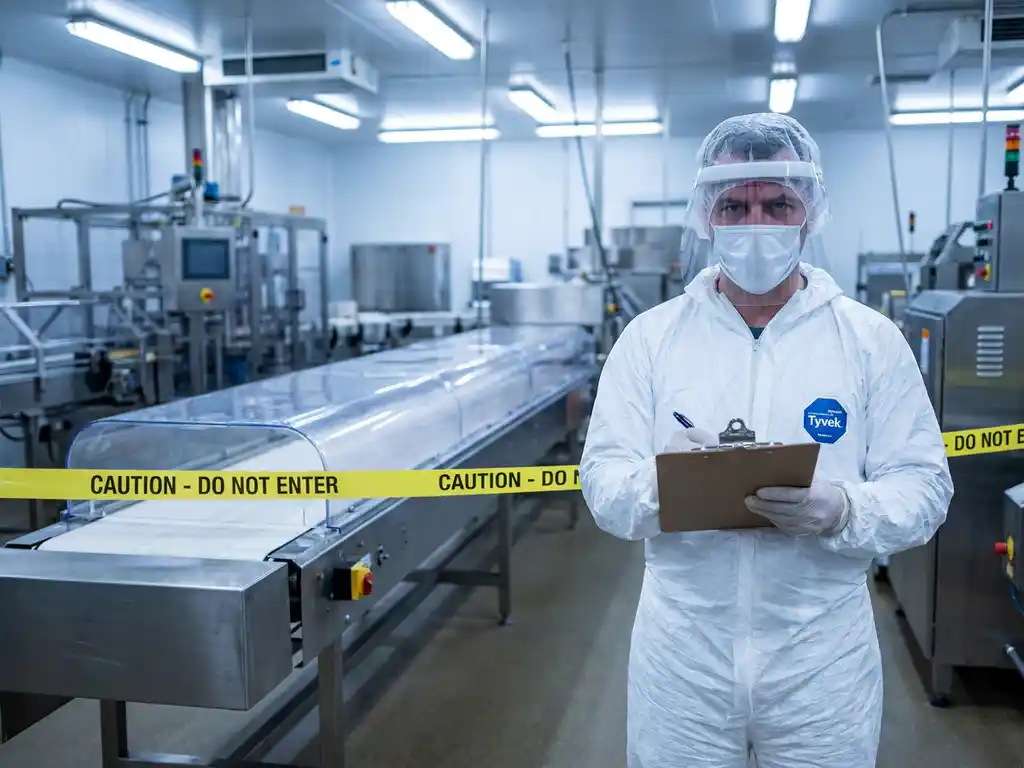
Failing a BRC audit as a food manufacturer in 2026 can cost anywhere from tens of thousands to several hundred thousand pounds when direct penalties, operational disruption, and lost contracts are combined. For facilities that supply major retailers or operate under BRCGS certification, the consequences extend well beyond the audit room. This article breaks down exactly what those consequences look like, what drives them, and what manufacturers can do to reduce the risk.
What happens to a food manufacturer after a failed BRC audit?
After a failed BRC audit, a food manufacturer faces immediate suspension or withdrawal of their BRCGS certification, depending on the severity and number of non-conformances recorded. A critical non-conformance results in automatic failure, while multiple major non-conformances can trigger the same outcome. Without a valid certificate, the manufacturer loses the right to trade under that certification until a successful re-audit is completed.
The practical consequences begin within days. Retail and foodservice customers who require BRCGS certification as a condition of supply will typically be notified, and some will place orders on hold or begin sourcing alternatives. The manufacturer must submit a corrective action plan within a defined timeframe, address the root causes identified by the auditor, and then request a re-audit, which comes at additional cost and with no guarantee of a first-time pass.
For facilities with a history of compliance issues, a failed audit can also trigger increased scrutiny from regulatory bodies, including the Food Standards Agency in the UK or equivalent authorities in other markets. This creates a compounding effect where one audit failure leads to a broader pattern of oversight that consumes significant management time and resources.
How much does a BRC audit failure cost in direct financial terms?
The direct financial cost of a BRC audit failure includes the re-audit fee, internal resource costs for corrective action, and any production downtime required to implement changes. Re-audit fees vary by certification body and facility complexity, but manufacturers should budget for a significant additional outlay on top of the original audit cost. When internal labour, external consultancy, and facility modifications are factored in, direct costs can reach five to six figures.
Beyond the re-audit itself, manufacturers may need to invest in new equipment, updated procedures, staff retraining, and in some cases, physical modifications to the production environment. If contamination control failures contributed to the non-conformance, remediation costs can include the replacement of inadequate hygiene barriers, deep cleaning programmes, and validation testing to demonstrate that corrective measures are effective.
Production disruption adds another layer of cost. If lines must be paused to allow for corrective work, or if product batches are quarantined pending investigation, the financial impact escalates quickly. For high-volume facilities, even a short period of reduced output represents a substantial loss.
What are the commercial consequences of losing BRC certification?
Losing BRC certification puts existing customer contracts at immediate risk. Many major retailers, foodservice operators, and ingredient buyers require suppliers to hold valid BRCGS certification as a non-negotiable condition of supply. Without it, a manufacturer may be temporarily or permanently delisted, meaning revenue from those accounts stops until certification is reinstated.
The reputational damage can outlast the certification gap itself. Buyers who have been forced to source elsewhere during the suspension period may not return, particularly if they have found alternative suppliers who can meet their needs reliably. In competitive supply chains, a BRC audit failure signals a compliance risk that procurement teams are reluctant to accept again.
There are also knock-on effects for export markets. BRCGS certification is recognised internationally and is often required for access to markets in North America, Europe, and Asia-Pacific. A lapsed or suspended certificate can close those markets entirely until the facility achieves recertification, delaying growth plans and damaging relationships with international distribution partners.
What are the most common reasons food manufacturers fail a BRC audit?
The most common reasons food manufacturers fail a BRC audit relate to gaps in food safety management systems, inadequate pest control, poor traceability records, and failures in contamination prevention. Auditors assess both documented systems and physical site conditions, so a facility can fail even when paperwork is in order if the production environment does not meet the required standard.
Recurring non-conformances typically fall into several categories:
- Contamination control gaps: Inadequate barriers at entry points, insufficient hygiene controls in high-care or high-risk zones, and poor management of foot traffic between clean and non-clean areas.
- Documentation failures: Incomplete HACCP records, missing verification activities, or procedures that exist on paper but are not consistently followed in practice.
- Pest management deficiencies: Evidence of pest activity or inadequate preventive controls, particularly in storage and raw material handling areas.
- Allergen management weaknesses: Insufficient segregation, labelling errors, or gaps in cleaning validation between allergen-containing and allergen-free production runs.
- Supplier approval failures: Use of unapproved suppliers or absence of adequate supplier monitoring records.
Many of these failures share a common thread: they reflect a gap between written procedures and what is actually happening on the factory floor. Auditors are trained to identify this disconnect, and it is one of the most reliable predictors of a non-conformance outcome.
How does contamination control affect BRC audit outcomes?
Contamination control is a fundamental requirement of the BRC Global Standard for Food Safety, and failures in this area are among the most frequently cited reasons for non-conformances. Auditors assess whether a facility has effective physical barriers and hygiene controls at entry points, particularly in high-care and high-risk zones where the risk of cross-contamination is greatest.
Foot traffic is one of the primary vectors for contamination in food manufacturing environments. Personnel moving between areas of different hygiene status can transfer pathogens, allergens, and particulates on footwear and clothing. If a facility cannot demonstrate that it has robust controls at these transition points, it is exposed to a major or critical non-conformance depending on the zone classification and the nature of the product being handled.
Industry experience consistently shows that facilities relying on disposable sticky mats or footbaths often struggle to demonstrate consistent contamination control performance during audits. Disposable mats lose effectiveness quickly, are frequently left in place beyond their useful life, and generate significant single-use plastic waste. Footbaths require careful management of chemical concentration and contact time to be effective, and audit evidence of this management is often incomplete.
Effective, validated contamination control at entry points, supported by documented cleaning and inspection records, gives auditors the evidence they need to confirm that a facility takes its hygiene obligations seriously. This is not a peripheral concern; it is central to how BRC auditors assess the integrity of a food safety system.
How can a food manufacturer reduce the risk of failing a BRC audit?
A food manufacturer can reduce the risk of failing a BRC audit by conducting regular internal audits against the current BRCGS standard, maintaining complete and accurate documentation, and ensuring that physical site conditions consistently reflect written procedures. Proactive gap analysis before the scheduled audit date is one of the most effective risk reduction strategies available.
Key actions that directly reduce audit failure risk include:
- Strengthening entry-point hygiene: Implement validated contamination control measures at all transition points between hygiene zones, with documented inspection and cleaning records.
- Conducting mock audits: Use internal or third-party auditors to simulate the BRC audit process and identify non-conformances before they are recorded officially.
- Training staff at all levels: Ensure that everyone working in or near controlled areas understands the hygiene requirements and their individual responsibilities.
- Reviewing supplier approvals: Confirm that all approved supplier lists are current and that monitoring records are complete and accessible.
- Updating HACCP documentation: Review critical control points against current production processes to ensure documentation reflects actual practice.
- Addressing previous non-conformances: Demonstrate closed-loop corrective action for any issues identified in prior audits, with evidence of effectiveness monitoring.
Facilities that treat BRC compliance as a continuous process rather than an annual event consistently achieve better audit outcomes. Building compliance into daily operational routines, rather than preparing intensively in the weeks before an audit, is the most reliable long-term strategy.
How Dycem helps food manufacturers maintain BRC compliance
Contamination control at entry points is one of the most auditable and improvable aspects of a food manufacturer’s hygiene programme. Dycem’s reusable contamination control mats are purpose-built to address this risk with validated, long-lasting performance that supports audit readiness year-round.
- Up to 99.9% particulate capture at pedestrian and wheeled traffic entry points, reducing the risk of contamination migrating between hygiene zones.
- Biomaster silver-ion antimicrobial technology built into every mat, inhibiting microbial growth by up to 99.9% and supporting hygiene standards in high-care environments.
- 3 to 5 year product lifespan, eliminating the inconsistency and waste associated with disposable sticky mat programmes.
- ISO-certified manufacturing to EN ISO 9001 and 14001 standards, providing the documented quality assurance that auditors expect from critical hygiene components.
- Washable and reusable construction, making it straightforward to maintain cleaning records and demonstrate consistent hygiene performance during an audit.
Whether you need to upgrade entry-point controls in a high-care zone or establish a consistent hygiene barrier across a multi-site facility, Dycem’s contamination control products are designed to integrate seamlessly into your existing compliance programme. To discuss your facility’s specific requirements and arrange a free site survey, contact Dycem today.