

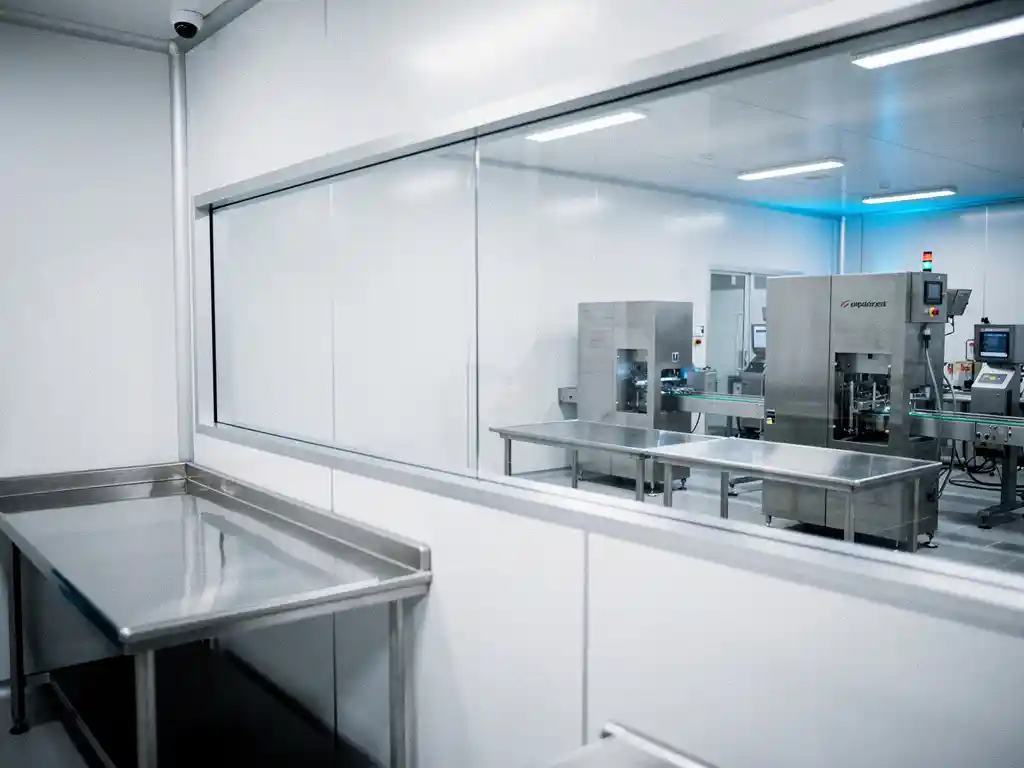
A low-risk food zone is an area of a food production facility where open, ready-to-eat, or high-care products are not present, meaning the consequences of contamination are lower and controls are less stringent. A high-risk food zone, by contrast, is a tightly controlled area where exposed food that will receive no further heat treatment or kill step is handled, making contamination directly hazardous to consumer safety. The distinction is defined by the nature of the product, its vulnerability to contamination, and the potential for harm if a pathogen or foreign body enters the zone. This article unpacks how that distinction is drawn, where the boundaries sit, and what controls food safety teams must put in place at every transition point.
What makes a food production area high-risk or low-risk?
A food production area is classified as high-risk or low-risk based on the vulnerability of the product being handled and the likelihood that contamination at that stage could cause consumer harm. High-risk areas contain food that is ready to eat, has already been cooked or processed, and will receive no further treatment capable of destroying pathogens. Low-risk areas handle raw, unprocessed, or packaged goods where a subsequent kill step still exists in the production chain.
The classification is not arbitrary. Food safety management systems, including those aligned to HACCP principles and the BRC Global Standard for Food Safety, use zone risk ratings to determine the level of hygiene control, personnel movement restrictions, and environmental monitoring required in each part of a facility. The higher the risk, the more rigorous the separation from potential contamination sources.
Several factors determine where a zone falls on the risk spectrum:
- Product state: Is the food exposed, cooked, or ready to eat? Or is it raw, enclosed, or destined for further processing?
- Kill step position: Does a heat treatment, pasteurisation, or other validated pathogen-reduction step occur before or after this area in the process flow?
- Exposure level: Is the product open to the environment, or is it enclosed in packaging that provides a physical barrier?
- Pathogen sensitivity: Some products, such as cooked meats or soft cheeses, are particularly susceptible to post-process contamination and therefore require higher-risk classification.
Some facilities also define intermediate categories, such as high-care zones, which sit between low-risk and high-risk in terms of the controls applied. High-care areas typically handle chilled, ready-to-eat products where the risk is elevated but the product may still receive some further treatment before consumption.
What are examples of high-risk zones in food facilities?
High-risk zones in food facilities are areas where ready-to-eat or post-process products are exposed to the environment without a subsequent kill step. Common examples include cooked meat slicing and packing areas, ready-meal assembly lines, pasteurised dairy filling rooms, and smoked fish processing areas. Any space where an exposed, finished, or near-finished product could be contaminated by pathogens, allergens, or foreign bodies qualifies as high-risk.
In practical terms, high-risk zones tend to share several characteristics. They operate under positive air pressure to prevent unfiltered air from entering. Personnel entering these areas follow strict gowning protocols, including dedicated clothing, footwear, and hygiene procedures. Movement of people, equipment, and materials into a high-risk zone is tightly controlled and documented.
Specific examples commonly found in food manufacturing facilities include:
- Cooked poultry or meat portioning and packaging rooms
- Ready-to-eat salad preparation and packing areas
- Post-pasteurisation dairy filling lines
- Sandwich and prepared food assembly areas
- Chilled dessert and confectionery finishing rooms
- Sterile or aseptic filling environments for liquid food products
In each of these settings, the product is at its most vulnerable. A single contamination event, whether microbial, chemical, or physical, can result in product recall, regulatory action, or harm to consumers. The controls applied in these areas reflect that level of risk.
What are examples of low-risk zones in food facilities?
Low-risk zones in food facilities are areas where raw, unprocessed, or fully enclosed products are handled, and where a kill step or further processing stage will follow before the product reaches the consumer. Examples include raw ingredient intake and storage areas, dry goods warehouses, raw meat preparation rooms, and outer packaging or dispatch areas. Contamination in these zones is less immediately critical because the product will undergo further treatment.
Low-risk areas still require hygiene standards and contamination control measures, but the controls are proportionate to the lower level of risk. Personnel movement is less restricted, gowning requirements are typically less intensive, and environmental monitoring programmes are less frequent than in high-risk zones.
Common low-risk zone examples in food production include:
- Raw ingredient reception and storage areas
- Dry goods and ambient product warehouses
- Raw meat, poultry, or fish preparation rooms (prior to cooking)
- Outer carton packing and secondary packaging areas
- Engineering and maintenance workshops within the facility
- Staff welfare areas, changing rooms, and corridors
It is worth noting that low-risk does not mean no-risk. Cross-contamination originating in a low-risk zone, if it travels unchecked into a high-risk area, can have serious consequences. This is why the boundaries between zones are as important as the zones themselves.
How does contamination travel between low-risk and high-risk zones?
Contamination travels between low-risk and high-risk food zones primarily through foot traffic, wheeled equipment, airflow, and the movement of materials or personnel across zone boundaries. People moving from a raw preparation area to a cooked product area without adequate decontamination are one of the most common vectors for cross-contamination in food facilities. Wheels on trolleys, pallet trucks, and forklifts are equally significant carriers of particulate and microbial contamination.
Research across food safety disciplines consistently identifies the floor as a critical contamination pathway. Pathogens such as Listeria monocytogenes are well documented for their ability to persist in floor environments and travel via footwear and wheeled equipment from low-risk to high-risk zones. Airborne particles, including dust, allergen fragments, and microbial aerosols, can also migrate between zones where physical separation and air pressure differentials are insufficient.
The most common contamination transfer routes include:
- Footwear: Contaminants picked up on the soles of shoes in low-risk areas are carried directly into high-risk zones with each step taken across a boundary.
- Wheeled equipment: Trolleys, pallet trucks, and forklifts move between zones and carry floor-level contamination on their wheels without any visible sign of transfer.
- Personnel hands and clothing: Staff who handle raw materials and then move to high-care or high-risk areas without changing or sanitising can transfer contamination directly to product contact surfaces.
- Airflow: Inadequate air pressure management allows contaminated air from lower-risk areas to migrate into controlled zones.
- Materials and packaging: Outer packaging that has been in contact with low-risk environments can introduce contamination when brought into high-risk areas.
Understanding these transfer routes is the foundation for designing effective zone separation strategies. Each route requires a specific control measure, and no single intervention addresses all of them.
What contamination controls are required at zone boundaries?
At the boundary between a low-risk and high-risk food zone, contamination controls must address every transfer route: people, equipment, materials, and air. Required controls typically include physical barriers, dedicated gowning and hygiene procedures, equipment decontamination protocols, and floor-level contamination capture systems at entry points. The specific measures required depend on the risk classification of the zones on either side of the boundary.
Effective zone boundary controls are layered. No single measure is sufficient on its own. A robust system combines physical separation with procedural controls and validated contamination capture at the point of transition.
Physical and structural controls
Physical barriers such as walls, airlocks, and controlled entry points prevent unmanaged movement between zones. Colour-coded flooring and clear signage reinforce zone boundaries for personnel. Air pressure differentials, maintained by HVAC systems, prevent contaminated air from flowing from lower-risk to higher-risk areas. Dedicated equipment assigned to specific zones prevents wheeled vehicles and utensils from crossing boundaries and carrying contamination with them.
Personnel and procedural controls
Personnel crossing from a low-risk to a high-risk zone must follow defined gowning procedures, which may include changing into zone-specific clothing and footwear, handwashing and sanitisation, and passing through a hygiene station before entry. These procedures are documented, audited, and enforced as part of the facility’s food safety management system. Visitor and contractor access to high-risk zones is typically restricted and supervised.
Floor-level contamination capture
The floor at zone entry points is one of the most critical and frequently overlooked control surfaces in food facilities. Contamination control mats placed at the transition between zones capture particulate and microbial contamination from footwear and wheeled equipment before it crosses the boundary. Unlike disposable sticky mats, which require frequent replacement and generate significant single-use plastic waste, reusable polymeric mats with built-in antimicrobial technology provide consistent, long-term performance at high-traffic entry points.
How do auditors assess zone separation during food safety inspections?
During food safety inspections, auditors assess zone separation by evaluating both the physical infrastructure and the operational practices that maintain boundaries between low-risk and high-risk areas. They look for documented zone maps, evidence that personnel follow defined transition procedures, physical barriers that prevent uncontrolled movement, and environmental monitoring data that demonstrates contamination is being controlled effectively at boundaries.
Auditors conducting assessments against standards such as the BRC Global Standard for Food Safety, SQF, or IFS Food will typically review zone separation as part of their site inspection. Key areas of scrutiny include:
- Zone maps and risk assessments: Is the facility’s zone classification documented, justified, and up to date?
- Physical separation: Are boundaries clearly defined, marked, and physically enforced? Are there airlocks or controlled entry points between zones?
- Gowning and hygiene procedures: Are personnel following the correct procedures when crossing zone boundaries? Is there evidence of training and compliance monitoring?
- Equipment segregation: Is equipment colour-coded or otherwise designated to specific zones? Is there evidence that cross-zone equipment use is prevented?
- Environmental monitoring: Is the facility conducting swab testing and environmental sampling at zone boundaries? Are results trending in the right direction?
- Floor hygiene at entry points: Are there validated controls in place at floor level to capture contamination before it crosses into high-risk areas?
Auditors are particularly attentive to evidence of actual practice rather than documented procedure alone. A facility may have a well-written zone separation policy but still fail an audit if observations on the floor reveal that personnel are not following it, that equipment is moving unchecked between zones, or that entry point controls are inadequate or poorly maintained.
Consistent, verifiable zone separation, supported by physical controls, documented procedures, and environmental monitoring data, is what auditors are looking for. Gaps in any one of these areas can result in non-conformances that affect certification status.
How Dycem helps with food zone contamination control
Dycem’s reusable contamination control mats are designed to address one of the most persistent and underestimated contamination transfer routes in food manufacturing: the floor. Placed at the transition points between low-risk and high-risk food zones, Dycem mats capture and retain up to 99.9% of particulate contamination from footwear and wheeled equipment before it crosses the boundary. Built-in Biomaster silver-ion antimicrobial technology inhibits microbial growth by up to 99.9%, providing an additional layer of protection at the most critical entry points in your facility.
- Dycem CleanZone is engineered for pedestrian and light-wheeled traffic areas, making it well suited to gowning room entrances, airlocks, and controlled corridors between food zones
- Dycem WorkZone handles heavy-wheeled traffic including forklifts and pallet trucks, providing contamination capture in high-throughput logistics and production environments
- Dycem Floating Mats offer flexible, repositionable coverage for facilities with variable zone layouts or temporary boundary requirements
- All Dycem mats are reusable, washable, and designed to perform for three to five years, making them a more sustainable and cost-effective alternative to disposable sticky mats
- ISO-certified manufacturing ensures consistent quality and compliance with EN ISO 9001 and 14001 standards, supporting your audit readiness
If you are reviewing your zone boundary controls ahead of an audit or looking to replace an inconsistent legacy solution, Dycem’s contamination control specialists can assess your facility and recommend the right configuration. Contact Dycem today to arrange a free site survey.