

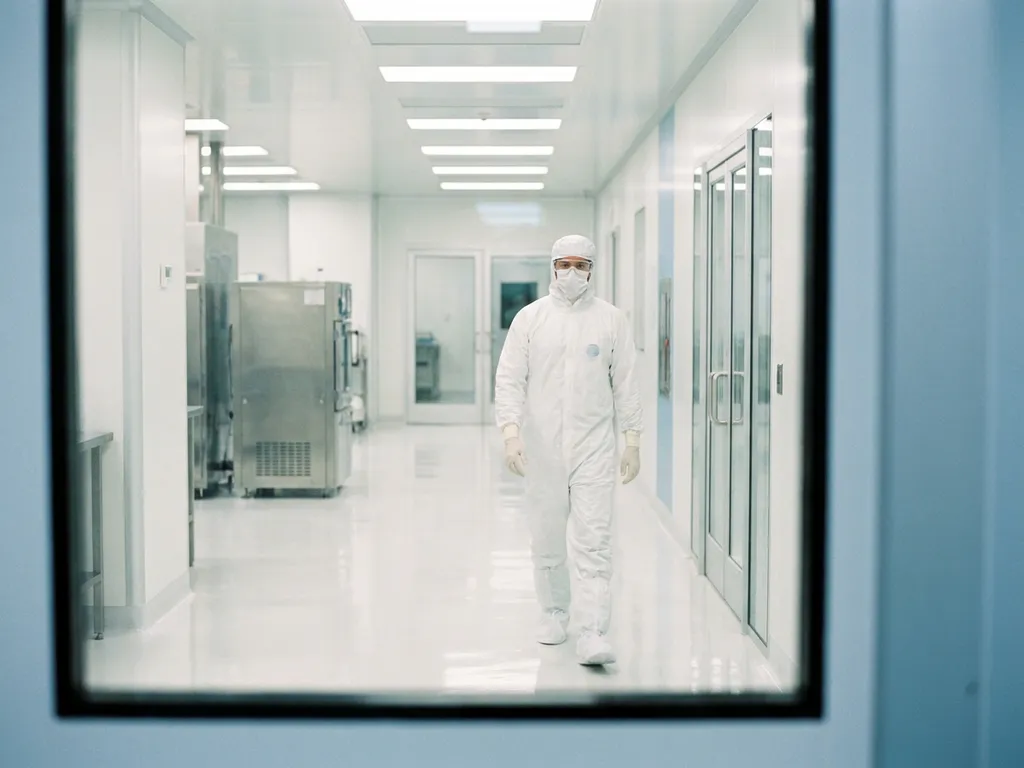
Contamination and cross-contamination are related but distinct risks in pharmaceutical manufacturing. Contamination refers to the unwanted introduction of any foreign substance into a product or environment, while cross-contamination specifically describes the transfer of a contaminant from one product, material, or surface to another. In pharma, both carry serious consequences for product integrity, patient safety, and regulatory compliance. The sections below break down how each occurs, where the risks originate, and what facilities must do to manage them effectively.
How does cross-contamination differ from general contamination?
General contamination in pharma means any unintended introduction of a foreign substance into a product or controlled environment. Cross-contamination is a specific subset of that risk: it occurs when a contaminant originates from another pharmaceutical product, active ingredient, or biological material and transfers into a separate product stream. The distinction matters because the control measures, regulatory obligations, and patient safety consequences differ significantly between the two.
For example, particulate matter from an uncontrolled environment entering a cleanroom is contamination. An active pharmaceutical ingredient (API) from one product migrating into the manufacturing line of a different product is cross-contamination. The latter is considered particularly serious because even trace amounts of a foreign API can cause adverse reactions in patients, especially when potent compounds or allergens are involved.
Understanding this distinction is the foundation of any sound contamination control strategy in a regulated pharmaceutical facility.
What are the most common sources of contamination in pharma?
The most common sources of contamination in pharmaceutical environments are personnel, equipment, raw materials, air, and surfaces. Of these, personnel movement is consistently identified as one of the most significant vectors, since people carry particulates, microorganisms, and chemical residues on their clothing, skin, and footwear into controlled areas.
Industry experience consistently points to the floor as a critical but underestimated entry point. Up to 80% of contaminants that enter controlled environments are tracked in at floor level, carried on the soles of shoes and the wheels of trolleys, carts, and equipment. Other key contamination sources include:
- Raw materials and packaging: Incoming components can introduce particulates, microbial load, or chemical residues if not properly handled and inspected
- Air and HVAC systems: Inadequate air filtration or pressure differentials allow airborne particles and microorganisms to migrate between zones
- Equipment and surfaces: Poorly cleaned or shared equipment can harbour residues between production runs
- Water systems: Purified water systems that are not properly maintained can introduce microbial contamination
- Human error: Procedural lapses, inadequate gowning, and non-compliance with entry protocols all create contamination opportunities
Addressing contamination at its source, particularly at facility entry points, is the most effective first line of defence before contamination can spread deeper into controlled zones.
How does cross-contamination occur between pharmaceutical products?
Cross-contamination between pharmaceutical products occurs when residues, particles, or biological material from one product or manufacturing process are transferred to another. This can happen through shared equipment, air movement between production areas, contaminated personnel, or the movement of materials and vehicles through a facility without adequate decontamination at transition points.
Shared manufacturing equipment is one of the most direct pathways. If cleaning validation procedures are insufficient, residues from a previous batch can persist on surfaces and contaminate the next product. Similarly, if air handling systems are not properly segregated, airborne APIs from one production suite can migrate into adjacent areas.
Personnel and wheeled equipment crossing between production zones without passing through effective contamination control barriers are also significant contributors. A technician who moves between a high-potency API suite and a standard production area without rigorous decontamination at the transition point creates a direct cross-contamination pathway. The same applies to forklifts and pallet trucks that move between warehouse areas and cleanroom-adjacent zones, carrying residues on their wheels from one environment to the next.
Facilities that rely on inadequate legacy solutions at these transition points, such as disposable sticky mats that lose effectiveness quickly or footbaths that offer inconsistent results, leave this pathway insufficiently controlled.
What are the regulatory consequences of contamination and cross-contamination?
Regulatory consequences of contamination and cross-contamination in pharma range from formal observations and warning letters to product recalls, facility shutdowns, and criminal liability. Regulatory bodies including the FDA, EMA, and MHRA treat contamination failures as critical GMP violations, and repeated or serious incidents can result in import alerts that effectively bar a facility from supplying certain markets.
Under EU GMP guidelines and FDA 21 CFR Part 211, pharmaceutical manufacturers are required to implement validated contamination control procedures and demonstrate that those procedures are consistently effective. Failure to do so during an inspection can result in:
- 483 observations or warning letters from the FDA
- Critical findings in EU GMP inspections, leading to manufacturing licence suspension
- Mandatory product recalls and batch rejections
- Significant financial penalties and reputational damage
- In serious cases involving patient harm, criminal prosecution of responsible individuals
Cross-contamination failures carry a higher regulatory burden because of the direct patient safety risk. Regulators expect facilities to demonstrate not only that cross-contamination did not occur, but that the systems in place make it demonstrably unlikely. Documentation, validated cleaning procedures, and physical contamination barriers all form part of that evidence base.
What contamination control measures are required in cleanrooms?
Contamination control measures required in cleanrooms include physical barriers at entry and exit points, validated air filtration and pressure cascade systems, gowning protocols, equipment cleaning and maintenance schedules, and ongoing environmental monitoring. Together, these measures form a layered defence designed to prevent particulates, microorganisms, and chemical residues from reaching product-critical zones.
Entry point control is a foundational requirement. Every person and piece of equipment entering a cleanroom or controlled area must pass through a decontamination step that removes surface contaminants before they can be introduced into the controlled zone. This typically includes:
- Gowning rooms and airlocks that enforce a physical and procedural barrier between uncontrolled and controlled areas
- Floor-level contamination control solutions at entry points to capture particulates from footwear and wheeled equipment
- Air showers or sticky mats at transition points, depending on the classification of the controlled area
- Regular environmental monitoring to verify that contamination levels remain within validated limits
- Cleaning and disinfection schedules validated to the specific microbial and particulate risks of the facility
For facilities looking to strengthen floor-level entry point control, Dycem’s contamination control mats provide a reusable, antimicrobial solution engineered to capture up to 99.9% of shoe and wheel contaminants at the most critical transition points.
When should a pharma facility reassess its contamination control strategy?
A pharma facility should reassess its contamination control strategy when there is a change in production scope, a new regulatory inspection finding, evidence of contamination events, or when existing solutions are no longer performing to validated standards. Regular scheduled reviews are also required under GMP frameworks, but specific triggers should prompt an immediate reassessment.
Key indicators that a review is overdue include:
- Environmental monitoring data showing an upward trend in particulate or microbial counts
- Introduction of new high-potency or allergenic products that increase cross-contamination risk
- Facility expansion, layout changes, or new entry and exit points that alter contamination pathways
- Regulatory observations or audit findings related to contamination control procedures
- Reliance on disposable sticky mats that are being replaced inconsistently or degrading quickly under traffic load
- Increased product recalls or batch failures linked to particulate or microbial contamination
Contamination control is not a static programme. As production volumes, product types, and facility layouts evolve, the risk profile changes. Facilities that treat their contamination control infrastructure as a fixed installation rather than a dynamic, reviewable system are more likely to accumulate compliance risk over time.
How Dycem supports contamination control in pharmaceutical facilities
Dycem provides pharmaceutical facilities with a proven, reusable contamination control mat system that addresses the most critical vulnerability in any cleanroom or controlled environment: the floor-level entry point. Where disposable sticky mats fail through inconsistency, rapid saturation, and high ongoing waste, Dycem’s polymer mat technology delivers sustained, validated performance across the full lifespan of the product.
For pharma Quality, EHS, and Facilities Managers, Dycem offers practical solutions at every stage of the contamination control programme:
- Dycem CleanZone: Semi-permanent mats for cleanroom entrances, gowning rooms, and airlocks, capturing particulates from footwear and light-wheeled traffic at the most sensitive transition points
- Dycem WorkZone: Heavy-duty mats engineered for forklifts, pallet trucks, and large carts, controlling contamination transfer in warehouse and logistics areas adjacent to controlled zones
- Dycem Floating Mats: Repositionable mats for facilities with variable or temporary controlled zones, providing flexible coverage without permanent installation
- Built-in Biomaster antimicrobial protection: Active across the full product lifespan, reducing microbial load on the mat surface between cleaning cycles
- ISO-certified manufacturing and compliance: Supporting audit readiness with products manufactured to EN ISO 9001 and 14001 standards
Every Dycem mat is reusable, washable, and designed for a lifespan of three to five years, making it a significantly more sustainable and cost-effective alternative to single-use peel-off mats. To understand how Dycem can be integrated into your facility’s contamination control strategy, speak to a contamination control specialist and request a free site survey.