

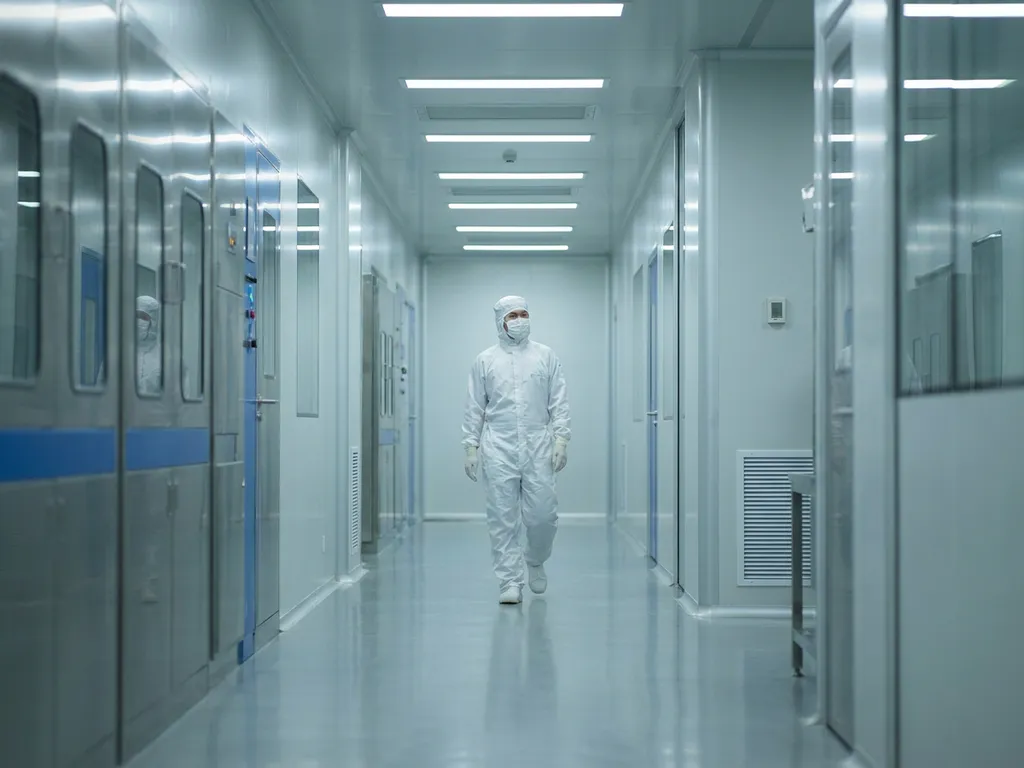
Microbial contamination and particulate contamination are distinct types of contamination that require different detection methods, monitoring protocols, and control strategies. Microbial contamination involves living microorganisms such as bacteria, fungi, and viruses, while particulate contamination refers to non-living particles including dust, fibres, and debris. Both pose serious risks in controlled environments, but they behave differently and demand targeted responses. The sections below explore how each type differs in source, measurement, industry impact, and the standards that govern their control.
How do microbial and particulate contamination differ in practice?
Microbial contamination involves living organisms that can grow, multiply, and spread within a controlled environment. Particulate contamination refers to inert, non-living particles that enter and settle in a space. The critical practical difference is that microorganisms can self-propagate, meaning a small initial contamination event can escalate rapidly without intervention, whereas particulate contamination remains static unless disturbed or reintroduced.
In a cleanroom or controlled environment, this distinction shapes how each type is managed. Particulate contamination is primarily a physical problem: particles enter on people, equipment, and materials, and are controlled through filtration, gowning, and floor-level capture. Microbial contamination is a biological problem: it requires not just physical exclusion but also active suppression through antimicrobial surfaces, sanitisation regimes, and environmental monitoring.
The two types are also closely related. Microorganisms rarely travel alone. They typically attach to particles, which act as carriers. A dust particle or skin cell shed by a person entering a cleanroom can carry a viable microbial load into the environment. This means that effective particulate control also reduces microbial risk, making floor-level contamination capture a dual-purpose intervention.
What are the main sources of each contamination type?
The primary source of both microbial and particulate contamination in controlled environments is people. Human movement generates skin cells, hair, clothing fibres, and respiratory droplets, all of which carry both particulate and microbial load. Equipment, raw materials, and facility infrastructure are secondary sources, but personnel remain the dominant contamination vector in most controlled settings.
For particulate contamination, the main sources include:
- Footwear and wheels tracking in external debris, dust, and fibres
- Skin shedding and clothing fibres from personnel
- Process-generated particles from manufacturing equipment
- Raw materials and packaging introduced into the environment
- HVAC and air handling systems if not properly maintained
For microbial contamination, the main sources include:
- Skin flora and respiratory microorganisms shed by personnel
- Contaminated surfaces, tools, or equipment brought into the space
- Water ingress or moisture accumulation enabling microbial growth
- Inadequately sanitised gowning areas and airlocks
- Footwear carrying environmental microorganisms from uncontrolled areas
Industry experience consistently shows that around 80% of contamination entering controlled environments does so at floor level, through footwear and wheeled equipment. This makes entry point management one of the most important contamination control priorities for both types.
Which industries are most affected by each contamination type?
Both contamination types affect a wide range of industries, but the dominant concern varies by sector. Pharmaceutical and medical device manufacturers face strict regulatory requirements around both microbial and particulate contamination control, making them the most comprehensively affected. Food and beverage production is primarily concerned with microbial contamination, while electronics and aerospace manufacturing are predominantly focused on particulate contamination.
In pharmaceuticals and medical devices, both contamination types are regulated under GMP frameworks and ISO standards. Microbial contamination can render sterile products unsafe, while particulate contamination can compromise injectable medications or implantable devices. Both must be monitored, documented, and controlled as part of routine quality assurance.
In food and beverage, microbial contamination is the primary concern, as bacterial and fungal growth directly affects product safety and shelf life. Regulatory frameworks such as HACCP and food safety standards mandate rigorous environmental monitoring and surface hygiene protocols.
In electronics and semiconductor manufacturing, particulate contamination is the dominant risk. Even sub-micron particles can cause defects in microchips or circuit boards, making cleanroom particulate control a production-critical requirement. Microbial contamination is a secondary concern in most electronics environments.
In aerospace and defence, both types matter. Particulate contamination can compromise precision components and optical systems, while microbial growth in confined or humid areas of aircraft structures poses long-term material risks.
How are microbial and particulate contamination measured and monitored?
Microbial contamination is measured using biological sampling methods, while particulate contamination is measured using physical particle counting instruments. The two disciplines use entirely different tools, sampling protocols, and reporting metrics, which is why cleanroom monitoring programmes typically address them separately under distinct standard operating procedures.
For particulate contamination monitoring, the standard approach uses optical particle counters (OPCs), which draw in air samples and use laser light scattering to count and size particles. Results are reported as particle counts per cubic metre at defined size thresholds, typically 0.5 microns and 5 microns. ISO 14644-1 defines cleanroom classification based on these measurements.
For microbial contamination monitoring, common methods include:
- Active air sampling using impaction samplers that collect airborne microorganisms onto culture media
- Settle plates, which passively collect microorganisms that fall onto an open agar plate over a defined period
- Surface contact plates and swabs for floors, walls, equipment, and gowning areas
- Personnel monitoring using fingertip and gown contact plates
Results from microbial monitoring require incubation before colony-forming units (CFUs) can be counted, meaning there is an inherent time lag between sampling and result. Particulate counts, by contrast, are available in real time. This difference has significant implications for how quickly a facility can respond to a contamination event.
Can one contamination control solution address both types?
Yes, certain contamination control solutions can address both microbial and particulate contamination simultaneously. Floor-level entry point solutions that physically capture particulates while incorporating antimicrobial properties provide a dual-action barrier at one of the highest-risk points in any controlled environment. No single solution eliminates all contamination risk, but combining physical capture with antimicrobial protection significantly reduces both types of contamination load at the point of entry.
The most effective approach integrates multiple layers. HEPA filtration addresses airborne particulates. Gowning protocols reduce personnel-generated microbial and particulate load. Sanitisation regimes suppress microbial growth on surfaces. At the floor level, entry control mats that capture particulates from footwear and wheels while actively inhibiting microbial growth on their surface address both contamination types at the point where the majority of contamination enters.
It is important to understand that no single product replaces a full contamination control programme. A floor mat, however effective, operates as one layer within a broader validated system. The value of dual-action solutions lies in their ability to reduce the cumulative contamination burden across multiple risk vectors simultaneously, which is particularly valuable at high-traffic entry points such as airlocks, gowning rooms, and cleanroom corridors.
What contamination control standards apply to cleanrooms?
Cleanroom contamination control is governed by a combination of international standards and industry-specific regulatory frameworks. The most widely applied standard for particulate contamination is ISO 14644-1, which classifies cleanrooms from ISO Class 1 (the most stringent) to ISO Class 9 based on airborne particle counts. For microbial contamination, the EU GMP Annex 1 guideline and FDA guidance documents set limits for pharmaceutical manufacturing environments.
Key standards and frameworks include:
- ISO 14644-1 and 14644-2: Define cleanroom classification by particulate cleanliness and specify monitoring requirements to maintain that classification
- EU GMP Annex 1: Sets microbiological and particulate limits for pharmaceutical manufacturing, with Grade A through D classifications aligned to production risk levels
- FDA 21 CFR Part 211: US current Good Manufacturing Practice regulations covering environmental controls in drug manufacturing facilities
- ISO 14698: Specifically addresses biocontamination control in cleanrooms, providing guidance on risk assessment and monitoring for microbial contamination
- IEST standards: The Institute of Environmental Sciences and Technology publishes recommended practices widely used in semiconductor and aerospace cleanroom design
Facilities operating in multiple regions or sectors often need to comply with several of these frameworks simultaneously. Quality and EHS managers are responsible for demonstrating ongoing compliance through documented monitoring programmes, validated procedures, and audit-ready records covering both particulate and microbial contamination control.
How Dycem helps with microbial and particulate contamination control
Dycem’s reusable contamination control mats are engineered to address both microbial and particulate contamination at the point of greatest risk: the floor-level entry points through which the majority of contamination enters controlled environments. Each mat combines high-performance particulate capture with built-in Biomaster antimicrobial protection, providing a validated dual-action barrier for cleanrooms and controlled environments across pharmaceuticals, food and beverage, electronics, aerospace, and healthcare.
Dycem’s contamination control mat range provides solutions for every facility requirement:
- Dycem CleanZone captures up to 99.9% of shoe and wheel contaminants at cleanroom entrances, gowning rooms, and airlocks, reducing both particulate and microbial load at the most sensitive entry points
- Dycem WorkZone is engineered for heavy-wheeled traffic including forklifts and pallet trucks, extending contamination control into demanding logistics and production areas
- Dycem Floating Mats offer flexible, repositionable coverage for variable or temporary controlled zones without requiring fixed installation
- All mats are reusable, washable, and built to last three to five years, making them a more sustainable and cost-effective alternative to disposable sticky mats
Dycem’s contamination control specialists provide consultative support from initial site assessment through to implementation, helping facilities align their floor-level strategy with GMP, ISO, and FDA compliance requirements. To discuss your facility’s specific contamination challenges, contact a Dycem specialist to arrange a free site survey.