

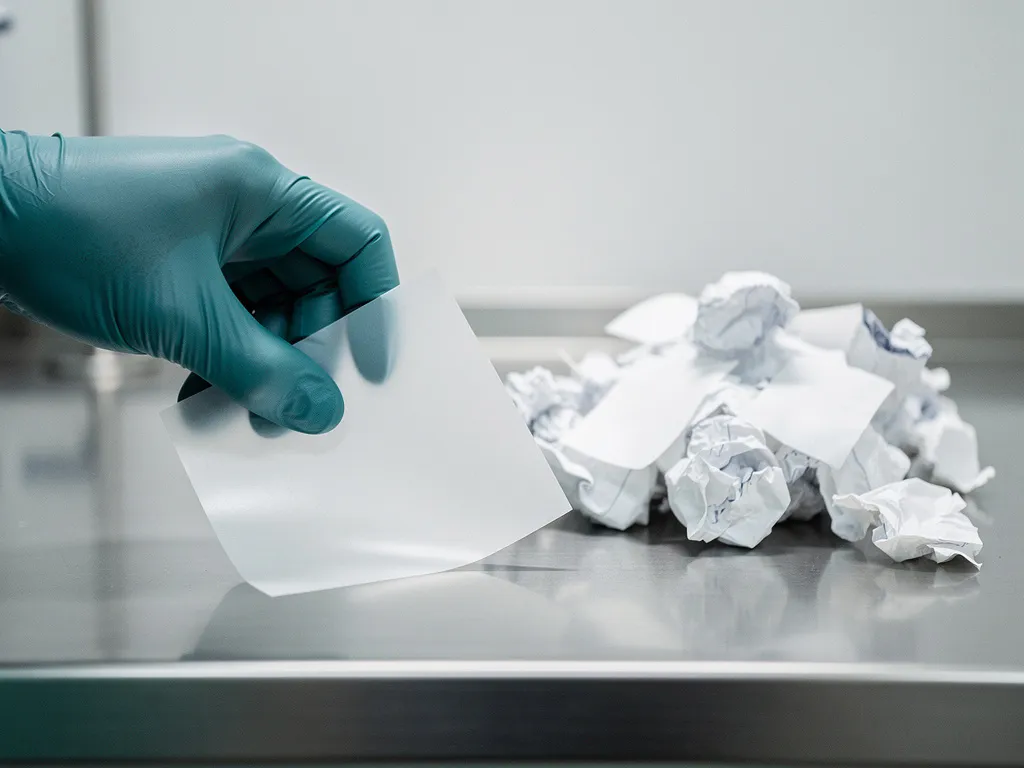
Reusable contamination control mats and disposable sticky mats both aim to capture particulates at facility entry points, but they differ significantly in performance, cost, and environmental impact. Reusable mats, built from durable polymeric materials, are engineered to capture and retain contaminants over a lifespan of three to five years, while disposable peel-off mats are designed for single use and discarded once the adhesive surface is exhausted. For regulated facilities where contamination control is a compliance requirement, understanding this distinction is essential to making the right long-term investment. The sections below address the most common questions facilities managers ask when evaluating these two approaches.
Which contamination control method actually removes more contaminants?
Reusable polymeric contamination control mats outperform disposable sticky mats in particulate capture when assessed over time. High-quality reusable mats are engineered to capture and retain up to 99.9% of shoe and wheel-borne contaminants, and their surface remains consistently effective throughout their operational lifespan rather than degrading with each peel-off layer.
Disposable sticky mats rely on an adhesive surface that becomes progressively less effective as contaminants accumulate. Each layer must be peeled away to restore performance, but in practice, busy facilities often delay this step, meaning the mat operates below its intended capture rate for extended periods. Traffic volume, the type of contaminants present, and how consistently staff peel layers all affect how well a disposable mat actually performs at any given moment.
Reusable mats made from engineered polymers work through a fundamentally different mechanism. Rather than adhesion, they use a textured, high-traction surface that physically dislodges and retains particulates from shoe soles and wheel surfaces. This mechanism does not degrade between cleaning cycles in the same way adhesive surfaces do. When cleaned according to the manufacturer’s guidelines, the mat returns to full performance, providing consistent contamination control at every entry point.
For cleanrooms and controlled environments where particulate levels must remain within defined limits, consistency of performance is not optional. A contamination control method that varies in effectiveness depending on how recently a layer was peeled, or how thoroughly a mat was replaced, introduces unnecessary risk. Reusable mats eliminate that variability.
What are the true costs of disposable contamination control mats?
The true cost of disposable contamination control mats extends well beyond the unit price. When facilities account for ongoing replenishment, storage, disposal, and the staff time required to manage mat replacement, the total cost of ownership for disposable sticky mats is substantially higher than it first appears, often making reusable alternatives the more economical choice over a three to five year period.
Disposable mats require continuous purchasing. A facility with multiple entry points and high foot traffic may go through a significant volume of mat layers each week. Multiply that across a full year and the procurement spend accumulates quickly. Add to that the logistics of ordering, storing, and distributing replacement stock, and the administrative burden becomes a hidden but real operational cost.
There are also waste disposal costs to consider. Contaminated peel-off layers may require specific disposal procedures depending on the regulated environment in which they are used, particularly in pharmaceutical or medical device manufacturing. This adds both cost and complexity that reusable mats do not generate.
Reusable contamination control mats require an upfront investment, but that investment is spread across a product lifespan that typically exceeds three years. With no recurring consumable spend and minimal disposal requirements, the total cost of ownership is significantly lower. For procurement and operations leaders evaluating supplier value, this long-term cost profile is an important factor in the decision.
How do reusable and disposable mats compare on sustainability?
Reusable contamination control mats are the more sustainable option when compared to disposable sticky mats. Disposable peel-off mats generate significant volumes of single-use plastic waste, while reusable mats, designed to perform for three to five years, dramatically reduce the material discarded by a facility over the same period.
Each roll or box of disposable mats represents plastic that will be used once and then sent to waste. In facilities with multiple entry points and high traffic, this can amount to a considerable volume of single-use material every year. As ESG commitments become a more prominent part of corporate strategy and regulatory scrutiny, this ongoing waste stream is increasingly difficult to justify.
Reusable mats address this directly. A single mat installation, properly maintained, replaces what would otherwise be thousands of disposable layers over its operational life. The reduction in single-use plastic is measurable, and for organisations reporting against sustainability targets, this shift can contribute meaningfully to waste reduction goals.
Dycem’s reusable mats are also manufactured to ISO-certified quality standards, including compliance with EN ISO 14001, the international standard for environmental management systems. This ensures that the sustainability commitment is embedded in the manufacturing process, not just the product’s end use. For facilities that need to demonstrate responsible procurement to stakeholders or auditors, this certification provides documented assurance.
Are reusable contamination control mats compliant with GMP and ISO standards?
Yes, high-quality reusable contamination control mats can be fully compliant with GMP requirements and ISO cleanroom standards. Reusable polymeric mats that are validated for particulate capture, manufactured under certified quality management systems, and cleaned according to defined protocols are accepted in regulated environments including pharmaceutical manufacturing, medical device production, and aerospace facilities.
The key compliance considerations for any contamination control mat are whether it can be validated for performance, whether it can be cleaned without degrading its effectiveness, and whether it introduces any contamination risk of its own. Reusable mats made from antimicrobial polymers address all three. Their particulate capture performance can be documented, their cleaning process can be standardised and recorded, and built-in antimicrobial technology, such as Biomaster silver-ion protection, inhibits microbial growth on the mat surface by up to 99.9%.
Disposable mats, by contrast, can introduce their own compliance challenges. The act of peeling layers in a controlled environment generates particulates and requires personnel intervention, both of which carry risk in sensitive zones. The inconsistency of performance between layer changes also makes it harder to demonstrate a controlled, reproducible process during a GMP audit.
Reusable mats manufactured to EN ISO 9001 standards, and compliant with California Proposition 65 and EU REACH regulations, provide the documented quality assurance that regulated industries require. For quality managers preparing for FDA inspections or ISO audits, this level of certification supports a defensible contamination control programme.
When should a facility choose reusable over disposable contamination control?
A facility should choose reusable contamination control mats when consistent performance, regulatory compliance, and long-term cost efficiency are priorities. For any organisation operating in a regulated or precision-sensitive environment, reusable mats provide a more reliable, auditable, and cost-effective solution than disposable alternatives over the full product lifecycle.
Reusable mats are particularly well-suited to facilities where contamination control is a compliance requirement rather than a preference. Pharmaceutical manufacturers, medical device producers, food and beverage processors, aerospace assemblers, and electronics manufacturers all operate in environments where particulate or microbial contamination can directly affect product quality, regulatory standing, or operational safety. In these settings, the performance consistency of a reusable mat is not a convenience — it is a risk management decision.
Facilities with high traffic volumes will also find reusable mats more practical. Disposable mats in busy environments require frequent layer changes to maintain any meaningful level of performance, generating operational disruption and ongoing cost. A reusable mat handles high foot and wheel traffic without requiring the same level of intervention, and its cleaning cycle can be scheduled as part of routine facility maintenance.
Disposable mats may still have a role in temporary setups, low-traffic areas, or situations where a fixed mat installation is not feasible. But for permanent entry points, cleanroom corridors, gowning rooms, and airlocks, the case for reusable contamination control is clear: better performance, lower total cost, reduced waste, and stronger compliance documentation.
How Dycem helps with contamination control
Dycem provides reusable contamination control mat solutions trusted by regulated industries worldwide, from pharmaceutical and medical device manufacturers to aerospace and electronics facilities. Dycem’s product range is engineered to deliver consistent, validated particulate capture at every critical entry point, backed by over 60 years of industry expertise. Key benefits include:
- Capture and retention of up to 99.9% of shoe and wheel-borne contaminants
- Built-in Biomaster antimicrobial protection that inhibits microbial growth by up to 99.9%
- A product lifespan of three to five years, significantly reducing waste and total cost of ownership compared to disposable mats
- ISO-certified manufacturing to EN ISO 9001 and 14001 standards, with EU REACH and California Proposition 65 compliance
- Customisable mat formats, including CleanZone and WorkZone solutions, tailored to pedestrian, light-wheeled, and heavy-traffic environments
- Consultative support from contamination control specialists, including free site surveys
If your facility is ready to move beyond the cost and inconsistency of disposable sticky mats, contact Dycem today to arrange a free site survey and speak with a contamination control specialist.