

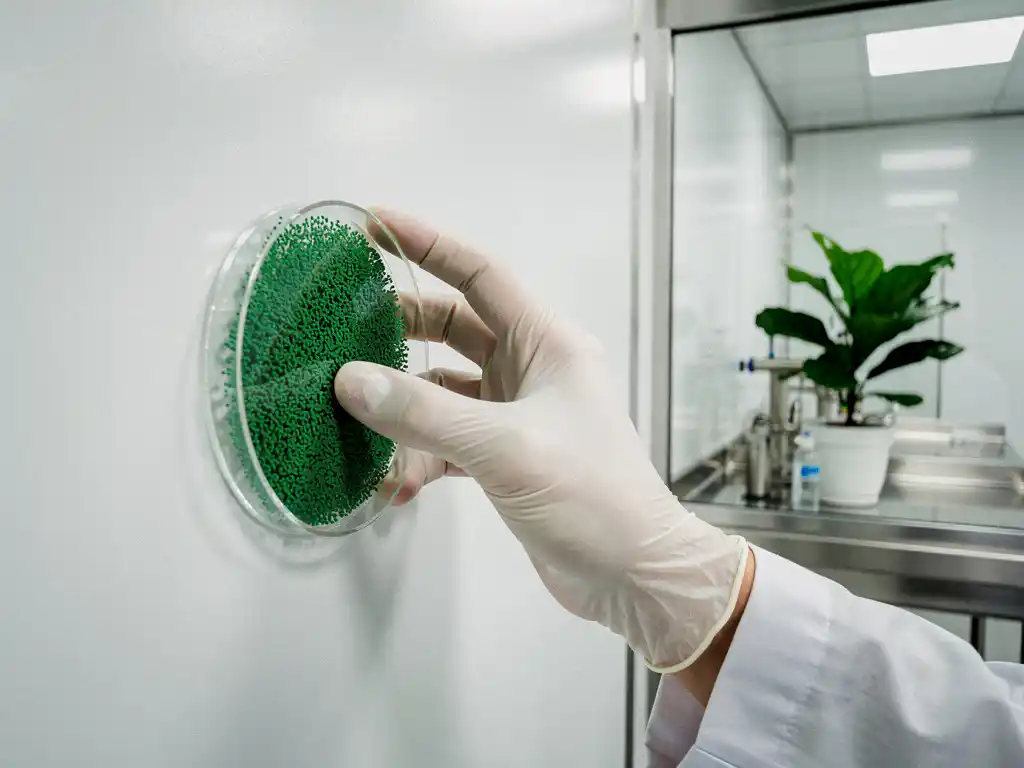
Microbial control is directly relevant to sustainable facility management because unmanaged microbial contamination drives recurring costs, compliance failures, and reliance on single-use materials that undermine both operational and environmental goals. For regulated facilities, the two priorities are inseparable: a contamination event does not just threaten product quality, it disrupts supply chains, triggers remediation cycles, and generates significant waste. The sections below address the most common questions facility managers ask when aligning hygiene performance with long-term sustainability strategy.
How does microbial contamination undermine facility sustainability goals?
Microbial contamination undermines sustainable facility management by creating cycles of remediation, product loss, and material waste that directly conflict with efficiency and environmental targets. When contamination is not controlled at the point of entry, facilities respond reactively, consuming more resources, more consumables, and more downtime than a proactive strategy would ever require.
The connection between microbial risk and sustainability is most visible in facilities that rely on disposable contamination control products. Peel-off sticky mats, single-use shoe covers, and disposable wipes generate substantial volumes of single-use plastic waste. When these products fail to perform consistently, facilities compensate by increasing replacement frequency, compounding both cost and environmental impact.
Sustainable facility management, by contrast, requires solutions that perform reliably over time without generating unnecessary waste. Reducing contamination events at the source means fewer product recalls, less rework, and fewer unplanned shutdowns. Each of those outcomes contributes directly to a facility’s carbon footprint, resource efficiency, and ESG reporting obligations. Microbial control is therefore not a secondary hygiene concern but a core input into any credible sustainability programme.
What role does floor-level contamination play in microbial spread?
Floor-level contamination is the primary vector for microbial spread in controlled environments. Research across regulated industries consistently shows that the majority of contaminants entering a controlled space do so at floor level, carried in on footwear, wheels, and equipment. Once inside, these particles and microorganisms can become airborne, settle on surfaces, or migrate into product contact zones.
The floor is the most trafficked surface in any facility. Every person who enters a cleanroom, gowning area, or production zone carries contaminants on their soles. Wheeled equipment, from trolleys to pallet trucks, transfers particulate from uncontrolled corridors into critical zones with every pass. Without an effective barrier at the point of entry, contamination spreads progressively deeper into the facility with each movement.
Controlling contamination at floor level before it enters a controlled environment is significantly more effective than attempting to manage it once it has dispersed. Entry-point solutions that capture and retain particulate from shoes and wheels interrupt the contamination pathway at its most predictable and manageable point, reducing the burden on downstream cleaning regimes and air filtration systems.
Are reusable contamination control mats more sustainable than disposable alternatives?
Reusable contamination control mats are a more sustainable option than disposable sticky mats across every meaningful measure: material waste, total cost of ownership, and lifecycle environmental impact. Disposable peel-off mats are single-use by design, generating plastic waste with every layer removed, and require frequent replenishment to maintain any level of performance.
Reusable polymeric mats, engineered for a lifespan of three to five years, eliminate the need for constant replacement. A facility that transitions from disposable sticky mats to a reusable system significantly reduces the volume of single-use plastic it consumes annually. Over a three-to-five-year period, that reduction compounds into a measurable contribution to waste reduction targets and ESG commitments.
The sustainability case is reinforced by performance consistency. Disposable mats lose adhesion as layers are used and removed, meaning their contamination capture rate degrades over time. A well-maintained reusable mat sustains performance throughout its lifespan, reducing the need for supplementary cleaning interventions that themselves consume resources. For facilities with defined ESG targets or sustainability reporting obligations, the shift to reusable contamination control is both operationally and environmentally sound.
How do antimicrobial properties in mats support long-term hygiene standards?
Antimicrobial properties in contamination control mats support long-term hygiene standards by actively inhibiting microbial growth on the mat surface between cleaning cycles. A mat that only captures particulate can itself become a reservoir for bacteria if not cleaned frequently enough. Integrated antimicrobial technology addresses this risk continuously, maintaining hygiene performance between scheduled maintenance.
Dycem mats incorporate Biomaster silver-ion technology, which inhibits microbial growth by up to 99.9%. Silver-ion antimicrobial agents work by disrupting the cellular processes of bacteria, preventing them from reproducing on the mat surface. This protection is built into the material rather than applied as a surface coating, meaning it remains active throughout the product’s lifespan rather than degrading after initial use.
For facilities operating under GMP, ISO cleanroom standards, or food safety regulations, this continuous antimicrobial action supports compliance between cleaning events. It reduces the risk of the mat itself becoming a contamination source, which is a genuine concern in high-traffic entry zones where cleaning frequency may be constrained by operational schedules. Long-term hygiene standards are easier to maintain when the contamination control solution is itself designed to resist microbial accumulation.
Which regulated industries benefit most from integrated microbial and sustainability controls?
The industries that benefit most from integrating microbial control with sustainability objectives are those where contamination has direct regulatory, financial, and reputational consequences. Pharmaceutical manufacturing, medical device production, food and beverage processing, electronics, aerospace, and healthcare all operate under frameworks where contamination events trigger audits, recalls, or production shutdowns.
Pharmaceutical and medical device manufacturing
GMP-regulated environments require documented contamination control procedures as a condition of regulatory approval. Facilities producing sterile pharmaceuticals or implantable medical devices face the highest contamination risk tolerance, meaning even low-level microbial ingress can compromise batch integrity. Sustainable contamination control solutions that perform consistently and generate less waste align with both regulatory requirements and the sector’s growing ESG commitments.
Food and beverage, electronics, and aerospace
Food production facilities operate under HACCP and food safety standards that treat microbial contamination as a direct public health risk. Electronics and aerospace manufacturers, meanwhile, are concerned with particulate contamination that can damage precision components or compromise structural integrity. In all three sectors, the cost of a contamination event, whether a product recall, a failed audit, or a scrapped production run, far exceeds the investment in a robust entry-level contamination control system. Integrating antimicrobial and sustainable mat solutions into entry protocols supports compliance while reducing the operational and environmental costs of reactive contamination management.
When should a facility conduct a contamination control site assessment?
A facility should conduct a contamination control site assessment whenever it is establishing a new controlled environment, expanding an existing one, or experiencing recurring contamination issues that current measures are not resolving. It is also appropriate ahead of regulatory audits, during facility redesigns, or when transitioning away from disposable contamination control products to a reusable system.
Site assessments are particularly valuable because contamination risk is specific to each facility’s layout, traffic patterns, and operational profile. A pharmaceutical cleanroom with a single gowning room entry has different requirements from a food production facility with multiple vehicle access points. Without a structured assessment, facilities often deploy contamination control products in the wrong locations, with insufficient coverage, or in formats that do not match the traffic they are managing.
Early assessment also supports cost planning. Understanding the full scope of entry points, traffic volumes, and contamination risk zones allows facilities to specify the right product formats, sizes, and quantities from the outset, avoiding the inefficiency of trial-and-error procurement. For facilities with sustainability targets, an assessment that maps reusable solutions to each zone also provides the data needed to quantify waste reduction against a disposable baseline.
How Dycem helps with microbial control and sustainable facility management
Dycem’s reusable contamination control mats are engineered to address both microbial risk and sustainability objectives within a single, long-term solution. Key capabilities include:
- Up to 99.9% particulate capture at floor level, interrupting the primary contamination pathway before microorganisms enter controlled zones
- Biomaster silver-ion antimicrobial technology built into every mat, inhibiting microbial growth continuously throughout the product’s lifespan
- Three-to-five-year product lifespan, significantly reducing single-use plastic waste compared to disposable sticky mat programmes
- ISO-certified manufacturing to EN ISO 9001 and 14001 standards, with compliance to California Proposition 65 and EU REACH regulations
- Customisable formats including CleanZone and WorkZone configurations suited to pedestrian, light-wheeled, and heavy-wheeled traffic environments
- Support for ESG reporting, with reusable mat programmes providing a measurable reduction in single-use plastic consumption
Dycem’s contamination control specialists provide a free site survey to assess your facility’s entry points, traffic flows, and contamination risk profile, ensuring the right solution is matched to each zone. To arrange a consultation and understand how a reusable contamination control programme can support both your hygiene standards and your sustainability targets, contact the Dycem team today.