
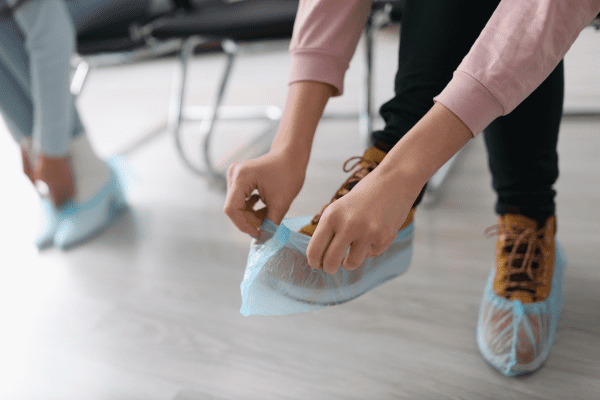
Many industries rely on shoe covers as a contamination-control tool, from cleanrooms and laboratories to manufacturing facilities. At first glance, they seem like an easy, low-cost way to keep floors and controlled spaces clean. But when you dig deeper, the problems with shoe covers start to add up.
Here are five compelling reasons to rethink shoe covers and consider better alternatives.
- They Create a Mountain of Waste
Most shoe covers are made from thin, disposable plastic designed for single use only. Every time a worker enters or exits a controlled area, a fresh pair is needed, often multiple times a day. That translates into significant plastic waste and frequent restocking.
Over time, the cost and environmental impact of this disposable approach far outweigh the initial cheap price tag.
- Cross-Contamination Risks Are Higher Than You Think
Putting on shoe covers might seem simple, but the process itself can introduce contamination. If hands aren’t perfectly clean, contaminants can transfer from hands to the covers, even before the person enters the space. Some shoe covers also shed particles or tear under pressure, letting underlying dirt touch the floor.
In controlled environments, especially in healthcare or sterile production, these little mistakes can have big consequences.
- They Slow Down Operations
Shoe covers demand time and attention. Workers must pause to put them on and take them off, and additional training and caution are required to prevent covers from touching “dirty” surfaces once deemed clean.
That’s time out of your day, and time away from productive work.
- Health & Safety Concerns Can Arise
Shoe covers aren’t always a perfect fit, and poor fit can lead to trip and slip hazards. If a cover comes off or tears at the wrong moment, an employee could fall, leading to injury or a safety claim.
Plus, when used together with other sticky mats or tacky floor products, covers can stick, tear off, or create even more risk underfoot.
- Hidden Costs Add Up Fast
While shoe covers might seem cheaper at first, their ongoing costs can be significant:
- Frequent purchases and disposal costs
- Time lost to gowning procedures
- Potential safety claims
- Contamination incidents that affect production or quality control
When you combine these factors, shoe covers often end up more expensive and less effective than alternatives.
So, What’s a Better Option?
The floor shouldn’t be ignored, as it is the largest surface in your critical area. Rather than covering shoes, contamination control mats offer a hands-free, reusable, long-term solution that captures particles on contact and helps keep controlled spaces truly clean without the downsides of disposables.
Shoe covers may seem convenient, but the reality is they generate waste, increase contamination risks, slow workflows, create safety issues, and lead to long-term costs. It’s a smart move for facility managers and cleanroom professionals to look beyond shoe covers and choose solutions that are more sustainable, safer, and more efficient.