

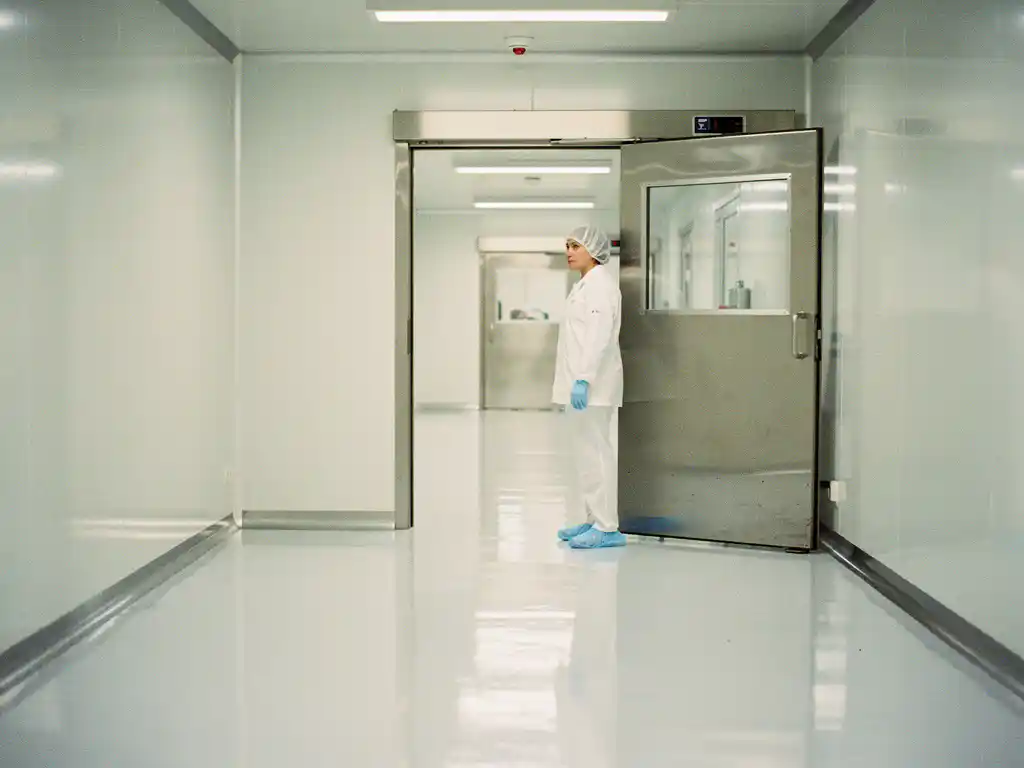
Antimicrobial mats work at food facility entry points by physically capturing contaminants from shoes and wheels through a high-tack polymeric surface, while simultaneously inhibiting microbial growth using built-in silver-ion technology. Every step onto the mat transfers dirt, dust, bacteria, and other particulates away from footwear before they can enter the production environment. The sections below address the most common questions facility managers ask when evaluating entry point contamination control for food manufacturing sites.
What contaminants do antimicrobial mats capture at food facility entry points?
Antimicrobial mats at food facility entry points capture a broad range of contaminants, including soil, dust, allergen particles, bacteria, mould spores, and microorganisms transferred via footwear and wheeled equipment. The polymeric surface attracts and retains these particles on contact, preventing them from being tracked into production or storage areas where they could compromise food safety.
Food manufacturing environments face a particularly wide contamination threat. Personnel moving between outdoor areas, loading docks, changing rooms, and production floors can carry in significant volumes of particulate on the soles of their shoes alone. Wheeled equipment such as trolleys and pallet trucks can transfer even larger debris loads across multiple zones in a single pass.
The contamination risk is not limited to visible dirt. Microscopic biological matter, including bacterial cells and fungal spores, can be present on footwear without any visible soiling. In a food production context, these microorganisms pose a direct threat to product integrity and can trigger non-conformances during regulatory audits. A well-engineered contamination control mat addresses both the physical particulate and the microbial risk simultaneously, rather than treating them as separate problems.
How does antimicrobial technology in contamination control mats actually work?
Antimicrobial technology in contamination control mats works by incorporating silver-ion compounds into the mat’s polymer matrix during manufacturing. Silver ions are released continuously at the mat surface, where they disrupt the cellular processes of bacteria and other microorganisms, inhibiting their ability to grow, reproduce, and survive. This protection is built into the material itself rather than applied as a surface coating.
The silver-ion approach used in Dycem mats, delivered through Biomaster technology, inhibits microbial growth by up to 99.9%. Because the antimicrobial agent is integrated throughout the polymer rather than sprayed on, it remains active across the full working life of the mat without degrading through regular cleaning or foot traffic.
This matters in food environments because entry point mats are high-contact surfaces. A mat that relies on a surface treatment would lose its antimicrobial effectiveness after repeated washing or wear. An integrated silver-ion system continues working between cleaning cycles, reducing the window during which captured microorganisms could transfer back onto footwear or become airborne.
It is important to distinguish what antimicrobial technology does from what the mat’s physical surface achieves. The polymer construction captures and retains particulates mechanically. The antimicrobial component then acts on any biological matter held within the mat surface. Together, these two mechanisms provide layered protection at the entry point.
Are antimicrobial mats effective enough to meet food safety compliance standards?
Yes, antimicrobial mats can form a valid and effective component of a food safety compliance programme, provided they are correctly specified, positioned, and maintained. They support compliance with hygiene-focused standards such as HACCP, BRC Global Standards, and ISO 22000 by providing a documented, repeatable contamination control measure at defined entry points.
Regulatory frameworks for food manufacturing require facilities to demonstrate active control of contamination vectors. Entry point hygiene is a standard audit focus, and the use of validated contamination control measures at these points contributes to a facility’s overall hygiene management evidence. Reusable antimicrobial mats with documented performance data and cleaning protocols are well-suited to this requirement.
The key factors auditors typically examine are whether the control measure is appropriate to the risk, whether it is consistently applied, and whether it is maintained in a condition that allows it to function effectively. A mat that captures up to 99.9% of particles, carries built-in antimicrobial protection, and has a defined cleaning schedule satisfies each of these criteria in a straightforward and auditable way.
It is worth noting that no single measure eliminates contamination risk entirely. Antimicrobial mats are most effective as part of a broader contamination control strategy that includes zoning, gowning procedures, and air handling. Within that strategy, entry point mats serve as a critical first line of defence.
What’s the difference between antimicrobial mats and disposable sticky mats in food environments?
The key distinction is performance consistency and long-term value. Disposable sticky mats rely on an adhesive layer to capture particles, but their effectiveness decreases with each layer peeled away and degrades rapidly in high-traffic conditions. Antimicrobial mats use a durable polymeric surface that maintains capture performance across years of use and incorporates active microbial inhibition that sticky mats do not provide.
In food manufacturing environments, this difference has practical consequences across several areas:
- Microbial control: Sticky mats have no antimicrobial function. Captured bacteria remain viable on the adhesive surface and can transfer back onto footwear if the layer is not peeled promptly. Antimicrobial mats inhibit microbial growth continuously.
- Traffic durability: Adhesive mats lose grip quickly under heavy foot traffic and become ineffective when wet or contaminated with oils, which are common conditions in food facilities. Polymeric mats maintain their surface tack across varied conditions.
- Waste generation: Disposable sticky mats generate significant single-use plastic waste over time. Reusable antimicrobial mats with a lifespan of three to five years represent a substantially more sustainable option for facilities with ESG commitments.
- Total cost of ownership: The ongoing purchase and disposal costs of sticky mats accumulate considerably over a three-to-five-year period. A reusable mat system, once installed, eliminates that recurring expenditure.
- Audit documentation: Reusable mats with defined cleaning schedules and validated performance data are easier to document for compliance purposes than a consumable product requiring frequent replacement and disposal records.
For food facilities operating under continuous audit pressure, the shift from disposable sticky mats to reusable contamination control mats is often driven by a combination of hygiene performance requirements and the need to reduce operational waste.
Where should antimicrobial mats be placed in a food manufacturing facility?
Antimicrobial mats should be placed at every transition point where personnel or equipment move from a lower-hygiene zone to a higher-hygiene zone. In a food manufacturing facility, this typically means entry points to production areas, packaging halls, cold stores, ingredient handling zones, and any area with a defined hygiene classification boundary.
The most critical placement locations include:
- Main personnel entry points from changing rooms or corridors into production areas
- Loading dock transitions where goods-in activity creates a direct route for external contaminants
- Internal zone boundaries between raw material handling and finished product areas
- Access points to high-care or high-risk zones where contamination consequences are most severe
- Equipment transfer points where trolleys, carts, or pallet trucks move between areas
Mat sizing and format should reflect the traffic type at each location. Pedestrian entry points are well-served by standard floor-level mats positioned so that both feet contact the mat surface with at least two full steps. Wheeled equipment routes require mats wide enough to cover the full wheel track width, ensuring complete contact on each pass.
Facilities with complex layouts or multiple entry points benefit from a site-specific assessment to map contamination risk against traffic flow. This ensures mat placement is driven by actual contamination vectors rather than convenience alone.
How often should antimicrobial mats be cleaned in a food production environment?
In a food production environment, antimicrobial mats should typically be cleaned at least daily, with higher-frequency cleaning required at entry points that handle very high footfall or where visible soiling accumulates between shifts. The cleaning schedule should be documented and aligned with the facility’s overall hygiene management plan.
The appropriate cleaning frequency depends on several site-specific factors:
- Traffic volume: Entry points used by large numbers of personnel across multiple shifts will saturate more quickly and require more frequent attention.
- Contamination load: Facilities where personnel enter from outdoor or heavily contaminated areas, such as loading docks or agricultural environments, will see faster particulate build-up.
- Hygiene zone classification: Entry points to high-care or high-risk zones may require cleaning between shifts or at defined intervals within a shift as part of the site’s hygiene protocol.
- Product type: Facilities handling allergens or ready-to-eat products often apply more stringent cleaning schedules to all hygiene control measures, including entry point mats.
Reusable polymeric mats are designed to withstand repeated washing without losing surface performance or antimicrobial effectiveness. Cleaning is typically carried out with water and a compatible detergent, and the mat can be returned to service once dry. Unlike disposable alternatives, there is no degradation of the capture surface as a result of cleaning, meaning the mat continues to perform consistently across its full working life.
Cleaning records should be maintained as part of the site’s hygiene documentation, providing an auditable trail that demonstrates the control measure is being actively managed.
How Dycem helps with food facility entry point contamination control
Dycem’s reusable antimicrobial mats are engineered specifically to address the contamination challenges food manufacturing facilities face at entry points. Here is what Dycem brings to food production environments:
- Captures up to 99.9% of shoe and wheel contaminants at the point of entry, before they reach production areas
- Integrated Biomaster silver-ion technology inhibits microbial growth by up to 99.9% throughout the mat’s working life
- Designed for a three-to-five-year lifespan, significantly reducing the cost and waste associated with disposable sticky mat programmes
- ISO-certified manufacturing meeting EN ISO 9001 and 14001 standards, with compliance to California Proposition 65 and EU REACH regulations
- Available in formats suited to pedestrian zones, wheeled equipment routes, and variable or temporary areas across the facility
- Customisable in size, format, and colour to suit complex facility layouts and zoning requirements
Dycem’s contamination control specialists provide consultative support from initial site assessment through to installation and ongoing maintenance guidance, helping food facilities build an entry point strategy that stands up to regulatory scrutiny. To discuss your facility’s requirements or arrange a free site survey, contact Dycem today.