

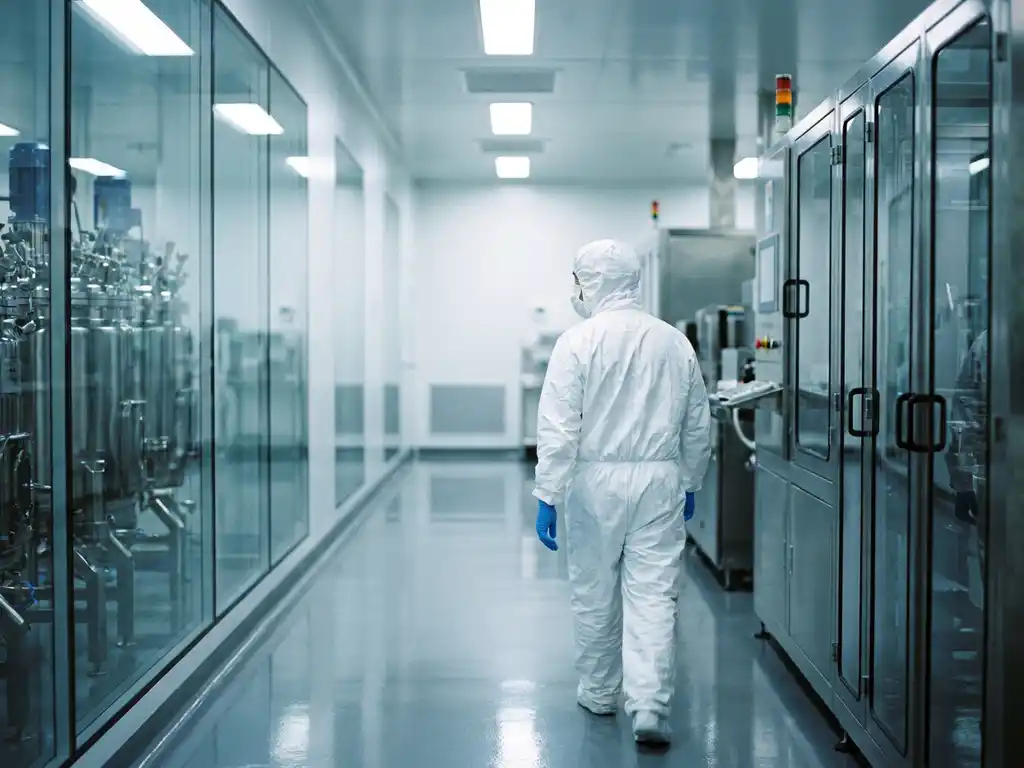
The biggest contamination risks in pharmaceutical manufacturing come from four primary sources: personnel, equipment, raw materials, and the facility environment itself. Of these, microbial contamination introduced through human activity and particulates entering at floor level represent the most persistent and difficult-to-control threats. For manufacturers operating under GMP and ISO cleanroom standards, understanding each source is the foundation of a robust contamination control strategy. The sections below address the most commonly asked questions on this topic, from how contaminants enter facilities to which control measures are most effective at entry points.
How does contamination enter pharmaceutical manufacturing facilities?
Contamination enters pharmaceutical manufacturing facilities through four main routes: people, materials, equipment, and air. Personnel movement is the single largest contributor, as staff carry particulates, microorganisms, and chemical residues on clothing, skin, and footwear. Materials and components brought into controlled zones introduce external contaminants if not properly cleaned or quarantined. HVAC systems and pressure differentials can draw in airborne particles if not correctly maintained.
Each of these entry routes requires a specific control strategy. Air filtration systems such as HEPA filters manage airborne particulate levels, while material transfer protocols and quarantine procedures address incoming components. However, the movement of people and equipment across facility thresholds remains one of the hardest vectors to fully control because it happens continuously and often at high frequency throughout a production shift.
Floor-level transfer is a particularly underestimated pathway. Contaminants tracked in on footwear and wheeled equipment can travel deep into controlled zones before being detected, making entry point management a critical layer of any contamination control programme.
What are the most common sources of microbial contamination in pharma?
The most common sources of microbial contamination in pharmaceutical manufacturing are personnel, water systems, raw materials, and surfaces within the production environment. Human operators shed skin cells, hair, and respiratory droplets continuously, making them the primary vector for microbial introduction in cleanrooms and controlled areas. Inadequately controlled water used in production processes is another significant source, particularly for gram-negative bacteria.
Raw materials and excipients can carry microbial loads if supplier quality standards are not rigorously enforced. Even materials that appear visually clean may carry bioburden that only becomes apparent during in-process or finished product testing. Surfaces within the facility, including walls, floors, drains, and equipment, can harbour biofilm if cleaning and disinfection procedures are inconsistent or poorly validated.
Cross-contamination between product streams is also a recognised microbial risk, particularly in multi-product facilities where shared equipment or overlapping personnel movement creates transfer pathways. Robust environmental monitoring programmes, validated cleaning procedures, and strict gowning protocols are all necessary to manage these sources effectively.
Why is floor-level contamination a critical risk in cleanrooms?
Floor-level contamination is a critical risk in cleanrooms because approximately 80% of contaminants that enter controlled environments do so at floor level, carried in on footwear and wheeled equipment. Once on the floor surface, particulates can be resuspended into the air through foot traffic and airflow, spreading contamination beyond the point of entry and into sensitive production areas.
Cleanrooms are classified by the number of particles permitted per cubic metre of air, and floor-level particulate transfer directly undermines those thresholds. A single uncontrolled entry event, such as an operator walking in from an uncontrolled area without adequate decontamination, can introduce enough particulate matter to compromise environmental monitoring results and trigger a GMP deviation investigation.
Wheeled traffic presents an additional challenge. Forklifts, pallet trucks, and trolleys used in logistics and material transfer accumulate significant contamination on their wheels, and without effective wheel decontamination at zone boundaries, they become vectors for spreading particulates across large floor areas rapidly. This is why entry point management, particularly at gowning room thresholds and airlock transitions, is treated as a priority control measure in well-designed cleanroom facilities.
What contamination risks do personnel pose in controlled environments?
Personnel are the highest-risk contamination source in controlled pharmaceutical environments. The human body continuously sheds particles, including skin cells, hair, and microorganisms, at a rate that makes unprotected movement through a cleanroom incompatible with maintaining required air cleanliness levels. Even with full gowning, the risk is not eliminated, only reduced.
The risks personnel introduce fall into several categories:
- Particulate shedding: Skin and clothing release particles with every movement, contributing directly to airborne particle counts.
- Microbial transfer: Skin flora, including staphylococci and other common organisms, can contaminate product contact surfaces and open containers.
- Footwear contamination: Shoes carry particulates and microorganisms from uncontrolled areas and transfer them directly to cleanroom floors at every step.
- Behavioural risk: Poor gowning technique, touching of surfaces, and non-compliance with movement protocols all increase contamination potential significantly.
- Respiratory output: Speaking, coughing, and breathing without appropriate face coverings releases droplets and aerosols into the controlled environment.
Training and procedure compliance are as important as the physical controls in place. A gowning room with excellent infrastructure provides limited protection if operators do not follow validated gowning sequences consistently. Regular retraining, behaviour observation programmes, and environmental monitoring data reviews are all tools that quality teams use to manage personnel-related contamination risk.
How do regulatory bodies classify and address contamination risks in pharma?
Regulatory bodies classify contamination risks in pharmaceutical manufacturing primarily through cleanroom grading systems and GMP guidelines that define acceptable environmental conditions at each stage of production. The EU GMP Annex 1 framework classifies cleanrooms into Grades A through D based on airborne particle counts and microbial limits, with Grade A representing the most critical zones such as open product filling areas.
The FDA’s approach under 21 CFR Parts 210 and 211 similarly requires manufacturers to establish and maintain conditions that prevent contamination of drug products, with specific expectations around facility design, personnel practices, equipment cleaning, and environmental monitoring. The FDA’s guidance on sterile drug manufacturing aligns closely with the ISO 14644 series, which defines cleanroom classifications from ISO Class 1 (most stringent) to ISO Class 9.
Regulatory expectations address contamination risks through several mechanisms:
- Environmental monitoring programmes: Regular sampling of air, surfaces, and personnel to detect microbial and particulate deviations before they affect product quality.
- Change control requirements: Any modification to facility layout, processes, or materials must be assessed for contamination risk impact before implementation.
- Cleaning and disinfection validation: Manufacturers must demonstrate that their cleaning procedures effectively reduce microbial loads on surfaces to acceptable levels.
- Personnel qualification: Gowning qualification and ongoing monitoring ensure that individuals working in controlled areas meet defined competency standards.
- Contamination control strategies (CCS): EU GMP Annex 1, updated in 2022, now explicitly requires manufacturers to document a holistic contamination control strategy that covers all relevant risk factors across the facility.
Failure to meet these requirements during an inspection can result in warning letters, import alerts, or in serious cases, facility shutdowns. Maintaining audit readiness requires that contamination control measures are not only in place but are consistently applied, documented, and reviewed.
What contamination control measures are most effective at entry points?
The most effective contamination control measures at facility entry points are those that intercept contaminants before they cross the threshold into controlled zones. These include gowning protocols, airlocks with pressure differentials, footwear change or cover requirements, and physical decontamination systems at floor level. Layering multiple controls at the same entry point significantly reduces the volume of contamination that penetrates into cleanroom areas.
Entry point controls that consistently demonstrate effectiveness include:
- Gowning rooms and airlocks: Structured transition zones that require personnel to change footwear and clothing before entering controlled areas, with clear dirty-to-clean directional flow.
- Pressure cascade management: Maintaining higher air pressure in cleaner zones prevents airborne particulates from migrating inward when doors are opened.
- Floor-level decontamination mats: Reusable polymeric mats at pedestrian and wheeled traffic entry points capture particulates from footwear and wheels before they are tracked into controlled zones.
- Wheel wash stations: For heavy-wheeled equipment such as forklifts, dedicated wheel cleaning at zone boundaries reduces the transfer of floor-level contamination.
- Visitor and contractor management: Defined protocols for infrequent users of controlled areas, who may be less familiar with gowning requirements, reduce the risk of inadvertent contamination events.
How Dycem helps reduce contamination risks at pharmaceutical entry points
Dycem’s reusable contamination control mats are engineered specifically to address the floor-level contamination risks that pose the greatest challenge at cleanroom and controlled environment entry points. As the world’s original manufacturer of polymeric contamination control mats, Dycem has spent over 60 years refining solutions that work within the operational realities of pharmaceutical manufacturing facilities.
Dycem mats deliver measurable performance where it matters most:
- Up to 99.9% capture of shoe and wheel contaminants, preventing particulates and microorganisms from being tracked across zone boundaries.
- Built-in Biomaster antimicrobial protection across all mat formats, providing continuous microbial suppression between cleaning cycles.
- Reusable, washable construction with a 3 to 5 year lifespan, eliminating the recurring cost and waste associated with disposable sticky mat programmes.
- Purpose-built formats for every entry scenario, including Dycem CleanZone for pedestrian and light-wheeled traffic at gowning rooms and airlocks, and Dycem WorkZone for heavy-wheeled equipment in logistics and production zones.
- ISO-certified manufacturing in compliance with EN ISO 9001 and 14001, supporting the documentation and supplier qualification requirements of GMP audits.
For quality, EHS, and facilities managers looking to strengthen their contamination control strategy at entry points, Dycem offers an initial consultation and free site survey to assess your facility’s specific risks and recommend the right solution. Explore the full range of contamination control mat products or contact a Dycem specialist to arrange your site assessment.