

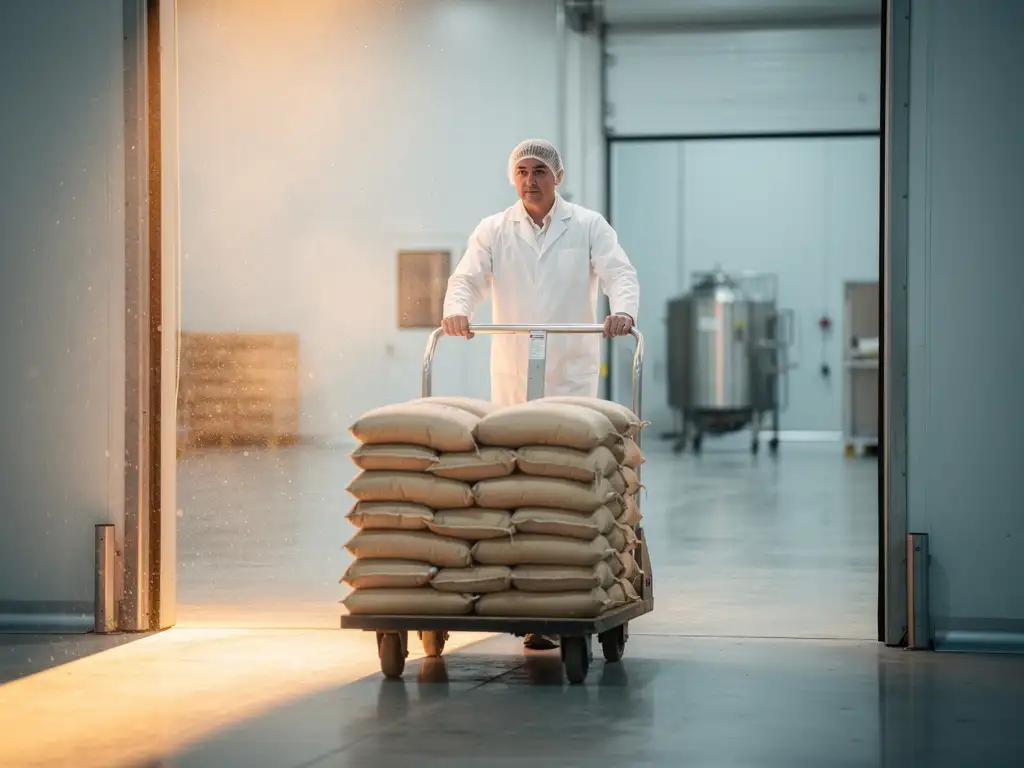
Raw material deliveries introduce contamination into food facilities primarily through vehicle surfaces, packaging exteriors, and the footwear and wheels of delivery personnel. Every incoming shipment creates a direct pathway between the external environment and your controlled production or storage areas. The questions below unpack exactly how this happens and what food manufacturers can do to close those gaps.
What types of contaminants do raw material deliveries carry?
Raw material deliveries carry a broad range of physical, biological, and chemical contaminants. These include soil, dust, and debris from road and yard surfaces, microbial organisms such as bacteria, mould spores, and yeast, pest-related matter including insect fragments and rodent hair, and chemical residues from vehicle exhaust, lubricants, or prior cargo. Each of these poses a direct risk to food safety and product integrity.
The contamination profile of any given delivery depends on the origin of the goods, the conditions during transit, and the state of the delivery vehicle itself. Chilled or ambient deliveries arriving from agricultural suppliers, for example, may carry soil-borne pathogens and organic matter in addition to the particulate load typical of road freight. Packaging materials such as cardboard, wooden pallets, and shrink wrap are particularly effective at harbouring and transporting microbial contamination because their porous surfaces trap moisture and organic debris during transit.
Allergen cross-contact is also a significant concern. If a delivery vehicle previously transported allergen-containing materials and was not properly cleaned between loads, residue on packaging surfaces or within the vehicle itself can transfer to incoming raw materials. For food manufacturers operating under strict allergen management protocols, this represents a compliance risk that goes beyond general hygiene.
How do delivery vehicles transfer contamination into food facilities?
Delivery vehicles transfer contamination into food facilities through direct contact between their external surfaces and the facility environment. Tyres, wheel arches, and undercarriages accumulate significant contamination from road surfaces, loading bays, and external yards. When vehicles enter or park adjacent to goods-in areas, this contamination is deposited onto the floor and surrounding surfaces, where it can then be tracked inward by foot traffic and wheeled equipment.
The transfer mechanism is largely mechanical. Forklift tyres and pallet truck wheels that cross the threshold between the external loading bay and the internal goods-in area carry whatever they have collected from the vehicle and yard directly into the facility. Each pass deepens the contamination load on internal floor surfaces, and without effective capture at the entry point, particles migrate progressively further into the building with every subsequent movement.
Driver and delivery personnel footwear follows the same pattern. Individuals who have walked through external yards, vehicle cabs, or other facilities before arriving at your site carry that contamination on the soles of their shoes. In the absence of a structured decontamination step at the entry point, those contaminants are deposited on your floor and begin their journey toward production or storage areas immediately.
Which entry points in a food facility are most vulnerable during deliveries?
The goods-in area and loading bay threshold are the most vulnerable entry points during raw material deliveries. These zones sit at the boundary between the external environment and controlled internal space, and they receive the highest concentration of contamination from vehicles, personnel, and packaging simultaneously. Secondary risk points include internal corridors connecting goods-in to storage or production, pallet staging areas, and any door or airlock that delivery personnel pass through.
The loading bay itself is often overlooked as a contamination risk because it is not technically inside the facility. However, contamination deposited in the loading bay by vehicle tyres and personnel footwear does not stay there. It is carried inward on the wheels of forklifts and pallet trucks, on the soles of goods-in staff, and on the base surfaces of incoming packaging. The loading bay is effectively a contamination reservoir that feeds directly into the facility with every delivery movement.
Internal staging areas where pallets are broken down and raw materials are transferred into facility containers represent a further risk point. Here, the outer surfaces of packaging come into direct contact with internal equipment and surfaces, and personnel handling incoming goods can transfer contamination from packaging exteriors to their gloves, clothing, and footwear, spreading it further into the facility.
Why are disposable sticky mats ineffective at delivery entry points?
Disposable sticky mats are ineffective at delivery entry points because they are not designed to handle the volume, weight, or type of contamination that goods-in areas generate. Their adhesive surface saturates quickly under heavy foot and wheel traffic, and once saturated, they provide no meaningful contamination capture. A single forklift pass can deposit enough debris to render a sticky mat ineffective for subsequent pedestrian traffic, leaving the entry point unprotected for the remainder of the delivery cycle.
The physical limitations of peel-off sticky mats become especially apparent in goods-in environments. These mats are sized and constructed for light pedestrian use, and the adhesive layers are not engineered to capture and retain the coarser particulate matter that vehicle tyres and delivery footwear carry. Heavy debris, grit, and moisture compromise the adhesive rapidly, and the mat must be peeled and replaced far more frequently than is practical in a busy loading environment.
There is also a consistency problem. Sticky mat performance degrades layer by layer, meaning the level of contamination control at the start of a delivery shift is significantly higher than it is midway through. For food manufacturers operating under GMP or BRCGS requirements, this inconsistency creates audit risk. A contamination control measure that delivers variable performance cannot be reliably validated, and its effectiveness cannot be demonstrated with confidence to an auditor or regulatory inspector.
Beyond performance, disposable sticky mats generate considerable single-use plastic waste. For facilities with ESG commitments or sustainability targets, the ongoing cost and environmental impact of high-volume mat replacement at a busy goods-in area represents a poor long-term outcome compared to more durable alternatives.
What contamination control measures should be in place at goods-in areas?
Effective contamination control at goods-in areas requires a layered approach that addresses foot traffic, wheeled equipment, and incoming packaging simultaneously. No single measure is sufficient on its own. The most robust programmes combine physical contamination capture at entry points, defined procedures for packaging decontamination, personnel hygiene protocols, and documented cleaning regimes for the loading bay and staging areas.
Key measures that food facilities should have in place at goods-in areas include:
- High-performance reusable contamination control mats positioned at all pedestrian and wheeled traffic entry points, capable of capturing particulate from both footwear and equipment wheels under sustained, heavy use
- Outer packaging removal or decontamination procedures that strip or wipe the exterior surfaces of incoming goods before they enter storage or production areas
- Defined personnel hygiene steps for delivery drivers and goods-in staff, including footwear decontamination at the entry threshold
- Segregation of external and internal equipment, preventing forklifts or pallet trucks used in the external loading bay from entering controlled internal areas without decontamination
- Scheduled cleaning of the loading bay and goods-in floor to prevent contamination accumulation between deliveries
- Supplier approval and vehicle hygiene requirements built into procurement and logistics contracts
The physical contamination capture step is the most critical because it intercepts contamination before it enters the facility rather than managing it after it has spread. Contamination control mats engineered for heavy wheeled traffic are particularly important here, as they must perform reliably under forklift and pallet truck loads without losing their capture capability between cleaning cycles.
How can food facilities validate that delivery contamination is being controlled?
Food facilities can validate delivery contamination control by combining environmental monitoring data, documented inspection records, and measurable performance benchmarks for each control measure in place. Validation requires evidence that the measures deployed are working consistently over time, not just at the point of installation. This is particularly important for facilities operating under BRCGS, SQF, IFS, or GMP frameworks, where contamination control procedures must be demonstrably effective.
Practical validation steps include:
- Environmental swabbing of floor surfaces, mat surfaces, and staging area contact points before and after deliveries to measure microbial load and particulate levels
- Visual inspection records for contamination control mats, documenting their condition, cleaning frequency, and any visible saturation or damage
- Particle count monitoring in areas adjacent to goods-in, used to track whether particulate levels in controlled zones correlate with delivery activity
- Cleaning verification logs confirming that loading bay and goods-in floors are cleaned to schedule and to standard
- Supplier and vehicle audit records documenting hygiene standards at the point of despatch
For contamination control mats specifically, validation should include confirmation that the mat specification is appropriate for the traffic type and volume at the entry point. A mat validated for pedestrian use only is not an appropriate control measure at a goods-in area that handles forklift traffic. The performance specification must match the operational reality of the environment it is protecting.
Trend analysis is also valuable. Reviewing environmental monitoring data over time allows quality teams to identify whether contamination levels at goods-in areas are stable, improving, or deteriorating, and to correlate any changes with specific delivery patterns, supplier changes, or control measure failures. This kind of evidence base is exactly what auditors and regulatory inspectors look for when assessing the effectiveness of a contamination control programme.
How Dycem helps food facilities control delivery contamination
Dycem’s reusable contamination control mats are engineered to address the specific challenges that raw material deliveries create at goods-in entry points. Unlike disposable alternatives, Dycem mats deliver consistent, validated performance across sustained heavy traffic, making them a reliable foundation for any food facility contamination control programme. Key benefits include:
- Capture of up to 99.9% of shoe and wheel contaminants at the entry point, preventing particulate from migrating into controlled areas
- Built-in Biomaster silver-ion antimicrobial technology, inhibiting microbial growth by up to 99.9% on the mat surface
- Dycem WorkZone mats designed specifically for heavy wheeled traffic including forklifts and pallet trucks, with a lifespan exceeding three years
- Washable and reusable construction that maintains consistent performance between cleaning cycles, supporting validated contamination control procedures
- ISO-certified manufacturing meeting EN ISO 9001 and 14001 standards, California Proposition 65, and EU REACH compliance
- A significantly more sustainable option than single-use sticky mats, reducing plastic waste and supporting ESG commitments
Dycem specialists work with food manufacturers to assess entry point risk, specify the right mat solution for each zone, and support the documentation needed for audit readiness. To discuss your facility’s goods-in contamination challenges, speak to a Dycem specialist and arrange a free site survey.