

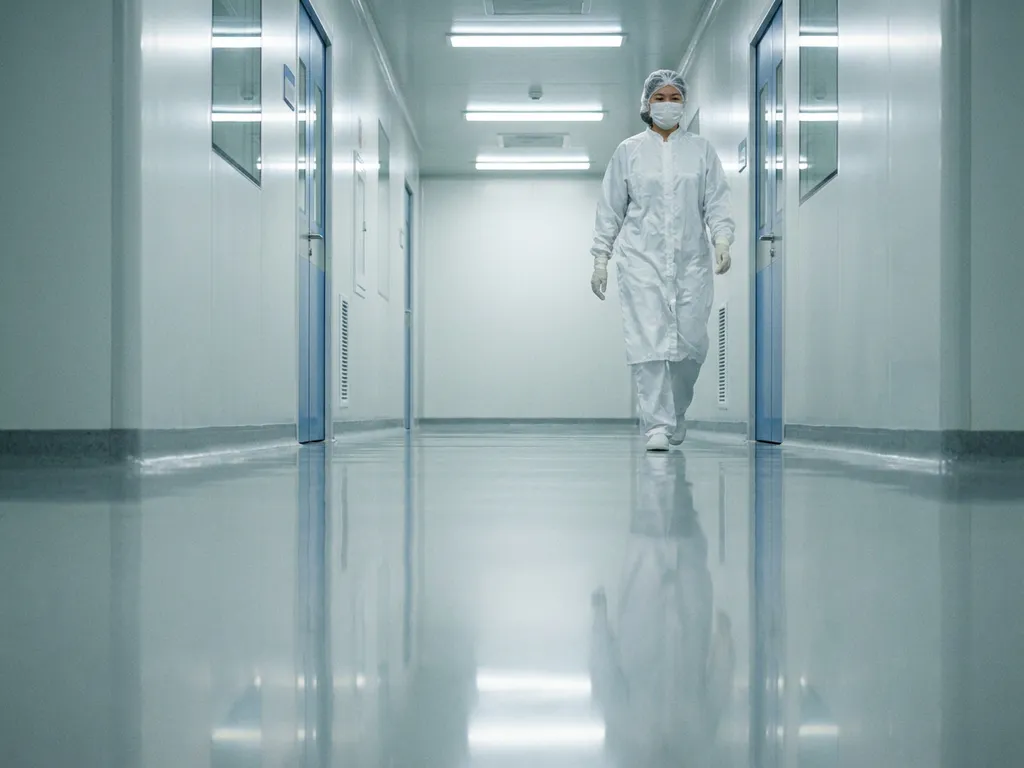
Standard floor cleaning methods fail in critical environments because they are designed to remove visible dirt, not capture and retain microscopic particulates, microorganisms, and chemical residues at the point of entry. Conventional mopping, sweeping, and even industrial vacuuming redistribute contaminants across surfaces rather than eliminating them from the controlled zone. For facilities operating under GMP, ISO, or FDA frameworks, this distinction is not academic — it is a direct compliance and product quality risk. The sections below address the most common questions facility managers ask when evaluating why their current floor hygiene approach is falling short.
What contaminants do standard floor cleaning methods leave behind?
Standard floor cleaning methods leave behind sub-visible particulates, microbial colonies, chemical residues, and fibres that conventional tools cannot fully capture. Mopping spreads contaminated water across floor surfaces, and as the mop dries, particles are redeposited. Sweeping agitates fine dust into the air, where it resettles. Even high-specification industrial vacuums cannot capture every particle at the microscopic level relevant to cleanroom and controlled environment standards.
The contaminants most frequently missed include:
- Sub-micron particulates carried on shoe soles and wheel treads from uncontrolled zones
- Microbial contamination including bacteria and fungal spores transferred by foot traffic
- Chemical residues from adjacent processing areas tracked in on footwear
- Fibres and lint shed from clothing, packaging, and outdoor environments
- Oils and lubricants from equipment or vehicle wheels
In a standard commercial setting, these residues are manageable. In a pharmaceutical filling line, a medical device assembly area, or a semiconductor fabrication facility, even trace levels of these contaminants can compromise product integrity, trigger failed batch tests, or cause equipment malfunction. Cleaning schedules that work in offices or warehouses simply do not meet the particulate management demands of regulated environments.
Why is the floor the highest-risk contamination entry point?
The floor is the highest-risk contamination entry point in controlled environments because it is the primary transfer route for contaminants moving between uncontrolled and controlled zones. Industry experience consistently identifies the floor level as the source of the majority of particulate contamination in cleanrooms, with estimates suggesting that up to 80% of contaminants enter controlled environments via shoes and wheeled equipment.
Every person and vehicle entering a controlled space carries contamination from outside. Shoe soles contact outdoor surfaces, car parks, corridors, and uncontrolled production areas before crossing the threshold into a cleanroom or critical zone. Wheeled carts, pallet trucks, and forklifts travel across loading bays and warehouses before entering food production or pharmaceutical environments. Without an active capture mechanism at the entry point, each transit event deposits a fresh load of particulates directly onto the controlled floor surface.
Unlike walls, ceilings, and equipment surfaces — which are relatively static and easier to monitor — floors are in constant contact with the primary vectors of contamination. Air filtration systems manage airborne particles effectively, but they cannot intercept contaminants that are introduced at floor level and remain there. This is why entry-point floor contamination control is a foundational element of any credible contamination prevention strategy, not an optional supplement to cleaning schedules.
How do disposable sticky mats fall short in regulated facilities?
Disposable sticky mats fall short in regulated facilities because their adhesive surface saturates quickly, their performance degrades rapidly with use, and they generate significant single-use plastic waste that conflicts with both operational efficiency and sustainability commitments. Once the top layer is peeled away, the next layer is immediately exposed to the same high-traffic conditions, meaning performance is inconsistent and dependent on how diligently staff manage the peel cycle.
The practical limitations are substantial:
- Rapid saturation: Adhesive layers lose effectiveness after relatively few footsteps, particularly in high-traffic entry points where consistent capture is most critical
- Inconsistent compliance: Relying on staff to peel layers at the correct frequency introduces human variability into a process that should be controlled
- Limited wheel performance: Sticky mats are largely ineffective at capturing contaminants from wheeled equipment, leaving a significant contamination vector unaddressed
- Ongoing cost: Continuous repurchase of disposable mats creates a recurring cost that compounds over time, with no improvement in baseline performance
- Waste generation: Each peeled layer becomes single-use plastic waste, creating disposal costs and ESG reporting concerns for regulated facilities
For facilities undergoing GMP audits or ISO certification reviews, the inability to demonstrate consistent, validated contamination capture at entry points is a genuine audit risk. A solution that depends on manual peel frequency and loses effectiveness between interventions is difficult to defend in a compliance context.
What are the compliance risks of inadequate floor contamination control?
Inadequate floor contamination control creates direct compliance risks including failed environmental monitoring results, non-conformances during regulatory audits, product contamination events, and potential batch failures or recalls. In regulated industries, contamination control is not a housekeeping preference — it is a documented requirement under GMP guidelines, ISO cleanroom standards, and sector-specific frameworks such as FDA 21 CFR Part 211 for pharmaceuticals or FSMA for food manufacturers.
When floor contamination is not adequately managed, the consequences escalate through several stages:
- Environmental monitoring failures: Routine microbial and particulate monitoring detects elevated contamination levels, triggering investigations and corrective action requirements
- Audit non-conformances: Inspectors reviewing contamination control procedures identify gaps in entry-point management, resulting in observations or warning letters
- Product quality events: Contaminants introduced via floor traffic reach product contact surfaces, compromising sterility, purity, or physical integrity
- Operational disruption: Contamination events trigger line shutdowns, deep-clean protocols, and revalidation exercises that carry significant cost and schedule impact
Beyond the immediate regulatory consequences, repeated contamination events damage the credibility of a facility’s quality management system. Regulators assess whether contamination control measures are systematic and validated, not reactive and informal. Facilities that cannot demonstrate a structured, evidence-based approach to floor contamination prevention are at a structural disadvantage in any inspection scenario.
What does an effective floor contamination control system look like?
An effective floor contamination control system combines active particulate capture at entry points, consistent performance across all traffic types, antimicrobial protection, and documented evidence of efficacy. It does not rely solely on cleaning schedules — it intercepts contamination before it enters the controlled zone, reducing the particulate burden that cleaning must then manage.
The core components of an effective system are:
- Entry-point capture mats engineered to remove particulates from shoe soles and wheel surfaces at the moment of crossing into a controlled zone
- Coverage across all traffic types including pedestrian, light-wheeled, and heavy-wheeled vehicle routes
- Antimicrobial properties built into the mat material to prevent microbial growth on the capture surface itself
- Cleanability and reusability so the system maintains consistent performance over time without generating ongoing waste
- Documented performance data to support validation, audit readiness, and internal quality reviews
Critically, the system must address the full range of entry points within a facility — not just the primary cleanroom entrance. Gowning rooms, airlocks, loading bays, and service corridors each represent contamination transfer risks that an incomplete system leaves unaddressed. A layered approach, where capture solutions are deployed at every transition between uncontrolled and controlled zones, provides the most defensible contamination prevention posture.
When should a facility replace its floor cleaning protocol?
A facility should replace its floor cleaning protocol when environmental monitoring data shows persistent contamination trends, when audit findings identify entry-point control as a gap, or when the current approach relies on disposable consumables that deliver inconsistent performance. These are not signs of a cleaning frequency problem — they are signs of a structural gap in contamination prevention strategy.
Specific triggers that indicate a protocol review is overdue include:
- Recurring excursions in particulate or microbial environmental monitoring results that trace back to entry-point traffic
- Audit observations referencing inadequate contamination control at floor level or entry points
- High and rising spend on disposable sticky mats with no measurable improvement in contamination outcomes
- Operational changes such as increased throughput, new product lines, or facility expansions that have outgrown the existing protocol
- Sustainability reviews identifying single-use mat waste as a significant contributor to plastic waste targets
Replacing a floor cleaning protocol is not simply a matter of switching products — it requires mapping contamination entry routes, assessing traffic types and volumes, and selecting solutions validated for the specific demands of each zone. Facilities that approach this process consultatively, with supplier support and site-specific assessment, are far more likely to achieve lasting compliance improvement than those that make a direct product swap without strategic review.
How Dycem helps facilities eliminate floor contamination risks
Dycem’s reusable contamination control mat systems are engineered specifically for the entry-point contamination challenges that standard floor cleaning methods cannot solve. Rather than supplementing cleaning schedules, Dycem mats actively capture and retain up to 99.9% of shoe and wheel contaminants at the point of entry, reducing the particulate load that reaches critical zones in the first place.
Key capabilities that address the risks covered in this article include:
- Dycem CleanZone for pedestrian and light-wheeled traffic at cleanroom entrances, gowning rooms, and airlocks — delivering consistent particulate capture at the most sensitive transition points
- Dycem WorkZone for heavy-wheeled traffic including forklifts and pallet trucks, addressing the contamination vector that disposable mats cannot manage
- Dycem Floating Mats for flexible or temporary zone coverage, allowing facilities to extend contamination control without fixed installation
- Built-in Biomaster antimicrobial protection across all mat formats, preventing microbial growth on the capture surface between cleaning cycles
- 3 to 5 year product lifespan with ISO-certified manufacturing, supporting audit documentation and reducing the total cost of ownership compared to disposable alternatives
Every Dycem engagement begins with a consultation and free site survey, ensuring that the solution recommended is matched to the specific entry points, traffic types, and compliance requirements of the facility. To explore the full range of contamination control solutions or to arrange a site assessment, contact the Dycem team directly.