

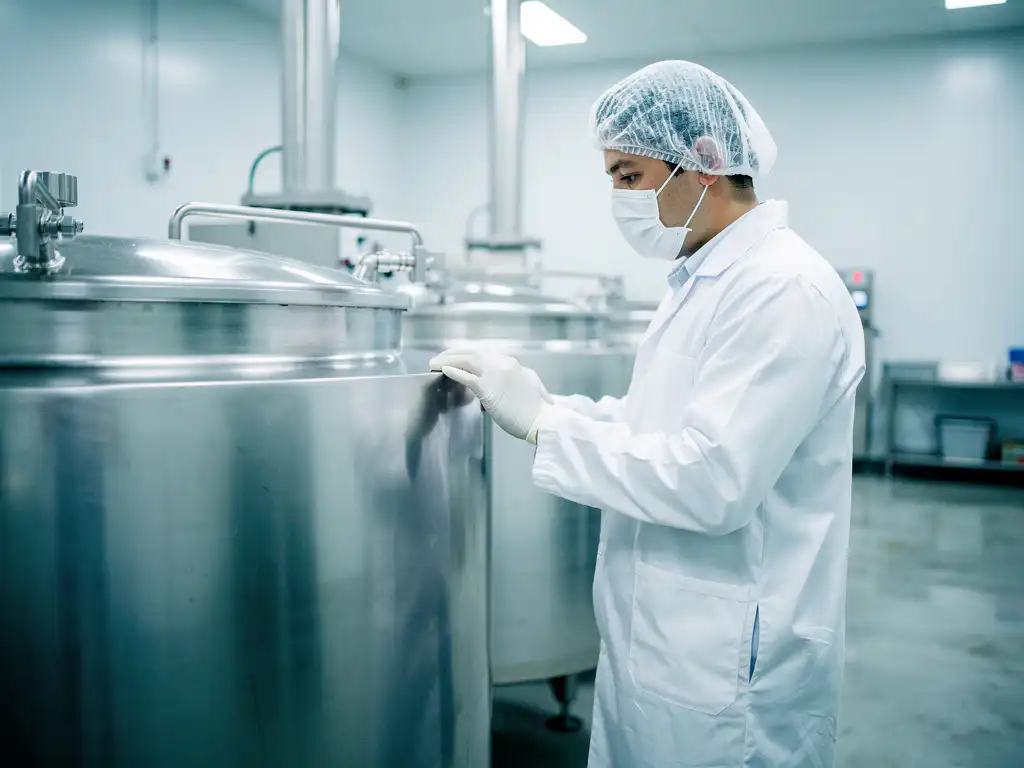
To conduct a contamination risk assessment for a food processing plant, you must systematically identify contamination sources, evaluate the likelihood and severity of each risk at every stage of production, and implement controls to reduce those risks to an acceptable level. The process follows a structured methodology aligned with food safety standards such as HACCP, GMP, and ISO 22000. The sections below address the most important questions food safety and quality managers face when building or reviewing a robust assessment.
What are the main sources of contamination in a food processing plant?
The main sources of contamination in a food processing plant are biological agents (bacteria, moulds, and viruses), chemical residues (cleaning agents, pesticides, and lubricants), physical foreign bodies (glass, metal, and packaging fragments), and allergen cross-contact. Understanding these four categories is the starting point for any food safety risk assessment.
Biological contamination is typically the most critical concern. Pathogens such as Listeria monocytogenes, Salmonella, and E. coli can survive on surfaces, equipment, and flooring, and spread rapidly through foot traffic and wheeled equipment. Research consistently shows that a significant proportion of contaminants enter controlled production spaces at floor level, carried in on footwear and vehicle wheels.
Chemical contamination risks arise from cleaning and sanitation programmes, pest control treatments, and equipment maintenance activities. Physical contamination can originate from ageing infrastructure, poorly maintained equipment, or inadequate zoning between raw material intake and finished product areas. Allergen cross-contact, while not always classified alongside the others, represents a growing compliance and liability risk in food manufacturing.
What steps are involved in a food processing contamination risk assessment?
A food processing contamination risk assessment typically follows six core steps: define the scope and team, identify all contamination hazards, assess the likelihood and severity of each hazard, determine existing controls and their effectiveness, implement additional controls where gaps exist, and document and review findings on a regular schedule.
- Define scope and assemble the team. Identify which areas, processes, and product lines are covered. Include quality, operations, engineering, and hygiene personnel to capture a complete picture.
- Identify hazards. Map every point in the process where biological, chemical, physical, or allergen contamination could be introduced, including raw material intake, processing, packaging, storage, and dispatch.
- Assess risk. For each hazard, evaluate the probability of occurrence and the severity of the consequence. A risk matrix is a standard tool for this step, producing a risk score that helps prioritise action.
- Evaluate existing controls. Review whether current measures — cleaning protocols, zoning, PPE requirements, entry controls — are adequate to manage the identified risks.
- Implement additional controls. Where gaps exist, introduce corrective measures. This may include physical barriers, enhanced cleaning schedules, staff training, or improved contamination control at entry and transition points.
- Document and schedule review. Record all findings, control decisions, and assigned responsibilities. Set a review date and define the triggers that would prompt an earlier reassessment.
Which areas of a food plant carry the highest contamination risk?
The highest contamination risk areas in a food processing plant are raw material intake zones, open product processing areas, chilled and wet environments, and the transition points between high-care and low-care zones. These locations combine high traffic, exposure to raw materials, and conditions that support microbial survival.
Open product handling areas are particularly vulnerable because food is exposed directly to the environment. Any contaminant introduced via foot traffic, equipment wheels, or airborne particles at these points can come into direct contact with the product. Chilled and wet environments present additional challenges because moisture supports the growth and persistence of pathogens such as Listeria, which can establish in floor drains, wall junctions, and underfoot surfaces.
Transition points between low-care and high-care zones are consistently identified as high-risk locations in GMP food processing audits. These boundaries are where contamination is most likely to migrate if physical controls are absent or poorly maintained. Raw material intake areas also carry elevated risk because incoming goods, packaging, and delivery vehicles introduce external contaminants directly into the facility environment.
How do you assess contamination risks at entry and transition points?
To assess contamination risks at entry and transition points, evaluate the volume and type of traffic passing through each point, the contamination load those people or vehicles are likely to carry, and the effectiveness of any existing controls in capturing or neutralising that contamination before it enters a controlled zone.
Begin by mapping every entry and transition point across the facility, including personnel entrances, gowning areas, raw material intake doors, and internal zone boundaries. For each point, consider:
- The frequency and volume of foot and wheeled traffic
- The external environment from which people or equipment are entering
- The sensitivity of the zone being entered
- The current control measures in place (footwear protocols, mats, barriers, hygiene stations)
- The evidence of control effectiveness, such as environmental monitoring data or audit findings
Entry point assessments should consider that foot traffic and wheeled equipment are among the most consistent vectors for particulate and microbial contamination in food manufacturing environments. Effective contamination control at these thresholds, including the use of contamination control mats, can significantly reduce the load of contaminants reaching production areas.
How often should a food plant repeat its contamination risk assessment?
A food processing plant should repeat its contamination risk assessment at least annually, and additionally whenever there is a significant change to the facility, processes, products, or regulatory requirements. Many food safety standards, including those aligned with HACCP and BRC Global Standards, require documented evidence of regular review.
In practice, the following events should trigger an immediate reassessment rather than waiting for the scheduled review:
- Introduction of a new product line or allergen
- Facility expansion, renovation, or changes to production layout
- A contamination incident, customer complaint, or failed audit
- Changes to cleaning chemicals, sanitation protocols, or pest control programmes
- New regulatory guidance or updated food safety standards
- Changes in raw material suppliers or supply chain logistics
Annual reviews provide a structured opportunity to incorporate environmental monitoring trends, audit outcomes, and operational changes that have accumulated over the preceding year. Facilities operating under more demanding regulatory scrutiny, such as those producing ready-to-eat products or supplying major retailers, often conduct more frequent reviews as part of their food facility risk management programme.
What documentation is needed to support a contamination risk assessment?
The documentation needed to support a food processing contamination risk assessment includes a hazard register, risk matrix, control measures record, corrective action log, review schedule, and evidence of team sign-off. These records demonstrate due diligence to auditors and regulatory bodies and form the backbone of a defensible food safety management system.
Key documents typically required include:
- Hazard identification records: A comprehensive list of all identified biological, chemical, physical, and allergen hazards relevant to the facility and its processes
- Risk assessment matrix: A scored evaluation of likelihood and severity for each hazard, producing a prioritised risk register
- Control measures documentation: Details of all preventive and corrective controls in place, including SOPs, cleaning schedules, and physical barrier specifications
- Environmental monitoring data: Swab results, air sampling data, and any other evidence used to validate the effectiveness of controls
- Corrective action records: Documentation of any non-conformances identified and the actions taken to address them
- Review and approval records: Dated signatures from the responsible team members confirming the assessment has been reviewed and approved
Good documentation practice also means maintaining version control so that assessors can trace how the risk profile of the facility has evolved over time. During regulatory inspections or customer audits, the ability to present a complete, coherent documentation trail is often as important as the controls themselves.
How Dycem helps with contamination control in food processing plants
Dycem’s reusable contamination control mats are designed to address one of the most consistent risk vectors identified in food plant risk assessments: contamination entering through entry and transition points via foot traffic and wheeled equipment.
- Up to 99.9% particulate capture at floor level, reducing the load of contaminants reaching production areas
- Biomaster silver-ion antimicrobial technology that inhibits microbial growth by up to 99.9%, providing continuous protection between cleaning cycles
- 3 to 5 year product lifespan, offering a more sustainable and cost-effective alternative to disposable sticky mats
- CleanZone mats engineered for personnel entry points, gowning rooms, and zone transitions where contamination control is most critical
- WorkZone mats built to handle forklifts, pallet trucks, and heavy-wheeled traffic in demanding food manufacturing environments
- ISO-certified manufacturing in compliance with EN ISO 9001 and 14001, supporting your audit documentation and supplier qualification requirements
Whether you are building a new contamination risk assessment or strengthening an existing programme, Dycem’s specialists can provide a free site survey to identify the highest-risk entry and transition points in your facility. Contact Dycem today to arrange your consultation.