

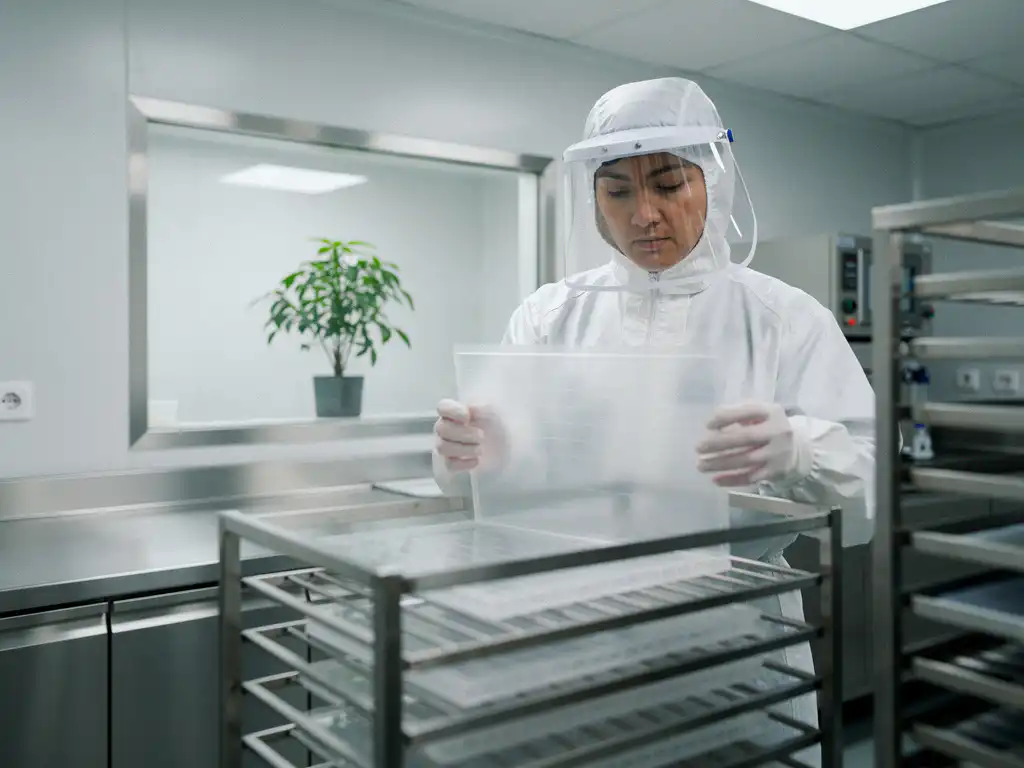
The most effective way to reduce plastic waste in a cleanroom environment is to replace disposable sticky mats with reusable contamination control mats. Disposable peel-off mats are the single largest source of single-use plastic in most controlled environments, generating significant waste with every shift change or traffic cycle. The sections below address the most common questions facilities ask when evaluating cleaner, more sustainable alternatives.
Why do cleanrooms generate so much plastic waste?
Cleanrooms generate substantial plastic waste primarily because contamination control has historically relied on disposable solutions. Sticky mats, single-use shoe covers, disposable gloves, and peel-off floor layers are all consumed at high volumes in facilities where contamination risk is constant. The faster a facility operates and the stricter its cleanliness standards, the more frequently these items are discarded.
The core problem is that disposable contamination control products are designed around convenience rather than sustainability. A single sticky mat pad is peeled away and discarded each time its surface becomes saturated with particulates, which in a busy pharmaceutical or electronics facility can happen multiple times per shift. Multiply that across dozens of entry points, hundreds of staff, and 365 operating days, and the volume of plastic waste generated annually becomes significant.
Regulatory pressure has historically focused on contamination performance rather than environmental impact, meaning facilities adopted whatever worked without scrutinising the waste it created. As ESG commitments become central to corporate strategy in 2026, quality and facilities managers are being asked to address both simultaneously, which is driving interest in sustainable contamination control alternatives.
What are the main sources of single-use plastic in contamination control?
The main sources of single-use plastic in contamination control are disposable sticky mats, single-use shoe covers, disposable overshoes, and single-use gloves or garments used at entry points and within controlled zones. Of these, disposable sticky mats typically account for the largest volume of plastic waste by weight and frequency of disposal.
Each category contributes to the problem in a different way:
- Disposable sticky mats: Layered peel-off mats that are discarded sheet by sheet as each layer becomes contaminated. High-traffic entry points may require multiple layers to be removed per shift.
- Single-use shoe covers and overshoes: Worn once and disposed of at gowning room exits, generating large volumes of plastic waste in facilities with high staff throughput.
- Disposable gloves and garments: While necessary in many controlled environments, they contribute meaningfully to the overall single-use plastic footprint of a cleanroom operation.
- Packaging from consumable contamination control products: The outer packaging of disposable mats and covers adds a secondary layer of plastic waste that is often overlooked in waste audits.
Addressing sticky mat waste is typically the highest-impact starting point for facilities looking to reduce cleanroom plastic waste, because it targets a high-volume, high-frequency disposal cycle that can be eliminated entirely with a reusable alternative.
How do reusable contamination control mats reduce plastic waste?
Reusable contamination control mats reduce plastic waste by replacing the continuous disposal cycle of sticky mats with a single long-life product. Instead of discarding a new layer of plastic after each use, a reusable mat is cleaned in place and returned to service, eliminating the ongoing generation of single-use plastic waste at every entry point.
The reduction in waste is structural rather than incremental. A reusable polymeric mat engineered to perform for three to five years replaces thousands of individual sticky mat sheets over the same period. For a facility with multiple entry points operating across multiple shifts, the cumulative reduction in plastic waste is substantial.
Reusable mats also support broader ESG commitments. Dycem’s contamination control mats are designed to minimise single-use plastics and are manufactured under EN ISO 9001- and 14001-certified processes, with compliance to EU REACH regulations and California Proposition 65. This means the sustainability improvement is supported by independently verified environmental standards, not just a product claim.
Beyond waste reduction, the built-in Biomaster silver-ion antimicrobial technology in reusable mats inhibits microbial growth by up to 99.9%, meaning the mat continues to perform between cleaning cycles without requiring disposal to maintain hygiene standards.
What contamination performance do reusable mats deliver compared to disposable sticky mats?
Reusable contamination control mats match or exceed the performance of disposable sticky mats in controlled environments. Dycem’s polymeric mats capture and retain up to 99.9% of shoe and wheel contaminants at the point of entry, addressing the fact that approximately 80% of contamination enters controlled environments at floor level.
Disposable sticky mats work through adhesion, which degrades rapidly as the surface becomes loaded with particulates. Once the top layer is saturated, the mat either needs to be peeled or it stops performing effectively, creating a window of reduced protection between changes. This inconsistency is a known operational frustration for quality managers responsible for maintaining cleanroom standards.
Reusable polymeric mats operate differently. The polymer surface attracts and retains particulates mechanically rather than through adhesion, and its performance is restored through regular cleaning rather than disposal. This means the mat delivers consistent contamination capture across its entire operational lifespan, without the performance dips associated with sticky mat saturation.
The addition of Biomaster antimicrobial technology provides a further layer of protection that disposable sticky mats do not offer. By inhibiting microbial growth within the mat itself, reusable mats address biological contamination risk in addition to particulate capture, making them a more comprehensive solution for regulated environments.
Do sustainability improvements in cleanrooms affect GMP or ISO compliance?
Switching from disposable to reusable contamination control mats does not compromise GMP or ISO compliance, provided the reusable solution delivers validated contamination performance. Regulatory frameworks such as GMP and ISO 14644 are concerned with contamination outcomes, not the specific format of the control measure used to achieve them.
In practice, reusable mats are already in use across pharmaceutical, medical device, food and beverage, and aerospace facilities operating under GMP, FDA, and ISO certification requirements. The key compliance consideration is whether the chosen solution can demonstrate consistent contamination control performance and be maintained according to a validated cleaning protocol.
Reusable mats manufactured to ISO 9001 and 14001 standards provide the quality documentation and process consistency that regulated facilities require. Contamination capture data, antimicrobial performance specifications, and material compliance certifications give quality managers the evidence base needed to validate the switch and defend it during regulatory audits.
If anything, moving away from disposable sticky mats can strengthen a facility’s compliance position by eliminating the inconsistency associated with delayed mat changes, adhesion degradation, and variable staff adherence to disposal protocols.
What should facilities consider when switching from disposable to reusable contamination control?
When switching from disposable sticky mats to reusable contamination control mats, facilities should assess entry point traffic volumes, mat sizing requirements, cleaning protocols, and the total cost of ownership over the product’s operational lifespan. A structured evaluation prevents common implementation errors and ensures the solution is validated before full deployment.
The key considerations include:
- Traffic type and volume: Pedestrian-only entry points, mixed pedestrian and light-wheeled traffic zones, and heavy-duty areas with forklifts or pallet trucks each require a different mat specification. Selecting the right format for each zone is essential for consistent performance.
- Facility layout and entry point mapping: Cleanroom entrances, gowning rooms, airlocks, and critical corridors each present different contamination control challenges. Mapping all entry points before specifying a solution ensures full coverage without gaps.
- Cleaning and maintenance protocols: Reusable mats require a defined cleaning schedule to maintain performance. Facilities should confirm that cleaning procedures are compatible with existing housekeeping operations and that staff are trained accordingly.
- Total cost of ownership: The upfront investment in reusable mats is higher than a single box of sticky mats, but the three-to-five-year operational lifespan eliminates the recurring cost of disposable replacements. A like-for-like cost comparison over a three-year period typically demonstrates clear financial advantage.
- Validation and documentation: Regulated facilities will need to document the switch as part of their change control process. Selecting a supplier that provides performance data, material certifications, and technical support simplifies validation.
A site survey conducted before purchase removes much of the guesswork from this process, allowing contamination control specialists to recommend the right solution for each specific facility layout and traffic pattern.
How Dycem helps reduce plastic waste in cleanroom environments
Dycem’s reusable contamination control mats are purpose-built to help regulated facilities eliminate disposable sticky mats and reduce cleanroom plastic waste without compromising contamination performance or compliance. Key benefits include:
- Capture and retention of up to 99.9% of shoe and wheel contaminants at the point of entry
- A three-to-five-year operational lifespan that replaces thousands of disposable mat sheets
- Built-in Biomaster silver-ion antimicrobial technology, inhibiting microbial growth by up to 99.9%
- ISO 9001 and 14001 certified manufacturing, with EU REACH and California Proposition 65 compliance
- A range of formats including CleanZone for pedestrian and light-wheeled traffic zones, WorkZone for heavy-duty areas, and Floating Mats for flexible or temporary deployments
- Customisable sizing, format, and colour to suit complex facility layouts and aesthetic requirements
Dycem contamination control specialists are available to conduct a free site survey, helping facilities identify the right solution for every entry point and build the evidence base needed for a smooth transition. Contact Dycem today to arrange your consultation.