

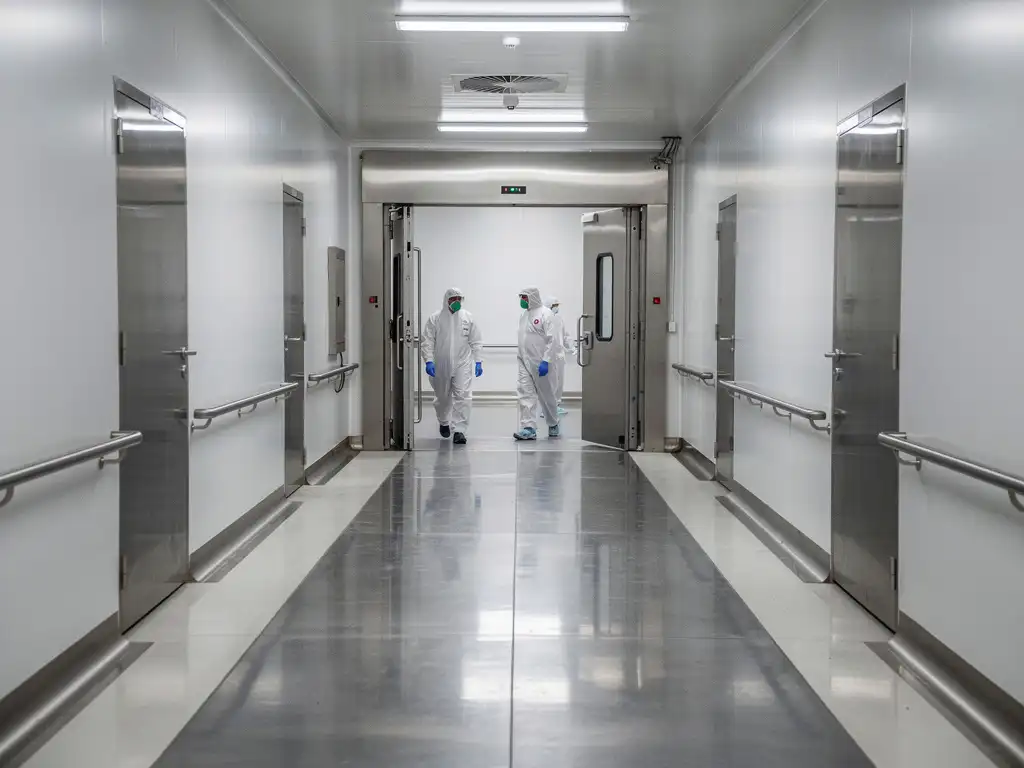
Setting up hygienic zones in a food manufacturing facility means physically and procedurally separating areas of different contamination risk, so that raw materials, allergens, pathogens, and environmental contaminants cannot migrate from lower-hygiene areas into higher-hygiene production spaces. The foundation of any effective zoning system is a risk-based approach: every zone boundary reflects the level of microbial and particulate risk that the product at that stage of production can tolerate. The sections below work through the key questions facility managers face when designing, implementing, and maintaining a robust zoning programme.
What are the different hygiene zones in a food manufacturing facility?
Food manufacturing facilities are typically divided into four hygiene zones, ranging from basic ambient areas to the most stringently controlled high-care and high-risk environments. Each zone is defined by the level of contamination risk it presents to the product and the corresponding controls required to manage that risk.
While terminology can vary between standards bodies and individual companies, the most widely adopted framework uses the following four-tier structure:
- Zone 1 (Non-food area): Warehousing, loading bays, staff amenities, and external access points. No direct product contact. Basic hygiene standards apply.
- Zone 2 (Low-care/ambient): Areas where food is handled but is protected by packaging, or where it has undergone a kill step and is not yet re-exposed. Moderate hygiene controls required.
- Zone 3 (High-care): Areas where ready-to-eat or high-risk products are handled after processing but before final packaging. Strict personnel hygiene, dedicated PPE, and controlled entry are essential.
- Zone 4 (High-risk): The most stringently controlled environments, typically for products that receive no further heat treatment or microbial reduction step before consumption. Physical segregation, positive air pressure, and validated entry protocols are standard requirements.
Some facilities add a fifth designation for open-product handling areas within Zone 3 or 4, but the four-zone model aligns with guidance from bodies such as the British Retail Consortium (BRC) and is widely recognised across GMP food manufacturing frameworks.
How do you determine which areas require which hygiene zone classification?
Zone classification is determined by a structured risk assessment that considers the nature of the product at each stage of production, the likelihood of contamination at that point, and the consequences if contamination occurs. The central question is whether a contamination event at this location could reach the consumer without being eliminated by a subsequent process step.
Key factors that inform zone classification include:
- Product vulnerability: Ready-to-eat products that receive no further kill step require the highest zone classification. Raw or ambient products that will be cooked tolerate lower classifications.
- Process stage: Post-process handling areas almost always require higher classification than pre-process areas, even if they are physically adjacent.
- Pathogen and allergen risk: Areas where allergen cross-contact is possible, or where Listeria, Salmonella, or other pathogens are a documented risk, should be classified at least as high-care.
- Air and water flow: Contamination can travel through HVAC systems, condensation, and drainage. Zone boundaries must account for how air and water move through the facility, not just how people and product move.
- Regulatory and customer requirements: BRC, SQF, IFS, and retailer-specific codes of practice may prescribe minimum zone classifications for certain product categories.
A HACCP-based analysis, ideally conducted by a cross-functional team including quality, production, and engineering, should underpin every zoning decision. Zone maps should be reviewed whenever the facility layout, product range, or process flow changes.
What physical controls are required at hygienic zone boundaries?
Physical controls at hygienic zone boundaries are the tangible barriers and decontamination measures that prevent contamination from crossing from a lower-hygiene area into a higher-hygiene one. The specific controls required depend on the classification of the zones on either side of the boundary, but the principle is consistent: the boundary must create a break in the contamination pathway.
Common physical controls include:
- Dedicated gowning areas: Changing facilities positioned at zone entry points where personnel exchange footwear, PPE, and outerwear appropriate to the zone they are entering.
- Footwear decontamination: Boot wash stations, boot dips, or contamination control mats positioned at entry points to capture and retain particulate and microbial contamination from footwear before it enters the zone.
- Air pressure differentials: High-care and high-risk zones are typically maintained at positive pressure relative to adjacent lower-hygiene areas, so that air flows outward rather than inward, reducing airborne contamination ingress.
- Physical separation: Walls, interlocked doors, and airlocks that prevent simultaneous access from both sides of a boundary, eliminating the risk of a direct contamination pathway.
- Dedicated equipment and utensils: Colour-coded tools, trolleys, and containers that are restricted to a single zone and never cross boundaries.
- Floor-level contamination control: Reusable polymeric mats at entry and transition points that capture dirt, dust, and particulates carried on footwear and wheels before they enter the controlled zone.
Research consistently shows that around 80% of contaminants entering controlled environments do so at floor level, carried in on footwear and wheeled equipment. This makes floor-level controls one of the most cost-effective investments at any zone boundary, particularly where foot and wheeled traffic is frequent.
How should personnel movement between zones be managed?
Personnel movement between hygiene zones should follow a strictly defined, one-directional flow wherever possible, with mandatory decontamination steps at each zone transition. The goal is to ensure that no person can carry contamination from a lower-hygiene zone into a higher-hygiene zone without passing through a validated decontamination process.
Effective personnel movement management includes the following principles:
- Unidirectional flow: Design personnel routes so that staff move progressively from lower-hygiene to higher-hygiene areas, not back and forth. Where bidirectional movement is unavoidable, a full gowning change must occur each time.
- Mandatory gowning protocols: Entry to high-care and high-risk zones must require a complete change of PPE, including dedicated footwear or overshoes, at a designated gowning point. Gowning procedures should be documented, trained, and audited.
- Visitor and contractor management: All non-production personnel must follow the same entry protocols as production staff. Visitor logs should record zone access, and escorts should be required in high-risk areas.
- Training and competency verification: Personnel must understand not just the procedure but the reason behind it. Facilities that invest in hygiene training see fewer procedural shortcuts and better compliance during audits.
- Signage and visual management: Clear, colour-coded floor markings, door signage, and PPE reminders at zone boundaries reduce the likelihood of accidental boundary breaches.
Access control technology, including swipe card or biometric entry systems, can provide an additional layer of enforcement and an auditable record of who entered which zone and when. This is particularly valuable during GMP or BRC audits.
What are the most common mistakes when setting up hygienic zones?
The most common mistakes when setting up hygienic zones in food manufacturing facilities fall into three categories: inadequate physical separation, poorly designed personnel flows, and underestimating floor-level contamination risk. Each of these errors can undermine an otherwise well-designed zoning programme and create compliance vulnerabilities.
Facilities most frequently encounter the following pitfalls:
- Zoning on paper without physical enforcement: A zone map that exists only as a document, without corresponding physical barriers, signage, and equipment restrictions, provides no real protection. Zones must be physically evident to everyone working in the facility.
- Shared equipment crossing zone boundaries: Trolleys, pallet trucks, and hand tools that move freely between zones are one of the most common vectors for cross-contamination. Colour-coding and zone-specific equipment pools are essential, not optional.
- Inadequate entry point controls: Relying solely on boot dips or disposable overshoes at zone entry points is rarely sufficient. Boot dips require regular maintenance to remain effective, and disposable solutions introduce their own handling and disposal risks. Reusable contamination control mats provide a consistent, validated alternative that captures particulate at the point of entry without the operational burden of liquid systems.
- Ignoring wheeled traffic: Personnel protocols often receive more attention than wheeled equipment routes. Pallet trucks, forklifts, and trolleys can carry significant contamination loads across zone boundaries if their wheels are not addressed at transition points.
- Failing to review zones after layout changes: Facility modifications, new product lines, or changes to process flow can invalidate an existing zone map. Zones should be formally reviewed as part of any change management process.
- Insufficient staff training: Even the best-designed zoning system fails if the people operating within it do not understand or follow the protocols. Training must be ongoing, not a one-time induction exercise.
How do you maintain hygienic zone integrity over time?
Maintaining hygienic zone integrity over time requires a combination of routine monitoring, scheduled audits, ongoing staff training, and a formal process for reviewing and updating zone controls whenever the facility, product range, or regulatory environment changes. Zoning is not a one-time setup exercise; it is a continuous programme.
The most effective long-term maintenance strategies include:
- Environmental monitoring programmes: Regular swabbing of zone boundaries, entry points, drains, and high-touch surfaces provides early warning of contamination trends before they become audit findings or product safety incidents.
- Scheduled equipment and infrastructure reviews: Physical barriers, door seals, air handling units, and floor-level controls all degrade over time. Planned maintenance schedules ensure they continue to perform as intended.
- Internal audit programmes: Regular internal audits against the zone map and associated SOPs identify procedural drift; the gradual erosion of compliance that occurs when shortcuts become normalised.
- Refresher training: Personnel turnover and complacency are two of the biggest threats to long-term zone integrity. Structured refresher training, particularly after incidents or near-misses, reinforces the importance of protocols.
- Supplier and contractor management: Third parties working within the facility must be held to the same zoning standards as internal staff. Contractor induction and supervision should be documented and auditable.
- Change management integration: Any change to facility layout, product specification, or process flow should trigger a formal review of the affected zone classifications and boundary controls before the change is implemented.
Facilities that treat zone integrity as a living programme rather than a fixed installation consistently perform better in third-party audits and experience fewer contamination-related incidents over time.
How Dycem helps with hygienic zone control in food manufacturing
Dycem’s reusable contamination control mats are engineered to address one of the most persistent vulnerabilities in any zoning programme: floor-level contamination at zone entry and transition points. Key benefits include:
- Captures up to 99.9% of shoe and wheel contaminants at zone boundaries, preventing particulate migration between hygiene zones.
- Built-in Biomaster silver-ion antimicrobial technology inhibits microbial growth by up to 99.9%, providing an additional layer of protection at high-traffic entry points.
- Reusable and washable, eliminating the recurring cost and waste of disposable sticky mats or the maintenance burden of boot dip systems.
- Designed to perform for three to five years, supporting consistent, validated contamination control across the product lifespan.
- Available in configurations suited to pedestrian traffic (CleanZone), heavy wheeled traffic including forklifts and pallet trucks (WorkZone), and flexible or temporary zone layouts (Floating Mats).
- ISO-certified manufacturing to EN ISO 9001 and 14001 standards, with compliance to EU REACH and California Proposition 65.
Dycem specialists work with food manufacturing facilities to assess entry points, traffic flows, and zone boundary requirements, providing a consultative approach that goes beyond product supply. Contact Dycem today to arrange a free site survey and find out how the right contamination control solution can strengthen your hygienic zoning programme.