

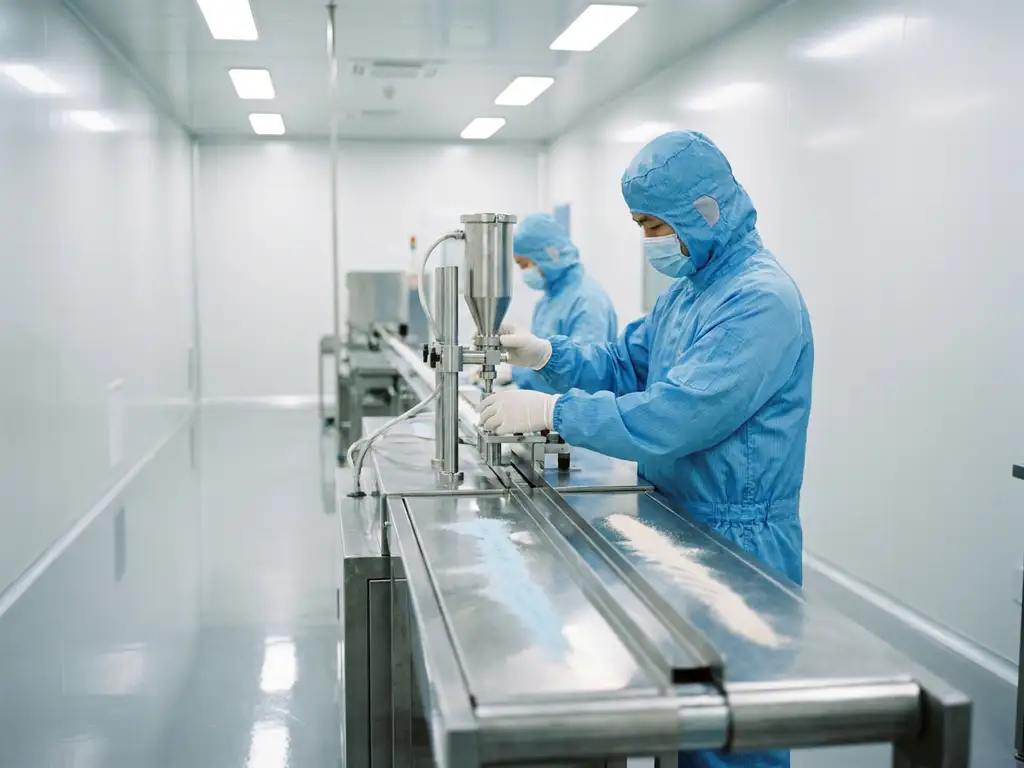
Cross-contamination between drug products on a shared pharmaceutical line occurs through four primary routes: personnel movement, equipment surfaces, airborne particle transfer, and inadequate changeover procedures. Any one of these pathways can introduce residual active pharmaceutical ingredients (APIs), excipients, or microbial contaminants from one product batch into another. Understanding each route is essential for any quality or facilities team operating under GMP, FDA, or ISO compliance requirements.
What are the main routes of cross-contamination on a shared pharmaceutical line?
The main routes of cross-contamination on a shared pharmaceutical line are physical contact with contaminated surfaces, airborne particle dispersal, personnel acting as vectors, and incomplete equipment cleaning during changeover. Each route can transfer residual APIs, microorganisms, or particulates from one product batch into another, creating serious compliance and patient safety risks.
In practice, these routes rarely operate in isolation. A production environment where personnel move freely between product zones, where air handling is poorly zoned, and where equipment cleaning validation is inconsistent creates multiple simultaneous contamination pathways. Regulatory frameworks such as EU GMP Annex 15 and FDA 21 CFR Part 211 specifically address these risks because shared-line manufacturing is common and the consequences of cross-contamination can be severe, ranging from product recalls to patient harm.
Effective contamination control requires a layered approach that addresses all four routes simultaneously rather than treating each in isolation. The sections below examine each pathway in detail.
How does personnel movement spread contamination between drug products?
Personnel spread contamination between drug products primarily through clothing, footwear, skin, and hands. When operators move between production zones handling different formulations, they carry residual particles, powders, and microorganisms on their bodies and garments. Footwear is a particularly significant vector because floor-level contaminants are picked up and redistributed with every step.
Research in cleanroom science consistently identifies people as one of the most significant sources of particulate and microbial contamination in controlled environments. Human skin sheds thousands of particles per minute, and pharmaceutical powders readily adhere to gowning materials, gloves, and shoe surfaces. In shared-line environments, this means that an operator who has been working near a high-potency API can inadvertently transfer trace quantities of that compound into an adjacent product zone simply by walking through it.
Gowning protocols, personnel flow controls, and defined entry and exit procedures are standard mitigations. However, these measures are only as effective as the contamination control systems that support them. Entry points to controlled zones represent the last line of defence before personnel-borne contaminants reach the production environment, making floor-level contamination capture at those points a critical control measure.
Why is equipment changeover a critical contamination risk point?
Equipment changeover is a critical contamination risk point because residual product from a previous batch can persist on machinery surfaces, transfer lines, and ancillary equipment if cleaning validation is insufficient. Even trace quantities of a previous API can contaminate the next product, particularly when potent compounds or allergens are involved.
Changeover procedures in shared-line pharmaceutical manufacturing are governed by cleaning validation requirements under GMP guidelines. Acceptable residue limits are calculated based on the toxicological profiles of the products involved, and swab or rinse sampling is used to verify that cleaning has been effective. Where these limits are not met, the risk of carryover contamination is real and measurable.
The challenge is that cleaning validation is resource-intensive and time-sensitive. Production schedules create pressure to minimise downtime between batches, and this pressure can lead to shortcuts in cleaning procedures. Equipment with complex geometry, such as tablet presses, filling lines, and granulators, presents particular challenges because residue can accumulate in hard-to-reach areas that are difficult to clean and verify. Robust changeover SOPs, well-designed equipment with cleanability in mind, and rigorous validation programmes are all necessary to manage this risk effectively.
What role does air handling play in cross-contamination between products?
Air handling plays a significant role in cross-contamination because airborne particles, API dust, and microbial aerosols can travel between product zones through shared HVAC systems, pressure differentials, and uncontrolled air movement. Without proper air segregation, contaminants generated in one part of a facility can be distributed to other production areas.
Pharmaceutical facilities managing cross-contamination risk through air handling rely on several engineering controls. Pressure cascades ensure that air flows from cleaner to less clean areas, preventing contaminants from migrating into critical zones. Dedicated air handling units for high-risk products, particularly highly active or sensitising compounds, prevent recirculation of contaminated air. HEPA filtration removes particulates from supply air, while exhaust systems capture dust at source during operations such as weighing, blending, and tablet compression.
Where shared air handling systems are unavoidable, the design of ductwork, the placement of return air intakes, and the frequency of filter changes all influence the level of cross-contamination risk. Facilities handling highly potent APIs or biological products often require fully segregated HVAC systems as a non-negotiable design requirement, regardless of the cost implications.
Which drug types carry the highest cross-contamination risk on shared lines?
The drug types carrying the highest cross-contamination risk on shared lines are highly potent active pharmaceutical ingredients (HPAPIs), sensitising compounds such as beta-lactam antibiotics and biological agents, and cytotoxic drugs used in oncology. These categories are hazardous at very low concentrations, meaning even trace carryover can cause harm to patients receiving a subsequently manufactured product.
Regulatory guidance classifies compounds by their occupational exposure limits (OELs) and permitted daily exposures (PDEs) to establish acceptable residue thresholds during shared-line manufacturing. Compounds with very low PDEs require either dedicated manufacturing facilities or extremely robust cleaning validation to demonstrate that shared-line production is safe.
Beyond potency, certain drug categories present cross-contamination risks for different reasons. Allergens, including penicillins and cephalosporins, can trigger serious immune responses in sensitive patients even at sub-therapeutic concentrations. Hormonal compounds, particularly sex hormones and corticosteroids, carry endocrine disruption risks if present in unintended products. Biologics introduce the additional complexity of microbial contamination and protein carryover. For all of these categories, the decision to manufacture on a shared line requires a formal risk assessment that weighs the contamination hazard against the available control measures.
How can contamination control at entry points reduce shared-line cross-contamination risk?
Contamination control at entry points reduces shared-line cross-contamination risk by intercepting particulates, microbial contaminants, and residual product carried on footwear and wheeled equipment before they enter controlled production zones. Because a significant proportion of facility contamination is introduced at floor level through personnel and equipment movement, effective entry-point controls directly reduce the contamination burden within the production environment.
In pharmaceutical facilities, entry-point contamination control typically encompasses gowning airlocks, personnel flow management, and floor-level decontamination solutions positioned at the transitions between zones of different cleanliness classifications. These measures are particularly relevant in shared-line environments where personnel and equipment move between areas handling different products, creating the conditions for cross-contamination at every transition point.
Floor-level contamination capture is a practical and validated layer within a broader contamination control strategy. When personnel walk from a production area handling one API into a corridor or adjacent zone, contaminants on their footwear are deposited on floor surfaces and can subsequently be redistributed. High-performance contamination control mats positioned at these transition points capture particulates and microorganisms at the point of transfer, reducing the quantity of contaminants that enter the next zone.
How Dycem contamination control mats support shared-line hygiene compliance
Dycem’s reusable contamination control mats are engineered to address the floor-level contamination pathway that contributes significantly to cross-contamination risk in pharmaceutical facilities. Positioned at cleanroom entrances, gowning room exits, airlocks, and critical corridors, Dycem mats capture up to 99.9% of shoe and wheel contaminants before they enter controlled production zones.
For shared-line pharmaceutical environments, Dycem’s solutions offer several specific advantages:
- Antimicrobial protection: Built-in Biomaster antimicrobial technology inhibits microbial growth on mat surfaces, reducing the risk of biological contamination transfer between zones.
- Reusable and washable construction: Unlike disposable sticky mats, Dycem mats are designed for repeated cleaning and reuse over a 3 to 5 year lifespan, supporting consistent hygiene compliance without the waste and recurring cost of single-use alternatives.
- Zone-specific formats: Dycem CleanZone mats are purpose-built for pedestrian and light-wheeled traffic at sensitive entry points, while WorkZone mats handle heavy-wheeled traffic, including forklifts and pallet trucks, in more demanding areas.
- ISO-certified manufacturing: Compliance with EN ISO 9001 and 14001 standards ensures consistent product quality aligned with pharmaceutical facility requirements.
- Sustainable alternative: Replacing disposable peel-off mats with reusable Dycem solutions significantly reduces single-use plastic waste, supporting ESG and sustainability commitments.
Dycem’s contamination control specialists offer a consultative approach that begins with a free site survey, helping quality and facilities teams identify the highest-risk entry points across their facility and specify the right solution for each zone. To discuss your facility’s requirements, contact the Dycem team to arrange an initial consultation.