

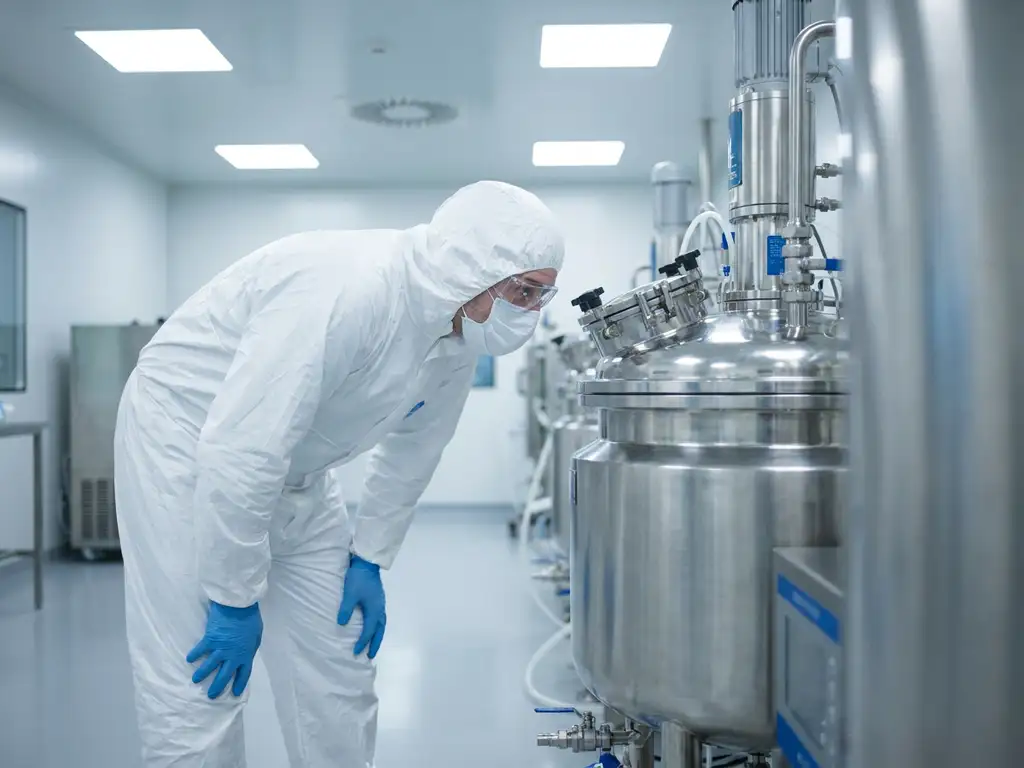
Equipment design is one of the most significant factors influencing contamination risk in drug manufacturing. Poor design choices — from surface texture to equipment placement — create conditions where microbial growth, particulate accumulation, and cross-contamination become difficult to prevent and even harder to detect. The sections below address the most common questions facilities face when evaluating or upgrading their manufacturing equipment from a contamination control perspective.
What equipment design features increase contamination risk in drug manufacturing?
Equipment design features that increase contamination risk include rough or porous surface finishes, inaccessible internal cavities, poorly sealed joints, and components that cannot be adequately cleaned or sterilised in place. Any design element that allows product residue, moisture, or particulates to accumulate unchecked creates a potential contamination pathway.
In pharmaceutical manufacturing, contamination risk is rarely the result of a single failure. It is typically the product of several compounding design weaknesses. Equipment with horizontal ledges, exposed threads, or complex geometries tends to trap particles and support microbial growth. Similarly, equipment that requires partial disassembly for cleaning introduces human contact as a contamination variable every time maintenance is performed.
Regulatory frameworks such as GMP and FDA guidance consistently highlight equipment design as a primary control point. Facilities that rely on well-intentioned cleaning protocols to compensate for poor equipment design are operating with unnecessary risk. The design itself should minimise contamination potential before any cleaning process is applied.
How does surface finish affect microbial contamination in pharma equipment?
Surface finish directly affects microbial contamination because rougher surfaces provide more area for microorganisms to attach, form biofilms, and resist cleaning agents. In pharmaceutical equipment, stainless steel surfaces are typically specified to a defined roughness average (Ra value), with smoother finishes being harder for microbes to colonise and easier to clean and validate.
Biofilm formation is a particular concern in drug manufacturing environments. Once microorganisms establish a biofilm on an equipment surface, they become significantly more resistant to disinfectants and cleaning cycles. A surface that appears visually clean can still harbour viable microbial populations if the underlying finish is too rough to allow complete removal of organic material.
Industry guidance generally favours electropolished or mechanically polished surfaces in product-contact areas. The practical implication is that surface finish specifications should be defined during equipment procurement, not retrofitted after installation. Facilities that inherit older equipment with suboptimal finishes often face disproportionate cleaning validation challenges as a result.
What is the role of cleanability in GMP-compliant equipment design?
Cleanability is a core requirement of GMP-compliant equipment design. Equipment must be designed so that all product-contact and non-product-contact surfaces can be thoroughly cleaned, inspected, and where necessary, sterilised. If a surface cannot be reliably cleaned and that cleanliness cannot be verified, it cannot be validated — and unvalidated cleaning is a direct compliance risk.
GMP guidelines require that equipment design supports cleaning validation by eliminating dead legs, blind spots, and areas where cleaning agents cannot reach or drain completely. This applies to both automated clean-in-place (CIP) systems and manual cleaning procedures. Equipment that requires operators to reach into confined spaces, use non-standard tools, or make assumptions about whether a surface has been cleaned introduces variability that undermines the entire validation process.
Cleanability also has a direct bearing on audit outcomes. During regulatory inspections, investigators frequently examine equipment design drawings, cleaning validation records, and the physical accessibility of equipment surfaces. Facilities that can demonstrate design-led cleanability — rather than process-compensated cleaning — are in a considerably stronger position during audits.
How does equipment placement and facility layout contribute to cross-contamination?
Equipment placement and facility layout contribute to cross-contamination when airflow patterns, personnel movement, or material flows are not designed to maintain separation between different products, processes, or contamination zones. Poor layout decisions can effectively negate the protection offered by well-designed individual equipment.
Cross-contamination through layout typically occurs in two ways. First, when high-particulate or high-bioburden activities are located adjacent to critical manufacturing zones without adequate physical or pressure differential separation. Second, when personnel or equipment move between zones without passing through appropriate decontamination steps, carrying contaminants from one area into another.
Facility design should map contamination risk zones explicitly and use physical barriers, airlocks, and defined traffic flows to prevent cross-zone transfer. Entry points into controlled areas are particularly critical — they represent the boundary between uncontrolled and controlled environments, and every person or wheeled item crossing that boundary is a potential contamination vector. Contamination control measures at these entry points, including floor-level contamination control solutions, form an important part of a layered defence strategy.
Airflow management is equally important. Unidirectional airflow, appropriate pressure differentials between zones, and correctly positioned HVAC returns all contribute to preventing airborne particulates from migrating into critical areas. Equipment that generates significant particulate or aerosol output should be positioned to work with airflow patterns, not against them.
What’s the difference between product contamination and environmental contamination in manufacturing?
Product contamination refers to the introduction of foreign material — biological, chemical, or physical — directly into the drug product itself, rendering it potentially unsafe or non-compliant. Environmental contamination refers to the presence of contaminants within the manufacturing environment that have not yet reached the product but represent an ongoing risk to product integrity and cleanroom hygiene.
The distinction matters because the two types require different control strategies, even though they are closely linked. Environmental contamination — particulates on floors, surfaces, or equipment exteriors, microbial counts in room air, or chemical residues on non-product-contact surfaces — is a leading indicator of product contamination risk. A facility that monitors and controls environmental contamination effectively is actively preventing product contamination before it occurs.
From a regulatory standpoint, both types are subject to scrutiny. GMP inspectors assess environmental monitoring data alongside product testing results. A pattern of elevated environmental contamination, even without confirmed product impact, can trigger corrective action requirements. This is why contamination control strategies in drug manufacturing must address the environment as a system, not just the product contact surfaces in isolation.
How can facilities reduce contamination risk introduced during equipment maintenance?
Facilities can reduce contamination risk during equipment maintenance by implementing controlled maintenance procedures, restricting access to critical zones during maintenance activities, using dedicated tools and garments for maintenance work, and applying rigorous cleaning and verification steps before returning equipment to service. Maintenance events are among the highest-risk activities in a controlled manufacturing environment.
During maintenance, equipment is opened, surfaces are exposed, and personnel who may not regularly work in the controlled area enter the space. Each of these factors introduces contamination potential that routine operations do not. Maintenance personnel should follow the same gowning and entry protocols as production staff, and the maintenance activity itself should be documented in a way that supports post-maintenance cleaning verification.
Spare parts and tools brought into controlled areas represent a frequently overlooked contamination pathway. Components stored in uncontrolled warehouses or workshops should be cleaned and inspected before introduction into the manufacturing zone. Similarly, maintenance activities that generate debris — grinding, cutting, or mechanical work — should be isolated or scheduled during shutdown periods, with enhanced cleaning procedures applied afterwards.
Environmental monitoring should be intensified in the period following significant maintenance events. Baseline contamination data collected before and after maintenance provides evidence that the area has been returned to a controlled state and supports ongoing compliance documentation.
How Dycem contamination control mats support pharma hygiene compliance
While equipment design addresses contamination risk at the source, entry points into controlled environments remain a consistent vulnerability. Personnel and wheeled equipment crossing from uncontrolled to controlled zones carry particulate and microbial contamination at floor level — a pathway that equipment design alone cannot close.
Dycem’s reusable contamination control mats are engineered specifically for this boundary. Built into facility entry points, gowning rooms, airlocks, and critical corridors, they capture up to 99.9% of shoe and wheel-borne contaminants before they enter the controlled space. Key attributes include:
- Biomaster antimicrobial protection built into the mat polymer, providing continuous microbial suppression between cleaning cycles
- Reusable construction with a 3 to 5 year lifespan, reducing the waste and inconsistency associated with disposable sticky mat programmes
- ISO-certified manufacturing compliant with EN ISO 9001 and 14001 standards, supporting audit-ready documentation
- Customisable formats including CleanZone for pedestrian and light-wheeled traffic, WorkZone for heavy industrial traffic, and Floating Mats for flexible or temporary zone configurations
- Validated performance that supports GMP compliance and environmental monitoring programmes
Contamination control at entry points is a practical, high-impact complement to equipment design improvements. To find out which solution fits your facility layout, speak with a Dycem contamination control specialist for a free site survey and consultation.