

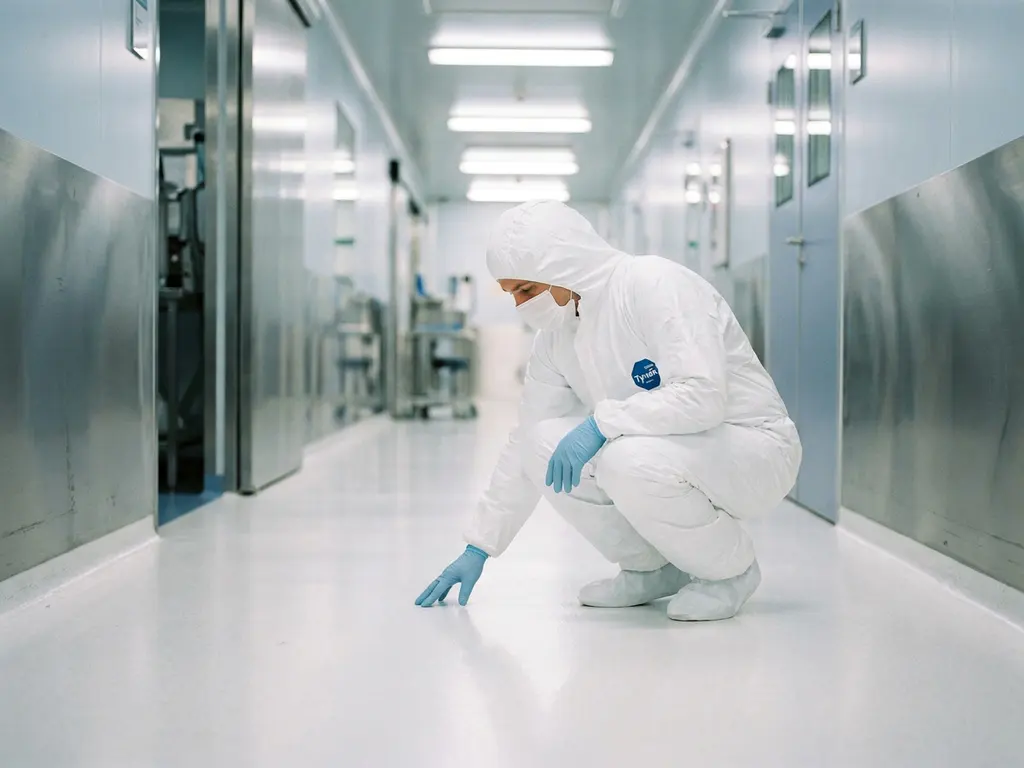
Particle transfer at floor level and surface contamination are fundamentally different in origin, mechanism, and risk profile. Floor-level particle transfer occurs when contaminants are physically carried into a controlled environment on the soles of shoes or the wheels of equipment, making entry points the critical control zone. Surface contamination, by contrast, refers to particles that settle or spread across work surfaces, equipment, or materials already inside the controlled space. Understanding this distinction is essential for facilities managers designing effective contamination control strategies, because the interventions that address one problem rarely solve the other. The sections below unpack each dimension of this difference in detail.
How does contamination actually enter a controlled environment?
Contamination enters controlled environments primarily through people, equipment, and materials crossing the boundary between uncontrolled and controlled zones. The floor is the single most significant pathway, with industry experience consistently showing that around 80% of particulate contamination is introduced at floor level through foot and wheel traffic.
Every time a person walks into a cleanroom or controlled space, the soles of their footwear carry particles accumulated from corridors, loading bays, car parks, and general facility floors. Wheeled equipment such as trolleys, pallet trucks, and forklifts compounds the problem by covering a greater surface area and applying more mechanical force, which can dislodge and redistribute particles across a wider zone.
Beyond the floor, contamination can also enter through air handling failures, personnel shedding (skin cells, hair, clothing fibres), and improperly packaged materials. However, these airborne and surface-origin pathways are typically addressed through HVAC filtration, gowning protocols, and material transfer procedures. The floor-level pathway is frequently underestimated relative to its actual contribution to the contamination load, which is why entry point management deserves dedicated attention alongside these other controls.
What makes floor-level particle transfer different from surface contamination?
Floor-level particle transfer is a dynamic, entry-point-driven process, whereas surface contamination is typically a static accumulation problem. The core difference lies in mechanism: floor-level contamination is actively transported into a controlled zone by a moving vector, while surface contamination accumulates passively from particles already present in the environment.
This distinction has significant practical consequences. Floor-level particle transfer introduces contaminants from entirely outside the controlled environment, meaning the particle types, microbial load, and contamination volume are largely unpredictable and uncontrolled until they cross the threshold. Surface contamination, by comparison, involves particles that have already entered the space and are redistributed by air movement, human activity, or equipment operation.
The vectors also differ. Floor-level contamination is carried by physical contact between footwear or wheels and the floor surface. The particles transferred are often coarser, heavier, and more varied in composition, including soil, oils, biological matter, and industrial debris. Surface contamination tends to involve finer particles that become airborne and settle, which is why cleanroom classifications focus heavily on airborne particulate counts rather than floor-tracked debris.
From a compliance standpoint, this means that cleanroom contamination control strategies must address both categories independently. Treating floor-level particle transfer as equivalent to surface contamination leads to protocol gaps that auditors and contamination events will eventually expose.
What types of particles are most commonly tracked in at floor level?
The most commonly tracked particles at floor level include soil and dust from outdoor and transitional spaces, lubricants and oils from industrial equipment, biological matter such as skin cells and organic debris, and microorganisms including bacteria and fungal spores. The specific particle profile depends heavily on the facility type and its surrounding environment.
In pharmaceutical and medical device facilities, the primary concern is microbial contamination and fine particulates that could compromise product sterility or cleanroom classification. In food and beverage environments, organic matter, allergens, and microorganisms present the greatest risk. Electronics and semiconductor facilities are particularly sensitive to metallic particles, fibres, and ionic contaminants that can cause product defects at a microscopic level.
What makes floor-tracked particles especially problematic is their diversity. A single entry point can introduce particles from multiple sources in a single shift, and the contamination load varies based on the time of day, weather conditions, and the number of personnel and equipment movements. This variability makes passive or infrequent cleaning approaches unreliable as a primary control measure.
Why can’t standard surface cleaning protocols control floor-level particle transfer?
Standard surface cleaning protocols cannot control floor-level particle transfer because they are reactive rather than preventive. Cleaning removes contamination that has already entered and spread within the controlled environment. It does nothing to stop particles from being carried across the entry threshold in the first place.
Mopping, wiping, and disinfection routines are designed to reduce the microbial and particulate burden on surfaces inside a controlled zone. They are effective at managing contamination that originates within the space or settles from the air. However, by the time a cleaning protocol addresses a tracked-in particle, that particle may already have been redistributed across the floor, picked up on footwear again, and transferred to a work surface or product area.
There is also a frequency problem. Cleaning schedules are typically defined by time intervals rather than contamination events. A high-traffic entry point during a busy shift can introduce a significant particulate load between scheduled cleans, and that window of exposure is precisely where floor-level contamination control needs to operate. Relying solely on cleaning to manage this pathway creates a structural gap in any contamination control programme.
How do contamination control mats capture particles at the entry point?
Contamination control mats work by physically intercepting and retaining particles from the soles of shoes and the wheels of equipment at the point of entry, before those particles can be carried further into the controlled environment. The mat surface creates a high-friction, adhesive-like contact zone that strips contaminants from footwear and wheels with each step or pass.
Reusable polymeric mats, such as those used in cleanroom and controlled environment applications, achieve this through the inherent tackiness of their material composition. Unlike disposable sticky mats that rely on a single-use adhesive layer, polymer-based mats maintain consistent capture performance across thousands of footsteps and can be cleaned and returned to full effectiveness repeatedly.
Antimicrobial properties built into the mat material add a second layer of protection by inhibiting the growth of bacteria and other microorganisms on the mat surface itself, preventing it from becoming a secondary contamination source. This is particularly relevant in pharmaceutical, healthcare, and food environments where microbial control is a compliance requirement.
Positioning is critical. A mat placed immediately at the entry point, before personnel or equipment fully cross into the controlled zone, captures contamination at its source. Mats placed further inside the space reduce the benefit, as particles may already have been deposited on the surrounding floor. The full range of contamination control mat formats available reflects the need to address different entry types, from pedestrian walkways and gowning rooms to forklift routes and heavy-traffic loading areas.
When should floor-level contamination control be prioritised over other interventions?
Floor-level contamination control should be prioritised when the primary contamination risk is external in origin, meaning it is being introduced from outside the controlled zone rather than generated within it. If audit findings, contamination events, or environmental monitoring data consistently point to entry points as the source, floor-level intervention is the logical first response.
Facilities that rely heavily on foot traffic and wheeled equipment to move materials in and out of controlled zones face the highest floor-level risk. This includes pharmaceutical manufacturing lines, food processing areas, electronics assembly cleanrooms, and aerospace component facilities. In these environments, the volume and frequency of crossings means that even well-managed gowning and HVAC protocols cannot fully compensate for an uncontrolled floor entry point.
Floor-level control should also be prioritised when a facility is transitioning away from disposable sticky mats or footbaths, both of which have well-documented limitations in consistency and cost. Sticky mats lose effectiveness as layers are peeled away inconsistently, and footbaths require careful maintenance to remain active. In both cases, the contamination control function is unreliable, and upgrading to a validated, reusable solution addresses the gap directly.
It is worth noting that floor-level and surface contamination control are not competing priorities. In a well-designed contamination control programme, entry point management reduces the overall particulate burden inside the space, which in turn reduces the demand placed on internal cleaning and air filtration systems. Addressing floor-level transfer first often improves the performance of every other control measure already in place.
How Dycem helps with floor-level particle transfer and cleanroom contamination control
Dycem’s reusable contamination control mats are engineered specifically to intercept particulate contamination at the entry point, addressing the floor-level transfer pathway that standard cleaning and surface protocols cannot prevent. Each mat in the Dycem range is built from a proprietary polymer that captures up to 99.9% of shoe and wheel contaminants, with built-in Biomaster antimicrobial protection and a validated lifespan of three to five years.
- Dycem CleanZone is designed for pedestrian and light-wheeled traffic at cleanroom entrances, gowning rooms, and airlocks, delivering high-performance particulate capture at the most sensitive entry points
- Dycem WorkZone handles heavy-wheeled traffic including forklifts and pallet trucks, providing consistent contamination control in demanding industrial and logistics environments
- Dycem Floating Mats offer flexible, repositionable coverage for facilities with variable or temporary controlled zones, without requiring fixed installation
- All Dycem mats are washable, reusable, and ISO-certified, supporting compliance with GMP, FDA, and ISO cleanroom standards while significantly reducing single-use plastic waste compared to disposable alternatives
Dycem contamination control specialists work with facilities teams to assess entry point risk, recommend the right mat configuration, and provide ongoing support. To discuss your facility’s requirements or arrange a free site survey, contact the Dycem team directly.