

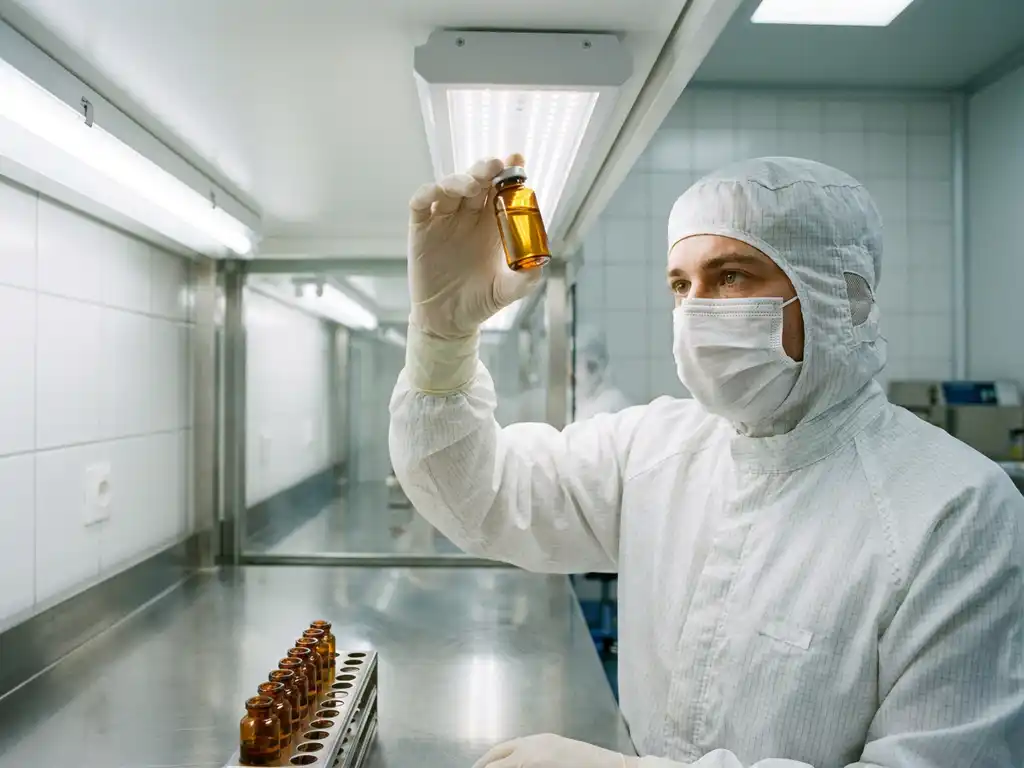
Particulate contamination is one of the most serious quality risks in pharmaceutical manufacturing, capable of causing patient harm, product recalls, and regulatory action. Even microscopic particles — invisible to the naked eye — can compromise the sterility, potency, and safety of injectable drugs, biologics, and other critical formulations. The sections below address the most pressing questions surrounding pharma contamination, from its sources and entry points to the regulatory stakes and practical prevention strategies.
What are the main sources of particulate contamination in pharmaceutical manufacturing?
The main sources of particulate contamination in pharmaceutical manufacturing are personnel, equipment, raw materials, packaging components, and the facility environment itself. Personnel are consistently identified as the dominant source, shedding skin cells, fibres from clothing, and respiratory particles continuously throughout production. Equipment wear, lubricants, and degraded seals contribute mechanical particles, while raw material impurities and packaging debris introduce chemical and physical contaminants.
Within a manufacturing environment, contamination sources can be grouped into two broad categories: endogenous sources (those generated inside the facility) and exogenous sources (those introduced from outside). Endogenous sources include process byproducts, equipment degradation, and cross-contamination between product lines. Exogenous sources include particles carried in on personnel, vehicles, raw materials, and through air handling systems.
Understanding the source hierarchy matters because it shapes the design of contamination control programmes. Reducing personnel-borne contamination through gowning protocols, behavioural training, and entry point management typically delivers the greatest impact. However, no single intervention is sufficient on its own. Effective contamination control in pharmaceutical environments requires layered defences that address each source category systematically.
How does particulate matter enter a cleanroom environment?
Particulate matter enters cleanroom environments primarily through people, equipment, and air movement. Personnel entering a controlled space carry particles on their footwear, clothing, and skin — and every step taken on an uncontrolled floor surface can transfer and redistribute those particles. Wheeled equipment such as trolleys, carts, and forklifts carry contaminants embedded in wheel treads directly from uncontrolled areas into critical zones.
Air is another significant vector. Inadequate pressure differentials, poorly maintained HVAC filters, and open doors or airlocks allow airborne particles to migrate between zones of differing cleanliness. Even well-designed air handling systems cannot fully compensate when particles are continuously reintroduced at floor level by foot and wheel traffic.
Industry data consistently shows that approximately 80% of contaminants entering controlled environments arrive at floor level. This makes entry point management one of the most cost-effective interventions available to pharmaceutical facilities. Addressing the floor as the primary contamination pathway — through robust mat systems, gowning room protocols, and controlled access procedures — directly reduces the particle load that air handling systems must manage.
What are the regulatory consequences of particulate contamination in drug products?
Regulatory consequences of particulate contamination in drug products range from warning letters and product recalls to facility shutdowns and criminal liability. Regulatory agencies including the FDA, EMA, and national competent authorities treat visible and subvisible particulate contamination in injectable and ophthalmic products as a serious patient safety issue, and enforcement action can be swift and severe.
Under current Good Manufacturing Practice (cGMP) frameworks, pharmaceutical manufacturers are required to demonstrate that their processes, environments, and controls consistently prevent contamination. Failure to meet particulate limits — as defined in pharmacopoeial standards such as USP <788> and <789> for injectable products — can result in batch rejection, mandatory recall, and regulatory citations. Repeat findings or systemic failures can escalate to import alerts or facility closure.
Beyond direct regulatory action, the commercial and reputational consequences are significant. A product recall linked to particulate contamination can damage relationships with healthcare providers, erode patient trust, and trigger costly supply disruptions. For organisations operating in multiple markets, a finding in one jurisdiction can trigger scrutiny in others. Maintaining robust contamination control is therefore not simply a compliance exercise — it is a commercial and reputational imperative.
What types of drug products are most vulnerable to particulate contamination?
Injectable drug products are the most vulnerable to particulate contamination because they bypass the body’s natural defence mechanisms entirely. Intravenous solutions, biologics, vaccines, and ophthalmic preparations must meet the strictest particulate standards, as even sub-visible particles can cause vascular occlusion, immune reactions, or localised tissue damage in patients. Sterile injectables manufactured in aseptic processing environments carry the highest risk profile.
Beyond injectables, the following drug product categories also carry elevated contamination sensitivity:
- Biologics and biosimilars — complex molecules susceptible to aggregation triggered by particulate interaction
- Ophthalmic preparations — applied directly to sensitive ocular tissue, requiring near-injectable levels of cleanliness
- Inhalation products — particles in the formulation or device can affect dose delivery and lung deposition
- Implantable devices and combination products — where particulate contamination at the manufacturing stage can have long-term clinical consequences
Oral solid dose products carry lower inherent risk from environmental particulates, but cross-contamination between product lines remains a concern — particularly in multi-product facilities where high-potency active pharmaceutical ingredients are handled. In all cases, the consequences of particulate contamination scale with the route of administration and the vulnerability of the patient population.
How can pharmaceutical facilities reduce particulate contamination at entry points?
Pharmaceutical facilities can reduce particulate contamination at entry points by implementing a layered access control strategy that addresses footwear, wheeled equipment, and personnel behaviour simultaneously. The most effective programmes combine physical contamination capture systems at entry points with structured gowning procedures, personnel training, and regular environmental monitoring to verify performance over time.
Key measures for entry point contamination control include:
- Floor-level contamination capture mats — positioned at cleanroom entrances, gowning rooms, and airlocks to remove particles from shoe soles and wheel treads before they enter controlled zones
- Defined gowning protocols — specifying the correct sequence for donning cleanroom garments, including dedicated footwear changes at designated transition points
- Pressure differential management — maintaining positive pressure in higher-classification zones to prevent particle migration from adjacent areas
- Wheel decontamination procedures — ensuring carts, trolleys, and other wheeled equipment are cleaned or pass over contamination capture surfaces before entering controlled areas
- Environmental monitoring programmes — routine particle counts and surface sampling at entry points to identify contamination trends before they become compliance issues
Entry point management is often underestimated relative to air handling and gowning, but it addresses the most direct route by which contamination enters a cleanroom. Consistent application of floor-level controls significantly reduces the particle burden that downstream systems must manage.
What is the difference between disposable sticky mats and reusable contamination control mats?
The key difference between disposable sticky mats and reusable contamination control mats is how they capture contaminants and what they cost — in both financial and environmental terms. Disposable sticky mats use a pressure-sensitive adhesive surface to trap particles; once saturated, the top layer is peeled away and discarded. Reusable contamination control mats use a durable polymeric surface engineered to capture and retain particles, and are cleaned and restored to full performance rather than thrown away.
In practice, this distinction has significant operational implications. Disposable sticky mats require frequent layer removal and replenishment, generating ongoing consumable costs and single-use plastic waste. Their adhesive performance degrades with each layer removed, and in high-traffic environments, they can become saturated quickly. Staff must also monitor mat condition and manage stock levels to avoid gaps in coverage.
Reusable mats, by contrast, offer consistent performance across their lifespan when cleaned according to validated procedures. They represent a more sustainable option compared to disposable alternatives, reducing single-use plastic waste substantially over a three to five year product life. For pharmaceutical facilities under pressure to demonstrate ESG commitments alongside compliance performance, this distinction is increasingly relevant to procurement decisions.
For facilities evaluating the total cost of ownership, the comparison typically favours reusable systems over a multi-year horizon — particularly in high-traffic environments where disposable mat consumption is high.
How Dycem helps protect pharmaceutical environments from particulate contamination
Dycem’s reusable contamination control mats are purpose-built for the entry point challenges pharmaceutical facilities face every day. Engineered from a proprietary antimicrobial polymer, Dycem mats capture up to 99.9% of shoe and wheel contaminants — delivering validated, consistent performance at the exact point where the majority of contamination enters a controlled environment.
For pharmaceutical and healthcare facilities, Dycem offers a range of solutions matched to specific access point requirements:
- Dycem CleanZone — a semi-permanent, washable mat designed for cleanroom entrances, gowning rooms, and airlocks, providing high-performance particulate capture in the most sensitive pedestrian zones
- Dycem WorkZone — engineered for heavy-wheeled traffic including pallet trucks and forklifts, maintaining contamination control in high-demand logistics and production areas
- Dycem Floating Mats — repositionable mats for facilities with variable or temporary controlled zones, offering flexibility without compromising hygiene compliance
- Dycem Bench Mats and Access Panels — extending contamination control beyond the floor and into workstation and access point environments
All Dycem mats are manufactured to ISO 9001 and 14001 standards, incorporate built-in Biomaster antimicrobial protection, and are designed to last three to five years — making them a demonstrably more sustainable option than disposable sticky mats. Dycem’s contamination control specialists provide consultative support from initial site survey through to implementation, helping facilities build an entry point strategy that supports audit readiness and long-term performance. Explore the full range of contamination control mats or speak to a specialist to arrange a free site survey.