

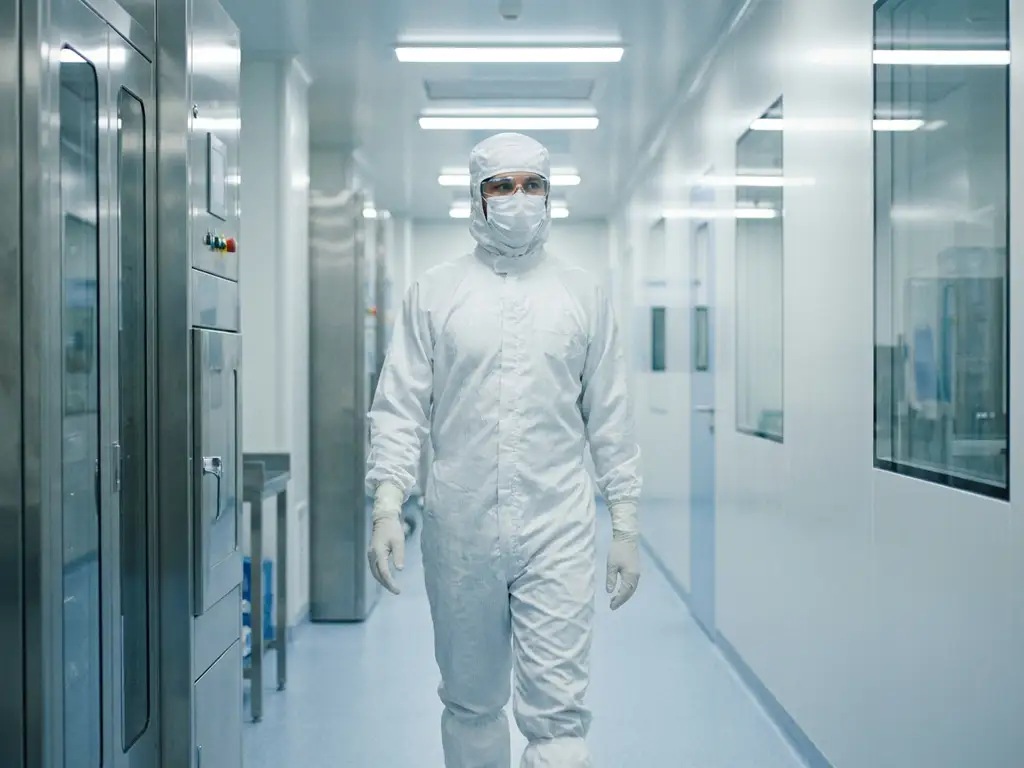
Personnel behavior is one of the most significant sources of contamination in cleanrooms. Human activity generates particles through skin shedding, respiration, movement, and contact with surfaces, making staff the primary contamination vector in most controlled environments. The sections below address the most common questions about how personnel behavior affects cleanroom contamination rates and what facilities can do to manage the risk.
What types of contamination do cleanroom personnel introduce?
Cleanroom personnel introduce biological, particulate, and chemical contamination. The human body continuously sheds skin cells, hair, and respiratory droplets, while clothing and footwear carry external particles into controlled zones. In pharma contamination and medical device manufacturing contexts, even trace amounts of these contaminants can compromise product integrity or trigger a compliance failure.
The main categories of contamination introduced by personnel include:
- Particulate contamination: Skin cells, hair fragments, and fibres shed from clothing and footwear
- Microbial contamination: Bacteria and fungi carried on skin, in saliva, and on exposed surfaces of the body
- Chemical contamination: Residues from cosmetics, hand creams, perfumes, and cleaning products brought in on skin or clothing
- Floor-tracked contamination: Particles and microorganisms transferred from uncontrolled areas to controlled spaces via footwear and wheeled equipment
In sterile environment settings such as pharmaceutical fill-finish suites or medical device assembly rooms, microbial contamination from personnel is particularly consequential. A single breach in gowning or an uncontrolled entry point can introduce colony-forming units that invalidate an entire batch. Understanding the range of contamination types personnel introduce is the starting point for designing effective controls.
How does movement speed affect particle generation in cleanrooms?
Faster movement generates significantly more airborne particles in a cleanroom. When personnel move quickly, they disturb the laminar airflow patterns that cleanroom HVAC systems are designed to maintain, lifting settled particles back into suspension and increasing the overall particle count in the environment. Slower, deliberate movement minimises this turbulence and supports cleanroom hygiene.
The relationship between movement and particle generation is well established in cleanroom science. Walking briskly or making sudden gestures can increase local particle counts by a measurable factor compared to slow, controlled movement. This is why standard operating procedures in ISO-classified rooms typically specify controlled walking speeds and prohibit unnecessary physical activity within the controlled zone.
The practical implications for facility managers include:
- Defining maximum walking speeds in SOPs for each cleanroom classification
- Restricting unnecessary movement, including socialising or gesturing, within controlled spaces
- Scheduling personnel entries and exits to minimise the frequency of door openings and the associated pressure disruptions
- Training staff to move with purpose and avoid reaching across sterile fields or product zones
Why is gowning procedure critical for contamination control?
Gowning procedure is critical because the human body is the largest single source of particles in a cleanroom, and proper gowning creates a physical barrier between personnel and the controlled environment. An incorrectly donned gown, a torn glove, or an exposed wrist can introduce thousands of particles per minute into a space where the entire classification depends on limiting particle counts to defined thresholds.
Effective gowning for cleanroom hygiene involves more than putting on a suit. The sequence in which garments are applied matters, as does the environment in which gowning takes place. Gowning rooms and airlocks serve as transition zones where personnel move progressively from uncontrolled to controlled conditions. Any contamination introduced during the gowning process itself, whether from a contaminated surface, an inadequately cleaned floor, or a poorly maintained mat zone, can undermine the integrity of the entire procedure.
Key elements of a robust gowning protocol include:
- A defined, validated gowning sequence with documented step-by-step instructions
- Regular gowning qualification testing for all personnel who enter controlled spaces
- Periodic re-qualification to catch procedural drift over time
- Clean, controlled gowning environments with appropriate floor-level contamination controls at entry points
- Clear visual cues, such as floor markings or colour-coded zones, to reinforce clean and dirty area boundaries
What behaviors cause the most contamination events in cleanrooms?
The behaviors most commonly associated with contamination events in cleanrooms are improper gowning, uncontrolled entry and exit, touching surfaces unnecessarily, and failure to follow defined movement protocols. These actions either introduce contaminants directly or disrupt the environmental controls that keep particle counts within acceptable limits for pharma contamination management and hygiene compliance.
Industry experience consistently points to human error as a leading cause of contamination deviations. The most frequently observed problematic behaviors include:
- Bypassing gowning steps: Skipping hand sanitisation, failing to cover facial hair, or not performing a full gown change after a break
- Inadequate entry procedures: Moving through entry points too quickly, propping doors open, or failing to use contamination control mats correctly
- Unnecessary contact: Touching walls, equipment, or product surfaces with gloved or ungowned hands
- Poor hygiene practices: Eating, drinking, or using personal items near controlled zones
- Inconsistent floor discipline: Tracking particles from uncontrolled corridors into cleanroom environments without proper footwear decontamination
Many of these behaviors are not the result of negligence but of inadequate training, unclear procedures, or facility layouts that make compliance difficult. Addressing them requires both a training response and a facility design response.
How does personnel training reduce cleanroom contamination rates?
Personnel training reduces cleanroom contamination rates by ensuring that every individual who enters a controlled environment understands the contamination risks their behavior creates and knows exactly how to mitigate them. Trained staff make fewer procedural errors, maintain gowning discipline more consistently, and respond more reliably to contamination risk scenarios, all of which directly lower the frequency and severity of contamination events.
Effective training programmes for controlled spaces go beyond a one-time induction. Contamination control is a discipline that requires reinforcement, because procedural drift, where staff gradually deviate from correct technique without realising it, is a well-recognised risk in long-running cleanroom operations.
A robust personnel training approach includes:
- Initial gowning qualification with documented assessment before first entry
- Periodic refresher training, typically annually or following a contamination event
- Practical, scenario-based instruction rather than purely classroom-based learning
- Environmental monitoring data shared with staff so they understand the real-world impact of their behavior
- Clear escalation procedures so personnel know how to report potential contamination events without fear of blame
Facilities that invest in ongoing training programmes typically see measurable reductions in contamination-related deviations and are better positioned during regulatory audits, where inspectors frequently assess whether personnel competency records are current and complete.
What floor-level controls support personnel contamination management?
Floor-level controls are among the most effective and practical tools for managing personnel-introduced contamination, because the floor is the primary transfer point for particles moving from uncontrolled to controlled environments. Contamination control mats positioned at entry points, gowning room exits, and airlocks capture particles from footwear and wheeled equipment before they reach critical zones, directly reducing the contamination load that personnel carry into sterile environments.
Approximately 80% of contaminants entering controlled environments do so at floor level, making entry point management a high-priority intervention. Effective floor-level controls include:
- Contamination control mats at all pedestrian and wheeled traffic entry points
- Defined clean and dirty zones with physical demarcation to reinforce floor discipline
- Regular cleaning and maintenance schedules for all floor surfaces within and adjacent to controlled areas
- Appropriate footwear protocols, including dedicated cleanroom shoes or overshoes, supported by mat-based capture at transition points
The choice of mat technology matters significantly for hygiene compliance. Disposable sticky mats require frequent replacement, generate single-use plastic waste, and often lose effectiveness before they are changed. Reusable polymeric mats offer a more consistent and sustainable alternative, maintaining particle capture performance across thousands of cleaning cycles.
How Dycem CleanZone supports personnel contamination management
Dycem CleanZone mats are designed specifically for the entry points and transition zones where personnel contamination risk is highest. Used by pharmaceutical manufacturers, medical device producers, and other regulated facilities worldwide, CleanZone delivers consistent floor-level contamination control that supports both hygiene compliance and audit readiness.
Key features that make Dycem mats effective in personnel contamination management include:
- Up to 99.9% particle capture: Engineered to remove contaminants from footwear and light-wheeled equipment at every pass
- Built-in Biomaster antimicrobial protection: Inhibits microbial growth within the mat surface, reducing biological contamination risk
- Reusable and washable construction: A 3 to 5 year product lifespan significantly reduces the waste and recurring cost associated with disposable sticky mat programmes
- ISO-certified manufacturing: Compliant with EN ISO 9001 and 14001 standards, supporting validation and audit documentation requirements
- Customisable format: Available in a range of sizes and colours to fit any facility layout, from single-door entry points to wide-aisle cleanroom corridors
Dycem’s contamination control mat range includes solutions for pedestrian zones, heavy-wheeled traffic areas, and flexible or temporary controlled spaces. Whether you are reviewing your current entry point controls or building a new contamination management strategy, Dycem’s specialists can assess your facility and recommend the right configuration. Contact Dycem to arrange a free site survey and consultation.