

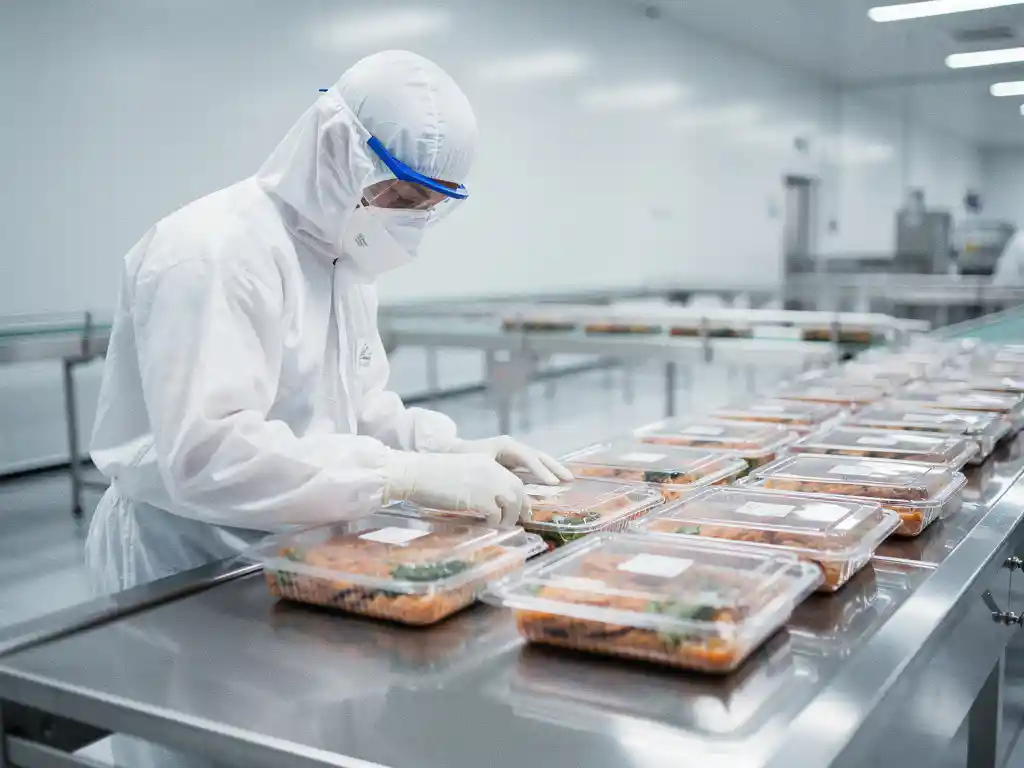
Contamination control standards for ready-to-eat food production are primarily governed by regulatory frameworks including HACCP, GMP guidelines, and food safety legislation such as the FDA Food Safety Modernization Act (FSMA) in the US and EU Regulation 852/2004 in Europe. These standards require RTE facilities to implement rigorous physical, procedural, and environmental controls to prevent microbial, chemical, and particulate contamination. The sections below address the most critical questions quality and facilities managers face when designing or auditing contamination control programmes in RTE environments.
What regulations govern contamination control in RTE food facilities?
Contamination control in ready-to-eat food facilities is governed by a combination of national legislation, international standards, and industry-specific codes of practice. In the United States, the FDA’s Food Safety Modernization Act sets legally binding preventive controls for human food, with RTE products subject to the most stringent requirements given their direct consumption without further heat treatment. In the European Union, Regulation (EC) No 852/2004 on food hygiene and Regulation (EC) No 853/2004 for products of animal origin establish the baseline. Globally, Codex Alimentarius guidelines on food hygiene provide a recognised reference framework.
Beyond legislation, most RTE manufacturers operate under HACCP (Hazard Analysis and Critical Control Points) plans, which require systematic identification and control of biological, chemical, and physical hazards. ISO 22000 and its related FSSC 22000 certification scheme are increasingly adopted as third-party validated food safety management systems that align with both regulatory expectations and retailer requirements. The BRC Global Standard for Food Safety (now BRCGS) is another widely recognised benchmark, particularly for manufacturers supplying major retailers in the UK and Europe.
What these frameworks share is a consistent emphasis on preventing contamination at every stage of production, with RTE zones demanding the highest level of environmental control because there is no kill step after processing.
What are the most common contamination risks in RTE food manufacturing?
The most common contamination risks in RTE food manufacturing are microbial contamination (particularly Listeria monocytogenes, Salmonella, and E. coli), cross-contamination from raw materials or personnel, and the introduction of foreign bodies or particulates through foot and vehicle traffic. Because RTE products are consumed without cooking, any contamination that occurs post-processing poses a direct public health risk.
Microbial risks are the most serious concern. Listeria monocytogenes is particularly problematic in RTE environments because it thrives in cold, wet conditions and can persist in facility environments for extended periods if not actively controlled. Personnel movement between raw and ready-to-eat zones is a primary vector for cross-contamination, making entry point management a critical control measure.
Physical contamination from particulates, dust, and debris carried in on footwear and wheeled equipment is a frequently underestimated risk. Research consistently shows that the majority of contaminants entering controlled food production areas arrive at floor level, transferred via foot traffic and the wheels of trolleys, carts, and pallet trucks. Inadequate control at these entry points can compromise an otherwise well-managed production environment. Airborne contamination from HVAC systems, open doors, and personnel activity adds a further layer of risk that environmental monitoring programmes must account for.
How are personnel and traffic entry points controlled in RTE zones?
Entry points into RTE zones are controlled through a combination of physical barriers, hygienic design, and procedural controls that together form a contamination exclusion boundary. The goal is to prevent contaminants from being transferred from lower-hygiene areas into the high-care or high-risk zone where ready-to-eat products are handled.
Standard entry controls for RTE facilities typically include:
- Gowning and PPE requirements — dedicated protective clothing, hairnets, gloves, and footwear specific to the RTE zone, changed at designated transition points
- Footwear hygiene stations — including boot washes, disinfectant footbaths, or contamination control matting at zone entry points
- Wheel hygiene for wheeled equipment — trolleys, carts, and pallet trucks must pass through decontamination or wheel-wash systems before entering high-care areas
- Airlock or lobby design — physical separation between zones to prevent airborne cross-contamination and enforce a sequential hygiene process
- Access restriction — limiting personnel entry to authorised individuals who have completed hygiene training and follow documented entry procedures
Contamination control matting at entry points plays a particularly important role in capturing particulates from footwear and wheels before they can be tracked into the production environment. Unlike disposable sticky mats, which degrade quickly and generate significant single-use plastic waste, reusable polymeric mats provide consistent, long-term particulate capture and can be integrated into both pedestrian and vehicle entry routes. Dycem’s contamination control products are designed specifically for these transition zones, capturing up to 99.9% of particles at the point of entry.
What’s the difference between a cleanroom and a controlled environment in food production?
In food production, a cleanroom is a formally classified space with defined and validated limits for airborne particulate concentration, temperature, humidity, and air pressure, maintained through engineered HVAC systems and strict access protocols. A controlled environment is a broader term referring to any production area where environmental conditions are managed to reduce contamination risk, but without necessarily meeting the formal classification criteria of a cleanroom.
Most RTE food facilities operate controlled environments rather than ISO-classified cleanrooms. The distinction matters because it affects the level of engineering investment, the monitoring regime, and the regulatory expectations that apply. High-care zones in RTE production, for example, are controlled environments with defined hygiene standards, personnel flow restrictions, and environmental monitoring programmes, but they are not typically subject to the same particulate classification standards used in pharmaceutical or microelectronics cleanrooms.
High-risk zones represent the most stringent category within food production, typically reserved for the final handling and packaging of RTE products. These areas require physical separation from the rest of the facility, dedicated personnel, positive air pressure relative to adjacent areas, and validated cleaning and disinfection programmes. The terminology varies between regulatory frameworks and industry standards, but the underlying principle is consistent: the closer a zone is to the finished RTE product, the more rigorous the environmental controls must be.
How do auditors assess contamination control during food safety inspections?
During food safety inspections, auditors assess contamination control by reviewing documented procedures, observing live practices, testing environmental hygiene, and verifying that physical controls are functioning as intended. The audit process typically combines document review with a physical walkthrough of the facility, with particular attention paid to zone boundaries, entry point controls, and the consistency between written procedures and actual behaviour on the floor.
Key areas auditors examine include:
- HACCP documentation — evidence that contamination risks have been identified, assessed, and controlled through validated critical control points
- Environmental monitoring records — swab results, air sampling data, and trend analysis demonstrating ongoing control of microbial and particulate levels
- Personnel hygiene practices — direct observation of gowning procedures, hand hygiene compliance, and adherence to zone entry protocols
- Condition of physical controls — the state of footwear hygiene stations, matting, wheel wash systems, and other entry point controls, including evidence of regular maintenance and replacement schedules
- Corrective action history — records showing how previous non-conformances or environmental excursions were investigated and resolved
Auditors from bodies such as BRCGS, SQF, or the FDA pay close attention to whether contamination control measures are genuinely effective or merely performative. A degraded sticky mat at a zone entry point, for instance, will be noted as a control failure, not just a housekeeping issue. Facilities that can demonstrate consistent, validated contamination control at entry points, supported by documented maintenance and monitoring, are better positioned to achieve strong audit outcomes.
What contamination control measures best support GMP compliance in RTE production?
The contamination control measures that best support GMP compliance in RTE food production are those that are consistent, validated, and integrated into the facility’s broader food safety management system. GMP requirements emphasise that controls must be documented, monitored, and capable of demonstrating ongoing effectiveness, not simply present in the facility.
Effective GMP-aligned contamination control in RTE environments typically includes:
- Defined zone segregation with physical barriers and controlled entry points
- Validated cleaning and disinfection programmes with scheduled frequency and documented completion
- Environmental monitoring programmes that track microbial and particulate levels over time
- Personnel hygiene training with records of completion and competency assessment
- Durable, maintainable entry point controls that perform consistently across shifts and traffic volumes
One area where many RTE facilities fall short of GMP expectations is at the floor level. Disposable sticky mats are widely used but present documented limitations: they lose effectiveness quickly, require frequent replacement, generate significant waste, and are difficult to validate as a consistent control measure. Reusable contamination control matting that captures and retains particulates from both footwear and wheeled equipment provides a more reliable, auditable solution.
How Dycem Supports Contamination Control in RTE Food Production
Dycem’s reusable contamination control mats are engineered to address the specific entry point challenges that RTE food facilities face, providing consistent, long-term particulate capture where it matters most. Key benefits for RTE food manufacturers include:
- Capture of up to 99.9% of shoe and wheel contaminants at zone entry points
- Built-in Biomaster silver-ion antimicrobial technology, inhibiting microbial growth by up to 99.9%
- A 3 to 5 year product lifespan, reducing the cost and waste associated with disposable sticky mat programmes
- ISO-certified manufacturing meeting EN ISO 9001 and 14001 standards, supporting audit documentation requirements
- Customisable sizes and formats to suit complex facility layouts, including pedestrian, light-wheeled, and heavy-traffic zones
Whether you are designing a new high-care zone, replacing an underperforming sticky mat programme, or preparing for a BRCGS or FDA inspection, Dycem’s specialists can help you identify the right solution for your facility. Contact Dycem today to arrange a free site survey and consultation.