

Yes, facilities should switch from disposable to reusable contamination control. Reusable polymeric mats consistently outperform disposable sticky mats on contamination capture, long-term cost, compliance readiness, and environmental impact. For regulated industries where contamination control is a compliance requirement, the case for switching is not marginal; it is compelling. The sections below address the most common questions facilities ask before making the change.
What are the real costs of disposable contamination control mats?
The real costs of disposable contamination control mats go well beyond the unit price. When facilities account for the full cycle of purchasing, storing, replacing, and disposing of sticky mats, the cumulative expenditure significantly exceeds what the per-mat price suggests. For high-traffic facilities running multiple entry points, those costs compound quickly across a year.
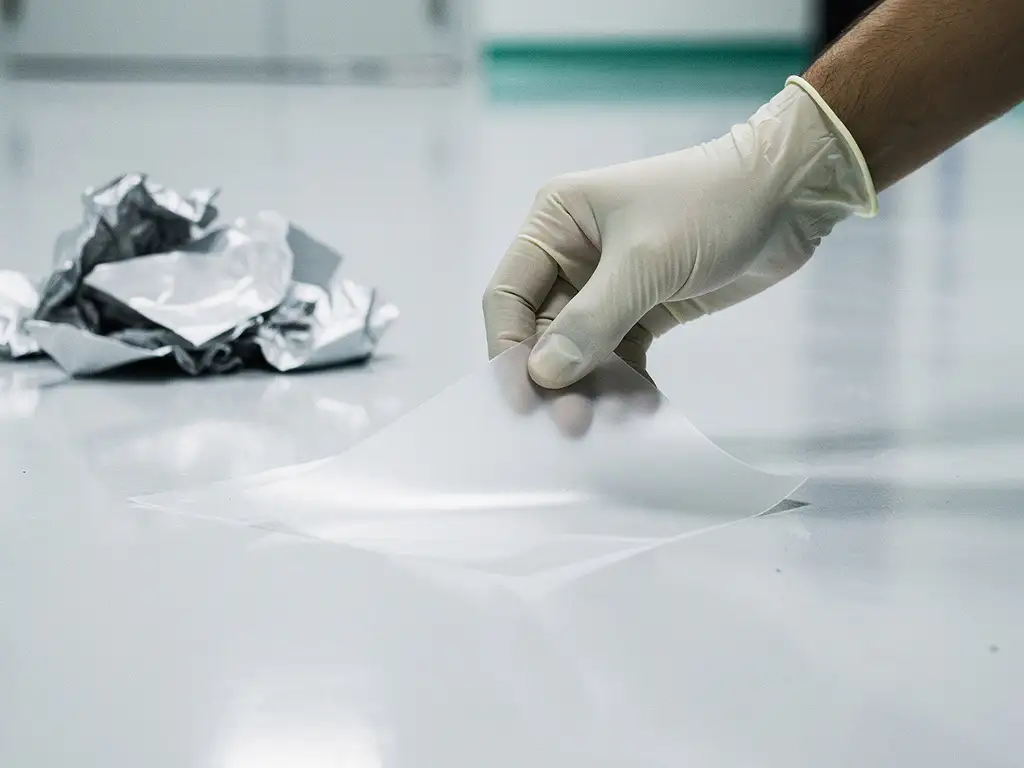
Disposable sticky mats require frequent replacement. Once the adhesive surface is saturated with particulate, the layer must be peeled away and discarded. In a busy cleanroom or production facility, this can happen multiple times per day. Each replacement cycle represents not just material cost but also labour time, waste disposal, and the operational interruption of managing stock levels.
There is also a hidden compliance cost. Inconsistent replacement schedules create gaps in contamination control coverage. If a mat is not changed promptly when saturated, it stops functioning as a barrier and may even redistribute particulate underfoot. This inconsistency introduces risk at exactly the point where reliability matters most: the controlled environment entry.
When facilities compare total cost of ownership across a three to five year period, reusable contamination control mats typically represent a substantially more cost-efficient solution. The upfront investment is higher, but the recurring expenditure on consumables, disposal, and labour is eliminated.
How effective are reusable mats at capturing contaminants?
Reusable polymeric contamination control mats are highly effective, capturing and retaining up to 99.9% of particles from shoes and wheels before they can enter a controlled environment. Unlike disposable sticky mats, which rely on an adhesive layer that degrades with use, reusable mats maintain consistent performance throughout their operational lifespan when cleaned according to schedule.
The effectiveness of reusable mats comes from the properties of the polymer material itself. The surface is engineered to attract and hold particulate through mechanical and electrostatic action, rather than through a temporary adhesive coating. This means performance does not drop off between cleaning cycles in the way that a saturated sticky mat does.
Reusable mats also incorporate antimicrobial protection. Dycem’s mats use Biomaster silver-ion technology, which inhibits microbial growth by up to 99.9%. This is particularly relevant in pharmaceutical, healthcare, and food production environments where microbial contamination carries direct product and patient safety implications.
Because up to 80% of contaminants enter controlled environments at floor level, the entry point is where contamination control has the greatest impact. A high-performing mat positioned at gowning room entrances, cleanroom thresholds, and critical corridors addresses the problem at source, before particulate can migrate further into the facility.
Which industries benefit most from switching to reusable mats?
Industries operating under strict cleanliness and compliance requirements benefit most from switching to reusable contamination control mats. These include pharmaceutical manufacturing, medical device production, food and beverage processing, electronics, aerospace, automotive, and healthcare. In each of these sectors, contamination carries direct consequences for product integrity, regulatory standing, and operational continuity.
In pharmaceutical and medical device environments, contamination control is mandated under GMP frameworks and validated as part of audit processes. A reusable mat solution with documented performance data and ISO-certified manufacturing supports audit readiness in a way that an informal sticky mat programme cannot.
In food and beverage facilities, microbial contamination at entry points represents a direct food safety risk. Reusable antimicrobial mats address both particulate and microbial ingress simultaneously, reducing the burden on other hygiene controls further inside the facility.
Electronics and aerospace manufacturers operate in environments where even microscopic particulate can compromise product quality and yield. In these settings, the consistency and reliability of reusable contamination control outperforms the variable performance of disposable alternatives, particularly in facilities with high foot and wheeled traffic volumes.
What’s the difference between reusable mats and disposable sticky mats?
The key difference between reusable contamination control mats and disposable sticky mats is the mechanism of capture, the consistency of performance, and the total cost model. Sticky mats use an adhesive layer to trap particles, which degrades as the surface fills and must be discarded. Reusable polymeric mats use engineered polymer surfaces to attract and retain particulate, are cleaned rather than replaced, and maintain performance across a lifespan of three to five years.
Performance consistency
Disposable sticky mats perform at their peak when new and decline as the adhesive surface becomes saturated. Once a layer is full, it must be peeled away and the next layer exposed. If this does not happen promptly, contamination control coverage lapses. Reusable mats, by contrast, are cleaned on a defined schedule and return to full performance after each clean, providing a more consistent barrier over time.
Environmental and operational impact
Disposable sticky mats generate significant single-use plastic waste. For facilities with ESG commitments or sustainability reporting requirements, this creates an ongoing tension between operational practice and environmental targets. Reusable mats eliminate this waste stream. A single reusable mat replacing years of disposable alternatives represents a meaningful reduction in single-use plastic consumption, making them a more sustainable choice for regulated facilities looking to align contamination control with broader environmental goals.
Do reusable contamination control mats meet cleanroom compliance standards?
Yes, reusable contamination control mats can fully meet cleanroom compliance standards when manufactured to the appropriate quality benchmarks. Mats produced under ISO 9001 certified processes, with documented performance data and regulatory compliance across frameworks such as EU REACH and California Proposition 65, are suitable for use in GMP-regulated, ISO-classified, and FDA-audited environments.
Compliance in a cleanroom context requires more than product performance; it requires traceability, consistency, and documentation. Reusable mats manufactured under certified quality management systems provide the audit trail that facilities need to demonstrate that their contamination control programme is validated and repeatable.
One area where reusable mats have a clear compliance advantage over disposable alternatives is consistency of use. Sticky mat programmes depend on staff replacing layers at the correct interval. Reusable mat programmes, once established, require cleaning rather than replacement, reducing the number of variables that can introduce compliance gaps. For quality managers preparing for regulatory audits, this predictability is operationally significant.
It is worth noting that reusable mats should be selected and positioned in line with facility-specific contamination control protocols. A site survey and consultation with a contamination control specialist helps ensure that mat format, placement, and cleaning schedule are aligned with the facility’s classification requirements.
When should a facility make the switch to reusable contamination control?
A facility should consider switching to reusable contamination control when recurring sticky mat costs are rising, when contamination incidents are linked to entry point failures, when an upcoming audit requires a more robust and documented programme, or when ESG commitments make continued reliance on single-use plastic mats difficult to justify. In 2026, all four of these pressures are increasingly common across regulated industries.
The most common trigger is cost frustration. Facilities that have been managing a disposable mat programme for several years often reach a point where the cumulative spend, combined with the operational overhead of managing stock and disposal, makes the total cost of ownership impossible to ignore.
Audit preparation is another frequent catalyst. When a quality or EHS manager is reviewing their contamination control programme ahead of a GMP or ISO audit, the inconsistencies inherent in a disposable mat programme become visible. Switching to a reusable solution with documented performance data, certified manufacturing, and a structured cleaning protocol strengthens the audit position considerably.
Facilities do not need to overhaul their entire contamination control programme at once. A phased approach, starting with the highest-risk entry points such as cleanroom entrances, gowning rooms, and airlocks, allows teams to validate the solution before expanding it across the site. Consulting a specialist early in the process ensures that the switch is planned around the facility’s specific layout, traffic flow, and compliance requirements.
How Dycem helps facilities make the switch from disposable to reusable contamination control
Dycem’s range of reusable contamination control mats is purpose-built for the regulated environments described throughout this article. As the world’s original contamination control mat manufacturer, Dycem brings more than 60 years of application knowledge to every facility it works with. Key features that support the switch include:
- Capture and retention of up to 99.9% of shoe and wheel contaminants at the point of entry
- Biomaster silver-ion antimicrobial technology, inhibiting microbial growth by up to 99.9%
- A three to five year product lifespan, eliminating recurring disposable mat expenditure
- ISO 9001 and 14001 certified manufacturing, with EU REACH and California Proposition 65 compliance
- Customisable formats including CleanZone for pedestrian and light-wheeled traffic, WorkZone for heavy industrial use, and Floating Mats for flexible or temporary zones
- Significant reduction in single-use plastic waste, supporting ESG and sustainability reporting goals
Every engagement begins with a consultation and free site survey, ensuring that the recommended solution fits the facility’s layout, traffic patterns, and compliance requirements. To find out whether reusable contamination control is the right fit for your facility, contact Dycem today and speak with a specialist.