

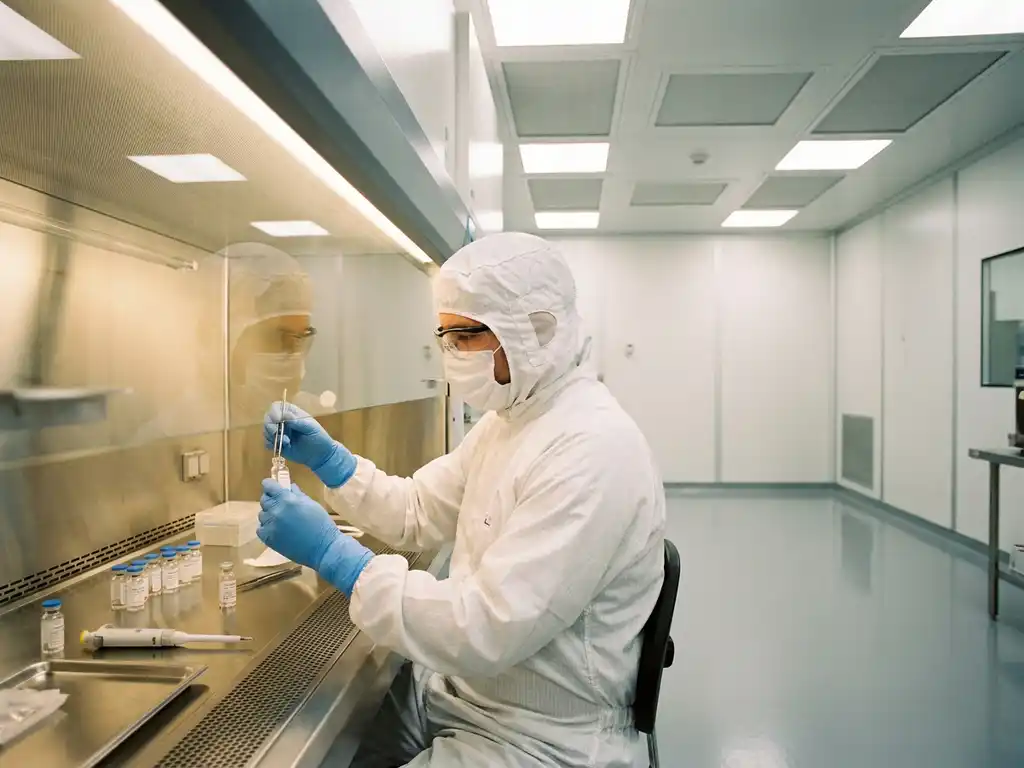
Active pharmaceutical ingredient (API) production carries some of the highest contamination risks in any manufacturing environment. The most critical threats include particulate matter, microbial contamination, cross-contamination between batches, and environmental ingress from personnel and equipment movement. For pharmaceutical manufacturers, these risks are not theoretical — they directly affect product safety, patient outcomes, and regulatory standing.
Understanding where contamination originates and how it spreads is the foundation of any effective contamination control strategy. The sections below address the most common questions facilities face when assessing and managing contamination risk in API production environments.
What are the most common sources of contamination in API manufacturing?
The most common sources of contamination in API manufacturing are personnel, equipment, raw materials, air, and surfaces. Personnel are consistently identified as the primary vector, introducing particulates, microorganisms, and chemical residues through skin, clothing, and movement. Equipment that is inadequately cleaned between uses, and raw materials that are improperly handled or stored, are also significant contributors.
Air quality plays a particularly important role in API facilities. Unfiltered or poorly managed air can carry viable and non-viable particulates directly into open product zones. Surface contamination, including floors, walls, and workstations, accumulates over time and becomes a reservoir for contaminants that can be redistributed through foot traffic and equipment movement.
Raw material contamination deserves specific attention. APIs are often chemically potent, and even trace levels of an unintended substance can compromise a batch. Suppliers must be qualified, and incoming material testing must be robust. Beyond chemistry, biological contamination from water systems — particularly through biofilm formation in pipes and tanks — is a persistent risk that facilities must actively manage.
How does cross-contamination occur between API batches?
Cross-contamination between API batches occurs when residues from one product transfer into another through shared equipment, surfaces, personnel, or airborne particles. It is one of the most serious contamination risks in pharmaceutical manufacturing because it can introduce unintended active substances at concentrations that may be harmful to patients, particularly where highly potent APIs are involved.
The most frequent causes of cross-contamination include:
- Inadequate cleaning and verification of shared manufacturing equipment between campaigns
- Shared air handling systems without appropriate pressure differentials or filtration
- Personnel moving between production areas without proper gowning or decontamination procedures
- Residues on floors, trolleys, and wheeled equipment transferred between zones
- Improper segregation of in-process materials and intermediate products
Dedicated equipment and campaign-based manufacturing can reduce cross-contamination risk significantly, but they are not always operationally practical. Where shared equipment is unavoidable, validated cleaning procedures with documented acceptance criteria are essential. Airflow design — including unidirectional flow, pressure cascades, and physical barriers — also plays a critical role in preventing airborne transfer between adjacent production areas.
Why is floor-level contamination a critical risk in pharmaceutical cleanrooms?
Floor-level contamination is a critical risk in pharmaceutical cleanrooms because up to 80% of contaminants enter controlled environments at floor level, carried in on shoes, boots, and wheeled equipment. Floors act as a collection point for particulates, microorganisms, and chemical residues, which are then redistributed throughout the facility every time personnel walk or equipment is moved.
This risk is compounded by the nature of cleanroom activity. In API production, personnel and equipment move frequently between gowning areas, airlocks, and production zones. Each transition is an opportunity for contaminants from less controlled areas to be tracked into critical spaces. Wheeled equipment such as trolleys and transfer carts is particularly problematic — wheels cover large surface areas and can carry significant particulate loads across multiple zones in a single movement.
Many facilities underestimate floor-level contamination because it is less visible than airborne particulates and not always captured by standard environmental monitoring programmes. Yet the consequences are the same: product contamination, failed batch releases, and regulatory findings. Addressing entry points with validated contamination capture systems is one of the most direct ways to reduce this risk at its source.
What are the regulatory consequences of contamination failures in API production?
Contamination failures in API production can result in batch rejection, product recalls, regulatory warning letters, facility shutdowns, and, in serious cases, criminal liability. Regulatory agencies including the FDA, EMA, and MHRA treat contamination as a fundamental GMP failure, and findings related to inadequate contamination control consistently appear among the most cited deficiencies during inspections.
The financial and reputational consequences extend well beyond the immediate batch. A single contamination event can trigger a full site inspection, require revalidation of cleaning procedures, and result in supply disruptions that affect patients and commercial partners. For facilities manufacturing highly potent APIs or sterile products, the regulatory threshold is even lower — any evidence of inadequate contamination segregation can result in import alerts or market withdrawal.
Warning letters issued in recent years have repeatedly cited failures in environmental monitoring, inadequate gowning procedures, and insufficient controls at facility entry and transition points. Regulators expect facilities to demonstrate not only that contamination controls exist, but that they are validated, consistently applied, and subject to ongoing review. Documentation and evidence of control effectiveness are as important as the controls themselves.
How can facilities reduce contamination risks at cleanroom entry points?
Facilities can reduce contamination risks at cleanroom entry points by implementing a layered approach that addresses personnel, equipment, and environmental controls simultaneously. Entry points — including gowning rooms, airlocks, and transition corridors — are the most critical junctures in any contamination control strategy because they are where the outside environment meets the controlled space.
Effective entry point controls include:
- Defined gowning procedures with clear donning sequences and documented training
- Airlock design with appropriate pressure differentials to prevent uncontrolled air movement
- Contamination capture mats positioned at entry thresholds to remove particulates from footwear and wheels before they enter critical zones
- Regular environmental monitoring at entry points to detect and respond to elevated contamination levels
- Clear visual cues and physical barriers that reinforce zone boundaries for all personnel
Contamination capture at floor level is particularly effective because it intercepts contaminants before they are dispersed into the wider environment. Reusable polymeric mats designed for cleanroom use offer consistent, validated performance across both pedestrian and wheeled traffic, and they can be integrated into existing entry point layouts without significant facility modification. Unlike disposable sticky mats, which degrade rapidly and generate plastic waste, high-performance reusable alternatives maintain their capture efficiency throughout their operational lifespan.
What contamination control measures are required under GMP for API facilities?
Under GMP guidelines — including ICH Q7 for APIs and EU GMP Part II — facilities are required to implement documented contamination control measures covering facility design, equipment qualification, cleaning validation, personnel hygiene, environmental monitoring, and change control. These requirements apply across the full API manufacturing process, from raw material receipt through to finished intermediate or bulk drug substance.
Key GMP requirements for contamination control in API facilities include:
- Facility design that prevents cross-contamination through physical segregation, airflow management, and defined zone boundaries
- Written and validated cleaning procedures for all equipment that contacts product, with defined acceptance limits
- A documented environmental monitoring programme covering viable and non-viable particulates at defined sampling points and frequencies
- Gowning and hygiene procedures appropriate to the classification of each area, with training records maintained
- Change control procedures that assess the contamination risk impact of any modification to process, equipment, or facility
- Supplier qualification and incoming material testing to prevent introduction of contamination through raw materials
GMP also requires that contamination control measures be subject to periodic review and that any out-of-specification environmental monitoring result triggers a documented investigation. Facilities cannot simply have controls in place — they must demonstrate that those controls are effective, consistently followed, and continuously improved based on monitoring data and inspection findings.
How Dycem CleanZone helps reduce contamination risk in API facilities
Dycem’s contamination control mat systems are designed specifically for the entry point challenges that API and pharmaceutical facilities face every day. Where floor-level contamination represents up to 80% of total environmental ingress, Dycem provides a validated, reusable solution that captures particulates from footwear and wheeled equipment before they reach critical production zones.
Key features relevant to API facility requirements include:
- Dycem CleanZone: Purpose-built for pedestrian and light-wheeled traffic at cleanroom entrances, gowning rooms, and airlocks — capturing up to 99.9% of shoe and wheel contaminants at the most sensitive transition points
- Dycem WorkZone: Engineered for heavy-wheeled traffic including pallet trucks and forklifts, extending contamination control into logistics and materials handling areas
- Built-in Biomaster antimicrobial protection: Inhibits microbial growth on the mat surface between cleans, supporting hygiene compliance in regulated environments
- Reusable and washable construction: A 3 to 5 year lifespan significantly reduces single-use plastic waste compared to disposable sticky mat alternatives, supporting sustainability commitments without compromising performance
- ISO-certified manufacturing: Consistent quality aligned with EN ISO 9001 and 14001 standards, supporting supplier qualification and audit documentation requirements
Dycem’s contamination control specialists work consultatively with quality, EHS, and facilities teams to assess entry point risk, recommend the right contamination control products for each zone, and support implementation across the site. If you are reviewing your current contamination control approach or preparing for a regulatory inspection, contact Dycem to arrange a free site survey and consultation.