

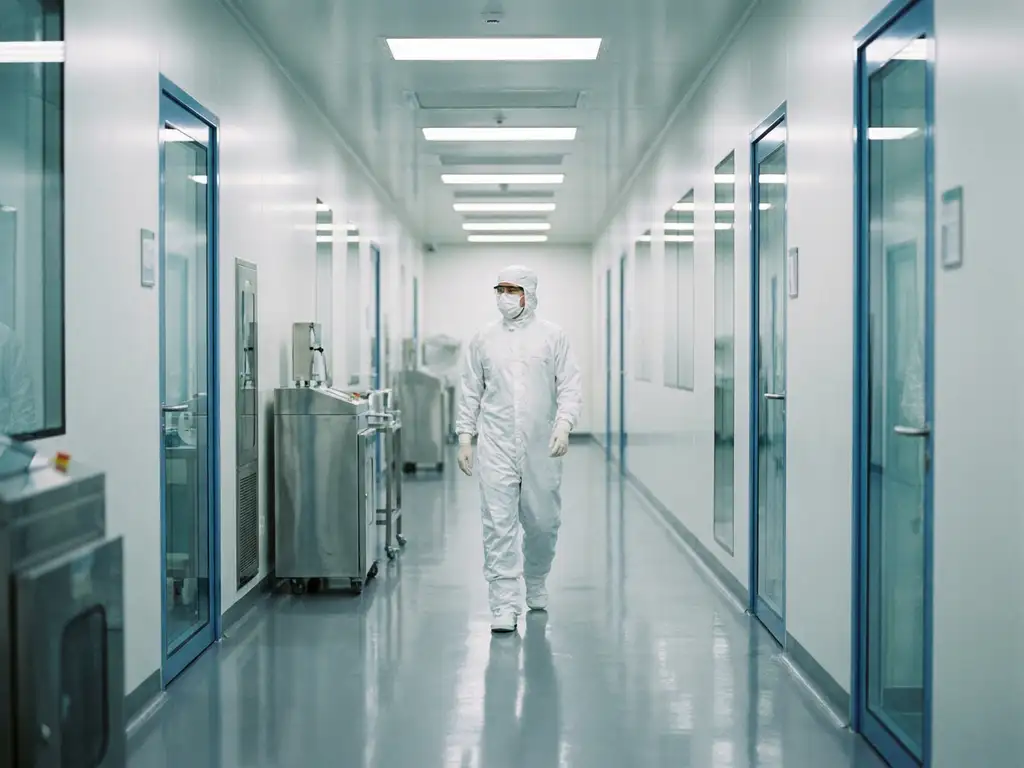
Contamination control is critical in GMP facilities because it directly determines whether manufactured products are safe, effective, and compliant with regulatory requirements. In pharmaceutical, medical device, and healthcare manufacturing environments, even microscopic contamination events can compromise entire batches, trigger regulatory action, or cause patient harm. The sections below address the most important questions surrounding pharma contamination and GMP hygiene compliance.
What are the main sources of contamination in GMP facilities?
The main sources of contamination in GMP facilities are personnel, equipment, raw materials, the facility environment itself, and utilities such as air and water systems. Of these, personnel and the surrounding environment are consistently the most significant contributors, because human activity continuously introduces particles, microorganisms, and chemical residues throughout the production day.
Personnel are the primary contamination vector in most controlled environments. Every person entering a cleanroom or sterile manufacturing area carries skin cells, hair fibres, clothing particles, and microbial load. Movement amplifies this risk, as walking, reaching, and handling equipment generate and disperse particulate matter. This is why gowning protocols, personnel training, and entry point controls are central to any GMP hygiene programme.
The floor is a particularly important and often underestimated contamination pathway. Industry experience consistently shows that around 80% of contaminants entering controlled spaces arrive at floor level, tracked in on footwear and wheeled equipment from less controlled areas. Dirt, biological material, and chemical residues adhere to shoe soles and cart wheels, then transfer directly into production zones with every crossing of an entry threshold.
Other significant contamination sources include:
- Raw materials and components that carry particulate or microbial load from external suppliers
- Equipment surfaces that accumulate residues between cleaning cycles
- HVAC and air handling systems that can distribute particles across zones if not properly maintained and filtered
- Water systems including purified water and water for injection, which can harbour biofilm if not adequately controlled
- Packaging materials that shed fibres or particles during handling
Understanding these sources is the foundation of any effective contamination control strategy, because each requires a different type of mitigation measure.
What regulatory standards govern contamination control in GMP?
Contamination control in GMP facilities is governed by a framework of international and regional standards, including EU GMP Annex 1 (for sterile medicinal products), FDA 21 CFR Parts 210 and 211 (for pharmaceutical manufacturing), ISO 14644 (for cleanroom classification and monitoring), and ICH Q9 (for quality risk management). Together, these frameworks define how facilities must identify, assess, and control contamination risk.
EU GMP Annex 1, substantially revised in 2022, introduced the requirement for a formal Contamination Control Strategy (CCS) document. This requires manufacturers to take a holistic, risk-based approach to contamination, documenting every control measure in place and demonstrating how those measures work together to protect product integrity. The CCS has raised the bar for how facilities plan, implement, and evidence their hygiene compliance.
ISO 14644 standards classify cleanrooms by the maximum permitted concentration of airborne particles at defined sizes. These classifications drive decisions about gowning, air change rates, pressure differentials, and surface cleanliness requirements. For medical device manufacturers, ISO 13485 adds a quality management layer that requires documented procedures for contamination prevention throughout the production process.
For facilities supplying the US market, FDA inspection readiness demands that contamination control measures are not only in place but also validated and documented. Auditors look for evidence of consistent practice, not just policy. Hygiene compliance gaps identified during inspections can result in warning letters, import alerts, or manufacturing shutdowns, making regulatory alignment a business-critical priority in 2026.
How does contamination affect product quality and patient safety?
Contamination in GMP manufacturing directly threatens product quality by introducing foreign particles, microorganisms, or chemical residues into products that must meet strict purity standards. For patients, the consequences can range from reduced drug efficacy to serious adverse events, including infection, allergic reaction, or toxicity. In sterile manufacturing environments, even a single contamination event can be life-threatening.
Microbial contamination in injectable pharmaceuticals or sterile medical devices is among the most serious risks in GMP manufacturing. Bacteria, fungi, or endotoxins that enter a sterile product can cause systemic infection in patients who have no defence against contamination introduced directly into the bloodstream or body cavity. Regulatory agencies treat sterility failures as among the most severe quality defects, and product recalls triggered by contamination events attract significant public and regulatory scrutiny.
Particulate contamination, while sometimes perceived as a lower-level risk, also carries real patient safety implications. Foreign particles in injectable products can cause vascular occlusion, inflammation, or immune response. In medical devices, particles can interfere with device function or cause tissue damage. This is why cleanroom hygiene and controlled environment standards set strict limits on both viable and non-viable particulate levels.
Beyond direct patient harm, contamination events damage the manufacturer’s ability to supply patients consistently. A contaminated batch that must be rejected or recalled removes product from the market, disrupts supply chains, and can leave patients without access to critical medicines. The downstream consequences of a single contamination failure extend well beyond the immediate quality event.
What contamination control measures are required at GMP facility entry points?
GMP facility entry points require a combination of physical barriers, procedural controls, and monitoring systems to prevent contaminants from transferring between zones. Required measures typically include gowning areas or airlocks, shoe change or overshoe protocols, surface decontamination systems, and contamination capture solutions at floor level. Entry point control is one of the highest-leverage interventions in any facility hygiene programme.
Airlocks and pressure cascade systems create physical separation between zones of different cleanliness classifications. Positive pressure in higher-grade areas prevents uncontrolled airflow from lower-grade corridors or external areas. These architectural controls work at the macro level, but they do not address the particulate load carried in on personnel and equipment at the moment of entry.
Floor-level contamination capture is essential at every entry point where personnel or wheeled equipment transition between zones. Sticky peel-off mats were historically used for this purpose, but they offer inconsistent performance, generate significant single-use plastic waste, and require frequent replacement to maintain any meaningful capture rate. Reusable polymeric contamination control mats provide a more consistent and sustainable alternative, capturing particulate from shoe soles and wheels at the point of entry before contaminants can be tracked into controlled spaces.
Additional entry point measures include:
- Gowning room protocols with defined donning sequences and visual inspection checkpoints
- Shoe covers or dedicated cleanroom footwear for personnel entering higher-grade areas
- Equipment cleaning and decontamination before items enter controlled zones
- Air showers at high-grade cleanroom entries to dislodge surface particles from gowns
- Environmental monitoring at entry points to detect and trend contamination levels over time
How do you validate contamination control effectiveness in a GMP environment?
Validating contamination control effectiveness in a GMP environment requires establishing baseline contamination levels, implementing defined control measures, and then demonstrating through ongoing monitoring that those measures consistently reduce contamination to acceptable limits. Validation is not a one-time event but a continuous process supported by environmental monitoring data, trend analysis, and periodic review.
Environmental monitoring programmes form the backbone of contamination control validation. These programmes typically include airborne particle counts, viable microbial sampling (settle plates, contact plates, and air sampling), and surface swabbing at defined locations and frequencies. Results are trended over time to detect drift, identify problem areas, and confirm that control measures are performing as intended.
For floor-level and entry point controls specifically, validation should include before-and-after particle counts at defined entry thresholds, demonstrating that the contamination capture solution is reducing the transfer of particulate into the controlled zone. Dycem’s contamination control mats are engineered to capture up to 99.9% of shoe and wheel contaminants, providing a measurable, documentable performance level that supports validation requirements.
Risk assessments conducted under ICH Q9 principles should inform where monitoring is concentrated and what alert and action limits are set. When monitoring data exceeds defined limits, a documented investigation process should identify the root cause and drive corrective action. This closed-loop approach is what regulators expect to see when reviewing a facility’s contamination control strategy.
What is the cost of poor contamination control in GMP manufacturing?
The cost of poor contamination control in GMP manufacturing includes direct costs such as batch failures, product recalls, and regulatory remediation, as well as indirect costs including production downtime, reputational damage, and loss of market authorisation. In regulated industries, the financial exposure from a single significant contamination event can far exceed the entire annual cost of a robust prevention programme.
Batch rejection is the most immediate financial consequence of a contamination failure. In pharmaceutical manufacturing, rejected batches represent not only the cost of raw materials and labour but also the lost revenue from product that cannot reach the market. For high-value biologics or speciality medicines, a single batch can represent hundreds of thousands or even millions in direct write-off.
Regulatory consequences compound the direct product losses. An FDA warning letter or EU GMP non-compliance finding can trigger mandatory remediation programmes, third-party audits, and in severe cases, a suspension of manufacturing authorisation. The operational cost of responding to regulatory action, including consultant fees, facility upgrades, and management time, is substantial. Supply disruptions caused by manufacturing shutdowns also carry indirect costs that are difficult to quantify but significant in practice.
Reputational damage is harder to measure but equally real. Contamination-related recalls attract media attention and erode customer and patient trust. For contract manufacturers, a contamination event can result in the loss of client contracts that took years to secure. Investing in effective hygiene compliance is therefore not just a regulatory obligation but a sound commercial decision.
How Dycem helps with contamination control in GMP facilities
Dycem provides GMP facilities with a proven, validated floor-level contamination control system that addresses one of the highest-risk entry points in any controlled environment. Where disposable sticky mats deliver inconsistent performance and generate ongoing waste, Dycem’s reusable polymeric mats offer a more reliable, sustainable, and cost-effective solution.
Dycem’s product range is purpose-built for the demands of GMP environments:
- Dycem CleanZone is designed for pedestrian and light-wheeled traffic at cleanroom entrances, gowning rooms, airlocks, and critical corridors, delivering high-performance particulate capture at the most sensitive entry points
- Dycem WorkZone handles heavy-wheeled traffic including forklifts and pallet trucks, providing contamination control in demanding production and logistics zones with a lifespan exceeding three years
- Dycem Floating Mats offer flexible, repositionable coverage for facilities with variable or temporary contamination control requirements
- All Dycem mats incorporate built-in Biomaster antimicrobial protection, are reusable, washable, and manufactured to ISO 9001 and 14001 standards
- Dycem’s contamination control specialists offer a free site survey to identify entry point risks and recommend the right solution for each facility layout
If you are reviewing your facility’s contamination control strategy or looking to replace legacy solutions that no longer meet regulatory expectations, speak to a Dycem specialist to arrange a consultation and free site survey.
Related Articles
- What contamination risks do contractors introduce to food manufacturing sites?
- How does water activity influence microbial contamination in food facilities?
- How does microbial transfer happen through foot traffic in food plants?
- What are the regulatory requirements for a contamination control strategy?