

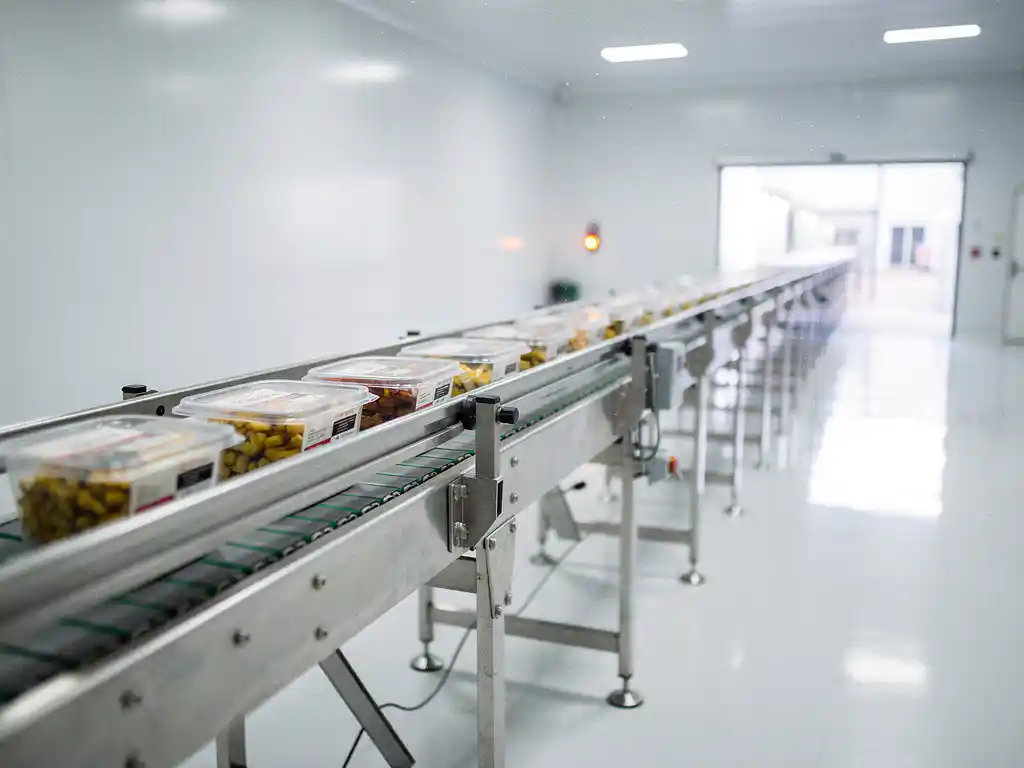
The hidden contamination risks in food and beverage packaging areas most commonly come from foot traffic, wheeled equipment, airborne particles, and personnel movement across zone boundaries. These risks are often invisible until they cause a product recall, a failed audit, or a regulatory action. Understanding where these risks originate and how they spread is the first step toward controlling them effectively.
Packaging environments sit at the final stage of production, meaning any contamination that reaches this point has the potential to compromise finished goods. The sections below address the most common questions facility managers ask when assessing and closing the gaps in their contamination control programmes.
Where do contaminants most commonly enter food and beverage packaging areas?
Contaminants most commonly enter food and beverage packaging areas through floor-level pathways, specifically the shoes of personnel, the wheels of carts and forklifts, and the movement of materials between zones. Industry experience consistently shows that up to 80% of contamination in controlled environments enters at floor level, making entry points the highest-risk locations in any packaging facility.
The primary entry vectors include:
- Personnel foot traffic moving from uncontrolled corridors, loading areas, or external environments into packaging zones
- Wheeled equipment such as pallet trucks, trolleys, and carts that travel between storage, processing, and packaging areas without decontamination
- Material transfer points where raw ingredients, packaging components, or finished goods pass through zone boundaries
- Airborne particles disturbed by movement that then settle on exposed products or surfaces
Gowning room transitions, airlock corridors, and loading bay access points are particularly vulnerable. Without a validated barrier at these entry points, every person and every piece of equipment entering the packaging area becomes a potential contamination vector.
What types of contaminants are most dangerous in packaging environments?
The most dangerous contaminants in food and beverage packaging environments are microbial contaminants, including bacteria, mould, and yeast, along with physical particulates such as dust, debris, and foreign material. Microbiological contamination poses the greatest risk to food safety because it can cause product spoilage, consumer illness, and large-scale recalls without being visible to the naked eye.
Beyond microbial threats, packaging environments must guard against:
- Physical contaminants: Dust, fibres, hair, and debris carried in on footwear or equipment wheels
- Chemical contaminants: Cleaning agent residues, lubricants, and substances tracked in from adjacent production or maintenance areas
- Cross-contamination from allergens: Particularly relevant in facilities handling multiple product lines, where allergen-containing particles can migrate across zone boundaries
The combination of high throughput, open product exposure during packaging, and frequent personnel movement makes these environments especially susceptible. A single contamination event in a packaging area can affect an entire production batch, with consequences that extend far beyond the facility floor.
How does foot traffic spread contamination across packaging zones?
Foot traffic spreads contamination across packaging zones by transferring particulates and microorganisms from one surface to another with every step. Shoes pick up contaminants from floors in uncontrolled areas and carry them directly into packaging zones, depositing material across a wide area as personnel move through the facility. The more steps taken before a barrier is reached, the wider the spread.
The mechanism works in two stages. First, contaminants adhere to the soles of footwear in external or low-hygiene zones. Second, those contaminants are deposited progressively across every surface the footwear contacts, including the floors of corridors, gowning areas, and ultimately the packaging environment itself. Wheeled equipment follows the same pattern, with tyres acting as efficient carriers that transfer contamination across large floor areas in a single transit.
Personnel who move frequently between zones, such as supervisors, maintenance staff, and quality inspectors, represent a particularly high-risk group. Each zone crossing without an effective decontamination step multiplies the contamination pathway. This is why contamination control products placed at every zone boundary, not just the main entrance, are essential for managing foot traffic risk effectively.
Why do disposable sticky mats fail to control contamination in high-traffic areas?
Disposable sticky mats fail in high-traffic areas because they lose adhesive effectiveness rapidly under heavy use. Once the top layer becomes saturated with particulates, typically within hours in a busy packaging environment, the mat stops capturing contaminants and instead becomes a surface that personnel simply walk across. Peeling away used layers restores some performance, but this process is inconsistent and operationally disruptive.
Several structural limitations make disposable sticky mats poorly suited to food and beverage packaging environments:
- Rapid saturation: High foot and wheel traffic fills adhesive capacity quickly, leaving the mat functionally ineffective for much of the working day
- Inconsistent maintenance: Layer removal depends on individual compliance, leading to variable performance across shifts
- No antimicrobial protection: Standard sticky mats capture particles but do not inhibit microbial growth on the mat surface itself
- Ongoing waste and cost: Continuous replacement of single-use layers generates significant plastic waste and recurring expenditure
- Wheel incompatibility: Sticky mats are largely ineffective for wheeled traffic, which applies concentrated pressure that bypasses the adhesive surface
For facilities operating under GMP or food safety regulations, the inconsistency of disposable mats creates an audit risk. If contamination control cannot be demonstrated as reliable and validated, it may not satisfy regulatory expectations regardless of how frequently mats are replaced.
What are the regulatory consequences of poor contamination control in food packaging?
Poor contamination control in food and beverage packaging areas can result in regulatory sanctions, including product recalls, facility shutdowns, warning letters, and significant financial penalties. In regulated markets, food manufacturers are required to demonstrate that contamination risks are identified, assessed, and controlled through validated procedures. Failure to do so constitutes a compliance breach, not simply an operational shortcoming.
Regulatory frameworks including HACCP, BRC Global Standards, SQF, and FDA food safety regulations all require facilities to implement and document contamination prevention measures at critical control points. Packaging areas, as the final stage before product reaches consumers, are subject to particularly close scrutiny during audits.
The consequences of non-compliance operate across several levels:
- Immediate operational impact: Production halts, batch quarantine, and mandatory remediation
- Commercial consequences: Loss of retailer approval, supply contract termination, and reputational damage
- Legal exposure: Regulatory fines, product liability claims, and in serious cases, criminal proceedings
- Long-term audit burden: Facilities with a contamination history face increased inspection frequency and heightened scrutiny
Beyond direct penalties, the cost of a product recall in the food and beverage sector routinely runs into millions of pounds or dollars when logistics, brand damage, and customer compensation are factored in. Effective contamination control is, in this context, a risk management investment rather than an operational overhead.
How can facilities reduce hidden contamination risks at packaging entry points?
Facilities can reduce hidden contamination risks at packaging entry points by implementing a validated, multi-barrier approach that addresses floor-level particulate transfer at every zone transition. This means placing effective contamination control measures at every point where personnel, equipment, or materials cross from a lower-hygiene area into the packaging environment, not only at the main facility entrance.
Key actions that reduce hidden contamination risk include:
- Mapping all entry points: Conduct a site survey to identify every route by which personnel, equipment, and materials enter the packaging zone, including secondary access points that are often overlooked
- Addressing wheeled traffic separately: Ensure that contamination control solutions at entry points are capable of decontaminating both foot traffic and wheeled equipment, which require different capture mechanisms
- Replacing inconsistent solutions: Transition away from disposable sticky mats or footbaths that deliver variable performance and replace them with validated, reusable alternatives that maintain consistent efficacy across shifts
- Incorporating antimicrobial protection: Choose solutions that inhibit microbial growth on the mat surface itself, not just capture physical particulates
- Documenting performance: Maintain records of contamination control measures in place to support GMP and food safety audit requirements
Regular review of entry point performance, particularly after changes to facility layout, traffic patterns, or production volumes, ensures that contamination barriers remain effective as operational conditions evolve.
How Dycem helps reduce contamination risks in food and beverage packaging areas
Dycem’s reusable contamination control mats are engineered specifically to address the entry-point vulnerabilities that put food and beverage packaging environments at risk. Trusted by global manufacturers across the food and beverage sector, Dycem provides a validated, long-term alternative to disposable solutions that fail under the demands of high-traffic production environments.
- Up to 99.9% particulate capture at floor level, targeting the primary contamination pathway in packaging facilities
- Biomaster silver-ion antimicrobial technology built into every mat, inhibiting microbial growth by up to 99.9% on the mat surface
- Dycem CleanZone for pedestrian and light-wheeled traffic at gowning rooms, cleanroom entrances, and critical corridors
- Dycem WorkZone for heavy-wheeled traffic including forklifts and pallet trucks in demanding logistics and production environments
- 3 to 5 year product lifespan, reducing replacement costs and single-use plastic waste compared to disposable sticky mats
- ISO-certified manufacturing meeting EN ISO 9001 and 14001 standards, with compliance to EU REACH and California Proposition 65
- Customisable formats tailored to complex facility layouts, traffic flows, and zone requirements
Dycem’s contamination control specialists offer free site surveys to help facilities identify hidden risks and design a solution that fits their specific entry points, traffic volumes, and compliance requirements. Contact Dycem today to arrange your consultation.