

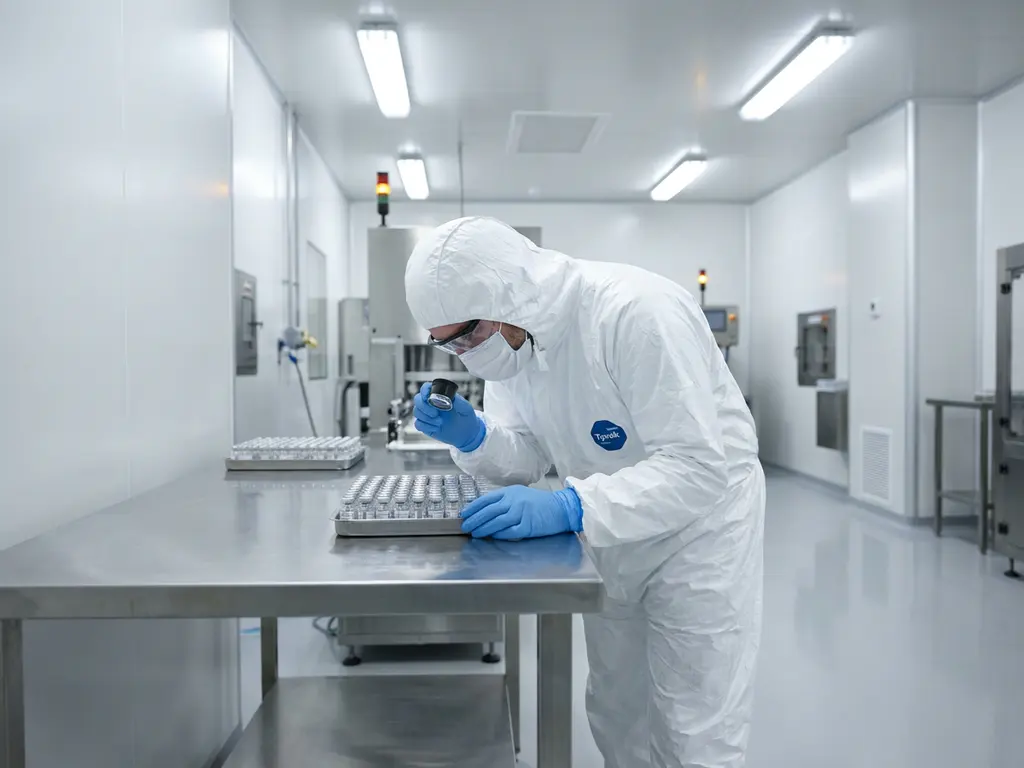
The most common sources of contamination in pharma cleanrooms are personnel, footwear and wheeled traffic, equipment and material transfer, and airborne particulates distributed by HVAC systems. Of these, human activity accounts for the largest share of contamination events, making people the primary risk factor in any controlled environment. The sections below address each source in detail, along with practical guidance on reducing contamination at entry points.
Where do most contaminants in pharma cleanrooms actually come from?
The majority of contaminants found in pharma cleanrooms originate from four primary sources: people, footwear and wheeled equipment, transferred materials, and air handling systems. Research consistently shows that human activity is responsible for the greatest proportion of particulate and microbial contamination in controlled environments, with floor-level ingress accounting for up to 80% of all contaminants entering a cleanroom.
Understanding where contamination originates is the foundation of any effective cleanroom hygiene programme. Each source introduces a different type of contaminant, whether viable particles such as skin cells and microorganisms, non-viable particulates like dust and fibres, or chemical residues carried in on surfaces. Pharma facilities operating under GMP, ISO, and FDA frameworks must address all four sources systematically to maintain compliance and protect product integrity.
How do personnel become the biggest contamination risk?
Personnel are the single largest source of contamination in pharma cleanrooms because the human body continuously sheds particles. Skin cells, hair, respiratory droplets, and clothing fibres are shed constantly during normal activity, and movement accelerates this process significantly. A person walking generates far more particulate release than a person standing still, which is why gowning protocols and personnel behaviour are central to cleanroom hygiene compliance.
Beyond physical shedding, personnel introduce contamination through behaviour. Touching surfaces, removing gloves incorrectly, or failing to follow gowning procedures at entry points creates direct contamination pathways. Fatigue, time pressure, and inadequate training all increase the likelihood of protocol deviations. In pharmaceutical manufacturing, where even trace contamination can compromise batch integrity or trigger a regulatory finding, the human factor remains the most difficult variable to fully control.
Effective personnel contamination control relies on a combination of disciplined gowning, validated entry procedures, and physical barriers at transition zones. Contamination control mats positioned at gowning room exits and cleanroom entry points provide a passive, consistent layer of protection that does not depend on individual compliance.
What contaminants do footwear and wheeled traffic introduce?
Footwear and wheeled equipment are among the most direct vectors for floor-level contamination in pharma cleanrooms. Shoes and boots carry particulates, microorganisms, moisture, and chemical residues picked up from general facility floors, outdoor surfaces, and transit areas. Wheeled equipment, including trolleys, carts, and pallet trucks, can transfer even larger volumes of contamination because their wheels cover more surface area and can carry debris embedded in tyre treads.
The risk is compounded by the frequency of entry. In an active pharmaceutical facility, personnel and equipment pass through transition zones dozens or hundreds of times per shift. Each crossing is an opportunity to carry floor-level contamination into a controlled space. Disposable sticky mats are widely used to address this, but their effectiveness degrades rapidly as adhesive layers fill with particulates, and their single-use nature generates significant ongoing waste and cost.
Reusable polymeric contamination control mats engineered to capture particulates from both shoe soles and equipment wheels offer a more consistent and sustainable approach. Unlike adhesive mats that lose effectiveness as layers are peeled away, high-performance polymer mats maintain capture efficiency throughout their service life and can be cleaned and reused without losing performance.
How does equipment and material transfer spread contamination?
Equipment and material transfer spreads contamination in pharma cleanrooms when items moving between zones carry particulates, chemical residues, or microbial load on their surfaces. Packaging materials, raw ingredients, equipment components, and tooling all have the potential to introduce contaminants if they are not properly decontaminated before entering a controlled environment. Contact surfaces, corners, and recessed areas of equipment are particularly difficult to clean thoroughly and often harbour residual contamination.
Transfer hatches, airlocks, and pass-through chambers are designed to manage this risk, but their effectiveness depends on consistent procedural compliance. When materials bypass decontamination steps or when transfer equipment is not cleaned between uses, contamination migrates across zone boundaries. In facilities handling potent active pharmaceutical ingredients or sterile products, even minor lapses in material transfer protocols can have serious consequences for product quality and patient safety.
Contamination control at material entry points should be treated with the same rigour as personnel entry. Floor-level protection at transfer zones, combined with surface decontamination procedures, creates a more complete barrier against cross-zone contamination.
What role does HVAC play in cleanroom contamination events?
HVAC systems play a dual role in cleanroom contamination: when functioning correctly, they are the primary mechanism for removing airborne particulates and maintaining positive pressure differentials that prevent contaminant ingress. When they malfunction or are poorly maintained, they become a direct source of contamination, distributing particles, microbial growth from ductwork, or unfiltered air throughout the controlled environment.
Filter integrity is the most critical factor in HVAC-related contamination risk. HEPA and ULPA filters must be regularly tested and validated to confirm they are performing within specification. Damaged filter housings, improperly seated filter media, or filters that have exceeded their service life can allow unfiltered air to bypass the filtration system entirely. In pharmaceutical cleanrooms classified under EU GMP Annex 1 or ISO 14644 standards, HVAC qualification and ongoing monitoring are mandatory elements of the environmental monitoring programme.
Pressure differentials between zones also require close attention. If a cleanroom loses positive pressure relative to adjacent areas, contaminated air can flow inward during door openings or through gaps in the building envelope. HVAC-related contamination events are often identified through environmental monitoring data rather than visible particulate, which makes routine trending and alert limit management essential for early detection.
How can pharma facilities reduce contamination at entry points?
Pharma facilities can reduce contamination at entry points by combining physical barriers, validated procedures, and consistent monitoring across all transition zones. Entry points, including gowning rooms, airlocks, and material transfer areas, are where contamination from outside the controlled environment is most likely to be introduced. Addressing these zones systematically is more effective than relying on any single control measure.
Key strategies for reducing entry-point contamination include:
- Contamination control mats at all pedestrian and wheeled traffic entry points to capture floor-level particulates before they enter the controlled zone
- Structured gowning protocols with clearly defined donning and doffing sequences, supported by visual aids and regular competency assessments
- Airlock and pressure cascade design that creates a buffer zone between uncontrolled and controlled areas, preventing direct air exchange during personnel or material entry
- Material decontamination procedures applied consistently at transfer hatches and pass-through chambers before items enter the cleanroom
- Regular environmental monitoring at entry points to detect early signs of contamination ingress and trigger corrective action before a trend becomes a deviation
- Training and behavioural reinforcement to ensure personnel understand the contamination risks associated with entry procedures and consistently follow validated protocols
The floor level deserves particular attention. With up to 80% of contamination entering at floor level, entry-point mats are one of the highest-impact controls a facility can deploy. Disposable sticky mats degrade quickly and create ongoing waste, whereas reusable polymer mats provide consistent performance across a multi-year service life.
How Dycem helps reduce pharma cleanroom contamination
Dycem’s contamination control mat systems are purpose-built to address the entry-point contamination risks that pharma facilities face every day. Engineered from a proprietary reusable polymer with built-in Biomaster antimicrobial protection, Dycem mats capture up to 99.9% of shoe and wheel contaminants at the point of entry, before they reach the controlled environment.
For pharmaceutical and medical device facilities, the Dycem range offers targeted solutions across different entry and traffic scenarios:
- Dycem CleanZone is designed for pedestrian and light-wheeled traffic zones such as cleanroom entrances, gowning rooms, and airlocks, delivering high-performance particulate capture at the most sensitive transition points
- Dycem WorkZone handles heavy-wheeled traffic including forklifts and pallet trucks, providing reliable contamination control in demanding logistics and production environments
- Dycem Floating Mats offer flexible, repositionable coverage for facilities with variable or temporary controlled zones, without the need for permanent installation
- Dycem Bench Mats and Access Panels extend contamination control beyond the floor and into workstation and access-point environments
All Dycem mats are washable, reusable, and designed for a service life of three to five years, making them a significantly more sustainable and cost-effective alternative to disposable sticky mats. ISO-certified manufacturing ensures consistent quality, and Dycem’s contamination control specialists are available worldwide to support site assessments and solution design. Explore the full range of contamination control mats or contact a specialist to arrange a free site survey.