

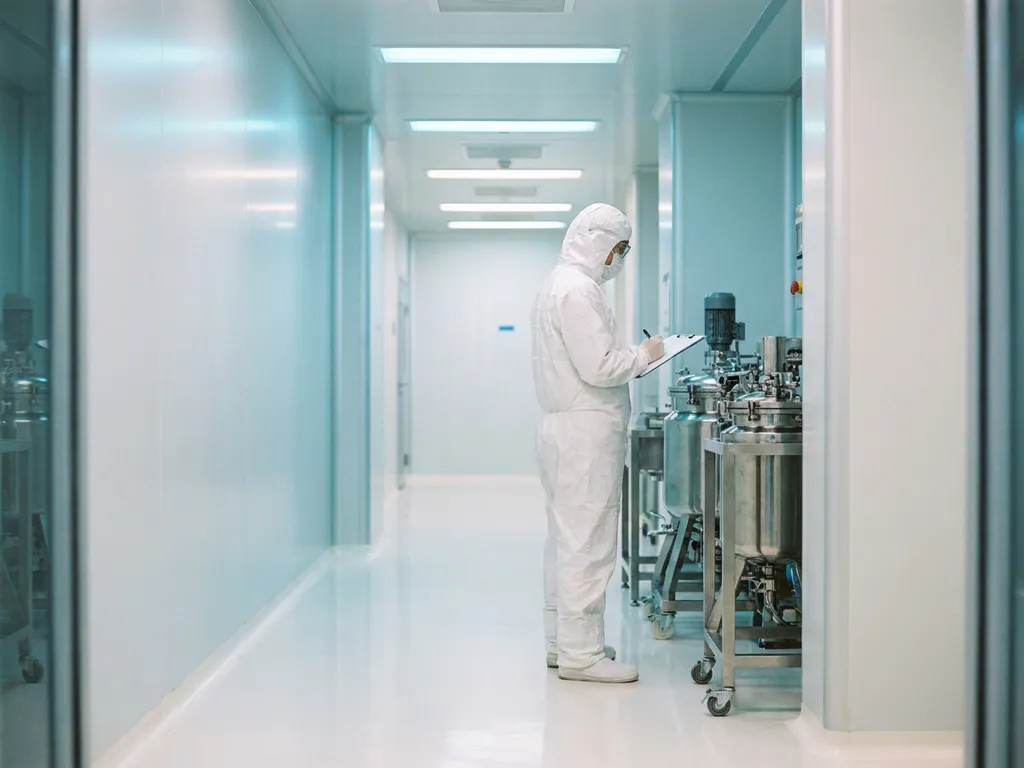
A pharma contamination event can trigger a cascade of regulatory consequences ranging from warning letters and product recalls to facility shutdowns and criminal prosecution of senior executives. These consequences apply to any manufacturer operating under GMP frameworks, including FDA, EMA, and equivalent international standards. The sections below break down each category of consequence and the practical steps that reduce exposure.
What regulatory actions can the FDA take after a contamination event?
The FDA can take a wide range of enforcement actions following a pharma contamination event, including issuing warning letters, initiating mandatory product recalls, placing import alerts, pursuing consent decrees, and seeking injunctions to halt manufacturing operations entirely. The severity of the response depends on the nature, scope, and root cause of the contamination.
Warning letters are typically the first formal step. They document specific GMP violations and require a written corrective action response within a defined timeframe. Failure to respond adequately, or a pattern of repeat violations, escalates the agency’s response significantly.
At the more serious end of the enforcement spectrum, the FDA can pursue consent decrees or permanent injunctions. These legally binding agreements can restrict or suspend all manufacturing activity at a facility until the agency is satisfied that systemic problems have been resolved. Remediation under a consent decree is costly, time-consuming, and very public. Beyond the operational impact, an FDA Form 483 inspection observation or a subsequent Untitled Letter can damage a company’s standing with trading partners and investors before any formal enforcement action is even concluded.
How does a contamination event trigger a GMP non-compliance finding?
A contamination event triggers a GMP non-compliance finding when an investigation reveals that the event resulted from a failure to follow Current Good Manufacturing Practice requirements. These requirements cover personnel hygiene, facility design, equipment maintenance, environmental monitoring, and contamination control procedures. A single event can expose deficiencies across multiple GMP chapters simultaneously.
Regulators assess not just the contamination itself but the adequacy of the systems designed to prevent it. If an inspection reveals that contamination control measures were absent, poorly documented, or inconsistently applied, the finding reflects a systemic failure rather than an isolated incident. That distinction matters enormously because systemic failures attract more serious regulatory responses.
Environmental monitoring data plays a central role in these investigations. Gaps in monitoring records, exceedances that were not investigated, or CAPA processes that failed to address root causes all become evidence of GMP non-compliance. For cleanroom and controlled environment operators, this means that the quality of contamination control at every entry point is directly tied to audit readiness and regulatory standing.
What is the financial impact of a pharma contamination recall?
The financial impact of a pharma contamination recall can reach hundreds of millions of dollars when direct costs, lost production, regulatory remediation, and reputational damage are combined. Direct costs include the physical retrieval and destruction of affected product, customer notifications, and logistics. Indirect costs, which are often larger, include lost sales, delayed product launches, and the expense of third-party audits and consultants brought in to manage remediation.
Manufacturing downtime compounds the financial exposure significantly. A facility that is suspended or voluntarily shut down during an investigation loses revenue on every product line it produces, not just the one implicated in the recall. For high-volume sterile injectables or biologics, even a short suspension can translate into substantial financial losses and potential supply shortages that attract further regulatory scrutiny.
Investor confidence and market capitalisation can also take a serious hit. Publicly traded pharmaceutical companies that announce contamination-related recalls frequently see share price declines in the immediate aftermath, with recovery timelines that depend heavily on how transparently and effectively the company manages the response. The reputational cost to brand equity and customer relationships is harder to quantify but no less real.
Can a contamination event result in criminal liability for pharma executives?
Yes, a pharma contamination event can result in criminal liability for executives, including senior managers who had no direct knowledge of the specific violation. Under the Park Doctrine in the United States, corporate officers can be held criminally liable for GMP violations that occurred within their area of responsibility, even without proof of personal involvement, if the court finds they had the authority and responsibility to prevent the violation.
Criminal prosecutions in the pharmaceutical sector have historically resulted in fines, probation, and in more serious cases, imprisonment. The threshold for criminal referral is typically a pattern of violations, deliberate concealment, or contamination events that caused patient harm. However, the regulatory and legal landscape has shifted toward holding individuals, not just companies, accountable for systemic quality failures.
This has significant implications for Quality Directors, EHS Managers, and senior operations leaders. Personal liability exposure reinforces why contamination control cannot be treated as a box-ticking exercise. Documented, validated, and consistently applied contamination prevention programmes are not just operational requirements; they are a professional and legal safeguard for the individuals responsible for facility compliance.
How do contamination events affect EMA and international regulatory standing?
A contamination event can damage a pharmaceutical manufacturer’s standing with the EMA and international regulatory bodies, particularly when the event results in a product recall, a GMP non-compliance finding, or enforcement action by another major regulator such as the FDA. Regulatory agencies across jurisdictions increasingly share inspection data and enforcement intelligence, meaning a serious finding in one market can trigger scrutiny in others.
The EMA and its network of national competent authorities maintain a database of GMP non-compliance statements. A facility listed in this database may find that its products face import restrictions or additional scrutiny in EU member states. For manufacturers supplying multiple markets, a single contamination event can therefore have cascading international consequences that extend well beyond the originating jurisdiction.
Mutual recognition agreements between regulatory agencies, including those between the FDA and EMA, mean that inspection findings are increasingly portable across borders. A facility that fails a US inspection may face a parallel review in Europe without a separate physical inspection taking place. Building and maintaining a strong compliance record across all entry points and controlled zones is therefore a global business imperative, not a market-by-market consideration.
What contamination control measures help prevent regulatory consequences?
Effective contamination control measures that help prevent regulatory consequences include validated entry-point protection, robust environmental monitoring programmes, documented personnel hygiene procedures, and regular internal audits against GMP standards. Together, these create a defensible, evidence-based contamination prevention framework that regulators expect to see during inspections.
Entry-point control is particularly critical because, as industry data consistently shows, the majority of particulate contamination in controlled environments enters at floor level via footwear and wheeled equipment. Addressing this risk at the point of entry, before contamination can migrate into cleanrooms or sterile zones, is far more effective than attempting to remediate it after the fact.
- Validated entry barriers: Contamination control mats at gowning room entries, airlocks, and critical corridors capture particulates before they enter controlled zones
- Environmental monitoring: Regular particle counts and microbial monitoring with documented investigation of any exceedances
- Personnel hygiene protocols: Gowning procedures, footwear controls, and training records that demonstrate consistent application
- CAPA documentation: A corrective and preventive action system that links contamination events to root cause analysis and verified resolution
- Supplier qualification: Using ISO-certified, validated contamination control products that support audit documentation
Regulators look for consistency, documentation, and evidence that contamination control systems are actively managed rather than passively maintained. Facilities that can demonstrate a systematic approach to entry-point hygiene, supported by validated products and training records, are significantly better positioned during GMP inspections.
How Dycem contamination control mats support pharma hygiene compliance
Dycem’s reusable contamination control mats are engineered specifically for the compliance demands of pharmaceutical, medical device, and other regulated environments. For Quality, EHS, and Facilities Managers facing audit pressure, they provide a validated, documented, and sustainable alternative to disposable sticky mats that deliver inconsistent performance and generate significant single-use plastic waste.
- Dycem CleanZone mats capture up to 99.9% of shoe and wheel contaminants at cleanroom entrances, gowning rooms, and airlocks, addressing the highest-risk contamination entry points
- Dycem WorkZone mats handle heavy-wheeled traffic including forklifts and pallet trucks, extending contamination control into demanding logistics and production environments
- Dycem Floating Mats offer repositionable protection for facilities with variable or temporary controlled zones
- All Dycem mats are built with integrated Biomaster antimicrobial protection, a 3 to 5 year product lifespan, and ISO-certified manufacturing that supports supplier qualification documentation
- Reusable construction significantly reduces single-use plastic waste compared to disposable peel-off mat alternatives, supporting ESG and sustainability commitments
Dycem’s contamination control specialists offer a free site survey to assess your facility’s entry points and recommend the right solution for your controlled environment. Explore the full range of contamination control products or contact the Dycem team to arrange your consultation.