

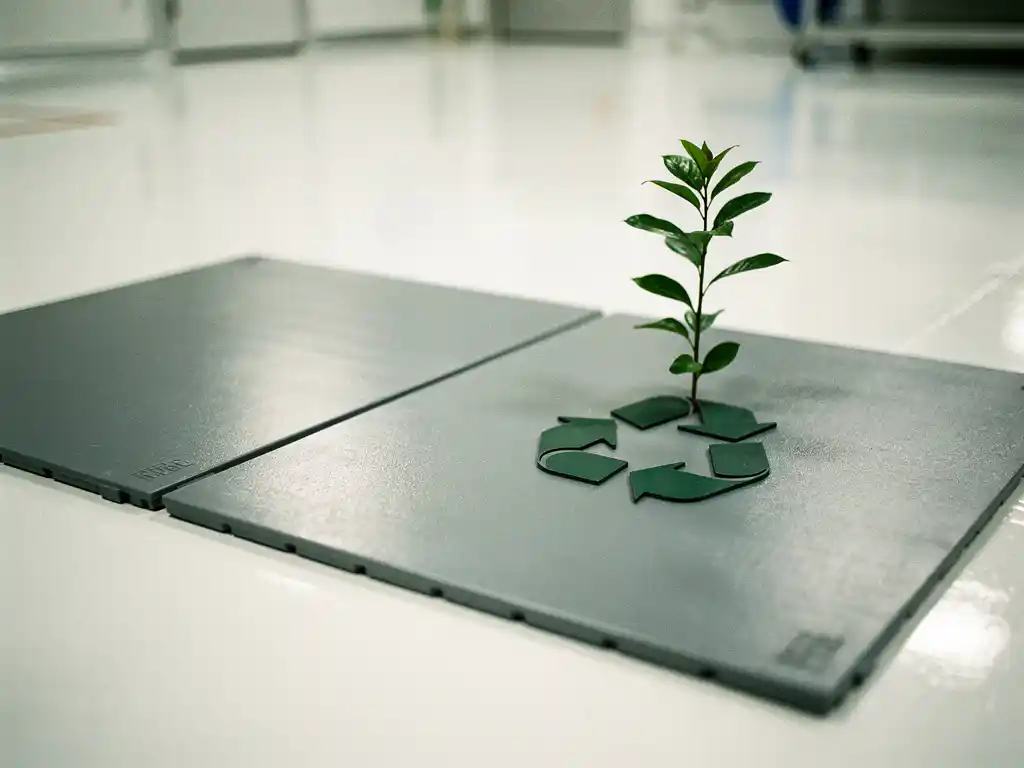
Durable facility products deliver significant sustainability benefits by dramatically reducing the volume of single-use waste generated in industrial and controlled environments. Unlike disposable alternatives that require frequent replacement, long-lasting products such as reusable contamination control mats are designed to perform for three to five years, cutting material consumption, procurement frequency, and landfill contribution. The sections below examine the specific sustainability advantages across waste reduction, carbon footprint, ESG compliance, total cost of ownership, and industry application.
How do durable facility products reduce industrial waste?
Durable facility products reduce industrial waste by replacing single-use consumables with reusable alternatives that remain effective across years of operation rather than days or weeks. In contamination control specifically, disposable sticky mats must be peeled and discarded repeatedly throughout a shift, generating substantial volumes of plastic waste that accumulate quickly across large facilities with multiple entry points.
The scale of this waste is often underestimated at the facility level. A single cleanroom entrance using disposable peel-off mats can go through hundreds of sheets per month. Multiply that across multiple entry points, shifts, and sites, and the material waste becomes a measurable operational and environmental liability. Switching to a reusable mat solution eliminates this cycle almost entirely, replacing ongoing consumable disposal with a single product that is cleaned, maintained, and reused over its full lifespan.
Reusable contamination control mats also reduce the packaging, shipping, and storage waste associated with frequent consumable orders. Fewer deliveries, fewer boxes, and fewer disposal runs all contribute to a leaner, lower-waste facility operation. For quality and facilities managers working toward waste reduction targets, this shift from disposable to durable represents one of the most direct and measurable improvements available.
What is the carbon footprint difference between reusable and disposable facility products?
Reusable facility products carry a significantly lower lifecycle carbon footprint than their disposable counterparts. While a reusable mat requires energy and materials to manufacture, that initial investment is spread across years of use. Disposable alternatives, by contrast, require repeated manufacturing, packaging, and transportation cycles, each of which contributes to cumulative emissions that far exceed those of a single durable product over the same period.
The carbon impact of disposable sticky mats extends beyond the product itself. Frequent procurement means repeated logistics runs and associated fuel consumption. Disposal generates landfill emissions. And the raw materials used in single-use plastic products are derived from fossil fuel processes, meaning each replacement sheet carries an embedded carbon cost from production alone.
Reusable mats, particularly those manufactured to ISO-certified standards such as EN ISO 9001 and 14001, are built to minimize environmental impact across their full lifecycle. When a product is designed to last three to five years and can be cleaned and returned to service repeatedly, the per-use carbon cost drops substantially compared to a product discarded after a single application. For organizations with carbon reduction commitments, this difference is not marginal; it is a material improvement in environmental performance.
How do long-lasting facility products support ESG and compliance goals?
Long-lasting facility products support ESG goals by reducing single-use plastic consumption, lowering carbon emissions, and demonstrating a measurable commitment to responsible procurement. On the compliance side, durable products manufactured to recognized quality and environmental standards provide documented evidence of responsible sourcing, which is increasingly relevant in regulated industries where supply chain sustainability is subject to audit.
For quality and EHS managers, the compliance dimension of facility product selection is rarely just about performance. Regulators, customers, and investors are placing growing scrutiny on how organizations manage waste, procure consumables, and account for environmental impact across their operations. Choosing products that align with frameworks such as EU REACH and California Proposition 65 reduces regulatory exposure while supporting broader ESG reporting requirements.
Reusable contamination control mats also support the social dimension of ESG by creating safer, more controlled working environments. Built-in antimicrobial protection, such as Biomaster silver-ion technology that inhibits microbial growth by up to 99.9%, contributes to hygiene standards that protect both workers and product integrity. Facilities that can demonstrate consistent contamination control performance are better positioned during GMP, ISO, and FDA audits, where documented cleanliness standards are a core requirement.
From a governance perspective, shifting from a recurring consumable spend to a planned, long-life asset simplifies procurement governance and reduces supplier dependency. A product with a three-to-five-year lifespan requires fewer purchase orders, fewer supplier interactions, and fewer compliance checks per unit of protection delivered, making facility management more predictable and auditable.
What is the total cost of ownership of durable versus disposable facility products?
The total cost of ownership of durable facility products is substantially lower than that of disposable alternatives when calculated across a comparable timeframe. Disposable products carry a deceptively low unit cost, but that cost recurs constantly. When procurement, storage, disposal, and labor for frequent replacements are factored in, the cumulative expenditure of a disposable approach significantly exceeds the upfront investment in a reusable solution.
A straightforward cost comparison between reusable and disposable mats typically reveals several categories of hidden expense in the disposable model:
- Recurring unit costs: Disposable mats are purchased repeatedly, often monthly or more frequently depending on traffic volume and contamination levels.
- Storage requirements: Maintaining adequate stock of disposable mats requires warehouse or on-site storage space, which carries its own operational cost.
- Disposal and waste management: Single-use plastic disposal is not free. Facilities may incur waste handling costs, particularly where regulated waste streams apply.
- Labor for replacement: Frequent mat changes require staff time that adds up across shifts and entry points.
- Inconsistent performance: As a disposable mat fills with particulate, its effectiveness declines until it is replaced, meaning contamination risk increases between change cycles.
A reusable mat with a three-to-five-year service life replaces all of these recurring costs with a single procurement event and a straightforward cleaning protocol. For procurement and operations leaders assessing supplier value, this shift from variable consumable spend to predictable asset investment is a compelling financial argument alongside the sustainability case.
Which industries benefit most from switching to durable facility products?
Industries with regulated controlled environments, high contamination sensitivity, or significant foot and wheeled traffic benefit most from switching to durable facility products. These include pharmaceuticals, medical devices, food and beverage production, electronics manufacturing, aerospace, automotive, and healthcare, where contamination risk directly affects product quality, regulatory compliance, and operational continuity.
In pharmaceutical and medical device manufacturing, contamination control is a GMP requirement, not a preference. Facilities operating under FDA, EU GMP, or ISO 13485 standards must demonstrate consistent particulate management at every controlled entry point. Durable, reusable mats provide documented, validated performance that supports audit readiness and reduces the risk of contamination-related batch failures or regulatory findings.
In food and beverage production, hygiene standards are equally stringent, and the volume of foot traffic through production areas makes disposable mat programmes both costly and operationally disruptive. Reusable mats with built-in antimicrobial properties provide continuous protection without the need for constant replacement, supporting HACCP compliance and reducing the risk of cross-contamination between zones.
Electronics and aerospace manufacturers operate in environments where even microscopic particulates can compromise product integrity. The precision requirements of these industries make consistent, high-performance contamination control essential at every entry point, from cleanroom entrances to gowning rooms and airlocks. Durable mats engineered to capture and retain particulate across years of use provide the reliability these environments demand.
Healthcare facilities, including hospitals and clinical laboratories, benefit from the combination of antimicrobial performance and reduced waste that reusable mats offer, particularly as procurement teams face pressure to reduce single-use plastic consumption while maintaining infection control standards.
How Dycem helps with contamination control sustainability
Dycem’s reusable contamination control mats are engineered to deliver the sustainability and performance outcomes described throughout this article. Key benefits include:
- Three-to-five-year product lifespan, dramatically reducing waste and replacement costs compared to disposable sticky mats
- Capture of up to 99.9% of shoe and wheel contaminants, maintaining consistent performance across the full product life
- Biomaster silver-ion antimicrobial technology, inhibiting microbial growth by up to 99.9% to support hygiene and compliance
- ISO-certified manufacturing to EN ISO 9001 and 14001 standards, with compliance to EU REACH and California Proposition 65
- Support for ESG goals by minimizing single-use plastic waste and reducing the carbon footprint of facility consumable programmes
- Customizable formats including CleanZone and WorkZone mats tailored to pedestrian, light-wheeled, and heavy-wheeled traffic environments
If your facility is ready to move beyond disposable mats and build a more sustainable, compliant contamination control programme, Dycem’s specialists are available to help. Contact Dycem today to arrange a free site survey and consultation.