

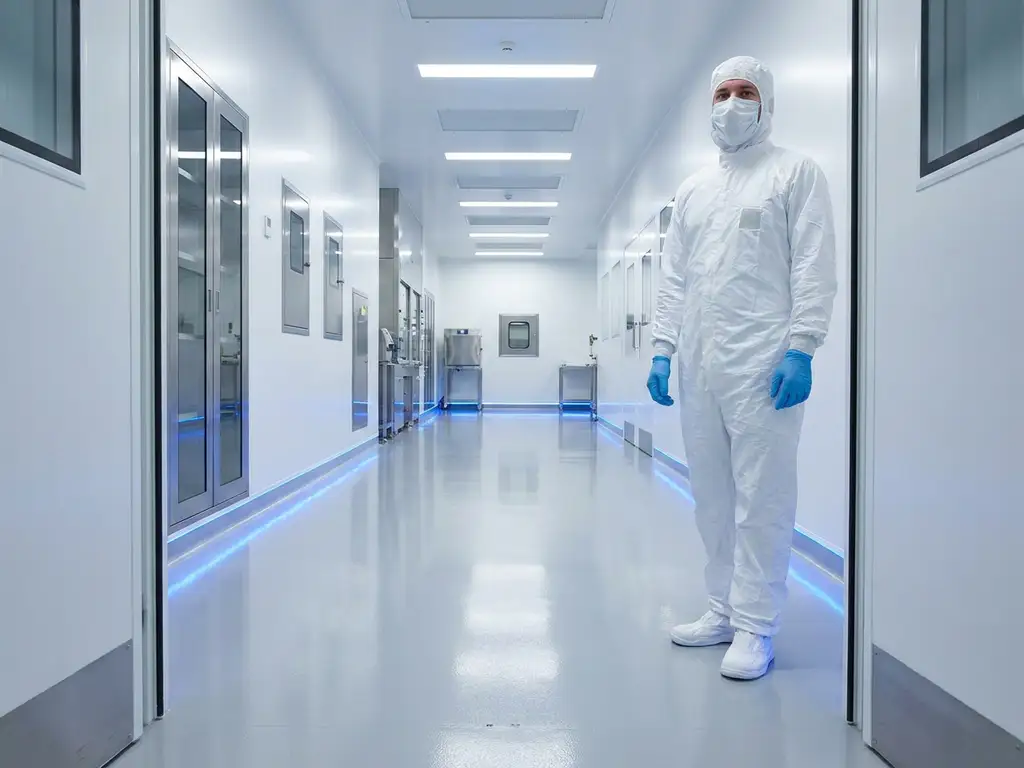
A contamination control strategy is a documented, systematic approach to identifying, managing, and preventing contamination risks within a controlled environment. It defines the sources of contamination, the controls in place to address them, the responsibilities of personnel, and the methods used to verify that those controls are working. For organisations operating in regulated industries, a contamination control strategy is not optional — it is a formal requirement embedded in GMP, ISO, and FDA frameworks. The sections below answer the most common questions about what a contamination control strategy involves and how to build one that holds up under scrutiny.
What does a contamination control strategy actually include?
A contamination control strategy includes a structured set of documented controls covering personnel behaviour, facility design, equipment management, cleaning procedures, environmental monitoring, and entry point management. It identifies every potential contamination source, assigns responsibility for each control, and defines how compliance is verified and recorded over time.
In practice, a well-constructed contamination control plan typically covers the following components:
- Risk assessment: A systematic review of contamination sources specific to the facility, including personnel, materials, equipment, air, and surfaces
- Physical controls: Barriers, airlocks, gowning protocols, and floor-level contamination capture systems at entry points
- Procedural controls: Standard operating procedures for cleaning, gowning, material transfer, and personnel movement
- Environmental monitoring: Scheduled particle counts, microbial sampling, and surface testing to detect contamination before it escalates
- Training and accountability: Defined roles for who is responsible for each control, with documented training records
- Review and improvement cycles: Scheduled audits and deviation reporting to continuously refine the strategy
The strategy is not a single document but a connected system. Each element reinforces the others — a gap in one area, such as inadequate entry point control, can undermine even the most rigorous cleaning regime elsewhere in the facility.
Why do regulators require a documented contamination control strategy?
Regulators require a documented contamination control strategy because contamination in controlled environments carries direct risks to product quality, patient safety, and consumer health. A documented strategy provides evidence that an organisation has proactively identified its contamination risks and put verified controls in place — rather than reacting to failures after they occur.
In pharmaceutical manufacturing, the EU GMP Annex 1 (2023 revision) explicitly requires a formal Contamination Control Strategy as part of the manufacturing licence framework. This requirement reflects a broader regulatory shift toward risk-based thinking, where manufacturers must demonstrate they understand their contamination risks, not just that they follow a checklist.
For medical device manufacturers, food producers, and aerospace suppliers, equivalent frameworks such as ISO 14644, FDA 21 CFR, and HACCP carry similar expectations. Regulators want to see that contamination prevention is systematic, measurable, and continuously reviewed. Without documentation, even effective controls cannot be demonstrated during an audit — and undocumented controls are, from a compliance perspective, controls that do not exist.
What are the most common sources of contamination in controlled environments?
The most common sources of contamination in controlled environments are personnel, materials entering the facility, equipment surfaces, air ingress, and the floor. Of these, personnel and floor-level contamination account for the majority of particulate and microbial contamination events because both involve constant movement through and between zones.
Breaking these down further:
- Personnel: Human skin, hair, clothing fibres, and respiratory particles are among the most prolific contamination sources in any cleanroom or controlled zone
- Floor-level transfer: Shoes and wheeled equipment carry contaminants from uncontrolled areas directly into controlled zones — industry experience consistently points to the floor as the entry route for up to 80% of contamination events
- Raw materials and packaging: Incoming goods can introduce particulates, microorganisms, and chemical residues if not properly decontaminated before entry
- Equipment and tooling: Surfaces that are difficult to clean, or that are cleaned infrequently, accumulate contamination over time
- Air and HVAC systems: Pressure differentials, filter failures, or poorly designed airflow can allow particulates to migrate between zones
- Water and process fluids: In food, pharma, and semiconductor environments, process fluids can introduce microbial or chemical contamination if not properly controlled
A credible GMP contamination control strategy addresses all of these sources, but prioritises controls at the points of highest risk — which, for most facilities, means personnel entry and floor-level transfer.
How does contamination control at entry points differ from general housekeeping?
Contamination control at entry points is a preventive measure — it stops contaminants from entering a controlled environment in the first place. General housekeeping is a remedial measure — it removes contamination that has already entered. Both are necessary, but entry point control is more effective because it addresses the problem before it spreads across surfaces, equipment, and product.
General housekeeping, including scheduled cleaning, wiping down surfaces, and mopping floors, is reactive by nature. It reduces contamination levels after the fact, but cannot prevent the distribution of particles that have already been tracked into a zone on the soles of shoes or the wheels of equipment.
Entry point controls work differently. They intercept contamination at the threshold — gowning procedures, airlocks, sticky mats, and reusable contamination control mats all function as physical barriers that capture or remove contaminants before personnel or equipment cross into a controlled zone. This approach is far more efficient because it reduces the contamination load that housekeeping then needs to manage.
In a well-designed contamination prevention strategy, entry point controls and housekeeping are complementary layers — not alternatives. Relying on housekeeping alone to manage contamination that could have been prevented at the door is both operationally inefficient and difficult to defend during a regulatory audit.
What’s the difference between reusable and disposable contamination control mats?
Reusable contamination control mats are made from durable polymer materials, designed to capture and retain particulates and microorganisms from footwear and wheels, and can be cleaned and returned to service repeatedly over a lifespan of several years. Disposable sticky mats use a peel-off adhesive layer system that is discarded once the surface becomes saturated, generating ongoing material waste and recurring procurement costs.
Performance and reliability
Reusable polymer mats maintain consistent contamination capture performance throughout their service life when cleaned according to the manufacturer’s guidance. Disposable sticky mats degrade in effectiveness as layers become saturated, and their performance depends entirely on personnel remembering to peel used layers — a procedural dependency that introduces human error into the contamination control system.
Cost and sustainability
Disposable mats carry a compounding cost: each mat is a consumable that must be reordered, stored, and disposed of continuously. Over a three to five year period, the total cost of ownership for disposable mats is typically significantly higher than an equivalent reusable system. Beyond cost, disposable mats generate substantial single-use plastic waste — a growing concern for organisations with ESG commitments or sustainability targets. Reusable mats represent a more sustainable alternative, eliminating the waste stream associated with peel-off systems while delivering consistent, validated performance.
For facilities subject to GMP or ISO audits, reusable mats also offer a more defensible record: a single validated product with a documented cleaning and inspection cycle, rather than a high-turnover consumable with variable performance across batches.
How do you measure whether a contamination control strategy is working?
A contamination control strategy is measured through environmental monitoring data, deviation records, audit outcomes, and trend analysis over time. No single data point tells the full story — effective measurement combines quantitative monitoring with qualitative review of where controls are succeeding or failing.
The most common measurement methods include:
- Particle counting: Regular airborne particle counts at defined locations within the controlled environment, compared against ISO classification thresholds
- Microbial surface sampling: Contact plates and swabs taken from critical surfaces, entry points, and high-touch areas to detect microbial contamination
- Personnel monitoring: Fingertip and settle plate testing to assess the contamination contribution of gowned personnel
- Deviation and non-conformance tracking: Recording and investigating contamination events to identify root causes and recurring failure points
- Audit performance: Internal and external audit findings that assess whether documented controls are being followed and whether they are effective
- Mat and entry point inspection: Scheduled inspection of floor-level controls to verify they are clean, intact, and positioned correctly at all entry points
Trend analysis is as important as point-in-time data. A single clean particle count result does not confirm that a strategy is working — but a consistent downward trend in contamination events over six to twelve months, correlated with specific control improvements, is meaningful evidence that the strategy is effective. Documenting this trend is also valuable during regulatory inspections, where auditors look for evidence of continuous improvement, not just compliance at a fixed moment in time.
How Dycem supports a complete contamination control strategy
Dycem’s reusable contamination control mats are engineered specifically for the entry point layer of a contamination control plan — the point where prevention is most effective and most often underestimated. Where disposable sticky mats introduce procedural dependency and recurring waste, Dycem provides a validated, long-life alternative with built-in antimicrobial protection and consistent performance across a three to five year service life.
Dycem’s product range is designed to address the full range of entry point scenarios within a controlled environment:
- Dycem CleanZone: High-performance particulate capture for pedestrian and light-wheeled traffic at cleanroom entrances, gowning rooms, and critical corridors
- Dycem WorkZone: Heavy-duty contamination control for forklifts, pallet trucks, and large wheeled equipment in industrial and logistics environments
- Dycem Floating Mats: Flexible, repositionable mats for facilities with variable or temporary controlled zones
- Dycem Bench Mats and Access Panels: Workstation-level and access-point solutions that extend contamination control beyond the floor
All Dycem mats share ISO-certified manufacturing, Biomaster antimicrobial protection, and a reusable construction that eliminates the single-use waste associated with peel-off alternatives. Contamination control specialists are available to conduct a free site survey and help identify where entry point controls can strengthen your existing strategy. To find out which solution fits your facility, explore the full Dycem contamination control range or contact the team to arrange a consultation.