

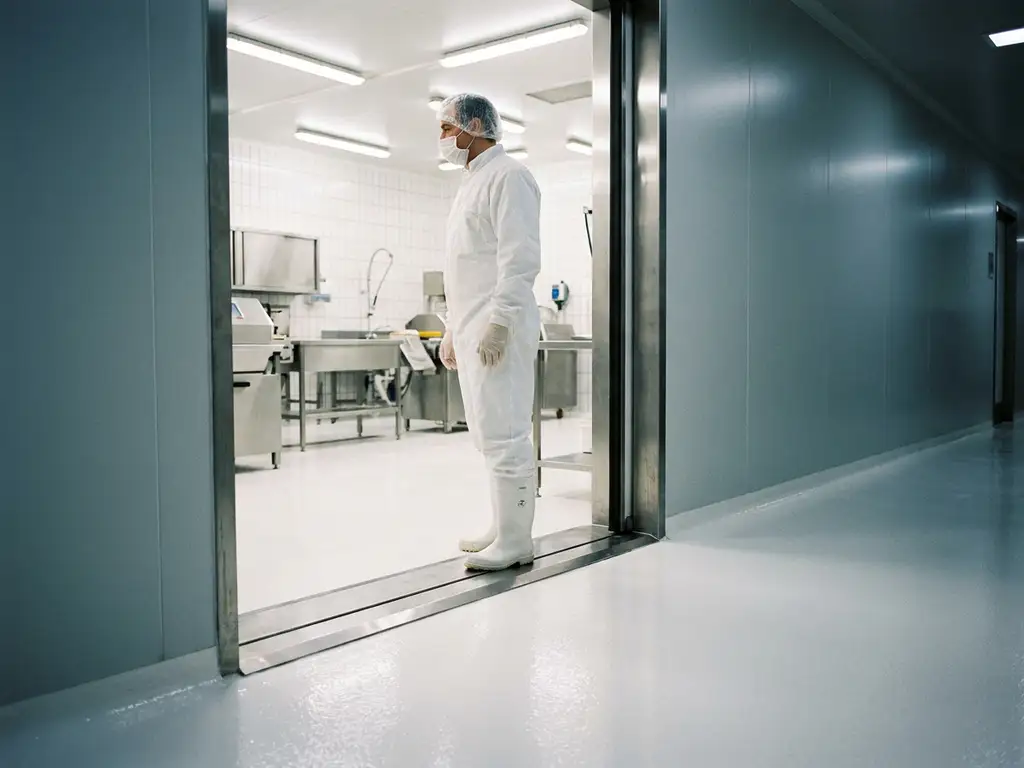
Hygienic zoning in food and beverage manufacturing is the practice of dividing a facility into defined areas based on their contamination risk level, with physical and procedural controls applied at the boundaries between zones. The goal is to prevent microbiological, chemical, and physical contaminants from migrating from lower-risk areas into zones where they could compromise product safety or quality. This article unpacks the key questions facility managers and quality teams face when designing, validating, and maintaining an effective zoning strategy.
What are the different hygiene zones in a food facility?
Food facilities are typically divided into four hygiene zones, ranging from basic ambient areas to the highest-risk production environments. Each zone is defined by the level of contamination risk it presents and the stringency of controls required to manage that risk. The zone classification determines everything from personnel hygiene requirements to the construction materials used in the space.
While terminology varies between frameworks and regions, the most widely adopted model uses the following structure:
- Zone 1 (Basic hygiene): Non-production areas such as offices, warehouses, and external dispatch areas. Contamination risk is low, but controls are still necessary to prevent contaminants from being tracked inward.
- Zone 2 (Medium hygiene): Areas adjacent to production, including corridors, storage rooms, and packaging areas where product is enclosed or protected. Personnel and equipment movement is controlled.
- Zone 3 (High hygiene): Open product areas where food is exposed during processing. Strict entry controls, dedicated workwear, and robust cleaning regimes apply. Microbial contamination risk is significant.
- Zone 4 (Highest hygiene / Ultra-high hygiene): Areas handling ready-to-eat or high-care products where the risk of contamination is most critical. These environments require the most rigorous controls, including dedicated personnel flows, positive air pressure, and validated decontamination at every entry point.
The exact number of zones a facility uses depends on its product range, production processes, and the regulatory framework it operates under. Some manufacturers adopt a three-zone model; others, particularly those producing high-care or high-risk products, operate with four or five distinct designations.
Why is hygienic zoning required under food safety regulations?
Hygienic zoning is required under food safety regulations because it provides a structured, auditable framework for managing contamination risk across a facility. Regulatory bodies including the FDA, EFSA, and national food safety authorities all recognise zoning as a foundational prerequisite for safe food production. Without clearly defined zones, facilities cannot demonstrate systematic control over contamination pathways.
In practice, zoning requirements appear across several major frameworks:
- FSMA (Food Safety Modernization Act): Requires facilities to implement preventive controls, including environmental monitoring and physical separation of risk areas.
- BRC Global Standard for Food Safety: Explicitly requires facilities to define and document hygiene zones, with controls validated and reviewed regularly.
- IFS Food Standard: Similarly mandates zone-based risk assessment and documented boundary controls.
- EU Regulation 852/2004: Requires food business operators to implement HACCP-based procedures that account for the physical layout and flow of people, materials, and waste.
Beyond regulatory compliance, hygienic zoning supports audit readiness. When an auditor visits a facility, clearly marked zones, documented entry procedures, and validated boundary controls demonstrate that contamination risk is being managed proactively rather than reactively. Facilities that cannot evidence their zoning strategy face significant audit risk and potential non-conformances.
How does contamination move between hygiene zones?
Contamination moves between hygiene zones primarily through people, equipment, and materials crossing zone boundaries without adequate decontamination. Foot traffic is one of the most significant vectors: shoes carry particulates, moisture, and microorganisms from lower-hygiene areas directly into high-care zones if entry controls are insufficient. Wheels on trolleys, pallet trucks, and forklifts present an equally serious risk.
The mechanisms of cross-zone contamination fall into several categories:
- Personnel movement: Staff moving between zones without changing footwear, gloves, or outerwear can transfer pathogens and particulates directly. This is particularly problematic in facilities where personnel move frequently between preparation and high-care areas.
- Equipment and wheeled traffic: Trolleys, forklifts, and pallet trucks that travel between raw material storage and production areas carry floor-level contamination with them. Wheels are especially effective at picking up and redistributing microorganisms.
- Airflow: Doors held open at zone boundaries allow airborne particulates and microorganisms to drift from lower-hygiene to higher-hygiene areas. Facilities without positive pressure differentials between zones are particularly vulnerable.
- Materials and packaging: Raw materials, packaging, and ingredients entering the facility from external areas introduce contamination if they are not adequately cleaned or decontaminated before entering higher-risk zones.
Industry experience consistently shows that the floor is the primary contamination highway within a facility. Contaminants that enter at ground level through foot traffic and wheeled equipment are then redistributed throughout the space unless they are captured at the zone boundary itself.
What controls are used at hygienic zone boundaries?
Controls at hygienic zone boundaries are physical, procedural, and environmental measures that prevent contaminants from crossing from a lower-hygiene area into a higher-hygiene one. Effective boundary control requires a layered approach, combining multiple measures rather than relying on a single intervention.
Physical controls
Physical controls create a tangible barrier or capture mechanism at the point of entry. These include:
- Contamination control mats: Placed at zone entry points, high-performance polymeric mats capture particulates and microorganisms from footwear and wheels before they can be tracked into higher-hygiene areas. Unlike disposable sticky mats, which lose effectiveness quickly and generate significant plastic waste, reusable antimicrobial mats provide consistent, long-term performance. Dycem’s contamination control mats are engineered specifically for this purpose, capturing up to 99.9% of floor-level particulate at the boundary.
- Footwear change stations: Dedicated areas where personnel change into zone-specific footwear or overshoes before entry.
- Air curtains and airlocks: Used to limit airborne contamination transfer when doors between zones are opened.
- Physical barriers and colour-coded flooring: Visual demarcation that reinforces zone boundaries and discourages uncontrolled crossings.
Procedural controls
Physical measures alone are not sufficient without supporting procedures. Procedural controls include:
- Documented personnel flow policies that define permitted routes between zones
- Hand hygiene and gowning protocols required before zone entry
- Equipment cleaning and decontamination procedures for wheeled traffic crossing boundaries
- Visitor and contractor management procedures that enforce the same standards applied to permanent staff
What’s the difference between hygienic zoning and HACCP?
Hygienic zoning and HACCP are complementary but distinct frameworks. HACCP (Hazard Analysis and Critical Control Points) is a systematic method for identifying, evaluating, and controlling food safety hazards at specific points in the production process. Hygienic zoning is a prerequisite programme that manages contamination risk through the physical design and operational control of the facility itself.
The key distinction is scope and focus:
- HACCP focuses on the production process, identifying critical control points where hazards must be controlled to prevent unsafe food reaching the consumer. It is product- and process-specific.
- Hygienic zoning focuses on the facility environment, establishing physical and operational boundaries that reduce the risk of contamination entering or spreading within the site. It applies across the entire facility, regardless of which specific products are being made.
In practice, hygienic zoning supports HACCP by reducing the overall contamination load within the facility, making it easier to control hazards at critical control points. A facility with poorly controlled zone boundaries will have a higher background level of environmental contamination, which increases the risk that HACCP controls will be overwhelmed or that monitoring will detect failures too late. Zoning is therefore best understood as a prerequisite programme that creates the conditions in which HACCP can function effectively.
How should hygienic zone boundaries be validated and maintained?
Hygienic zone boundaries should be validated through documented environmental monitoring programmes and maintained through regular review, staff training, and physical inspection of boundary controls. Validation confirms that the controls in place are actually preventing contamination transfer; maintenance ensures they continue to perform over time as facility conditions and personnel change.
A robust validation and maintenance programme typically includes:
- Environmental monitoring: Regular swabbing and air sampling at zone boundaries and within high-hygiene areas to detect any microbial contamination that indicates boundary controls are failing. Results should be trended over time to identify deterioration before it becomes a non-conformance.
- Physical inspection of boundary controls: Contamination control mats, footwear change stations, air curtains, and other physical measures should be inspected on a defined schedule. Mats that are saturated, damaged, or no longer performing should be replaced or cleaned according to manufacturer guidance.
- Personnel training and competency checks: Zone boundary procedures are only as effective as the people following them. Regular training, refresher sessions, and observed competency assessments help ensure that entry protocols are consistently applied.
- Documentation and audit trails: All monitoring results, inspection records, and corrective actions should be documented in a way that supports internal and third-party audits. Traceability is essential for demonstrating ongoing compliance.
- Periodic risk review: As production processes, facility layouts, or product ranges change, the zoning strategy should be reviewed to ensure it remains appropriate. A zone classification that was adequate two years ago may not reflect current risk levels.
Maintenance of physical controls deserves particular attention. Contamination control mats at zone entry points are among the most frequently used and most critical boundary controls in a food facility, yet they are often underestimated in maintenance planning. Reusable antimicrobial mats with a documented lifespan and a clear cleaning protocol are far easier to maintain and validate than disposable alternatives, which offer no consistent performance data and require frequent replacement.
How Dycem helps with hygienic zoning in food and beverage manufacturing
Dycem’s contamination control mats are designed to address one of the most persistent challenges in hygienic zoning: preventing contaminants from crossing zone boundaries via foot traffic and wheeled equipment. Used at entry points to high-hygiene and high-care areas, Dycem mats provide a validated, auditable layer of physical control that supports the wider zoning strategy.
- Capture up to 99.9% of floor-level particulate at zone entry points, reducing the contamination load before it enters critical areas
- Built-in Biomaster silver-ion antimicrobial technology inhibits microbial growth by up to 99.9%, supporting microbiological boundary control
- Reusable construction with a 3 to 5 year lifespan provides consistent, documentable performance, unlike disposable sticky mats that degrade rapidly and offer no performance traceability
- Available in formats suited to pedestrian traffic, light-wheeled traffic, and heavy industrial use, covering every type of zone boundary in a food facility
- ISO-certified manufacturing to EN ISO 9001 and 14001 standards, with compliance to EU REACH regulations, supporting audit readiness and procurement confidence
Whether you are establishing zoning controls for the first time or looking to replace an underperforming legacy solution, Dycem’s specialists can provide a consultative assessment of your facility’s entry points and boundary requirements. Contact Dycem today to arrange a free site survey and find out how a reusable contamination control solution can strengthen your hygienic zoning programme.