

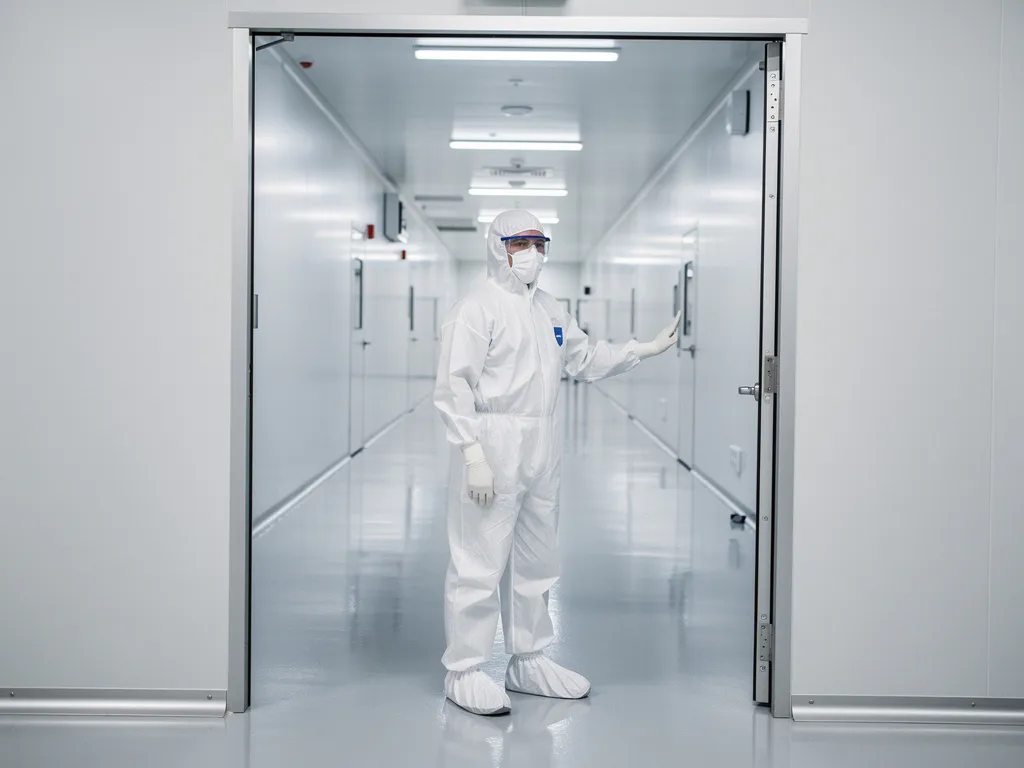
Contamination control mats can replace boot wash stations in many controlled environments, and in regulated industries such as pharmaceuticals, medical devices, and food production, they are increasingly doing exactly that. Modern polymeric mats capture and retain particulates and microbial contaminants at the point of entry without the operational complexity, water use, or hygiene inconsistencies associated with traditional wash stations. This article examines the key questions facilities managers are asking when evaluating these two approaches.
How effective are contamination control mats compared to boot wash stations?
Contamination control mats are highly effective at removing and retaining particulates, and in controlled environment settings they frequently outperform boot wash stations on both hygiene consistency and operational reliability. High-performance polymeric mats are engineered to capture up to 99.9% of shoe and wheel contaminants, including fine particulates and microbial matter, at the point of entry before they can travel deeper into a facility.
Boot wash stations rely on liquid disinfectants and physical scrubbing action to reduce contamination. While this can address visible soiling, the process is inherently inconsistent. Effectiveness depends on the concentration of the disinfectant solution, how frequently it is changed, whether staff use the station correctly, and how thoroughly footwear is dried afterward. Wet boots exiting a wash station can themselves become a contamination vector, tracking moisture and residual particles into cleanrooms and controlled zones.
By contrast, a well-maintained contamination control mat provides passive, consistent performance at every pass. Reusable polymeric mats with built-in Biomaster silver-ion antimicrobial technology inhibit microbial growth by up to 99.9%, adding a layer of protection that wash stations cannot replicate without precise chemical management. For facilities where contamination control is a compliance requirement rather than a preference, this consistency is a significant operational advantage.
What are the hygiene risks of traditional boot wash stations?
Traditional boot wash stations carry several hygiene risks that are often underestimated. The most significant is cross-contamination: a shared wash station that is not cleaned and refreshed at the correct intervals can become a reservoir for the very organisms it is meant to eliminate, redistributing microbial contamination to every user who passes through it.
Key hygiene risks associated with boot wash stations include:
- Diluted or degraded disinfectant solutions that no longer meet effective concentration thresholds after repeated use
- Residual moisture on footwear that carries particulates and microorganisms into controlled zones after washing
- Inconsistent user compliance, particularly in high-traffic periods when staff may rush through the process
- Standing water accumulation around the station, creating slip hazards and additional contamination pathways
- Biofilm formation within the station itself if cleaning and maintenance schedules are not strictly followed
These risks are compounded in high-throughput environments where shift changes bring large numbers of personnel through entry points in a short window. Managing disinfectant concentration and station hygiene under those conditions requires dedicated resources and rigorous SOPs. For many facilities, this operational burden outweighs the perceived benefit of the wash station itself.
Which industries are replacing boot wash stations with mat-based systems?
Pharmaceutical manufacturing, medical device production, food and beverage processing, electronics, aerospace, and healthcare facilities are among the industries most actively replacing boot wash stations with mat-based contamination control systems. These sectors share a common need: validated, consistent, and auditable contamination control at cleanroom and controlled environment entry points.
In pharmaceutical and medical device manufacturing, GMP requirements and regulatory audit pressure drive facilities to seek solutions that can be validated and documented. Polymeric contamination control mats offer a repeatable, measurable performance standard that wash stations struggle to match. In food production, the elimination of standing water at entry points reduces both contamination and slip risk, addressing food safety and health and safety obligations simultaneously.
Electronics and aerospace facilities, where even microscopic particulate contamination can compromise product integrity, have adopted mat-based systems because of their ability to capture fine particles that wash stations cannot address. Healthcare environments, including hospital operating theatres and sterile preparation areas, benefit from the antimicrobial properties of advanced polymeric mats, which provide continuous passive protection between cleaning cycles.
The shift is also being driven by sustainability commitments. Wash stations consume water and chemical disinfectants continuously, while reusable contamination control mats have a lifespan of three to five years and generate significantly less operational waste.
What does GMP compliance require for cleanroom entry contamination control?
GMP compliance requires that cleanroom entry contamination control measures are validated, consistently applied, and capable of demonstrating measurable reduction in particulate and microbial contamination. Regulatory frameworks including EU GMP Annex 1, FDA 21 CFR standards, and ISO 14644 cleanroom classifications all require facilities to demonstrate that contamination risks at entry points are identified, controlled, and monitored.
For cleanroom entry specifically, GMP-compliant contamination control must address:
- Particulate management at gowning rooms, airlocks, and critical corridors
- Microbial contamination reduction at all personnel and equipment entry points
- Documented performance that can be presented during regulatory inspections and internal audits
- Consistent application that does not depend on individual operator behaviour
- Integration with gowning and decontamination procedures already specified in facility SOPs
Boot wash stations can be included within a GMP-compliant system, but they require stringent documentation of disinfectant concentration, change frequency, and maintenance records to satisfy auditors. Contamination control mats, particularly those manufactured to ISO 9001 and 14001 standards, offer a more straightforward compliance profile. Their performance characteristics are consistent, their maintenance requirements are clearly defined, and they integrate naturally into gowning rooms and airlock entry procedures without introducing the variables that make wash station management audit-intensive.
How do the total costs of contamination control mats and boot wash stations compare?
When evaluated on total cost of ownership rather than upfront expenditure, contamination control mats typically offer a lower long-term cost than boot wash stations. The ongoing operational costs of wash stations, including water consumption, chemical disinfectant procurement, maintenance, and the staff time required to manage and monitor them, accumulate significantly over time.
Boot wash station costs to consider include:
- Recurring purchase of disinfectant chemicals and replacement parts
- Water and drainage infrastructure maintenance
- Staff time for monitoring solution concentration and station hygiene
- Potential compliance costs if stations fail audit due to inadequate records or degraded disinfectant
- Remediation costs if cross-contamination incidents occur
A high-quality polymeric contamination control mat, by comparison, is designed to perform for three to five years. Maintenance involves periodic cleaning rather than chemical replenishment, and there are no water or drainage costs associated with routine use. For facilities operating multiple entry points across a large site, the cost differential across a five-year period can be substantial.
Procurement and operations leaders evaluating this decision should also factor in the cost of contamination incidents. A single contamination event in a pharmaceutical or electronics facility can result in batch failures, regulatory action, or production downtime, all of which dwarf the capital cost of a mat-based entry system. The risk reduction value of a consistent, validated solution is a legitimate component of the total cost comparison.
Should a facility use contamination control mats, boot wash stations, or both?
For most regulated facilities, contamination control mats are the more practical and reliable primary solution at cleanroom entry points, and in many cases they can fully replace boot wash stations. However, the right answer depends on the contamination risk profile of the facility, the nature of the work being carried out, and the regulatory framework the facility operates within.
Facilities handling heavy soiling, such as food processing plants where boots may carry significant organic material from outdoor or wet areas, may benefit from a sequential approach: a boot wash station to address gross soiling, followed immediately by a contamination control mat to capture residual particulates and provide antimicrobial protection before personnel enter the controlled zone. In this configuration, the two systems complement rather than duplicate each other.
For pharmaceutical cleanrooms, medical device manufacturing areas, electronics facilities, and aerospace environments, contamination control mats alone are generally sufficient at personnel entry points, provided they are correctly specified for the traffic volume and contamination risk level of each zone. The key is matching the mat specification to the entry point, whether that is a gowning room, airlock, critical corridor, or equipment entry area.
Facilities evaluating this decision should consider conducting a site survey to map contamination entry points, traffic flows, and existing control measures. This allows contamination control to be designed around the facility’s actual risk profile rather than defaulting to legacy solutions that may no longer represent best practice.
How Dycem helps with cleanroom entry contamination control
Dycem’s range of reusable polymeric contamination control mats is engineered specifically for the entry point challenges described throughout this article. Key capabilities include:
- Capture and retention of up to 99.9% of shoe and wheel contaminants at the point of entry
- Built-in Biomaster silver-ion antimicrobial technology, inhibiting microbial growth by up to 99.9%
- A three-to-five year product lifespan, reducing replacement costs and operational waste
- ISO 9001 and 14001 certified manufacturing, supporting GMP compliance and audit readiness
- Customisable formats for gowning rooms, airlocks, critical corridors, and heavy-traffic zones
- Compliance with California Proposition 65 and EU REACH regulations
Whether your facility is looking to replace boot wash stations entirely or integrate mat-based solutions alongside existing entry controls, Dycem’s contamination control specialists can assess your site and recommend the right configuration. Contact Dycem today to arrange a free site survey and consultation.