

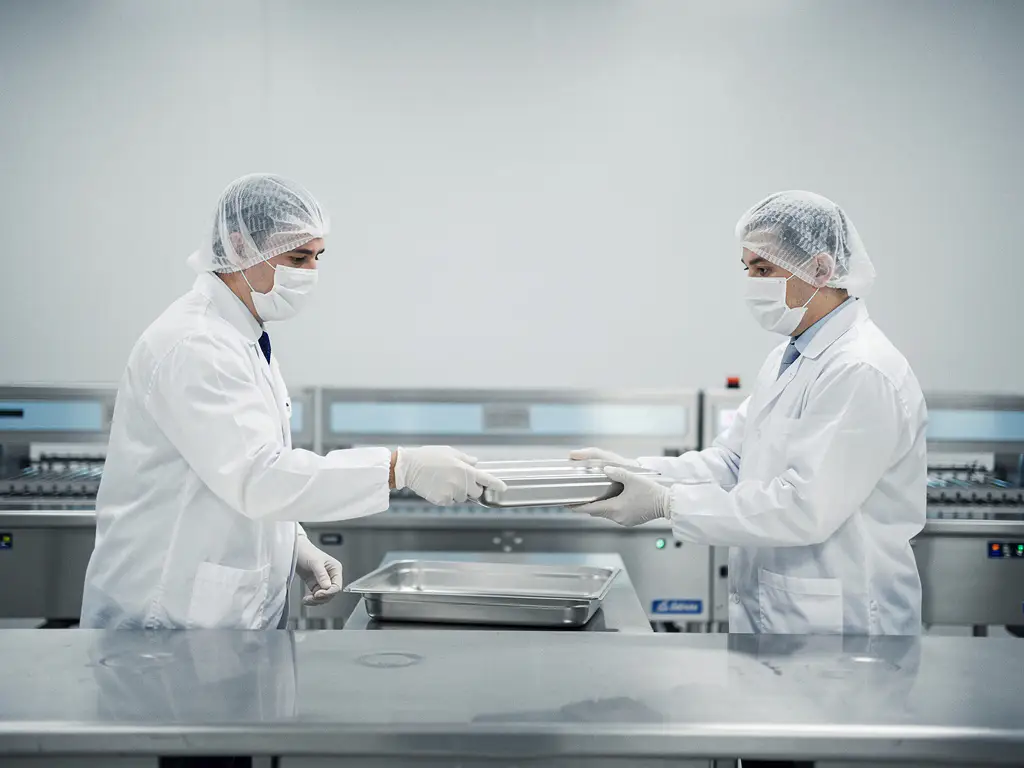
To prevent contamination during shift changes in food production, facilities must enforce consistent entry hygiene protocols at every transition point, including footwear decontamination, personnel gowning checks, and equipment cleaning before new teams begin work. Shift changes are one of the highest-risk moments in any food manufacturing environment because they combine increased foot traffic, temporary lapses in supervision, and the movement of personnel between zones. The sections below address the most important questions facilities should be asking about shift change contamination control.
Why do shift changes increase contamination risk in food production?
Shift changes increase contamination risk in food production because they create a concentrated period of personnel movement, zone transitions, and procedural handovers, all at once. When large numbers of workers enter or exit a facility in a short window, contamination entry points face their highest traffic load of the day, and the consistency of hygiene compliance tends to drop when supervision is transitioning alongside the workforce.
Several factors compound this risk. Outgoing staff may skip final cleaning steps under time pressure. Incoming workers may not yet be fully gowned or may carry contaminants from break areas, locker rooms, or external environments. Equipment and surfaces that have been in continuous use may not receive adequate cleaning before the next team begins. In food production environments, where microbial contamination, allergen cross-contact, and particulate matter can all compromise product integrity, this combination of factors makes shift transitions a critical control point.
GMP frameworks and food safety standards recognise this. Facilities operating under BRCGS, SQF, or FDA food safety modernisation requirements are expected to demonstrate that hygiene controls are maintained consistently across all shifts, not just during peak inspection periods. Shift change contamination risk is not incidental; it is structural, and it demands a systematic response.
What are the most common contamination entry points during a shift change?
The most common contamination entry points during a shift change are footwear, wheeled equipment, and personnel clothing. Research consistently shows that up to 80% of contaminants entering controlled environments are carried in at floor level, making entry points the primary vulnerability during any period of high personnel movement.
During shift changes specifically, the following entry points carry the greatest risk:
- Footwear and shoe soles — Workers arriving from break rooms, changing areas, or external zones carry dirt, moisture, microbes, and particulates directly onto production floors.
- Wheeled equipment — Trolleys, carts, and pallet trucks that cross zone boundaries transfer contaminants from lower-hygiene areas into production spaces if wheels are not decontaminated at entry.
- Gowning failures — Incomplete or inconsistent gowning at shift start introduces contamination via hair, skin, and clothing before workers reach the production line.
- Shared surfaces and touchpoints — Door handles, locker room surfaces, and shared equipment touched by outgoing staff before handover can transfer contamination to incoming personnel.
- Airborne particles — The movement of large numbers of people through entry corridors and airlocks generates air disturbance that can carry particulates into controlled zones.
Addressing these entry points requires a layered approach. No single control measure eliminates all risk, but combining physical barriers at entry with consistent procedural compliance significantly reduces the contamination load that reaches the production environment.
How do contamination control mats reduce shift change risk?
Contamination control mats reduce shift change risk by capturing and retaining particulates, microbes, and debris from footwear and wheels at the point of entry, before they reach the production floor. Positioned at facility entry points, gowning room exits, and zone transitions, effective mats intercept contaminants during the high-traffic window of a shift change when the volume of personnel movement is at its peak.
Reusable polymeric mats engineered for food production environments go further than passive dirt trapping. Mats incorporating Biomaster silver-ion antimicrobial technology actively inhibit microbial growth on the mat surface by up to 99.9%, reducing the risk that the mat itself becomes a reservoir for bacteria between cleaning cycles. This is particularly relevant in food facilities where microbial contamination is a primary concern.
The placement strategy matters as much as the mat specification. Mats should be positioned at every transition point that personnel cross during a shift change, including main entry doors, gowning room exits, and any corridor connecting lower-hygiene zones to production areas. A contamination control mat system that covers all these points creates a continuous barrier rather than leaving gaps that foot traffic can bypass.
For facilities with heavy wheeled traffic during shift changes, mats engineered for forklift and pallet truck loads extend this protection to equipment as well as personnel, ensuring that wheel-borne contamination is addressed alongside footwear contamination.
What GMP procedures should cover shift change contamination control?
GMP procedures for shift change contamination control should cover personnel hygiene verification, equipment and surface cleaning handover, zone entry protocols, and documentation of compliance at each transition. In food manufacturing, shift change SOPs are a formal requirement under most major food safety standards, and their content directly affects audit outcomes.
Personnel hygiene at shift start
Every incoming shift should follow a documented gowning and entry procedure before reaching the production floor. This includes footwear inspection or change, hand hygiene, full gowning checks, and passage through any designated decontamination zones. Entry procedures should be the same regardless of shift timing; night shift workers should follow identical protocols to day shift personnel.
Cleaning handover between shifts
Outgoing teams should complete a documented cleaning handover before departure. This covers production equipment, contact surfaces, floor zones, and any shared tools or materials. Incoming supervisors should verify and sign off on cleaning completion before production resumes. Gaps in this handover are a common audit finding and a direct contamination risk.
Contamination control point checks
Entry mats, footbaths, and other physical contamination controls should be inspected and, where necessary, cleaned or reset between shifts. A mat that has captured heavy contamination during the outgoing shift should be cleaned before the incoming shift begins, ensuring it performs at full capacity during the next high-traffic period. Documented checks at each shift transition demonstrate due diligence to auditors and create a traceable hygiene record.
Should reusable or disposable contamination control solutions be used in food facilities?
Reusable contamination control solutions are the more effective and sustainable choice for food production facilities. Disposable sticky mats, the most common alternative, degrade rapidly under high foot traffic, require frequent replacement, and generate significant single-use plastic waste. In a food facility with multiple shift changes per day, the performance limitations of disposable mats become apparent quickly.
Reusable polymeric mats offer consistent performance across the full lifespan of the product, which can extend beyond three years with proper maintenance. This consistency is important in food manufacturing because contamination control must be reliable across every shift, not just at the start of a fresh mat layer. A disposable mat that has been walked over hundreds of times during a busy shift provides little meaningful protection for the incoming team.
From a compliance perspective, reusable mats with documented performance data are easier to validate and defend during audits. Facilities can demonstrate that their contamination control solution meets a defined standard, rather than relying on the variable performance of a consumable product. The reduction in single-use plastic waste also supports ESG commitments that are increasingly scrutinised by food retailers and procurement teams in 2026.
The total cost of ownership comparison further favours reusable solutions. The recurring procurement cost of disposable mats across a three-to-five year period typically exceeds the investment in a reusable system, before factoring in the labour cost of frequent replacement during shift transitions.
How often should contamination control mats be cleaned in food production?
In food production environments, contamination control mats should be cleaned at minimum once per day, with additional cleaning between shifts in high-traffic or high-risk areas. The cleaning frequency should reflect the volume of foot traffic the mat handles, the hygiene classification of the zone it protects, and the type of contamination risk present in the facility.
For facilities running multiple shifts, a practical cleaning schedule looks like this:
- Between each shift — Inspect mats at all entry points and clean any that have captured visible contamination or reached their saturation point.
- Daily deep clean — Wash reusable mats with approved cleaning agents as part of the facility’s daily sanitation programme. Most reusable polymeric mats are compatible with standard food-safe detergents and can be cleaned in place or removed for washing.
- After any contamination incident — If a spill, product drop, or hygiene breach occurs near an entry point, clean the mat immediately rather than waiting for the scheduled cycle.
- Periodic performance review — Inspect mats regularly for signs of wear, surface degradation, or reduced adhesion that may indicate the mat is approaching the end of its effective service life.
Cleaning procedures should be documented and included in the facility’s sanitation schedule. Auditors reviewing food safety management systems will expect to see evidence that contamination control equipment is maintained to a defined standard, and mat cleaning records contribute to that evidence base.
How Dycem helps with shift change contamination control in food production
Dycem’s reusable contamination control mat systems are designed to address the specific challenges food production facilities face during shift changes. Key benefits include:
- Up to 99.9% particulate capture — Dycem mats attract, capture, and retain floor-level contaminants from footwear and wheels at every entry point, performing consistently across multiple shifts.
- Biomaster antimicrobial protection — Built-in silver-ion technology inhibits microbial growth on the mat surface by up to 99.9%, reducing the risk of cross-contamination between shifts.
- Long-term performance — Engineered to last three to five years, Dycem mats deliver reliable contamination control without the recurring cost and waste of disposable alternatives.
- Washable and easy to maintain — Compatible with standard food-safe cleaning agents, Dycem mats can be cleaned between shifts without operational disruption.
- ISO-certified manufacturing — Meeting EN ISO 9001 and 14001 standards, Dycem mats provide auditable, validated performance data to support GMP compliance.
- Tailored to facility layouts — Customisable in size, format, and colour to suit gowning rooms, production corridors, entry airlocks, and heavy-traffic zones.
Dycem’s contamination control specialists provide free site surveys to assess entry points, traffic flows, and hygiene requirements specific to your facility. To find out how Dycem can support your shift change contamination control programme, contact Dycem today.