

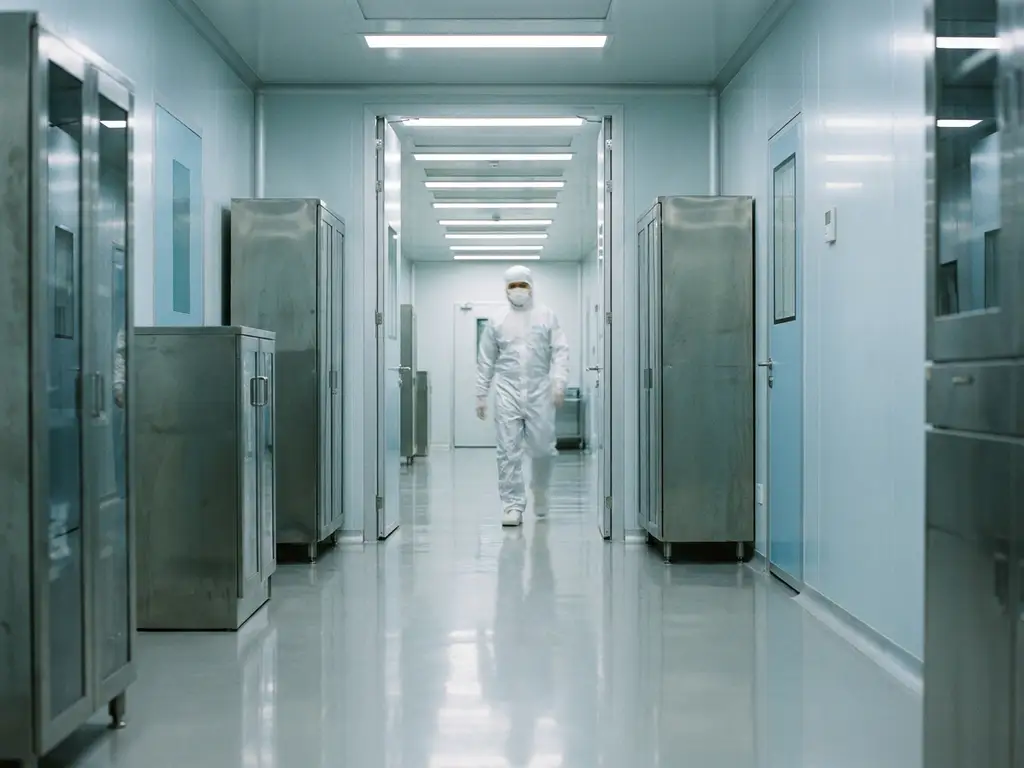
EU GMP Annex 1 sets out the contamination control requirements that manufacturers of sterile medicinal products must meet to protect product integrity and patient safety. These requirements cover facility design, cleanroom classification, environmental monitoring, personnel and material entry controls, and the overarching framework known as the Contamination Control Strategy. The 2022 revision significantly expanded these obligations, and pharmaceutical manufacturers operating in or supplying to the EU are expected to demonstrate full compliance.
What changed in the 2022 revision of EU GMP Annex 1?
The 2022 revision of EU GMP Annex 1 introduced the most substantial update to sterile manufacturing guidance in over a decade. The revised document expanded from 16 to 58 pages and introduced the formal requirement for a documented Contamination Control Strategy, shifting the regulatory focus from prescriptive rules to a risk-based, holistic approach to contamination prevention across the entire manufacturing site.
Several areas received significant attention in the updated text. The scope was broadened to apply to all sterile medicinal products, not just those manufactured under aseptic conditions. Requirements around facility design, cleanroom qualification, environmental monitoring, and personnel behaviour were all strengthened. The revision also placed greater emphasis on the use of barrier technology such as RABS and isolators, and on the integration of contamination controls across the full product lifecycle.
For quality and facilities managers, the 2022 revision means that contamination control can no longer be treated as a series of isolated measures. Regulators now expect a connected, documented system where every control is justified, monitored, and periodically reviewed.
What is a Contamination Control Strategy under Annex 1?
A Contamination Control Strategy (CCS) under Annex 1 is a documented, site-wide plan that identifies all potential sources of contamination and defines the controls in place to prevent, detect, and respond to them. It is not a single document but a living framework that connects facility design, process controls, environmental monitoring, cleaning procedures, personnel training, and equipment qualification into a unified system.
The CCS must demonstrate that each control measure has been selected based on risk assessment and that the combination of controls provides adequate protection for the product and process. Regulators expect the strategy to cover:
- Facility and equipment design, including airflow, pressure differentials, and surface materials
- Cleanroom classification and qualification data
- Environmental monitoring programmes and alert and action limits
- Personnel and material entry controls, including gowning, airlocks, and decontamination procedures
- Cleaning and disinfection regimes
- Process-specific contamination risks and their mitigations
The CCS must be reviewed regularly and updated whenever processes, equipment, or facility layouts change. It also serves as a central reference point during regulatory inspections, giving auditors a clear picture of how contamination is managed across the site.
What are the specific requirements for cleanroom entry points under Annex 1?
Annex 1 requires that entry points into classified cleanroom environments are designed and controlled to prevent the transfer of contamination from lower-grade or unclassified areas. This includes the use of airlocks, pressure differentials, and defined gowning procedures that are appropriate to the grade of the area being entered. Personnel and materials must follow separate, validated entry routes wherever possible.
For personnel entry, the revised guidance emphasises that gowning procedures must be validated and that gowning areas should be designed to minimise the risk of contamination being introduced during the process itself. This means careful consideration of the sequence of steps, the surfaces personnel contact, and the controls in place at each transition point.
At the floor level, entry point controls are particularly important. Industry experience consistently shows that the majority of particulate contamination entering controlled environments is carried in at floor level, transferred by footwear and wheeled equipment. Annex 1 expects manufacturers to assess this risk within their CCS and implement appropriate physical controls at every entry point into classified zones.
Reusable contamination control mats, when validated and maintained correctly, can form part of the documented controls at cleanroom entry points. Dycem’s contamination control solutions are designed specifically for this purpose, capturing particulates from footwear and wheels before they enter critical environments.
How does Annex 1 define environmental monitoring requirements?
Annex 1 defines environmental monitoring as a systematic programme for measuring and recording the microbiological and particulate conditions within classified cleanroom environments. The programme must be risk-based, with monitoring frequency, locations, and methods determined by the grade of the area, the activities conducted, and the potential impact on product quality.
The revised guidance specifies that environmental monitoring must cover both viable (microbiological) and non-viable (particulate) contamination. Monitoring locations should be selected based on risk assessment, including areas identified as most likely to present contamination risk during operations. Results must be trended over time, with defined alert and action limits that trigger investigation and corrective action when exceeded.
Annex 1 also requires that environmental monitoring data is integrated into the broader CCS. Monitoring results should inform decisions about cleaning schedules, gowning procedures, and facility maintenance, creating a feedback loop that continuously improves contamination control performance. Manufacturers are expected to demonstrate that their monitoring programme is capable of detecting deterioration in cleanroom conditions before product quality is compromised.
What contamination risks does Annex 1 place on facility design?
Annex 1 identifies facility design as a primary control against contamination, requiring that cleanrooms and associated areas are designed to minimise the risk of particulate and microbiological contamination from the outset. The guidance expects manufacturers to apply Quality Risk Management principles during the design phase, ensuring that the layout, materials, airflow patterns, and surface finishes all support contamination control objectives.
Key facility design requirements under Annex 1 include:
- Unidirectional airflow in Grade A zones, with validated air velocities and recovery times
- Appropriate pressure differentials between adjacent cleanroom grades to prevent cross-contamination
- Smooth, cleanable surfaces that do not harbour contamination or shed particles
- Segregated routes for personnel, materials, waste, and equipment to avoid cross-contamination
- Airlocks and pass-through hatches designed to maintain cleanroom integrity during transfers
- Drainage and utility penetrations that do not compromise the cleanroom envelope
The revised Annex 1 also places greater scrutiny on the design of entry and exit points, recognising that transitions between classified and unclassified areas represent some of the highest contamination risk moments in a manufacturing operation. Facility designers and quality teams are expected to document how each design decision contributes to the overall CCS.
How do manufacturers demonstrate compliance with Annex 1 contamination controls?
Manufacturers demonstrate compliance with Annex 1 contamination controls through a combination of documented procedures, qualification and validation data, environmental monitoring records, and periodic review of the Contamination Control Strategy. Regulators expect evidence that controls are not only in place but that they are effective, consistently applied, and continuously evaluated.
In practice, compliance demonstration involves several interconnected activities:
- CCS documentation: A comprehensive, current Contamination Control Strategy that maps every identified risk to its corresponding control measure and justifies the selection of each control through risk assessment.
- Qualification and validation records: Documented evidence that cleanrooms, HVAC systems, equipment, and processes perform as intended under defined conditions, including worst-case scenarios.
- Environmental monitoring data: Trending reports showing particulate and microbiological results over time, with investigation records for any excursions above alert or action limits.
- Training and gowning records: Evidence that all personnel entering classified areas are trained, assessed, and re-qualified at appropriate intervals.
- Cleaning and disinfection logs: Records demonstrating that validated cleaning procedures are followed consistently, including rotation of disinfectants where required.
- Change control and review: Documentation showing that changes to processes, equipment, or facility design are assessed for contamination risk impact and that the CCS is updated accordingly.
During inspections, regulators will look for consistency between the CCS and the controls they observe on the floor. Gaps between documented procedures and actual practice are among the most common findings in GMP audits related to Annex 1 compliance.
How Dycem supports Annex 1 contamination control compliance
For pharmaceutical manufacturers working to meet the contamination control requirements of EU GMP Annex 1, the challenge is building a system of controls that is documented, validated, and demonstrably effective at every entry point and transition zone across the facility. Dycem’s reusable contamination control mats are engineered to support exactly this requirement.
Dycem mats capture up to 99.9% of shoe and wheel contaminants at the point of entry, providing a validated, physical barrier against particulate transfer into classified environments. As part of a documented CCS, they offer several practical compliance advantages:
- Validated particulate capture at cleanroom entry points, gowning areas, airlocks, and critical corridors
- Built-in Biomaster antimicrobial protection to reduce microbiological risk at high-contact surfaces
- Reusable, washable construction with a lifespan exceeding three years, supporting consistent performance and audit traceability
- ISO-certified manufacturing in compliance with EN ISO 9001 and 14001 standards, supporting supplier qualification requirements
- Range of formats including CleanZone mats for pedestrian and light-wheeled areas, WorkZone mats for heavy equipment traffic, and Floating Mats for flexible or temporary zones
Dycem’s contamination control specialists provide consultative support from initial site survey through to installation and ongoing review, helping quality and facilities teams integrate floor-level controls into their broader Annex 1 compliance programme. To discuss your facility’s requirements, contact Dycem’s team to arrange a free site survey.