

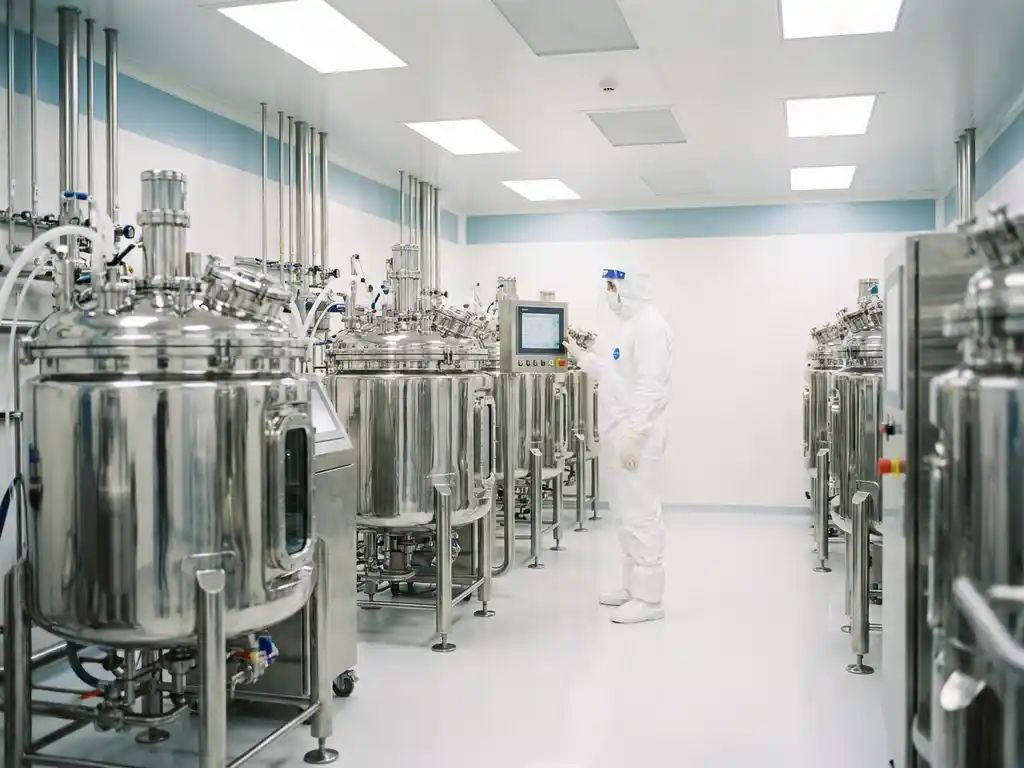
Biotechnology manufacturing carries some of the highest contamination risks of any industrial sector. Because biotech processes involve living cells, biological agents, and highly sensitive compounds, even trace levels of particulate, microbial, or chemical contamination can compromise an entire batch, invalidate a product, or trigger a serious regulatory response. The sections below address the most important contamination questions facing biotech facilities in 2026.
How does contamination enter a biotechnology facility?
Contamination enters a biotechnology facility through personnel, equipment, raw materials, air systems, and surfaces. Of these routes, personnel movement is consistently the most significant vector. Research and industry experience show that approximately 80% of contaminants in controlled environments are introduced at floor level, carried in on footwear, wheels, and equipment moving between zones.
Every time a person walks from an uncontrolled corridor into a cleanroom or production area, they carry particulate matter, biological debris, and microorganisms on the soles of their shoes. Wheeled equipment such as trolleys, carts, and pallet trucks amplifies this risk by covering a greater surface area and travelling across multiple zones. Air handling systems can also draw in external particulates if filters are inadequate or if doors between zones are left open. Raw material delivery, packaging, and maintenance activities all introduce additional contamination pathways that must be managed at the point of entry.
What types of contamination pose the greatest risk in biotech manufacturing?
The three primary contamination categories in biotech manufacturing are microbial contamination, particulate contamination, and chemical or cross-contamination. Each poses distinct risks depending on the product type and the stage of the manufacturing process. In most biotech environments, microbial and particulate contamination are considered the most operationally dangerous.
Particulate contamination includes dust, fibres, skin cells, and debris that can interfere with cell cultures, block filters, or compromise sterile formulations. Chemical contamination, including residues from cleaning agents or raw material carry-over, can disrupt biological processes or introduce toxic compounds into products intended for human use. Cross-contamination between different biological agents or product streams is a particular concern in multi-product facilities, where segregation between production areas is critical.
Why is microbial contamination especially dangerous in biotech processes?
Microbial contamination is especially dangerous in biotech manufacturing because biotech processes rely on living biological systems. When unwanted microorganisms enter a cell culture, fermentation vessel, or sterile fill environment, they compete with or destroy the target organism, alter the chemistry of the product, or render a batch entirely unusable. Unlike particulate contamination, microbial contamination can propagate and spread rapidly once established.
Bacteria, fungi, and endotoxins can survive on surfaces and floors for extended periods, making consistent environmental control essential rather than periodic. In sterile drug product manufacturing, microbial contamination can lead to patient harm if it reaches the final product. In upstream bioprocessing, a single contamination event in a bioreactor can result in the loss of weeks of cell culture work and significant financial cost. The consequences extend beyond one batch: contamination events often trigger root cause investigations, environmental monitoring failures, and production shutdowns that affect the wider manufacturing schedule.
What are the regulatory consequences of contamination in biotech manufacturing?
Regulatory consequences of contamination in biotech manufacturing range from batch rejection and product recalls to facility shutdowns, warning letters, and loss of manufacturing authorisation. Regulatory agencies including the FDA, EMA, and MHRA hold biotech manufacturers to strict Good Manufacturing Practice (GMP) standards, and contamination events are among the most serious findings an inspector can document.
A contamination-related observation on an FDA Form 483 or an EMA inspection report can initiate a cascade of compliance actions. Manufacturers may be required to conduct full investigations, implement corrective and preventive actions (CAPAs), and demonstrate through environmental monitoring data that the root cause has been resolved. Repeat findings or systemic failures in contamination control can result in import alerts, consent decrees, or the suspension of a manufacturing licence. For biotech companies with products in clinical trials, a GMP failure can delay regulatory approval and set back development timelines by months or years.
How can biotech manufacturers reduce contamination risks at entry points?
Biotech manufacturers can reduce contamination risks at entry points by implementing validated, layered contamination control measures at every transition between uncontrolled and controlled zones. This includes gowning protocols, air pressure differentials, HEPA-filtered airlocks, and physical contamination capture systems at floor level. No single measure is sufficient on its own; effective contamination control depends on the consistent performance of multiple barriers working together.
Entry point management is particularly important because it addresses contamination before it reaches the production environment. Gowning rooms and airlocks serve as decontamination transitions, but without effective floor-level contamination capture, particulates and microorganisms carried on footwear can bypass gowning controls and enter the cleanroom. Facilities should also consider wheeled equipment entry points separately from pedestrian routes, as carts and trolleys introduce contamination across a larger floor contact area and may travel deeper into controlled zones before being cleaned.
Regular environmental monitoring at entry points, combined with documented cleaning and maintenance schedules for contamination control equipment, provides the audit evidence that regulators expect to see. Training personnel on contamination awareness and entry procedures reinforces the physical controls already in place.
What contamination control standards apply specifically to biotech cleanrooms?
Biotech cleanrooms are governed by a combination of international standards and regulatory guidelines that define acceptable particle counts, microbial limits, air classification, and environmental monitoring requirements. The most widely applied frameworks are ISO 14644 (which defines cleanroom classifications from ISO Class 1 to Class 9), EU GMP Annex 1 for sterile medicinal products, and FDA guidance on aseptic processing.
EU GMP Annex 1, substantially revised in 2022, places particular emphasis on Contamination Control Strategy (CCS) as a documented, holistic approach to managing contamination risk across the entire facility. Under this framework, biotech manufacturers must demonstrate that every element of their contamination control programme, including entry point controls, environmental monitoring, cleaning validation, and personnel behaviour, has been assessed and integrated into a coherent strategy. ISO 14644-1 and 14644-2 provide the technical basis for cleanroom classification and ongoing monitoring, while ICH Q10 supports the broader pharmaceutical quality system in which contamination control sits.
Compliance with these standards is not static. Manufacturers are expected to review and update their contamination control strategies in response to monitoring data, deviations, and changes in facility layout or product portfolio. In 2026, regulatory scrutiny of contamination control documentation continues to intensify, making it essential for biotech quality teams to maintain current, evidence-based records of every control measure in place.
How Dycem contamination control mats support biotech facility hygiene
Dycem’s reusable contamination control mats address one of the most persistent entry point challenges in biotech manufacturing: the transfer of particulates and microorganisms on footwear and wheels at the transition between zones. Built-in Biomaster antimicrobial protection inhibits microbial growth on the mat surface itself, providing an additional layer of defence at critical entry points.
- Dycem CleanZone mats are engineered for pedestrian and light-wheeled traffic zones including cleanroom entrances, gowning rooms, and airlocks, capturing up to 99.9% of shoe and wheel contaminants at the most sensitive transition points.
- Dycem WorkZone mats handle heavy-wheeled equipment including forklifts and pallet trucks, providing validated contamination capture in high-traffic industrial and logistics environments with a lifespan exceeding three years.
- Dycem Floating Mats offer flexible, repositionable coverage for facilities with variable or temporary controlled zones, without requiring fixed installation.
- All Dycem mats are reusable, washable, and ISO-certified, supporting both hygiene compliance and sustainability commitments by eliminating the recurring waste of disposable sticky mat alternatives.
For biotech manufacturers building or reviewing a Contamination Control Strategy in line with EU GMP Annex 1 or FDA aseptic processing guidance, Dycem’s contamination control specialists offer a free site survey to assess entry point risk and recommend the right solution for your facility layout. Explore the full range of contamination control mat solutions or contact a specialist to arrange your consultation.